DAILY FILM DOSE: A Daily Film Appreciation and Review Blog: TIFF 2011
[go: up one dir, main page]

Showing posts with label TIFF 2011. Show all posts

Sunday, 18 September 2011

TIFF 2011 - 50/50


50/50 (2011) dir. Jonathan Levine
Starring: Joseph Gordon-Leavitt, Seth Rogen, Anna Kendrick, Bryce Dallas Howard, Anjelica Huston, Phillip Baker Hall

****

By Greg Klymkiw

I hate cancer. Who doesn't? It kills friends and family and before they're dead it tears them apart physically and mentally. The pain is, for those who've never been afflicted, unimaginable - though I often recall the worst pain I've ever suffered (in my case, kidney stones) and magnify it several thousand times. The thought of that is, frankly, sickening.

Even the process of successfully battling cancer is painful and debilitating. With all the technological and medical advancements, there is no real perfect cure. I must speak plainly on that front and assert: That's just completely fucking stupid!

Fuck you, cancer. Fuck you!

50/50 is a comedy about cancer. The incongruity of this might seem off-putting, but the fact remains that with any illness - no matter how deadly (or not), humour is - in my humble opinion - the best medicine. Furthermore, there is much to be said, on an aesthetic level, for rendering the drama of illness - especially cancer - WITH humour. 50/50 does so with utter perfection. It's the laughs, the human comedy, the on-screen knee-slappers that are the very elements which render the drama with so much poignancy and yes, pain.

This might well be one of the best comedies of the new Millennium. Time will ultimately be the true judge of this proclamation, but for now, it's sure feeling like it's going to be right up there.

Adam (Joseph Gordon-Leavitt) is a public radio reporter with talent, commitment and a bright future. When he is diagnosed with cancer - one in which his chances of living are the 50/50 of the title - his life quickly unravels. His beautiful, but self-absorbed girlfriend Rachel (Bryce Dallas Howard) is completely unable and unwilling to assist with the debilitating effects of the aggressive treatment needed - in spite of her insistence that she is more than up to it. She is, in fact, the biggest problem facing his mental health and well being. This involves having an affair behind his back - with, I might add, a major fucking loser.

Now before you get the impression this is a total downer, allow me to say two words:

SETH ROGEN!!!!!

One of the best young actors in the business, Rogen plays Adam's mega-pot-ingesting ('natch) best buddy Kyle. He offers friendship, company, support, endless laughs (for Adam, but by extension, the audience) and dope (a most convenient painkiller for cancer victims anyway). A slimmed-down Rogen has not meant any less hilarity. His goofy charm and one-liners continue to offer-up belly-laughs of such intensity that the resulting effect upon audiences (as they were with me) might well be severe abdominal cramps.

Bring on the cramps, baby! Seth, you rock my world!

There's also a terrific performance from the almost criminally cute and mouth-wateringly delightful Anna Kendrick as Katie, Adam's hospital social worker. Needless to say, romance brews with these two. Anjelica Huston as Adam's loving, smothering Mom is funny and moving as is the great character actor Phillip Baker Hall as one of Adam's fellow cancer-sufferers.

One of the great things about Will Reiser's semi-autobiographical and superbly structured screenplay is that it doesn't only deliver the requisite laughs and tears, but it never feels like it's hitting the kind of false, overwrought notes so many contemporary comedies are saddled with. The humour is natural and comes with ease from both character and situation. We get all the clinical detail of Adam's treatment and while it always seems rooted in reality, it doesn't get in the way of the picture's humanity, but adds to it.

Humanity, especially in a movie about cancer, is clearly a necessity. However, the movie never feels overtly dour and/or tear-jerking and I loved the way it even exposes flaws and foibles in Adam's character. For example, his "vengeance" upon the philandering girlfriend is genuinely mean-spirited. Yes, it feels somewhat justifiable, but at the same time, the character's treatment of her (no matter what SHE has done to him) exposes more than a hint that he's not some flawless, doomed, Camille-type, but has it in him to be a major prick. Yes, even cancer victims can be pricks. Welcome to the world, folks!

This is all achieved in good measure due to Jonathan (All the Boys Love Mandy Lane) Levine's exquisite direction. It's not show-off-ish in any way, shape or form, but covers the excellent written material with the assured hand of an old pro. That said, Levine's only in his thirties and this is his third feature film. One can only wonder what the kid's going to generate when he actually IS "old".

The bottom line on this picture is thus: If you let the cancer theme scare you away from rushing out to seeing it - don't. 50/50 is a great picture - infused with laughs, love and hope.

These are good things!

Note to Seth Rogen: You look great, bud, but please put back a tiny bit o' girth. Those love handles were sexy. Besides, it's not healthy to be so thin. Next time you're in Toronto, remind Sarah Polley to have me recommend where you can get some great popcorn-chicken-in-a-sausage-sack kishka. This will work wonders. Trust me.

50/50 received its official unveiling at the Toronto International Film Festival (TIFF 2011) and will be theatrically released by e-one Entertainment.

Saturday, 17 September 2011

TIFF 2011 - You're Next!


You're Next! (2011) dir. Adam Wingard
Starring: Sharni Vinson, AJ Bowen, Joe Swanberg, Margaret Laney, Barbara Crampton, Nicholas Tucci, Wendy Glenn, Amy Seimetz, Ti West and Larry Fessenden

**1/2

By Greg Klymkiw

This energetic, crisply directed home invasion horror thriller delivers up the scares and gore with considerable panache. I absolutely loved the delightfully grotesque look of the killers in You're Next! Wearing ultra-creepy animal masks (like those really cute lifelike ones you can buy for your kids at Zoo gift shops), the deadly home-invading carnage-purveyors might only have been creepier if they all wore matching Larry Harmon Bozo the Clown masks. (Or even creepier than that, if they WERE actually ALL Larry Harmon - but that, I'm afraid is another movie.)

In addition to the aforementioned, the picture is chock-full of babes including a mega-kick-ass Aussie chick played spiritedly by Sharni Vinson whose character, it is revealed, was raised in a survivalist compound Down Under. (I kid you not! An Aussie Survivalist Babe!!!)

So, what's not to like?

Well, not that I expect much in the way of originality from this sort of movie, especially if the killings are conceived and dispatched with both humour and aplomb - as they most certainly are in the picture, but the big disappointment is one of those: " Oh fuck, I can see an obvious 'twist' coming from miles away and I hope to Christ it's just a red herring and the filmmakers surprise me with something as sick and twisted - if not more so - than what's already on display in terms of the gore." But no! There it is in all its dullsville glory - the dreaded twist I won't reveal for the great unwashed who don't see it coming!

Come on, guys! Give me a break. Frankly, I'd have been happier if there was NO reason given for the killings save for a whack of psychos just doing what psychos do best. That really would have been better than the, uh... twist.

In any event, the first half of the movie proceeds like a delightful bat out of hell. An affluent couple (the female half played by the still-delectable Re-Animator babe Barbara Crampton) are celebrating their 35th wedding anniversary in their ultra-chic country mansion and have invited all their kids and assorted significant others to join them. The characters sharing bloodlines are straight out of some lower-drawer Albee or O'Neill play and the conversation round the dinner table plays out with plenty of funny, nasty sniping.

Great stuff!

Then the killing starts!

Even Greater!

And then, the aforementioned plot twist!

Uh, not great! Not good! Not even passable.

Thankfully, the carnage continues, but for this genre geek, the movie never quite recovers from a twist that was probably meant to be clever or something. I hate that! This is exactly the sort of thing that can drag potentially great genre pictures right down the crapper. It's too bad, really, because I really think screenwriter Simon Barrett has a lot more going for him that resorting to crap like that. He delivers a decent backdrop, first-rate sniping and a passel of great killings.

And, of course, let's not forget the babe raised on a survival compound in Australia.

Now that is truly inspired!!!

You're Next was unveiled at the Toronto International Film Festival (TIFF 2011) and while as of this writing it has not secured a distribution deal, it will. And it will no doubt be gangbusters at the boxoffice - in spite of the stupid... God I want to spoil it for those of you who are too boneheaded to not see it coming, but I won't.

TIFF 2011 - Carré blanc


Carré blanc (2011) dir. Jean-Baptiste Léonetti
Starring: Sami Bouajila, Julie Gayet

****

By Greg Klymkiw

Those who cling to wealth and power by forcing conformity, stifling creativity and crushing the very essence of humanity are the faceless dominant evil that exploits the most vulnerable aspect of what it means to be human. It is ultimately our spirit which is, in fact, not as indomitable as we'd all like to believe. Through indoctrination and constant scrutiny we are reduced to lumps of clay. We are moulded in the image our true rulers want to see. They want us tied to the consumption they control. Call them what you like, but they are indeed The New World Order.

And, they are winning.

And, worst of all, the loser is love.

And, without love, we all become prey.

Harkening back to great 70s science-fiction film classics like The Terminal Man, Colossus: The Forbin Project, A Boy and His Dog, Silent Running and THX 1138 - when the genre was thankfully bereft of light sabres, Wookies and Jabba the Hut - when it was actually ABOUT something, Jean-Baptiste Léonetti's debut feature film Carré blanc is easily the finest dystopian vision of the future to be etched upon celluloid since that time.

The future it creates is not all that removed from our current existence.

Léonetti announces himself as a talent to be reckoned with. This low budget science fiction film astounds us with its visual opulence. That, of course, is because it's so obvious that Léonetti has filmmaking hardwired into his DNA. NEVER does the film feel cheap or low budget. Never do we feel like the film has structured itself around all the usual budget-saving techniques that so many other first-time filmmakers unimaginatively opt for. Leonetti has wisely, painstakingly chosen a number of actual exterior and interior locations that fit his vision perfectly and work in tandem with the narrative. His compositions are rich and because his location selection has been so brilliantly judicious, he clearly had the time to properly light and dress the images.

The next time I hear some young filmmaker whining about the "challenges" of their one-set low-budget production I will consider placing them on my list of those who shall feel the wrath of my Baikal semi-automatic Russian assault rifle when civilization collapses and it becomes one giant free-for-all.

Though Carré blanc shares a specific approach from past work to a genre that can - perhaps more than any other, effect true analysis and possibly even change, there is nothing at all retro about the picture - no obvious post-modernist nods here. It is completely unto itself.

Carré blanc is fresh, hip, vibrant and vital.

Blessed also with a deliciously mordant wit, Léonetti delivers a dazzling entertainment for the mind and the senses.

The tale rendered is, on its surface and like many great movies, a simple one. Phillipe (Sami Bouajila) and Marie (Julie Gayet) grew up together in a state orphanage and are now married. They live in a stark, often silent corporate world bereft of any vibrant colour and emotion. Muzak constantly lulls the masses and is only punctuated by announcements occasionally calling for limited procreation and most curiously, promoting the game of croquet - the one and only state sanctioned sport.

Phillipe is a most valued lackey of the state - he is an interrogator-cum-indoctrinator - and he's very good at his job. In fact, with each passing day, he is getting better and better at it. Marie, on the other hand, is withdrawing deeper and deeper into a cocoon as the love she once felt for Phillipe is transforming into indifference. In this world, hatred is a luxury. It's a tangible feeling that the rulers would never tolerate and punish with death.

Indifference, it would seem, is the goal. It ensures complete subservience to the dominant forces. Love, however, is what can ultimately prove to be the force the New World Order is helpless to fight and the core of this story is just that - love. If Phillipe and Marie can somehow rediscover that bond, there might yet be hope - for them, and the world. It is this aspect of the story that always keeps the movie floating above a mere exercise in style.

So many dystopian visions suffer from being overly dour. Happily, Léonetti always manages to break the oppressive force of the film and its world by serving up humour. Most of the laughs in Carré blanc occur within the context of tests delivered by the interrogating indoctrinators. In the world of the film, suicide is often the only way out for those who have a spirit that cannot be crushed. One early scene features Phillipe as a young teen and another boy his age who have both attempted unsuccessfully to kill themselves (by hanging and wrist-slashing respectively).

Both boys are led into an empty room where smiling corporate lackeys speak to them in tones of compassion. They are both asked to engage in a test to cheer them up. Lying before them is a body bag. The test is thus: which one of them will be first to go inside the bag? They hesitate. They're assured how much fun it will be. The other boy dives down immediately and enters the bag.

The lackey zips the boy inside, hands a club to Phillipe and orders him to begin beating the boy within the body bag. Phillipe hesitates. The lackey praises our young protagonist - assuring him he's made the right choice and that anyone who would choose (as Phillipe has not) to go into the body bag is not worthy of life. Phillipe continues to hesitate and the lackey strikes him viciously with a club, ordering him to strike the boy repeatedly. When Phillipe beats the boy in the bag, but halfheartedly, he is again punished by the lackey. Phillipe knows what he has to do now and does so with vigour.

Here we laugh in horror as Phillipe beats the child in the body bag. (I wasn't the only one laughing in the packed house at the film's premiere screening. A few sick puppies belched out appreciative guffaws.)

Narratively, this sequence reveals that Phillipe is clearly an interrogator-in-the-making. The test itself is a perfect way to not immediately "waste" potential "talent" by snuffing them out before seeing what they're really made of. As the film continues to unspool, some of the biggest laughs and equally chilling moments come from the tests Phillipe concocts and metes out to discover those who must be weeded out of society - permanently. Other laughs derive from the odd announcements and pronouncements over the endless loudspeakers.

To Monsieur Léonetti, I offer a tip of the hat for coming up with so many dollops of darkly humorous nastiness throughout the proceedings. They not only offer entertainment value, but are inextricably linked to the world he creates, a world so similar to the one we live in and one which feels just around the corner if humanity does not prevail over the force of a very few.

Love becomes the ultimate goal of Léonetti's narrative and as such, he delivers an instant classic of science fiction. At the end of the day, the best work in this genre IS about individuality and the fight to maintain the indomitability of spirit.

It might, after all, be the only thing we have left.

Carré blanc was unveiled at the Toronto International Film Festival (TIFF 2011) and if there is any hope for both cinema and mankind, it will be released theatrically as soon as humanly possible.

TIFF 2011 - Paradise Lost 3: Purgatory

Paradise Lost 3: Purgatory (2011) dir. Joe Berlinger and Joe Sinofsky
Documentary

****

By Alan Bacchus

Perhaps only Michael Apted's Up series could compare to the effect of Berlinger/Sinofsky's 15-years-in-the-making documentary. This third film surrounding the now famous West Memphis Three case is a triumph, a powerful compendium of all three films combining evidence compiled over the years, which ultimately brought justice to three men wrongly accused. PL3 is a haunting, tragic and frustrating look at not only a flawed justice system, but also the cloud of ignorance, bigotry and hatred that has warped the minds of the angered members of the West Memphis community.

To recap, in 1996 these same filmmakers produced the first Paradise Lost movie, which recounted the murder of three young boys in the woods of West Memphis Arkansas, and the outrageous, inquisition-style witch hunt that resulted in three Goth-like youths, Jessie Misskelley, Damien Echols and Jason Baldwin, convicted and sentenced to either life in prison or, in the case of Echols, a death sentence. The success of this film led to the creation of a public plea to retry and exonerate the West Memphis Three. In 2000, Berlinger/Sinofsky returned to the case to update us on new evidence and theories that arose after ‘96, including suspecting one of the fathers, Mark Byers, as the murderer. Unfortunately, despite overwhelming evidence and public outcry, the West Memphis Three are still in prison.

Berlinger and Sinofsky deftly move us between the years from the murders and today. We don't need to see the previous films to follow the story, nor do we get an obligatory or expository recap. It's like the pair are remaking their films from a new point of view without compromising the integrity of the first two.

Some characters remain the same, others are remarkably different. Mark Byers, previously the ringleader against the egregious accusations of Satanism, which was the apparent 'motivation' for the murders, does a remarkable about-face by taking responsibility and apologizing for his ignorant reactions. A new suspect arises, someone we've been looking right in the face all these years, and it’s a revelation that provides a chilling new reflection on these events.

Paradise Lost 3 blurs all barriers of subject and observer, which contributes to the feeling that we’re participating in the lives of the people involved in real-time. Dramatic news about the case emerged prior to this festival, which causes us to watch the film differently, resulting in a feeling of real-time journalism but with a wholly cinematic artistic treatment.

Consistent with the tone of the original films, Berlinger/Sinofsky cast a net of dark, brooding horror, which fits in well with the witch hunt theme and allegory to the Salem Witch Trials. The new songs contributed by Metallica are magnificently chosen, conveying the same tone of grungy melancholy, both disturbing and thoughtful, as in the previous films.

The one frustration comes at the very end, as we know that the final outcome of this case occurred mere days after the completion of the film. According to HBO, a new cut will be made to incorporate the very important postscript.

I doubt this is even the end of the story. The lives of the three men back in society would make an ideal fourth chapter, hopefully more triumphant and inspiring than the previously three.

The record of these films, this third one in particular, is a monumentally important achievement. Paradise Lost 3: Purgatory features something we're wholly aware of at the beginning, middle and end of the film, resulting in a cinema experience unlike any other.

Friday, 16 September 2011

TIFF 2011 - Shame


Shame (2011) dir. Steve McQueen
Starring: Michael Fassbender, Carey Mulligan, James Badge Dale

****

By Alan Bacchus

Steve McQueen's follow-up to the acclaimed Hunger is a more controlled and precise film. Perhaps it's because he's working with another writer from source material in a novel, but either way this film shows McQueen's superb skills with a conventional narrative. McQueen's confidence in directing this picture is through the roof, as he executes scenes of astonishing visceral and emotional power and creates a technically stylish and emotionally intense experience on par with Black Swan.

The title refers to the affliction of his main character, which is an addiction to sex. Whether it's picking up women on the subway, hiring prostitutes or surfing the Internet for porn at work and jerking off in the bathroom, Brandon (Fassbender), despite being incredibly handsome and charming, is a man shamed by his addiction, which has caused him to create a silo of emotional detachment from everything around him.

We are strictly within Brandon's point of view, both sympathizing with and being reviled by his salacious behaviour. By day he seems to be well put together, a successful Manhattan executive living comfortably in his swanky apartment. Beneath this veneer is a broken down man full of self-loathing caused by his inability to control his libido. Threatening to interrupt his perfect charade is his sister, Sissy (Mulligan), who is equally messed up, possibly because of the same sexual afflictions as Brandon. Over the course of the film, Brandon’s downward spiral becomes near operatic in its tragedy.

McQueen’s metaphors are uncomplicated, as this is clearly a story of addiction. Sex for Brandon is primal, and most of the acts in which he engages are fleeting pleasures like an addict getting a fix.

Fassbender, who is already being celebrated for his performance, projects onto his character a shell of invulnerability to mask the inner torment and shame of his addiction. Carey Mulligan’s character complements Brandon, as she is also able to create a mask of success for the public while being a fragile wreck inside.

The opening scene is majestic, driven by a piece of music remarkably similar to something composed by Hans Zimmer in The Thin Red Line. Whether it’s an homage or outright theft, it works. The music creates the feeling of a grandiose battle at play. The looks and glances of courtship between Fassbender and the anonymous prey are intoxicating and ooze sexual energy.

Throughout the film the game of courtship is anti-romantic and treated like a predator and prey scenario. And by setting the story in Manhattan filled with alpha male, cockswaggering businessmen, it gives it a distinctly ‘80s quality when coke, sex and making money contributed to this exaggerated social competitiveness.

Like Hunger, Shame is anchored by a number of visually stunning, emotionally visceral set pieces, the most intense being Brandon's third act descent into his carnal super ego – a sexual 'bender' equivalent to a drug overdose.

Brandon's controlled performance is complemented by McQueen's astonishing control of his palette. Tones of blue and light, and touches of warm yellows equal the sadness that blankets the film. Shame is a film that is impossible to forget.

Thursday, 15 September 2011

TIFF 2011 - God Bless America


God Bless America (2011) dir. Bobcat Goldthwait
Starring: Joel Murray, Tara Lynne Barr

***½

By Greg Klymkiw

Frank is a very kind person.

He kills people.

But they deserve it.

Big time.

Played brilliantly with pathos and deadpan humour by Joel Murray, Frank is a hard working American for whom life keeps dealing one losing card after another. He's been diagnosed with a fatal disease. His wife has left him for a hunky young cop in a suburban paradise. His daughter has turned into a shrill spoiled brat who doesn't want to visit him on custody days because he has no cool stuff at home like video games. He "forces" her to do "boring" stuff like art, going to the zoo and playing in the park. In fact, his progeny is so indifferent towards him that when Mom calls Frank to see if he can stop one of the brat's petulant gimme-gimme-gimme outbursts, the little bugger’s response is, "I don't want Daddy! I want an iPhone!!!"

Frank is plagued and beleaguered by the Decline of Western Civilization In his world, the decay currently sending America straight into the crapper is one of the things forcing him to lie around his squalid home after mind-numbing work days as an insurance company executive.

Home.

Alone.

Home is a man's castle, but not this man, not this home. His next-door neighbours are genetically moronic White Trash filth - living poster children for strangulation at birth. He is forced, night after night, to crank up the volume on his television to try drowning out their subhuman conversation, the endless cacophony of verbal and physical abuse, the wham-bam sexual activities, the constant caterwauling from their no-doubt genetically stupid infant and the grotesque sounds emanating from their stereo and/or TV.

What he has to endure on television is, frankly, just as bad – the sort of stuff feeding the feeble minds of America – most notably his mind-bereft neighbours. There’s Tuff Girlz, a reality-TV program. Just as Frank channel hops to it, a white trash woman digs a blood-soaked tampon out of her vagina and flings it towards an equally foul white trash douche. Then there’s the endless parade of right wing wags dumping on the disenfranchised of America or insisting: “God hates fags” or presenting images of Barack Obama as Adolph Hitler – replete with Swastikas. News reports of homeless people being burned alive or true crime info-docs on the likes of mass murderer Charles Whitman buttress programs like Dumb Nutz where grown men engage in horrendously painful physical practical jokes on themselves. The airwaves are choked on the self-explanatory Bowling on Steroids or American Superstarz where a celebrity panel insults an untalented retarded boy with no talent whatsoever.

Perhaps the most repellent of all is reality TV star Chloe, a nasty teenage girl who treats anyone and everyone like dirt. She must die.

Poor Frank. Even when he drives to work, every station on his car radio is an aural assault from Tea Party types. Once he gets to the office he has to endure the boneheaded water cooler talk of his simpleton colleagues as they moronically regurgitate everything he was forced to endure on television the night before. Capping off Frank’s miserable existence is a tiny bright spot that quickly turns dark. The fat, ugly sow that handles reception at the front of the office and openly flirts with him files a sexual harassment complaint behind his back and he loses his job.

When he gets home, all he has to look forward to is turning on his TV full blast, yet again, to drown out his jelly-brained neighbours. There is, however, a solution.

Frank, you see, is a Liberal – a Liberal with a handgun.

Cleaning up begins at home, so he pays his neighbours and their grotesquely squealing infant a visit. With his gun in hand, Frank upholds the values of Liberals everywhere – he does what it takes to do what all Liberals must do when civilization is on the brink of collapse.

Okay, we’re only about 15 minutes into God Bless America and at this point I laughed so hard I suspected I might have ruptured something.

From here, the movie doesn’t let up for a second – especially once Frank begins a spree of violence against intolerance with a gorgeous, sexy teenage girl (winningly played by Tara Lynne Barr) who takes a liking to both him and his ways. They’re birds of a feather – a veritable Bonnie and Clyde – fighting for the rights of Liberals and anyone else who might be sick and tired of the mess America is in.

God Bless America is one of the best black comedies I’ve seen in ages. Bobcat Goldthwait makes movies with a sledge hammer, but it's a mighty trusty sledge hammer. He has developed a distinctive voice that began with the magnificently vile Shakes the Clown and with this new film he hits his stride with crazed assuredness. Some might take issue with the way he lets his central characters rant nastily and hilariously - well beyond the acceptability of dramatic necessity - but I have to admit it is what makes his work as a filmmaker so unique. He creates a world that exists within his own frame of reference which, at the same time, reflects aspects and perspectives that hang from contemporary society like exposed, jangled nerves.

With God Bless America, Goldthwait delivers a movie for the ages – one that exposes the worst of America and delivers a satisfying Final Solution to the problem of stupidity and ignorance. The pace, insanity and barrage of delightfully tasteless jokes spew from him with a vengeance, but they're not only funny, he uses them to create movies that challenge the worst elements of the Status Quo.

It's a movie that fights fire with fire.

Or rather, with a handgun.

It’s the American Way!

Even for Liberals.

God Bless America was unveiled at the Toronto International Film Festival (TIFF 2011) and if we’re lucky, it’ll be released theatrically very soon.

TIFF 2011 - The Descendants

The Descendants (2011) dir Alexander Payne
Starring: George Clooney

***½

By Alan Bacchus

(Warning: Spoilers contained here)

The Descendants admirably continues Alexander Payne's career of melancholy off-kilter comedy in which he finds humour in the most dire situations. In this case it's a man making contact with the relatives of his dying wife. He also needs to reconcile the mistakes made by both of them during their marriage. Payne's absurdist tone deftly marries silly, broad comedy with monumental tragedy resulting in a resonating and poignant bittersweet experience perfectly in line with the feelings we got from Sideways and About Schmidt.

George Clooney plays Matt King, a lawyer living in Hawaii and a member of a large family that is the title owner of a huge acreage of unused land on the island paradise. With their deal on the land ending and the family on the verge of selling, pressures run deep. Meanwhile, Matt's wife has been in a boating accident that has put her in a coma and on life support. Before pulling the plug, Matt and his two daughters, Alexandra and Scottie, must travel across the island and connect with each of their relatives to pay their last respects. Adding to Matt's grief is the heartbreaking revelation of his wife’s infidelity with a mystery man, causing a haze of anger and frustration that could cloud his business dealings.

It's a journey not unlike Jack Nicholson's in About Schmidt, whose fundamental life changing events caused a similar journey of self-discovery. For Matt, the journey serves to reconnect him with his daughters, who, in their burgeoning adolescence, have lost touch. Payne's characters are expertly drawn, relatable and humanized. They are matched with a roll call of supporting characters, each of which are off-centre just enough to spark the delightful comic conflict. In particular, Alex's stoner boyfriend, Sid, is an inspired creation, a wildcard on the journey whose laid back attitude to the heavy drama greases the joints of conflict but whose naiveté provides a unique and poignant perspective.

Much like the affable sap philanderer played by Thomas Haden Church in Sideways, Payne sympathizes with his antagonists, in this case Brian Spear (Matthew Lillard), the mystery man with whom Matt's wife was having an affair. The climatic meeting between the two men in the third act is a delightful conversation that plays to the enormous complexity of the situation. The dialogue from Alexander Payne and co-writers Nat Faxon and Jim Rash is simple but perfectly precise – a confrontation both heated and tense, with all the other hugely dramatic subtext layered underneath.

Tonally, the film is cut out of the same mould as Sideways and About Schmidt. Location is as important as the Napa Valley was to Sideways and the mid-Western Nebraska/Colorado setting was to About Schmidt’s depiction of Middle America. The easy going attitude and the deep connection to the land and the environment come across in the Hawaiian locations, and the tender ukulele music brings a wisp of the fanciful to this heavy story.

If there's anything to fault Payne for it's the safety net above which he's put himself. His tonal consistency is remarkable, and he seems to be the one to take Woody Allen's place in the genre of humble, intelligent comedy. But Payne is operating like late-career Woody, who, after his track record, is allowed to rest on his laurels. But I can't help but feel Payne needs to take a risk and venture out of his comfort zone – after he has celebrated once again during awards season though.

Wednesday, 14 September 2011

TIFF 2011 - Neil Young Life


Neil Young Life (2011) dir. Jonathan Demme
Starring Neil Young

***

By Greg Klymkiw
On the other side of Winnipeg
Neil and The Squires played the Zone
But then he went to play
For awhile in Thunder Bay
He never looked back and he’s never coming home

-Randy Bachmann "Prairie Town"

Ultimately, Neil Young belongs to the world, but it's the city of Winnipeg that allows Him to be shared.

Toronto, the pathetic, self-absorbed self-proclaimed centre of the universe tries to claim everything as their own. Yes, Neil was born in Toronto, the City of (to coin a phrase from the late, great Canadian literary giant Scott Symons) Smugly Fucklings, but His earliest, most formative years were spent on the prairies and in the deep bush territory of Northern Ontario.

Jesus Christ was born in Bethlehem, but He will always be Jesus of Nazareth.

You follow?

From the North Ontario town of Omemee, Neil and his Mom eventually moved to The 'Peg where they lived in Fort Rouge (a south-end enclave for those of the working class). He played numerous gigs at the immortal Kelvin High School and this is where he formed his first major group The Squires.

For me, and those of my ilk, Our Lord will always be Neil Young of Winnipeg.

It is then, with heavy heart I report that His latest concert film, Neil Young Life was shot at Toronto's Massey Hall.

My Father, why hast Thou forsaken me?

"Because, My son, much as Winnipeg will always be My spiritual home, it is now a cesspool that has nary a single venue worthy of My Holy Voice and Hallowed Words."

Sad, but true. Massey Hall in Toronto is an astounding venue for Neil Young. It is replete with history, whilst most of Winnipeg's history has been systematically decimated. All Winnipeg has these days is a grotesque downtown arena built on the demolished ruins of a historic department store called Eaton's - this after the historic Winnipeg Arena, the original home to Canada's National hockey team, the Winnipeg Maroons and the glorious Winnipeg Jets in the lamented World Hockey Association, was levelled. Now, all that remains is an acoustically perfect, but cold and history bereft venue bearing the name of the Manitoba Telephone System.

An arena named after a telephone company is no place to capture Our Lord on celluloid.

And ultimately, the raison d'etre of Jonathan Demme's latest cinematic record of a great live performance is seeing Neil Young in concert like you could never see him live in ANY venue - up close and personal, through the lens of a great artist.

Neil Young Life features some of the most astounding footage of the hallowed rock legend you will ever see committed to film.

Neil is admittedly in great form here, but the star of the movie is definitely director Jonathan Demme. Only one filmmaker has ever been able to capture live performance as brilliantly as Demme - Martin Scorsese. But not even Marty has delivered as MANY great live performance documentaries as Demme. Will anyone ever forget their first screening of The Talking Heads concert film Stop Making Sense? This was truly one of the most exciting and visually gorgeous concert films imaginable (save, perhaps, for Scorsese's The Last Waltz). Demme managed to outdo even himself with the astounding Swimming To Cambodia wherein he captured the genius of the late Spaulding Gray delivering one of his outstanding monologues.

Demme's crowning glory, however, must surely be the trilogy of Our Lord's concert films Neil Young Heart of Gold, Neil Young Trunk Show and now Neil Young Life.

The best of the three is still Heart of Gold - it had the most clearly defined aesthetic approach of the three films, but there are plenty stunning moments in Life; a heartbreaking "Down By the River", numerous great renderings of material off His "Le Noise" album and finally, a truly powerful sequence in honour of those slain during the Kent State Massacre.

The sequence begins with Neil driving around his old hometown of Omemee and admitting that the only time he listens to music these days is when he is driving in cars - this statement leads into the sweetest cut imaginable as Neil launches into one of the most soulful renderings of "Ohio" I have ever experienced. Neil is in exquisite form here - his passion and intensity is pitched so acutely that one could close one's eyes and just listen and be forced to open them to allow a flood of tears to pour out.

What pushes us over the top emotionally during this sequence is the beautifully edited newsreel footage of the Kent State Massacre, a roll call of those innocent young people murdered by the National Guard and finally, a collage of the victims' photos accompanied by their dates of birth and death - all the more gut wrenching as the photographs reveal such brightness and promise in the eyes of those who were slaughtered like pigs by their own government - and for no reason.

If this were the only sequence worth watching in the film, then the entire picture would still be worth seeing. In fact, while Neil Young Life - as a film - falls a bit short of Heart of Gold, the Kent State sequence renders some of the entire trilogy's greatest moments.

What the movie is lacking is not really its fault since the whole approach is to meant to be All-Neil-All-The-Time, but the fact remains, one misses Neil's interaction with the guest artists accompanying Him during Heart of Gold and that of His band in the second picture. Life is, however, a bit more successful than Trunk Show, which occasionally felt too distanced and impersonal.

At the end of the day, all three films are an important record of a Man who might well be the mightiest musical bard in all contemporary music. An ideal situation - which I plan to do as soon as I can - is to watch all three pictures back to back and preferably in one marathon sitting.

I'm salivating at the prospect of doing so.

One technique I love in Life are the amazing extreme close-ups - the camera straight on Young's lower jowls and mouth whilst the camera remains fixed on Our Lord emoting with a simple in and out bob of His head.

And for those of us who care, there are numerous shots of Neil Young wearing a Manitoba Moose hat.

It sure warmed my cockles.

Tuesday, 13 September 2011

TIFF 2011 - Killer Joe


Killer Joe (2011) dir. William Friedkin
Starring: Matthew McConaughey, Emile Hirsch, Gina Gershon, Thomas Haden Church and Juno Temple

***½

By Greg Klymkiw

"I don't think I'll have to kill her. Just slap that pretty face into hamburger meat."
- Jim Thompson dialogue from Stanley Kubrick's The Killing


At one point during William Friedkin's Killer Joe, an unexpected roundhouse to the face renders its recipient’s visage to a pulpy, swollen, glistening, blood-caked skillet of corned beef hash. Said recipient is then forced at gunpoint to fellate a grease-drenched KFC drumstick and moan in ecstasy while family-members have little choice but to witness this horrendous act of violence and humiliation.

William Friedkin, it seems, has his mojo back.

He’s found it in the muse of Pulitzer-Prize-winning playwright Tracy Letts. The two collaborated in 2007 on the nerve-wracking film adaptation of Bug, a paranoia-laden thriller with Michael Shannon and Ashley Judd. Set mostly within the dank, smoky confines of a sleazy motel room, both dialogue and character was scrumptiously gothic. The narrative was full of unexpected beats, driving the action forward with so much mystery that we could never see what was coming. Alas, Letts lost command of his narrative in the final third, veering into predictability. In spite of this, Bug was still one of the most compelling and original works of its year.

Killer Joe is a total whack job of a movie, and delightfully so.

Set against the backdrop of Texas white trash, the picture opens with a torrential downpour that turns the mud-lot of a trailer park into the country-cousin of war-torn Beirut. Amidst tire tracks turning into small lakes, apocalyptic squalor and lightning flashes revealing a nasty barking mastiff, a scruffy Chris (Emile Hirsch), drenched from head to toe, bangs on the door of a trailer. When it creaks open, a muff-dive-view of the pubic thatch belonging to his ne'er do well Dad's girlfriend Sharla (Gina Gershon) leads Chris to the bleary-eyed Ansel (Thomas Haden Church).

Chris desperately needs to clear up a gambling debt and suggests they order a hit to knock off his Mom, Ansel’s ex-wife. She has a whopping life insurance policy and its sole recipient is Dottie (Juno Temple), the nubile, mentally unstable sister and daughter of Chris and Ansel respectively. Once they collect, Chris proposes they split the dough.

To secure the services of the charming Killer Joe Cooper (Matthew McConaughey) they need to pay his fee upfront. Father and son propose Joe take a commission on the insurance money once it pays out. This is initially not an acceptable proposal until Joe catches sight of the comely Dottie. He agrees to take the job in exchange for a “retainer” – sexual ownership of Dottie.

Father and brother of said sexy teen agree to these terms, though Chris betrays some apprehension as he appears to bear an incestuous interest in his dear sister.

From here, we’re handed plenty of lascivious sexuality, double-crosses, triple-crosses and eventually, violence so horrendous, so sickening that even those with strong stomachs might need to reach for the Pepto Bismol.

Basically, we’re in Jim Thompson territory here. It’s nasty, sleazy and insanely, darkly hilarious.

This celluloid bucket of glorious untreated sewage is directed with Friedkin’s indelible command of the medium and shot with a terrible beauty by ace cinematographer Caleb Deschanel.

Friedkin, the legendary director of The French Connection, The Exorcist and Cruising, dives face first into the slop with the exuberance of a starving hog at the trough and his cast delivers the goods with all the relish needed to guarantee a heapin’ helpin’ of Southern inbred Gothic.

This, my friends, is the kind of movie they don’t make anymore.

Trust William Friedkin to bring us back so profoundly and entertainingly to those halcyon days.

Oh, and if you’ve ever desired to see a drumstick adorned with Colonel Sanders’ batter, fellated with Linda Lovelace gusto, allow me to reiterate that you’ll see it here.

It is, I believe, a first.

Killer Joe is being unveiled for North American audiences at the Toronto International Film Festival (TIFF 2011).

Monday, 12 September 2011

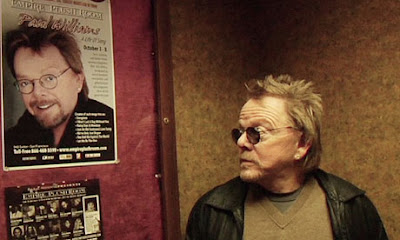
TIFF 2011 - Paul Williams Still Alive


Paul Williams Still Alive (2011) dir. Stephen Kessler
Starring: Paul Williams, Stephen Kessler, Johnny Carson, Karen Carpenter, Richard Carpenter, Barbara Streisand, Dick Clark, Kermit the Frog, Angie Dickinson, Peter Lawford, Telly Savalas, Tony Randal, Jack Klugman, Burt Reynolds, Ed McMahon

***½

By Greg Klymkiw

1975 was the best Christmas of my life. I was 15 years old and I saw Brian DePalma’s satirical rock musical Phantom of the Paradise at least 20 times over a period of two weeks. I saw it so many times afterwards, I still have no idea how many times I’ve seen it – not just on home video, but mostly – throughout the late 70s and early 80s on BIG SCREENS.

I wasn’t the only one.

At least not in my hometown – my glorious winter city.

The movie was a huge flop all over the world – save for two cities; Paris, France and Winnipeg, Manitoba, Canada.

In Winnipeg it played first-run, non-stop, six performances a day in a 1000-seat movie theatre for several months. Even when Phantom of the Paradise ended its first-run engagement, it was held-over, moved-over, re-released and revived in one-screen stand-alone suburban cinemas and drive-in movie theatres all over the city. It was played endlessly at Winnipeg repertory cinemas, the Winnipeg Art Gallery, the Manitoba Museum Auditorium, all the University film series and wherever, whenever movies were screened publicly on film. Hell, once I got a chance to program a repertory cinema all on my lonesome, I not only played the movie to packed houses, but watched it on occasion in the very cinema I was running.

Why?

It’s a great movie, to be sure. DePalma’s delicious trash sensibilities and style hit more than a few chords with me and others of my generation who grew up – in our very formative years – being raised on Universal Horror, Hammer Horror and Roger Corman horror pictures. The movie tapped into everything that made horror movies so special – working not just on the level of satirical humour, but like any great satire, it worked on the same levels as the thing that was being satirized. Even cooler was it’s story – a very special amalgam of Phantom of the Opera and Faust, but with rock music.

(Another reason was definitely Jessica Harper. What 15-year old boy DIDN’T have a crush on her as the sexy songstress Phoenix and what 15-year-old girl DIDN’T want to be Jessica Harper?)

Why Winnipeg?

Well, believe it or not, it was a pretty cool city in those days. On the surface, a sleepy Midwestern Canadian city in the middle of nowhere on the flat prairies, but with a heavy concentration of the coolest counter-culture in a four-to-five-block area downtown – GREAT record shops, comic book stores, pinball parlours, head shops, grind houses, greasy spoons, sleazy manor hotels (by law – men only in both the rooms and the bars) and this entire childhood playground of COOL included a bevy of porno cinemas and massage parlours. In spite of all the “nastier” elements, it was a surprisingly safe place for kids to go on their own by bus. (At the age of 12, I was watching Hammer horror, motorcycle movies and beach party picture triple bills in grindhouses stinking of urine, cum and vomit – staring wide-eyed at ratty old screens filled with large-breasted Swedish women baring their milky necks for Christopher Lee's fangs while toothless hookers gave gum jobs to old men all around me.)

I also think Winnipeg’s physical and cultural isolation played a big part in all this. Genre appreciation is big with kids everywhere, but in Winnipeg, there was NO American television and many of us didn’t get cable television in our homes until we were already in our mid-teens. Well, there was ONE American station – a border town on the USA side one-hour south – Pembina, North Dakota to be precise. A tiny independent television station called KCND-TV set up shop to beam its way to the greedy rabbit-ear antennae of Winnipeg boob tubes to cleanup on advertising dollars. With no network affiliations, the station ran old horror movies whenever it could – especially on Saturday nights after syndicated broadcasts of Perry Mason re-runs on every Winnipeg kid’s favourite show, Chiller Thriller.

Winnipeg was also a cool music town. Some were old enough to have seen Neil Young or The Guess Who – live: in Winnipeg, in their burgeoning years. Even if we didn't, we knew they were Winnipeggers. Neil went to Kelvin High School while Burton Cummings went to St. John's. Randy Bachmann's folks lived around the corner from my house. Burton Cummings Mom worked in the downtown Eaton's department store. All the school dances and sock hops and coffee houses featured live music from soon-to-be-rock-legends and all those others who should/could have been. (My Dad even gave Burton Cummings an early gig playing a riverboat cruise with the legendary Toilet Rockers Gary and Blair MacLean.)

The ‘Peg was – “shakin’ all over” big time.

Young 'Peggers were (at least I like to think) so genre and music savvy at just the right time in just the right place to turn Phantom of the Paradise into a huge cult film.

The prime ingredient of Phantom of the Paradise that connected with all of us was none other than the astounding music composed by Paul Williams.

His score was so popular in Winnipeg that the soundtrack album went Gold in Canada – solely from its sales in Winnipeg. (I still have MY mint condition sealed vinyl as well as an original well-worn copy - both of which I purchased at Gambles, the long-dead discount department store in Winnipeg's north end.)

Williams’s score was boss and spun at many high school dances and on local radio stations. Like DePalma’s cinematic approach to the material, Williams satirized so many beloved genres of rock music and, sounding like a skipped record here, great satire rides the delicate line between parody and the thing being satirized.

It’s a score that works on its own as truly great music.

Winnipeggers – initially through Phantom of the Paradise – became the most rapturous fans of Paul Williams. A few months after the movie opened and went through the rough, a hastily arranged series of sold out Paul Williams concerts played at Winnipeg’s majestic Centennial Concert Hall. Williams must have felt like Jesus Christ on the Second Coming – or, better than Jesus, The Beatles. That’s no exaggeration.
Phantom of the Paradise was our way into Paul Williams. He not only wrote the score that Winnipeggers drove to Gold Record status, but he starred in the movie as Swan, the slimy music promoter who signed his clients to deals with the Devil himself. And we loved him. He wasn’t so much the villain you loved to hate, but the villain you loved to love.

WHY Paul Williams became such an idol in Winnipeg is beautifully explained in Paul Williams Still Alive and it also happens to explain why director Kessler was a rapturous fan - so much so that he was driven to craft this extraordinary documentary.

And Paul Williams was ubiquitous. He was fucking everywhere. We now had cable TV all over the city and there he was – endless appearances on endless popular AMERICAN programs: Johnny Carson, Merv Griffin, Police Woman (getting blown away by Angie-hubba-hubba-Dickinson), The Odd Couple, Sonny and Cher – the list went on.

No luck finding Paul Williams on the CBC, though. Canada's national public broadcaster was too busy producing and programming shows featuring inbred East Coast fiddlers and, God Help Us! - Hymn Sing. (That said, we kind of loved those too. Winnipeg's water pipes were lined with asbestos for more years than most of us are too frightened to acknowledge.)

Some of us even went so far as to dig into his back catalogue of song writing and were stunned that he wrote hit music for Three Dog Night AND The Muppets. And while not all of us might have been as enamoured with his hits for The Carpenters, Helen Reddy and Barbara Streisand – we sure never begrudged him that – especially not when he began recording and performing his own renditions of the songs which, I can assure you we all preferred.

Paul Williams was so high on the radar.

Then he dropped off.

This is what precipitated and inspired the terrific new feature documentary by Stephen Kessler, Paul Williams Still Alive. Kessler, as he explains in his heart-felt narration had an equally rapturous adoration for Williams until eventually life moved on and Williams became a fleeting memory. A chance Internet surf brought Williams back onto his radar. He eagerly wanted to know more about his childhood idol. What happened? Where was he now? What was he up to?

What does a fan do in such circumstances? He makes a movie about it.

Kessler was in a good position to do so. He wasn’t a mere fan-boy with a camcorder – he was a bonafide filmmaker with a successful career as a TV commercial director, an Academy Award nominated short drama and two features which, for me, place him in the pantheon of one of the strangest filmmakers who should have been well on the road to some kind of greatness. I actually love Kessler’s first feature Vegas Vacation with Chevy Chase. What can I say? I loved all the Vacation pictures (except European Vacation) and the Vegas instalment especially made me soil myself with laughter. Then he made The Independent, one of the strangest features to NEVER find an audience, an oddball mockumentary about a Grade-Z moviemaker played by Jerry Stiller that, at the very least, should have become far better known than it is to geeks everywhere.

Great documentaries tell stories. Imparting information A&E Biography-style is mind-numbingly dull. That said, great subject matter (which Paul Williams assuredly is) ALSO do not make for great documentaries. Every year at the Hot Docs film festival in Toronto I hear people extolling the virtues of documentaries because of what they’re about. Sorry wags, pundits, critics and worst of all, commissioning editors – just because the subject matter is great doesn’t mean it’s great FILMMAKING.

Grab a fucking brain, people!

Kessler, however, is a real filmmaker and this documentary not only tells a great story but it is first-rate moviemaking!

First and foremost it does all the stuff it needs to do – we get all the biographical details past and present and we most certainly get a keen sense of WHO Paul Williams was and is. If that is all you want out of the picture, it is most certainly there and then some.

What makes it special is not just what it is, but what it became during the filmmaking process and most importantly because Kessler is a real filmmaker who ultimately knew he had to grab the opportunity – if not on a conscious level at first, certainly at a gut level due to the fact that he’s the real thing and not one of these lunkhead losers with either an agenda and/or lucks into a great subject, grabs a camera and stumbles into a movie that connects with people who should know better.

This is a movie about friendship. We see it happen before our very eyes. We see a director who clearly loves his subject matter. As he begins the film, Kessler THINKS he knows where to take it, but because of his innate cinematic sensibilities, his fumbles become a part of the story (like his interrupting Paul Williams while he tells a great personal story to cleave out his own agenda and, in the process, pissing his subject off). At one point, Kessler is forced to follow Williams around from a distance. It’s a hilarious scene and kind of touching because as the shaky-cam pathetically captures its subject we can hear Williams and those with him commenting on Kessler’s doggedness. Williams is both annoyed and strangely grudging about the fact that Kessler means business.

In a very cool moment, Williams finally just tells Kessler to be in the movie with him because it’s the only way he feels comfortable participating in the project. Kessler wisely jumps on this. He is, in his own delightful geek-fan-boy way, a pretty good subject himself.

So now, not only do we get a chance to follow Paul Williams on his current gigs, meet his friends, associates, family and others, but also we see a friendship developing between the two men. We learn – within the context of this developing friendship – about Williams struggle with drugs, alcohol and personal relations. This is what gives the movie that added frisson because it’s not just about the relationship between two artists, one exploring, the other revealing – but we see two men getting closer as the movie progresses and we eventually get a central subject who lowers his guard and responds – not as a subject, but a friend.

One could argue all documentary directors, and to a certain extent news reporters, operate. Well, they do. It takes a real filmmaker to propel it to cinema.

By the end of the film, one learns as much about Paul Williams as one does about Kessler and because of this we get a far more evocative portrait of one of the greatest songwriters of the 20th century.

And guess what? He’s still alive, he’s still performing and he’s still writing music.

Hell, we’re in a new century now. Who knows what will happen next? The movie gives a sense that whatever it is it’s just beginning, but that it’s all good.

It’s a great story!

Paul Williams Still Alive is being unveiled at the Toronto International Film Festival (TIFF 2011) and will no doubt be theatrically released very soon.

Sunday, 11 September 2011

TIFF 2011 - Into the Abyss

Into the Abyss (2011) dir. Werner Herzog
Documentary

***½

By Alan Bacchus

What a devastating film. Into the Abyss is an elegiac case against capital punishment told through the far reaching circle of violence surrounding a particularly grisly and inhuman act of murder.

Michael Perry is on death row for a 2001 triple murder, which saw a random woman, her son and a friend murdered over a car. As recounted by Herzog, it's that utterly frightening kind of murder, a random killing perpetrated by young men with no concept of moral right and wrong, and no concept of life or death.

Even though it's been almost 10 years and Perry is days away from death, he maintains his innocence. It’s the same with his accomplice, Jason Burkett, who received a life sentence. Both of these guys continue to blame each other and divest themselves of the greater responsibility. But Herzog is never interested in stirring up controversy or re-investigating the case. Instead, he focuses on the cloud of violence that feeds into his rather profound sketch of the cycle of violence that afflicts this rural southern community of Conroy, Texas.

Herzog's usually droll interview techniques pull out some remarkable confessions. The victim's sister, for instance, after recounting the painful details of the moment she heard about the murders, reveals an astounding history of family violence, which left half a dozen of her family members dead due to various causes in the last six years.

Each and every angle of this story opens up a complex web of violence that is never ending. The depth of the levels of tragedy is staggering. It’s a truly sad and frightening picture, but it’s important for Herzog and his audience to help comprehend how such heinous actions can be committed over and over again.

TIFF 2011 - Shame


Shame (2011) dir. Steve McQueen
Starring: Michael Fassbender, Carey Mulligan, James Badge Dale, Nicole Beharie

***

By Greg Klymkiw

There is absolutely no question that director Steve McQueen is the real thing. Filmmaking is hard-wired into his DNA. He not only composes dazzling imagery, he is ALWAYS thinking about how to tell his stories using every available visual flourish. It’s not overtly showy like, say, Darren Aronofsky, but equally vital and exciting. McQueen is one of a very few contemporary directors who propel the medium into dangerous, compelling territory.

Directors like McQueen are rare breeds in these dark days of feature film – they restore one’s faith in cinema’s power to be more than a rollercoaster ride. That said, he’s still as much a showman as any great filmmaker should be. He cascades and careens you along the track with gusto. McQueen, for all his panache, chooses to tell stories not aimed at 15-year-old boys. His two features, thus far, have delved into lives of experience and, thrust themselves unashamedly at audiences – wearing darkness on their respective sleeves as a badge of honour.

Shame is about sexual addiction. It follows its central character Brandon (Michael Fassbender), a successful, reasonably affluent single urban professional as he devotes virtually every single waking honour in the pursuit of sexual gratification. He’s killer sexy and malevolently charming and he can pretty much sleep with any woman he sets his sights on – and does.

Unlike the sexually addicted 70s female counterpart, Theresa Dunn (Diane Keaton) in the Richard Brooks film adaptation of Judith Rossner’s novel Looking For Mr. Goodbar, this is not a tale of sexual awakening transforming into sexual addiction. Right from the get-go in Shame we’re plunged solidly into the trajectory of someone who not only needs to constantly gratify himself with bar-pickups, but prostitutes, online peep shows, a gay bar blowjob and just plain unadulterated masturbation. (Sex, to coin Woody Allen, with someone he truly loves.) In fact, when Brandon finally meets a woman he genuinely likes (Nicole Beharie), he can’t get it up, tosses her from his pad and hires a whore to sodomize with gusto against the picture window frames of his high-rise.

Brandon’s only real friend is his boss Dave (James Badge Dale). The two of them prowl bars together, but Dave’s approach is far too obvious and in spite of tutelage from Brandon, he ignores it and follows his own less successful approach. In fact, the only time we really see Dave score is with Brandon’s messed-up, suicidal sister Sissy (Carey Mulligan) who has insinuated herself upon Brandon’s space in order to get her head together.

It’s the relationship between the siblings where McQueen’s film really soars. Screenwriter Abi Morgan in collaboration with McQueen makes a wise choice to not specifically reveal the obvious pain the brother and sister have both shared at some point in their past. The hurt is there in spades, but never literalized. There’s nothing more annoying when this sort of background is ladled out ad-nauseum in order to provide easy answers or justification for aberrant behaviour. In fact, it is when a story takes on the heavy weight of morality, it becomes an easy way out for the characters to become pawns for us to sit in judgement based upon the storyteller’s own jackhammer point of view. This moralistic approach works in Looking For Mr. Goodbar as it is set at time when “aberrant” behaviour was a response to post-war repression from a previous generation and ties in with the character’s lapsed Catholicism and the notion of being punished, or doing penance for one’s sins. In Goodbar, the punishment is rape and murder – the snuffing out of a life not-well-lived. (I doubt I shall ever forget the image of Diane Keaton’s life-drained face bathed in the light of a strobe that clicks incessantly and ever-slowly.)

If I have a quibble with Shame, it’s two-fold. Firstly, the movie races to a “shocking” climactic moment that is inevitable. This might be the point, but it’s not dramatically satisfying. Secondly, I wish McQueen had a more pronounced sense of black humour and just a wee-bit of a trash sensibility to juice his dark tale up even more. Ulrich Seidl, for example, with Dog Days, drags us through a veritable sewage treatment plant of aberrant behaviour, but it’s often extremely funny. Rather than temper the despair, the humour actually heightens it. As for a pulp sensibility, I don’t think I’m asking for a Paul Verhoeven Showgirls approach, but Shame is about sex – a bit of snigger-laden Brian DePalm-styled exploitation could have done wonders to goose things up a bit, but also give even more power to McQueen’s tale of addiction and obsession.

Shame is as dark as McQueen’s previous film, Hunger (which starred Fassbender as IRA prisoner Bobby Sands), but where that film was physically claustrophobic (while being wildly cinematic), here McQueen opens up his palette to a myriad of locations. The result? More claustrophobia. This is not a failing.

In fact, it’s kind of cool.

Shame is receiving its North American unveiling at the Toronto International Film Festival (TIFF 2011) and will be released in the USA by Fox Searchlight and in Canada by Alliance.

TIFF 2011 - The Artist

The Artist (2011) dir. Michel Hazanavicius
Starring: Jean Dujardin, Bérénice Bejo, Malcolm MacDowell, John Goodman and James Cromwell, Penelope Ann Miller

****

By Alan Bacchus

What a remarkably entertaining film. French director Michel Hazanavicius's love letter to the silent film era has the potential to be the movie event of the year. It’s a remarkably poignant, humorous and thoroughly entertaining black and white silent film presented in the style, tone and form of this era in Hollywood.

Like studio classics of yesteryear, such as All About Eve and A Star is Born, The Artist chronicles an epic journey of a Hollywood actor from the highs of stardom to the lows of obsolescence and back up again in miraculous fashion. Jean Dujardin plays George Valentin, a silent film star who is obsessed with his own celebrity. After the premiere of his latest swashbuckler starring himself and his frequent sidekick, his dog, he's on top of the world. He lives in a lavish mansion decorated which shameless portraits of himself and all other forms of self-congratulations. His marriage falls apart when he's caught in a photo being kissed by a fan, the coverage of which puts the young gal, Peppy Miller, in demand as well. Peppy's background extra parts in films slowly turn into bit player parts, then back-up dancer parts, then co-star roles until eventually she becomes lead actress.

Stardom arrives for her in 1929 with talking pictures, a time when many actors like Valentin suddenly were out of demand, unable to transition into the sound era. As Valentin hits rock bottom, Peppy's star hits its height. Despite the cavernous distance between their career paths, the spark of love remains, the blossoming of which might just help Valentin get back on his feet.

Oh yeah, all of this is silent. That means no dialogue. There's a wonderful music track though, which guides us through the emotional ebbs and flows. But it's the phenomenally expressive performances that take us back in time and make us care about what happens, beyond our admiration for the technical audacity. Dujardin's resemblance to Gene Kelly is so remarkable that the film deservedly belongs to sit beside Singing in the Rain, which also used the switch to the new sound era to frame its story. His comic timing and physicality hit every comic and tragic beat for maximum dramatic impact. Dujardin is so good, he's practically Rudolf Valentino raised from the dead.

The Artist reminds us of Todd Haynes' experimentation with a Douglas Sirk-style melodrama played absolutely straight. This film works as well as Haynes', if not better. It's so well executed, it has a chance to open up lay audiences to how and why silent films were so popular and remain as entertaining as anything made today.

The Artist might just be the front-runner for the audience award here at TIFF and perhaps film of the year. Oscar might even be calling.

Saturday, 10 September 2011

TIFF 2011 - Melancholia


Melancholia (2011) dir. Lars von Trier
Starring: Kirsten Dunst, Charlotte Gainsbourg, Kiefer Sutherland, Charlotte Rampling, John Hurt, Stellan Skarsgard, Udo Kier

****

By Greg Klymkiw

Every year I gain more life experience and creep closer to death. The thing I love almost as much as my family, my friends and my very mortality – movies – will occasionally yield the work of artists I enjoy growing with as I advance towards bodily putrification and (I hope) spiritual transcendence.

Lars von Trier has been, for me, one of those artists. My relationship with him has been complicated. His early work drove me up a wall, but with each new film, as he's grown, I have, in turn, found myself more and more drawn to his vision.

His new movie, Melancholia, is deeply moving.

It is a tale of two sisters – Justine (Kirsten Dunst) and Claire (Charlotte Gainsbourg) – privileged beyond belief, yet facing many of the same demons and challenges we all must confront.

Respectively, one is ethereal, the other pragmatic.

Together they face the ultimate destruction.

Last year, von Trier redefined the horror genre in his own image with the stunning Antichrist. With Melancholia, he seeks to do the same with science fiction.

In its own strange, gentle fashion the picture succeeds admirably.

Melancholia is, one one hand, an extension of Thomas Vinterberg’s handheld examination of a bitter family sniping in a country home in the 1998 masterpiece of the dogme movement The Celebration (AKA Festen).

Blend that, then, with a poetic Kubrick-like rumination on the universe (similar but less New-Agey than Terrence Malick’s The Tree of Life) and an end of the world saga (think a kinder, gentler, deeper Deep Impact) and you have a picture guaranteed its place in the pantheon of the greats.

From the beginning we’re plunged into a blend of surrealism, expressionism and German Romanticism as Richard Wagner’s soaring Tristan and Isolde Overture wells up on the soundtrack. Here we’re treated to a series of sumptuous, gorgeously composed shots of the universe, nature, the opulence of the sprawling estate the film is set on, weirdly beautiful images of Kirsten Dunst, Charlotte Gainsbourgh and a magnificent steed seemingly moving forward, which, as we keep fixing our gaze, move in reverse. Or are they going forward, too? This montage, layered with beauty and portent, climaxes with a shot of the most gorgeous image of mass destruction I’ve yet to witness in any film.

We are now ready for Melancholia in all its splendour.

The carefully composed images of this evocative preamble lead to his trademark dogme-styled shaky-cam as we follow the events of Justine’s wedding day.

And what a wedding!

Maestro von Trier plunges us into a dinner party that explodes with yummy vitriolic sniping amongst the assembled members of the family.

Justine and her handsome, but rather unimaginative, bland and ineffectual husband Michael (Alexander Skarsgard) arrive two hours late and are chastized by Charlotte.

Justine’s Dad (John Hurt) appears with two chubby ladies both named Betty and drunkenly engages in a childish game of openly filching the silverware and complaining repeatedly to a server about the lack of said silverware. Justine’s Mom (Charlotte Rampling), with nary a shred of humour, hurls out a variety of bile-tainted barbs against her silly ex-husband.

During his toast, Dad quips about Mom’s "domineering" qualities. Mom proceeds to disagree and then, in a most "domineering" fashion, steals the limelight, interrupting Dad’s speech and makes one of her own. It's quite the inspirational wedding speech as she declares, "I hate marriage" and adds her well-wishes to the happy couple with: "Enjoy it while it lasts!"

Udo Kier offers a whole whack of magnificent scene stealing knee-slappers as the pricey, pretentious wedding planner who prissily declares he's "at his wit's end". He later complains that Justine has ruined “his” wedding and announces he will never again look at her. In a hilarious running gag, dearest Udo holds up his hand and averts his eyes every single time Kirsten Dunst passes him.

Ah, family!

Ah, weddings!

Ah, Maestro von Trier!

He delivers the goods what might be one of the most memorable movie weddings - right up there with The Godfather and The Deer Hunter.

The lovely bride mopes about inconsolably. The best man (and her ad agency boss), played by Stellan Skarsgard with suitable slime-oozing, expects her to – at the wedding, no less! – come up with a tag line for their new and important client, Claire natters on to Justine about decorum while her husband John (a great Kiefer Sutherland - oddly sweet AND knobbish) keeps reminding everyone how much the wedding is costing him.

Pathetic hubby Michael proves he clearly doesn't have the stuff to enter this family. When it's time for him to make a speech, he burbles out a few uncomfortable sentiments that boil down to "I love you." Nice enough if you're marrying into a "normal" family, but clearly inadequate for this clan endowed with flamboyant dysfunction and, one hell of a lot of style. Even more pathetic is when Michael privately presents Justine with his wedding gift - a snapshot of an Empire Apple orchard that he just bought for their years of retirement.

I don't know about you, but if I were Kirsten Dunst at the peak of my youth and beauty, the last thing I'd want to be thinking about on my wedding night is sitting in the shade of an apple tree when I'm more wizened and rotting than an apple that's fallen to the ground and has festered in the sun.

Is then, any wonder that just before the cutting of the cake, Justine decides to take a bath.

Her loopy Mother decides to do the same.

Like daughter, like mother.

Furious, John grabs his Mother-in-law’s luggage and tosses the bags out front of the mansion. And just when it looks like all will settle down once husband and wife retreat to the nuptial boudoir, the new bride spurns hubby’s advances and rushes out onto the rolling lawns to look at the heavens and then have sex in a sand trap on the estate’s golf course with her boss’s nephew.

Does any of this sound familiar? It should. All families behave this way, don’t they?

The entire first part of the film is subtitled “Justine”. The second half is subtitled “Claire”. In the latter portion of the film we discover that a mysterious planet, long hidden behind the sun, is making its way in the direction of the Earth. Astronomy buff John insists this will be an interplanetary “fly-by”, but Claire's obsessive internet trolling suggests there’s a very distinct possibility that the humungous, blue, glowing orb will collide with the Earth at a rate of 60,000 miles per second.

It is here the film launches into a tremendously sad waiting game as the sisters keep trying to make (mostly on Claire’s part) the sort of sibling connections of love that have kept and indeed keep eluding them.

By fusing a darkly comic domestic drama with an impending apocalypse, von Trier has created a bold and original work. There’s obviously the possibility that the movie works on a purely metaphorical level since the planet threatening Earth is called Melancholia and as such, this all might actually be one grand statement that the sickness of depression is what threatens to swallow everyone and everything whole.

I prefer, however, to think the metaphor exists within the literal context of life on Earth being snuffed out. I suspect this is ultimately the case as Justine's character feels like a mouthpiece for von Trier himself - especially when she very matter-of-factly declares: “The Earth is evil. Life on Earth is evil.”

As evil as it may be for von Trier, this evil has also yielded his genius and, most importantly, gives us an exquisitely beautiful, haunting and thought-provoking work of art.

Maestro von Trier has also created images that shall never retreat from the memory banks of all who see his film. Who will ever forget, for example, Kirsten Dunst adorned in her wedding dress as she lay (Ophelia-like) in a stream or as she bathes naked upon a rock under the gorgeous blue glow from the rogue planet?

And for every image of heartbreaking beauty, von Trier counters it with something so indelibly appalling (the vicious beating Justine lays upon her horse Abraham) that he creates, once more, an important film exposing the dichotomous nature of life itself.

It’s a great picture! Any petulant nonsense von Trier spewed out at the notorious Cannes film festival press conference about being a Nazi should ultimately be swept under a rug.

There's no need to allow anything to impede your experience of seeing this movie.

Melancholia is having its North American premiere at the Toronto International Film Festival (TIFF 2011) and will be released theatrically in Canada via e-one Entertainment.

Friday, 9 September 2011

TIFF 2011 - The Hunter

The Hunter (2011) dir. Daniel Nettheim
Starring: Willem Dafoe, Sam Neill, Frances O'Connor

**

By Greg Klymkiw

This is definitely one of those movies you want to like while you're watching, but too much conspires against you to succumb to what are ultimately its meagre attributes.

Star Willem Dafoe is definitely one of the best things about the picture. He plays a master hunter who takes tough jobs nobody else will take and usually for nefarious types looking for endangered species. For a whole whack of dough he heads into the wilds of Tasmania. Thought to be extinct, reports have filtered through that one Tasmanian tiger might still exist. He's billeted with a family in the middle of nowhere and sets about his dirty task.

When Dafoe is alone in the wilderness stalking his prey, the movie soars. Alas, there are far too many annoying subplots that get in the way - culled no doubt from Julia Leigh's novel upon which the picture is based.

The family he stays with is, one supposes, the primary reason he begins to question the morality of what he's doing. Furthermore, there are the nasty locals who have a major hate-on for the environmentalists who are threatening their livelihood - the clear-cutting of forests and there are the mysterious figures who may or may not have their own malevolent motives to either kill him and/or kill the tiger - IF it even exists.

Director Daniel Nettheim and screenwriter Alice Addison never adequately juggle all these elements. In fact, the middle of the road plot elements are affixed to what could/should be more intimate. They feel by rote - almost unnecessary. The "villain" is obvious from the get-go and with all the time the movie takes to dangle a red herring - it's finally all for nought since we know who the scarlet fishy-wishy is anyway and that he's not the real problem.

As such, we always feel annoyed that these elements intrude upon our fascination with Willem Dafoe whilst he meticulously goes about his "craft" in the wilds.

I know it's not fair to wish the movie was something else, but it would truly have been a much more interesting movie if it had contented itself with being a man against the wilderness story so that Dafoe's turn could instead come from a respect he develops for the tiger - seeing in it something of himself and acting accordingly.

Alas, this is not the movie it is and as such, is worse for the wear because of it.

The Hunter is being unveiled at the Toronto International Film Festival (TIFF 2011) and will be released by e-one Entertainment.

TIFF 2011 - From the Sky Down

From the Sky Down (2011) dir. Davis Guggenheim
Documentary

**

By Alan Bacchus

For those expecting a traditional bio-doc of the history of U2, this is not the film for you. Instead, Davis Guggenheim (It Might Get Loud, An Inconvenient Truth) tries to crack the creative process of the band by looking back at the most pivotal moment of change in their career – the Achtung Baby album, which saw them launch into the superstrata of arena rock bands after the near collapse of the band. Unfortunately, despite this focus, the film is flat and uneven, often stretching out sequences to create a narrative where one isn't present.

The opening shot reminds us of his opening in An Inconvenient Truth and features the iconic figures of the band back-lit for maximum glorification in slo-motion preparing to go on stage for one of their shows. Where most music docs would go back to chart the progress of a band's career, Guggenheim takes us on a mostly non-linear journey, intercutting rehearsal sessions for the upcoming concert, which will have them playing a number of songs from the aforementioned Achtung Baby album.

We also see stock footage of the recording sessions from back in the day. The smattering of chronicle-type storytelling that creeps in is mostly inconsistent, falsely leading us in wrong directions. The brief introduction to the meeting of the bandmates in 1976 is fun and enlightens us on the pre-celebrity personalities of Bono and the gang as musicians-in-training. But then the timeline fast forwards to The Joshua Tree followed by a lengthy sequence about the Rattle and Hum movie.

Guggenheim makes it clear that 1988 represented the lowest point of the band, as the reaction from audiences to Rattle and Hum was that the film was one of egotistical self-important indulgence. But an inexplicable amount of time is spent on the effects of filming that movie, compared to a lack of coverage of their rise and early successes, including the War and The Unforgettable Fire albums.

This would be okay if Guggenheim actually broke into the creative process. While we do see and hear some raw experimentation during the creation of some of their classic tunes, there is still a shell of protection around the band that Guggenheim never cracks. It's a shame because I find documentaries about the creation of art immensely fascinating. Unfortunately, From the Sky Down never goes as deep as the Bruce Springsteen doc The Making of Darkness on the Edge of Town or the Metallica doc Some Kind of Monster. This is for U2 fans only.