Afghan President replaces spy chief with controversial figure
August 31, 2012 Leave a comment
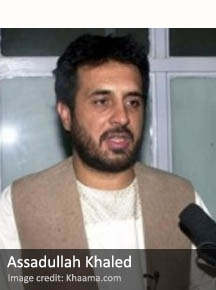
The office of the Afghan President announced yesterday the dismissal of the country’s intelligence chief and his replacement with a controversial official accused by Canadian and British sources of using torture to implement his policies. Speaking to reporters in Kabul, Afghan President Hamid Karzai thanked Rahmatullah Nabil, the outgoing Director of the National Directorate for Security (NDS), for his service, and said he would soon be appointed ambassador to a foreign country. According to Karzai’s representatives, the dismissal falls under the President’s decision that “no intelligence Director could serve longer than two years”. But observers point out that Nabil’s dismissal is part of a broader bureaucratic turf-war between the Office of the President and the Afghan Parliament, over the control of Afghan intelligence and military agencies. Earlier this month, the Parliament managed to oust two senior government officials, Minister of the Interior Besmillah Mohammadi and Minister of Defense Abdul Rahim Wardak. Both men are considered to be among President Karzai’s closest political allies. Nabil’s dismissal is therefore seen by many as an act of retribution by the President against defiant Afghan parliamentarians. What is arguably more interesting, however, is Karzai’s choice of the person to replace the fired Nabil, who is no other than Assadullah Khaled, currently Afghanistan’s Minister for Border and Tribal Affairs. According to sources in Kabul, Khaled’s appointment to lead the NDS is a matter of days, and that is appointment can already be considered as having been “confirmed”. This is despite the fact that Khaled is known for resorting to brutal torture and outright intimidation to get his way, especially during his time as Governor of the province of Kandahar. While there, he built a notorious reputation for abducting, torturing, and often killing, his personal and political opponents. Read more of this post







 intelNews.org
US spy agencies resisting White House plan to create master list of espionage threats
July 1, 2026 by Joseph Fitsanakis Leave a comment
Citing “people familiar with the matter”, the Times said on Monday that the effort to create a master list of foreign spies and Americans who are spying on behalf of foreign intelligence services is being led by the Office of the Director of National Intelligence (ODNI). The agency has asked the Federal Bureau of Investigation FBI to provide the names of all individuals who have been found to engage in espionage and are being watched by the Bureau. Likewise, the Central Intelligence Agency (CIA) has been asked to provide names of foreign espionage operatives that populate its lists of potential assets—foreign spies who may in time be turned by the CIA.
The master list of spies would potentially allow the entirety of the United States Intelligence Community (IC) to monitor the global activities of these espionage operatives and share information about them in real time. Additionally, the existence of such a list would in theory prevent operational duplication and help deconfliction within the IC when it comes to counterintelligence efforts. The central idea behind the master list dates to National Security Presidential Memorandum – 7, a directive issued by President Donald Trump in October 2017, during his first term in office.
However, senior counterintelligence officials are reportedly concerned that giving the ODNI full access to such a comprehensive master list of espionage threat actors could potentially compromise the integrity of counterintelligence operations. Information about espionage operatives and assets—both current and prospective—is usually protected behind several layers of classification and compartmentalization that shield it even within individual intelligence agencies. Additionally, some of the information relating to these individuals is acquired through counterintelligence activities authorized by the Foreign Intelligence Surveillance Court, and is thus subject to tight restrictions.
At a deeper level, the resistance of senior counterintelligence officials to surrender sensitive information about espionage to the ODNI reflects years of mutual suspicion and turf wars within the IC. According to the Times, these officials have yet to agree about how such a master list would be constructed, what information it would contain, who should have access to it, and how it should be maintained and updated.
► Author: Joseph Fitsanakis | Date: 1 July 2026 | Permalink
Filed under Expert news and commentary on intelligence, espionage, spies and spying Tagged with counterintelligence, espionage, intelligence sharing, News, ODNI, turf wars, United States