Opinion: Gofman’s Mossad appointment poses major challenges to Israeli Intelligence
June 19, 2026 8 Comments

The Appointment Process
On 4 December 2025, Netanyahu announced his decision to appoint Gofman as the next director of the Mossad. At that time, Gofman was serving as Netanyahu’s military secretary. Gofman was selected to replace outgoing Mossad Director David Barnea, whose five-year term was scheduled to end in June 2026.
The choice was notable because Gofman came from the Israel Defense Forces (IDF) rather than from within the Mossad itself. Reports indicate that Netanyahu bypassed Mossad’s existing leadership, including candidates reportedly favored by outgoing director David Barnea, in selecting Gofman.
Following the announcement, Israeli law required the Advisory Committee for Senior Appointments to review senior security appointments. Chaired by former Supreme Court President Asher Grunis, the committee examined Gofman’s candidacy and approved it in April 2026. After /approval, Netanyahu signed the appointment documents.
Nevertheless, the Committee’s approval did not resolve all disagreements. Gofman’s nomination soon became the subject of legal challenges before Israel’s High Court of Justice. Only after the Court rejected petitions seeking to block the appointment was Gofman able to assume office as Mossad Director in June 2026.
Why Netanyahu Chose Gofman
Supporters of Gofman’s appointment emphasized that, following the outbreak of the Israel-Gaza War in October 2023, Gofman brought extensive military experience and was closely involved in national security decision-making. Netanyahu’s office highlighted Gofman’s wartime operational leadership, his service as military secretary, and his coordination with intelligence agencies, including Mossad. Supporters also emphasized Gofman’s reputation as an unconventional and creative commander. During his military career, Gofman commanded armored formations, led operational units on Israel’s northern and southern fronts, and was wounded while fighting Hamas militants during the attacks of 7 October 2023. His supporters argued that the post-October 7 security environment required fresh thinking and leadership from outside traditional intelligence circles.
Lack of Intelligence Background
The most common criticism of Gofman’s appointment concerned his professional background. Unlike most recent Mossad directors, Gofman had spent his career in the military rather than in intelligence operations. Critics argued that running a global espionage organization requires skills and experience different from those needed to command military units. Several commentators noted that he would be among the few Mossad chiefs appointed without a substantial career in the intelligence service. Supporters countered that the Mossad has historically benefited from leaders with diverse backgrounds and that strategic leadership skills can be transferable across intelligence organizations. His critics emphasize his lack of experience, as four days after his appointment he fired the No. 2 at the Mossad, who had strong credentials and successful experience at the agency. It looks like more senior officials at Mossad may leave the agency, as they are not satisfied with Gofman’s nomination.
Allegations of Political Loyalty
Another major point of contention is Gofman’s close relationship with Netanyahu. As the prime minister’s military secretary, Gofman worked directly alongside Netanyahu and was regarded as a trusted adviser. Some observers stated that his appointment was based on personal loyalty rather than solely on professional considerations, and noted that Netanyahu bypassed candidates favored by the outgoing Mossad leadership.
Some warned that intelligence chiefs should provide independent assessments to political leaders, even when those assessments are unwelcome. Gofman’s nomination was included in a broader discussion about political influence over Israel’s security institutions.
The “Minor Informant” Affair and Legal Challenges
A further complication emerged during scrutiny of Gofman’s tenure as an IDF commander. Critics questioned his involvement in a controversial military operation that used a minor in a sensitive information campaign. This became a focal point during the vetting process and was cited by those challenging his appointment.
Although the advisory committee approved his nomination, the issue caused delays. It also provided grounds for legal petitions.
Gofman’s nomination faced formal legal challenges before the High Court of Justice in Israel. Petitioners argued that aspects of Goffman’s conduct and the appointment process raised concerns regarding standards expected of senior public officials. The litigation delayed the completion of the appointment process and prolonged public debate about the nomination. Ultimately, the High Court rejected the petitions and allowed the appointment to proceed.
Conclusion
Roman Gofman’s appointment as Mossad director illustrates the tensions that frequently accompany senior security appointments in Israel. On the one hand, supporters viewed him as a highly capable commander whose operational experience, creativity, and wartime service made him well-suited to lead the country’s foreign intelligence service. On the other hand, critics questioned his lack of intelligence experience, his close association with Prime Minister Netanyahu, and controversies stemming from allegations of lapses in decision-making and command disputes during his military career.
Despite these challenges, Gofman ultimately secured approval from both the Advisory Committee for Senior Appointments and the High Court of Justice, allowing him to assume leadership of the Mossad in June 2026. His performance as director will be subject to close scrutiny.
► Author: Avner Barnea* | Date: 19 June 2026 | Permalink
* Dr. Avner Barnea is a research fellow at the National Security Studies Center of the University of Haifa in Israel. He served as a senior officer in the Israel Security Agency (ISA). He is the author of We Never Expected That: A Comparative Study of Failures in National and Business Intelligence (Lexington Books, 2021).
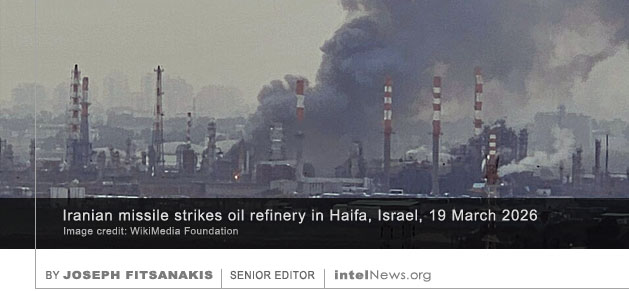 IRAN USED THE EIGHT-week ceasefire with the United States and Israel to replenish its military arsenal to at least three-quarters of its pre-war levels, according to Western intelligence estimates. Tehran has been able to incorporate substantial supplies of Russian-built weapons to its firepower and could easily reach 100 percent of its pre-war arsenal capacity soon, according to
  A CENTRAL INTELLIGENCE AGENCY officer allegedly created a fake government program in order to embezzle over $42 million in government funds, according to reports. The Federal Bureau of Investigation
  AUTHORITIES IN MEXICO AND the United States have rejected as “fictions” reports in American and Mexican media that Central Intelligence Agency (CIA) personnel are directly involved in assassination operations against the cartels. Notably
  The United States remains the most powerful military actor in the Western alliance system, but recent conflicts have exposed serious limits in American strategic capacity. For Europe, this lesson is no longer speculative. It must now shape the intelligence planning, defense preparedness, and executive decision-making across NATO’s European pillar. This requires a major shift in how European intelligence communities define their mission and operational priorities.
 objectives. This mirrors earlier patterns in Afghanistan, where overwhelming tactical superiority failed to produce durable political outcomes. It is worth noting that the Taliban did not require a navy and air force in order to defeat American forces; if that is so, then why would the Iranians require them? For intelligence professionals, the lesson is clear: battlefield metrics must be analytically divorced from strategic indicators. This means that intelligence support to policymakers must explicitly distinguish between momentary tactical achievements and their long-term strategic significance.
 THE AUSTRIAN DEFENSE INTELLIGENCE Agency, the Abwehramt (AbwA), as well as the Austrian Chief of the General Staff, have publicly warned in recent weeks that intelligence targeting of the Austrian military, the Bundesheer, has increased markedly. There has not only been a significant rise in unauthorized drone flights near and over military installations, but also instances of individuals gathering information through vehicular-based surveillance outside facilities. Traditional recruitment methods by foreign intelligence services have also been observed—although no public disclosure has emerged on how frequent these attempts are.
 caught sooner rather than later. This has led to them being labeled “Wegwerfagenten” (“throwaway agents”). While Ruckenstuhl does not address this aspect, he clearly states that the success of this method will likely lead other (antagonistic) intelligence services to adopt similar approaches, which he describes as a “non-professionalization.” As a result, he concludes that “this confronts Austrian intelligence services with challenges that will have to be met with equally adapted methods backed by an appropriate legal basis.” Ruckenstuhl finishes with what seems—in the eyes of this author—like a thinly veiled cautionary note to executive and legislative decision-makers when he notes that, noting: “At the same time, the penalties for foreign intelligence operations in Austria lag behind those in other European countries, thereby limiting their deterrent effect. Austria will therefore remain an important hub and safe haven for foreign intelligence services.”
 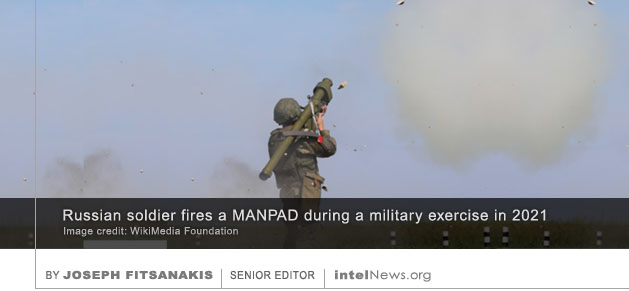 THERE IS MOUNTING EVIDENCE to suggest that the government of China may be supplying missiles to the Iranian armed forces, according to American intelligence agencies. Combined with
  ON SUNDAY MARCH 22, The New York Times
  Prime Minister Netanyahu’s circle. Analysis of The New York Times article suggests two possible sources for the leak: senior American officials, or members of the Israeli security establishment—which might reflect internal tensions.
 foreign residences, and few of them possess the linguistic or social capital to relocate abroad. Simply put, they have no viable exit. For them, defeat is not exile—it is annihilation. Under such conditions, the expectation is not capitulation, but resistance to the very end.
 A JOINT PROJECT BY the German newsmagazine
  A CLASSIFIED REPORT ISSUED two weeks ago by the United States National Intelligence Council (NIC) found that even a full-scale interstate war against Iran would be unlikely to dislodge or drastically alter the current regime. A summary of the report
  THE UNITED STATES CENTRAL Intelligence Agency (CIA) is arming and training ethnic separatists in northwestern Iran with the goal of fomenting an armed rebellion against Tehran in the coming weeks, according to reports. Several news outlets,
  THE ONGOING CONFRONTATION BETWEEN Iran and its adversaries unfolds against the backdrop of a regime that is strategically depleted yet politically combustible. Yet strategic exhaustion does not equate to imminent collapse. Indeed, the potential degradation of Iran’s coercive institutions raises a more complex question: what follows tactical success? Thus, while Iran appears weakened and vulnerable, the longer-term trajectory of the conflict remains uncertain, fraught with the risk of protracted instability and regional spillover at a level that could make Libya and Syria seem mild by comparison.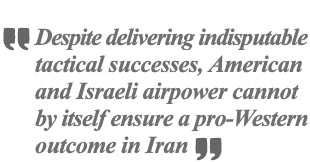
 A CIVILIAN AND A reservist with high-level classified access used Israel Defense Forces (IDF) confidential information to place bets on Polymarket regarding future Israeli military operations. Polymarket is among the most prominent platforms in the rapidly emerging cryptocurrency-based prediction market sector.






 intelNews.org
US spy agencies resisting White House plan to create master list of espionage threats
July 1, 2026 by Joseph Fitsanakis Leave a comment
Citing “people familiar with the matter”, the Times said on Monday that the effort to create a master list of foreign spies and Americans who are spying on behalf of foreign intelligence services is being led by the Office of the Director of National Intelligence (ODNI). The agency has asked the Federal Bureau of Investigation FBI to provide the names of all individuals who have been found to engage in espionage and are being watched by the Bureau. Likewise, the Central Intelligence Agency (CIA) has been asked to provide names of foreign espionage operatives that populate its lists of potential assets—foreign spies who may in time be turned by the CIA.
The master list of spies would potentially allow the entirety of the United States Intelligence Community (IC) to monitor the global activities of these espionage operatives and share information about them in real time. Additionally, the existence of such a list would in theory prevent operational duplication and help deconfliction within the IC when it comes to counterintelligence efforts. The central idea behind the master list dates to National Security Presidential Memorandum – 7, a directive issued by President Donald Trump in October 2017, during his first term in office.
However, senior counterintelligence officials are reportedly concerned that giving the ODNI full access to such a comprehensive master list of espionage threat actors could potentially compromise the integrity of counterintelligence operations. Information about espionage operatives and assets—both current and prospective—is usually protected behind several layers of classification and compartmentalization that shield it even within individual intelligence agencies. Additionally, some of the information relating to these individuals is acquired through counterintelligence activities authorized by the Foreign Intelligence Surveillance Court, and is thus subject to tight restrictions.
At a deeper level, the resistance of senior counterintelligence officials to surrender sensitive information about espionage to the ODNI reflects years of mutual suspicion and turf wars within the IC. According to the Times, these officials have yet to agree about how such a master list would be constructed, what information it would contain, who should have access to it, and how it should be maintained and updated.
► Author: Joseph Fitsanakis | Date: 1 July 2026 | Permalink
Filed under Expert news and commentary on intelligence, espionage, spies and spying Tagged with counterintelligence, espionage, intelligence sharing, News, ODNI, turf wars, United States