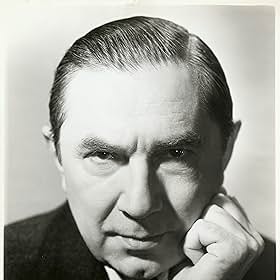
Dracula
- 1931
- Tous publics
- 1h 15m
IMDb RATING
7.3/10
64K
YOUR RATING
Transylvanian vampire Count Dracula bends a naive real estate agent to his will, then takes up residence at a London estate where he sleeps in his coffin by day and searches for potential vi... Read allTransylvanian vampire Count Dracula bends a naive real estate agent to his will, then takes up residence at a London estate where he sleeps in his coffin by day and searches for potential victims by night.Transylvanian vampire Count Dracula bends a naive real estate agent to his will, then takes up residence at a London estate where he sleeps in his coffin by day and searches for potential victims by night.
- Awards
- 5 wins & 3 nominations total
Charles K. Gerrard
- Martin
- (as Charles Gerrard)
Anna Bakacs
- Innkeeper's Daughter
- (uncredited)
Bunny Beatty
- Flower Girl
- (uncredited)
Nicholas Bela
- Coach Passenger
- (uncredited)
Daisy Belmore
- Coach Passenger
- (uncredited)
William A. Boardway
- Concertgoer Outside Theatre
- (uncredited)
Barbara Bozoky
- Innkeeper's Wife
- (uncredited)
Tod Browning
- Harbormaster
- (voice)
- (uncredited)
Moon Carroll
- Maid
- (uncredited)
Geraldine Dvorak
- Dracula's Wife
- (uncredited)
Featured reviews
Bela Lugosi forever captures the role of a certain undead Transylvanian count who takes a trip to London in the first legitimate version of the classic Bram Stoker novel. Despite many attempts by many talented film makers, I believe this version, directed by Tod Browning, remains the definitive take on the often-filmed novel. But why? Is it simply nostalgia? Granted, I do fondly remember staying up late as a child watching this film on Ghost Host theater and finding myself suitably frightened. However, if I were the same age today, would I find the film as effective? Would a steady diet of more modern and explicit horror films made me too jaded to enjoy the more subtle charms of this film? I hope not, but I could see how it might. The film is slow, and its slowness is further emphasized by the absence of an under score. It is stagey - being as it was more influenced by the stage play than the novel itself. Also, the story plays itself out too quickly. Van Helsing manages to figure everything out and dispatch the count in about two seconds. There simply isn't much suspense - and even less gore or violence. Yet it remains the champ. Why? The main reason is Lugosi himself. He gives the performance of a lifetime. He truly inhabits the role and is genuinely creepy. The rest of the cast, particularly Edward Van Sloan as Van Helsing and Dwight Frye as Renfield, support him admirably. However, when I watch the old Universal horror films nowadays, I find myself really enjoying the atmospheric sets and lighting. Yes, there is still much to love about Dracula today. (As long as you avoid the optional Philip Glass score on the DVD!)
"I bid you welcome," "I never drink wine," "Children of the night...what music they make," and of course "I am Dracula" are memorable lines that resonate throughout horror films, literature, art, etc... throughout the 20th century because of a landmark film made in 1931 starring Bela Lugosi and directed by Tom Browning. This film was the birth of the horror film as we know it. Its importance can not be underestimated. Dracula is a wonderful film for so many reasons, but first let's look at its many faults.
The film is by today standards very antiquated. It has almost no soundtrack, stage acting for the most part, limited special effects, and a slow pacing. It has long parts of little action and lots of chat. It shows little while leaving much to one's imagination(a plus for those like myself that are good at envisioning what is not shown). With all this not going for it, why is Dracula such a classic? Why is it considered to be such a great film and a great horror film?
The answer is that even with all these flaws (and bear in mind some of these flaws are not flaws for all) the film offers a rich story in an eerie, atmospheric way. Bela Lugosi was Dracula. He was the model for oh so many vampires to come. His gesturing, his deliberation in speech, his facial movements all created a vampire never to be forgotten. Despite Lugosi, however, is the real genius of the film....Tod Browning. Browning created a movie and a setting hitherto imagined and conjured on a screen. Browning was the man behind the camera that created the cob-webbed stairs of the Dracula castle and the squalid emptiness of the crypt. He created the ghoulish female vampires thirsting for blood. Dracula is not just a film to see, it is film history and should be viewed with that in mind and not put under a microscope of today's languishing tastes.
The film is by today standards very antiquated. It has almost no soundtrack, stage acting for the most part, limited special effects, and a slow pacing. It has long parts of little action and lots of chat. It shows little while leaving much to one's imagination(a plus for those like myself that are good at envisioning what is not shown). With all this not going for it, why is Dracula such a classic? Why is it considered to be such a great film and a great horror film?
The answer is that even with all these flaws (and bear in mind some of these flaws are not flaws for all) the film offers a rich story in an eerie, atmospheric way. Bela Lugosi was Dracula. He was the model for oh so many vampires to come. His gesturing, his deliberation in speech, his facial movements all created a vampire never to be forgotten. Despite Lugosi, however, is the real genius of the film....Tod Browning. Browning created a movie and a setting hitherto imagined and conjured on a screen. Browning was the man behind the camera that created the cob-webbed stairs of the Dracula castle and the squalid emptiness of the crypt. He created the ghoulish female vampires thirsting for blood. Dracula is not just a film to see, it is film history and should be viewed with that in mind and not put under a microscope of today's languishing tastes.
It's almost impossible not to love 'Dracula', a horror milestone that is the most important and influential vampire movie ever made. Bela Lugosi became a cinematic legend after this movie, and his portrayal of Dracula basically invented the modern vampire as we know it. Murnau's silent classic 'Nosferatu' was an obvious influence on Todd Browning, but while Browning was no James Whale (the innovative British director who made 'Frankenstein' for Universal a few months after this) he added a lot of his own style and ideas to the project, and Counts Orloff and Dracula are completely different kinds of creatures. Lugosi made his Count sophisticated, attractive and sexy, and this is what made this movie such a sensation at the time, and what helps make it still a wonderful viewing experience. Lugosi's performance is one of the greatest in horror history. Some of the other actors in the cast are a bit shaky but Edward Van Sloan as Van Hesling is excellent and Dwight Frye's Renfield (a different character from the book) is also memorable. Both actors would reappear in 'Frankenstein'. 'Dracula' is an important landmark horror movie, but even better, is still a fantastic viewing experience seventy years later. Don't just watch it because it's a classic, watch it because it's wonderful entertainment!
(62%) It is without doubt a classic owing to the fact that it is so well made, and so memorable. The sets are some of the greatest ever to appear on any film, and Lugosi is great as the awful head vamp. It's more than a little dated of course, so there's no blood/biting or on-screen death or murder, plus the acting is very theatrical at times, and there's quite a few long drawn-out sections of total silence that highlight exactly how old and pioneering it is.With that said, all horror fans should watch this at least once, as it does make a great late-night Halloween movie that will live on - just like the old count himself - forever.
This is an immensely enjoyable version of 'Dracula'. It is not perfect, as I will explain in a minute, but the acting is excellent throughout. Lugosi, who of course plays the eponymous count, gives a performance that is equally cultured and creepy (as far as I know he pioneered this interpretation), and I also liked Helen Chandler as Mina, David Manners as Harker and Dwight Frye as Renfield. The story has been changed from Bram Stoker's novel, in part quite substantially so, but the changes work well. My one quibble in this context is that the ending of the film is abrupt and unconvincing. In want to avoid spoilers, so I won't tell, but at 1 hour 15 minutes I would have thought that a few minutes more to wrap up things and provide an explanation for one person's miraculous recovery/survival should have been possible. The photography is excellent, especially the scenes in Transylvania. I was initially startled to find an opossum and an armadillo in the Carpathians, but after all, vampire bats are from South America, too, so why not? Speaking of bats: director Tod Browning judiciously decided not to use special effects (for example to show how Dracula transforms into diverse creepy animals), but he did include bats flapping about, and they don't work. They really don't. They look like Tutulla the bat in 'Kleiner König Kalle Wirsch' by the 'Augsburger Puppenkiste' theatre that was on the TV when I was a kid (check it here: https://www.imdb.com/title/tt0184133/?ref_=nv_sr_srsg_0; https://www.imdb.com/title/tt0184133/mediaviewer/rm2171260161/). Bad idea, but still: Great acting, the plot works mostly well, and very good photography with a few limitations. In sum: a very good film.
Did you know
- TriviaGenerally regarded as the film that kickstarted the horror genre in Hollywood.
- GoofsWhen Van Helsing is attempting to catch Dracula's lack of reflection in a mirror, there are visible chalk marks on the floor showing Bela Lugosi where to stand for the shot.
- Quotes
Count Dracula: This is very old wine. I hope you will like it.
Renfield: Aren't you drinking?
Count Dracula: I never drink... wine.
- Crazy creditsThe original title card has producer Carl Laemmle, Jr. identified as Presient (sic).
- Alternate versionsA version of the film played on the 10/24/15 airing of Svengoolie (1995) featured a soundtrack taken from the French language audio track on the Dracula Blu-ray.
- ConnectionsAlternate-language version of Dracula (1931)
- SoundtracksSwan Lake, Op.20
(1877) (uncredited)
Music by Pyotr Ilyich Tchaikovsky
Excerpt Played during the opening credits
Details
- Release date
- Country of origin
- Official site
- Languages
- Also known as
- Drácula
- Filming locations
- Stage 12, Universal Studios - 100 Universal City Plaza, Universal City, California, USA(Grand Staircase; interior of Dracula's castle; interior of Carfax Abbey, demolished in 2020)
- Production company
- See more company credits at IMDbPro
Box office
- Budget
- $355,000 (estimated)
- Gross worldwide
- $89,201
- Runtime
- 1h 15m(75 min)
- Aspect ratio
- 1.20 : 1(original release)
Contribute to this page
Suggest an edit or add missing content