The Classics Club 26 in 2026

The Classics Club recently posted a questionnaire for members to complete. It’s a shorter, updated version of an earlier questionnaire from 2014 with 50 questions – I participated in that one and found it interesting to go back and look at my answers! There are 26 questions in this version (because it’s 2026) and here they are:

1. When did you join The Classics Club? How many titles have you read for the club so far? Share a link to your latest classics club list.

I joined in 2012 when it was first formed. Since then I’ve read 150 books for the club (100 from my first list and 50 from my second). I recently posted a third list of 50, which you can see here.

2. What classic are you planning to read next? Why? Is there a book first published in 1926 that you plan to read this year?

I just posted my new Classics Club list last week and am still deciding which book I want to pick up first! I have one title published in 1926 on the list – Lolly Willowes by Sylvia Townsend Warner, which I’m definitely intending to read this year.

3. Best book you’ve read so far with the club? Why?

My re-reads of The Count of Monte Cristo, Rebecca and Wuthering Heights, but I already knew I was going to love those books before I read them again, so that’s probably not a fair answer! Considering only books I read for the first time as part of the club, my favourites include Scaramouche by Rafael Sabatini, A Tale of Two Cities by Charles Dickens and The Woodlanders by Thomas Hardy.

4. Classic author who has the most works on your club list? Or, classic author you’ve read the most works by?

I’ve restricted myself to no more than two books per author on my current club list. The classic author I’ve read the most works by overall, not just from my club lists, must definitely be Agatha Christie. Since I started blogging in 2009, I’ve read 64 of her books and still have more left to read!

5. If you could explore one author’s literary career from first publication to last — meaning you have never read this author and want to explore him or her by reading what s/he wrote in order of publication — who would you explore? Obviously this should be an author you haven’t yet read, since you can’t do this experiment on an author you’re already familiar with. Or, which author’s work you are familiar with might it have been fun to approach this way?

I can’t really think of an author I haven’t read who I would want to explore in that way, because if I haven’t tried them yet I don’t know if I would like them enough to read everything they wrote. However, I think it would have been interesting to work through Agatha Christie’s books from the beginning – I’ve just been reading them at random as I come across them. Daphne du Maurier is another author I wish I’d approached in that way; I’ve read all of her novels and short stories and have noticed differences between her earlier and later books so it would have made sense to read them in order.

6. First classic you ever read?

I see there’s a separate question coming up about children’s classics, so for this one I’ll stick to adult classics. I think the first one I read was probably Wuthering Heights when I was thirteen (at least the first one I read on my own rather than at school). At that age I loved the passion of the writing and the dark, Gothic atmosphere. I’m not sure how I would have felt if I’d read it for the first time as an adult.

7. Favorite children’s classic?

There are so many! My absolute favourite is probably Watership Down by Richard Adams – I still loved it when I re-read it as an adult – but others that I enjoyed as a child include The Secret Garden, The Hobbit, The Chronicles of Narnia, Black Beauty, Anne of Green Gables and anything by Enid Blyton!

8. Which classic is your most memorable classic to date? Why?

Memorable in a good or a bad way? I don’t think I’ll ever forget the experience of reading Samuel Richardson’s Clarissa as part of a year-long readalong in 2012 – all 1,536 pages of it! It wasn’t actually the length that was the problem – it was the repetitiveness and the way the plot just seemed to go round in circles for hundreds of pages at a time without moving forward. The good parts were good enough to make it worth persevering.

9. Least favorite classic? Why?

I don’t think I could single out a ‘least favourite’. There are some very popular classics that I just didn’t get on with at all, such as To the Lighthouse by Virginia Woolf, A Farewell to Arms by Ernest Hemingway and Tender is the Night by F. Scott Fitzgerald. I also hated John Steinbeck’s The Pearl when we read it at school, but I suspect I was probably just too young to appreciate it.

10. Favourite movie or TV adaptation of a classic?

My favourite is probably Alfred Hitchcock’s Rebecca starring Joan Fontaine and Laurence Olivier. I also love The Lady Vanishes, Hitchcock’s adaptation of Ethel Lina White’s The Wheel Spins – one of the few cases where I’ve enjoyed the film much more than the book!

11. Favorite biography about a classic author you’ve read, or the biography on a classic author you most want to read, if any?

I haven’t read a lot of biographies of classic authors, but I did like Daphne du Maurier and Her Sisters by Jane Dunn; Daphne is a favourite author of mine, but it was also interesting to learn more about her sisters Angela, also an author, and Jeanne, an artist. Another biography I enjoyed is The Real Enid Blyton by Nadia Cohen, a fascinating exploration of Blyton’s life and work.

12. Favourite classic author in translation? Do you have a favorite classics translator? What do you look for in a classic translation?

As The Count of Monte Cristo is my all-time favourite classic and I also loved The Black Tulip and The Three Musketeers and its sequels, I’ll say Alexandre Dumas as my answer to the first part of the question. I don’t think I have a favourite classics translator, though.

13. Do you have a favorite classic poet/poem, playwright/play? Why do you love it?

I don’t read a lot of either poetry or plays (the title of my blog is a clue) but I do enjoy both from time to time. I loved The Importance of Being Earnest by Oscar Wilde, so I included another of his plays on my current club list, and I can also highly recommend Edmond Rostand’s Cyrano de Bergerac. Both were very clever and witty in different ways!

14. Which classic character most reminds you of yourself? Which classic character do you most wish you could be like?

I never really think about whether characters remind me of myself, but maybe someone like Elinor Dashwood from Sense and Sensibility – the quiet, sensible sister rather than the impulsive, passionate one.

15. What is the oldest classic you have read or plan to read? Why?

The oldest I’ve read is definitely The Epic of Gilgamesh which was composed 4000 years ago in ancient Mesopotamia. The second oldest would be Homer’s Odyssey, dating from the 8th or 7th century BC. I enjoyed both!

16. If a sudden announcement was made that 500 more pages had been discovered after the original “THE END” on a classic title you read and loved, which title would you be happiest to see continued?

The Mystery of Edwin Drood by Charles Dickens! I knew before I started reading it that Dickens never completed it, but it was still frustrating not knowing how it ends. I don’t think it would need another 500 pages, though – just enough to finish the story!

17. Favorite edition (or series) of a classic you own, or wished you owned, if any?

My lovely hardback copy of A Christmas Carol, which I’ve had since my childhood, with beautiful colour illustrations and black and white line drawings by Arthur Rackham.

18. Do you reread classics? Why, or why not?

Yes, I do, but not as much as I used to before I started blogging. I should really do more of it, because the handful of classics that I have reread over the last few years were just as great on a second (or subsequent) read as they were the first time. I also find that I get different things out of books when reading them at different stages of my life.

19. Has there been a classic title you simply could not finish?

Not really. There are some that I started to read then got distracted by other books, but that doesn’t mean I wasn’t enjoying them and don’t want to try again. Dickens’ The Old Curiosity Shop is one of those, which is why I’ve put it on my current Classics Club list. There are also titles that I abandoned and dismissed as not for me, but later had another attempt and made it to the end – for example, Middlemarch and Crime and Punishment.

20. Has there been a classic title you expected to dislike and ended up loving?

I was convinced I wouldn’t like East of Eden by John Steinbeck, after my experience at school with The Pearl, so I was surprised by how much I loved it. When I looked back at my answers to the 2014 version of this questionnaire I noticed I had named East of Eden as the book on my list that I was most avoiding. I’m glad I did eventually read it!

21. List five fellow Classic Clubbers whose blogs you frequent. What makes you love their blogs?

I follow a lot of great bloggers who are part of the Classics Club and don’t like leaving people out, but the first five that come to mind are FictionFan, What? Me Read?, BooksPlease, Just Reading a Book and What Cathy Read Next. It made me sad to see my original answer to this question as three of the bloggers I listed in 2014 are no longer blogging.

22. If you’ve ever participated in a readalong on a classic, tell us about the experience? If you’ve participated in more than one, what’s the very best experience? the best title you’ve completed? a fond memory? a good friend made?

I already mentioned the experience of taking part in a Clarissa readalong in my answer to question 8. I’ve participated in several others during my time as a blogger, including a War and Peace readalong which was supposed to take a full year, but I decided halfway through that the schedule wasn’t working for me and finished it at my own pace. I also joined in with a group read of The Moorland Cottage by Elizabeth Gaskell, which I enjoyed because the book was only eleven chapters long and the host posted helpful annotated summaries of each chapter with pictures and facts (sadly her blog has since been deleted).

23. If you could appeal for a readalong with others for any classic title, which title would you name? Why?

I’m not sure about this one. I would consider joining a readalong of any of the books on my current list or any other book that sounds interesting, but I don’t have any specific titles to suggest.

24. What are you favourite bits about being a part of The Classics Club?

The Classics Spins, which are always fun to join in with and help motivate me to read the books on my list. Otherwise, I like the sense of community that comes with being part of a group of people who all enjoy reading classics.

25. What would you like to see more of (or less of) on The Classics Club?

Maybe more features like this questionnaire that encourage members to interact and get to know each other. I used to enjoy the monthly memes, but I appreciate that things like that create more work for the moderators, who are doing a great job as it is!

26. Question you wish was on this questionnaire? (Ask and answer it!)

Name five classics you loved and haven’t mentioned yet in this questionnaire: The Woman in White by Wilkie Collins, Persuasion by Jane Austen, Alone in Berlin by Hans Fallada, The Private Memoirs and Confessions of a Justified Sinner by James Hogg and The Tenant of Wildfell Hall by Anne Brontë.

~

I hope you enjoyed reading my answers to these questions!
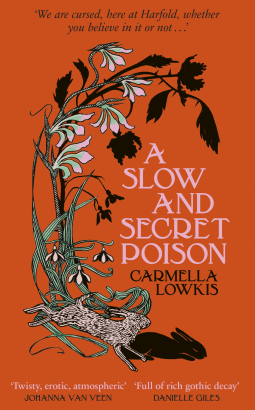
A Slow and Secret Poison by Carmella Lowkis

It’s 1925 and Vee Morgan is on her way to Harfold Manor in Wiltshire to take up the position of gardener. She knows she’s lucky to get the job; although she loves being outdoors and was a Land Girl on a farm during the war, she has no horticultural qualifications and no references, not to mention that women gardeners are not at all common and not exactly in high demand. After arriving at her new workplace, however, she learns that none of the local men wanted the job and are reluctant to come anywhere near Harfold Manor and its strange inhabitant, Lady Arabella Lascy.

Arabella, alone in the world apart from her estate manager and cousin, Maurice Reacher, believes she and her family have been cursed. First her parents died, then all four of her brothers, each within three years of the one before, leaving only Arabella to inherit the family estate. Now another three years have passed and Arabella is convinced that she will be the next victim. But are the Lascys really under a curse or is there a more human explanation for what has been happening?

A Slow and Secret Poison is the second novel by Carmella Lowkis; I had mixed feelings about her first, Spitting Gold, a retelling of a Charles Perrault fairy tale, but I found this one more enjoyable. Vee interested me from the beginning – she’s a very flawed heroine, as we discover as the story unfolds and secrets from her past come to light – but I liked her as a character and I thought her practical, no-nonsense personality provided a good counterpart to the reclusive, fanciful Arabella. I was intrigued to learn from the author’s note at the end of the book that the character of Arabella was inspired by Stephen Tennant, one of the Bright Young Things of the 1920s.

The book has a lot of Gothic elements: the crumbling old house and its eccentric owner, the supposed Lascy family curse, sightings of a mythical hare and, of course, the poisonings hinted at in the title. I was reminded very much of Laura Purcell’s books, although this one isn’t as dark as those. I did find some of the secrets and twists quite easy to predict and some parts of the plot felt a little bit implausible (particularly regarding property ownership, which becomes an important part of the story later on), but otherwise it was a quick, entertaining read.

Thanks to Doubleday for providing a copy of this book for review via NetGalley.

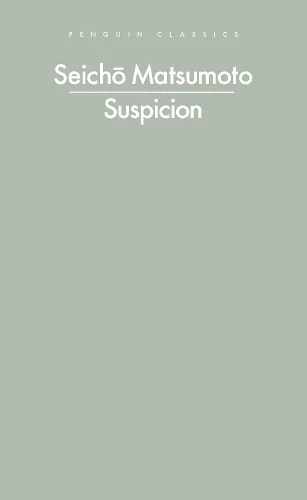
Suspicion by Seichō Matsumoto

Translated by Jesse Kirkwood

For this year’s Japanese Literature Challenge (hosted by Meredith at Dolce Bellezza), I wanted to read something by an author who was new to me and decided on Suspicion by Seichō Matsumoto. It turned out to be an excellent choice!

Suspicion was originally published in Japanese in 1982 and is now available from Penguin Classics in a new English translation. It’s a short novella at 112 pages, but it’s satisfying and I didn’t feel that it needed to be any longer. Loosely based on a true crime, the plot revolves around the trial of Kumako Onizuka, a woman accused of murdering her husband. She had only been married to Shirakawa for a few months when their car plunged into the sea one rainy July evening. Onizuka, who later claimed to have been in the passenger seat, managed to escape, but Shirakawa was drowned.

The story is told mainly from the perspective of the journalist Akitani, who is covering the case for the Hokuriku Daily. Akitani believes Onizuka is guilty and has written several pieces for the newspaper making his opinion very clear. Onizuka has a shady background, having already committed two or three other crimes, and the fact that she took out a large insurance policy on her husband’s life just before his death makes the whole thing look even more suspicious. Akitani is convinced that it was Onizuka and not Shirakawa who drove the car into the sea and in his newspaper articles he draws attention to her past, her character and even her name, Oni, which is associated with demons in Japanese.

However, all the evidence against Onizuka is purely circumstantial and when her original lawyer steps down due to illness, the court appoints a new one, Takukichi Sahara, who believes he’ll be able to prove her innocence. Akitani is horrified – Onizuka has links with the Yakuza (Japan’s version of the Mafia) and if she’s freed she’s sure to want revenge on everyone who has spoken out against her.

This is such a fascinating book. On one level, it works as a detective novel, with Sahara doing the ‘detecting’, looking through the evidence, considering the witness statements and trying to determine what really happened that evening in July. Then there are all the other layers: the role of the media in influencing public opinion; the way preconceived ideas can lead us to make unfair assumptions; and how personal bias can make two people interpret a situation in completely different ways. The characters don’t have much depth – and we never even really ‘meet’ Onizuka, with our knowledge of her coming mainly from other characters’ conversations – but that didn’t bother me too much in such a short book with so many other things to interest me. There’s also a twist at the end, which leaves us to decide for ourselves what probably happened next!

I would like to read more of Matsumoto’s books. It seems that Tokyo Express is considered his masterpiece, but it’s described as a mystery revolving around train timetables and alibis and I’m not sure how I would get on with that. Should I try it or can anyone recommend another one?

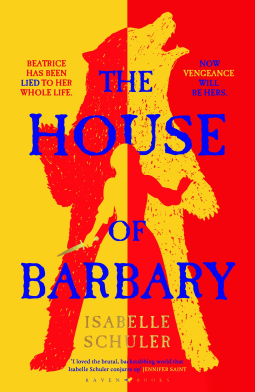
The House of Barbary by Isabelle Schuler

A few years ago I read Isabelle Schuler’s debut novel, Lady MacBethad, which is set in 11th century Scotland and imagines the early life of Gruoch, the ‘real’ Lady Macbeth. Her second book, The House of Barbary, is set in a very different time and place – 17th century Switzerland – and this time it’s inspired by the Bluebeard fairy tale.

Our heroine is Beatrice Barbary, the only child of Jakob Barbary, one of the two mayors of Bern. Beatrice has never known her mother, who died when she was a baby, and has had an unusual upbringing, with her father encouraging her interest in natural science, keeping her away from other children and, now that she’s a young woman, preventing her from marrying. As a result, the people of Bern think she is strange and she has no friends her own age. When Jakob is killed, brutally murdered in his own home, Beatrice is determined to find out who is responsible and why, but as she begins to investigate she becomes aware of just how vulnerable and alone she is. The only person who may be able to help is Johann Schorr, an artist who lived with the Barbary family during Beatrice’s childhood, working on a portrait of Jakob; the problem is, for some reason, Beatrice has no memory of him at all.

Beatrice’s narrative alternates with Johann’s story, which is set more than a decade earlier during his time in the Barbary household. As a Catholic in a largely Protestant city, Johann is grateful for the support and patronage of Jakob Barbary and begins to consider him a friend. However, their friendship is tested when Johann makes a gruesome discovery in Jakob’s cellar and he must decide whether he can continue working for the man or whether he should get as far away as possible, even if it means sacrificing his career and leaving Beatrice, an innocent young child, in danger.

If you’re familiar with the Bluebeard folktale, you can probably guess what’s hidden in the cellar – and if you’re not, I won’t spoil things by telling you. It’s only a loose retelling of Bluebeard anyway and whether or not you know other versions of the story should make no difference to your enjoyment of this one. And did I enjoy it? Yes, I did, for the most part – but I felt that some of the developments in the second half of the book let it down. Beatrice, who has set out to investigate and avenge her father’s death, ends up doing things that I found disproportionate and difficult to justify, so that I lost most of the sympathy I’d had for her earlier on. The ending was not what I’d expected or hoped for either.

I’ve never been to Bern and loved the descriptions of the city, as it was in the 1650s, with its cobbled streets, sandstone arcades and famous bear pits. I’ve read very few books set in Switzerland and even less about 17th century Switzerland, so everything was new to me; it was interesting to read about the political system in place at that time, with Bern having two mayors at once – they would alternate each year, one ‘acting’ and one ‘sitting’ – and four powerful officials known as Venners, who would each oversee one district of the city. This political system is important to the story, with Beatrice’s father being one of the two mayors and all four Venners being part of his inner circle.

Schuler’s historical note at the end of the book was fascinating; I discovered that, although Beatrice is a fictional character, she’s based on the real life German entomologist and naturalist Maria Sibylla Merian, a woman I previously knew nothing about. It’s always good to learn something new!

I think the only other Bluebeard retellings I’ve read are two short stories: Angela Carter’s The Bloody Chamber and Nalo Hopkinson’s The Glass Bottle Trick. If you can recommend anything else, please let me know.

Thanks to Raven Books for providing a copy of this book for review via NetGalley.

Classics Club List #3

classicsclub I recently completed my second Classics Club list (which I wrote about last week) and am now ready to post a new one. For any of you who are not familiar with the Classics Club, the idea is to make a list of at least fifty classics and read them within a five year time period. In reality, both my first and second lists took longer than that, but five years is the aim!

As I’ve already included a lot of the better known classics on my first two lists, I’ve had to search slightly harder for books to put on this one and a lot of these are lesser known titles by classic authors. You may be questioning whether some of them are really classics, but the rules of the Classics Club allow us to define classics in any way we choose, as long as the book is at least twenty-five years old. I’ve mostly avoided re-reads apart from the two Shakespeare plays – I chose those two because I have some modern retellings on the TBR and thought it would be interesting to re-read the original play first.

Here’s my list of 50 books with an estimated finish date of 16th January 2031:

1. Dandelion Wine by Ray Bradbury
2. The Baron in the Trees by Italo Calvino
3. Shadows on the Rock by Willa Cather
4. The Evil Genius by Wilkie Collins
5. Little Dorrit by Charles Dickens
6. The Old Curiosity Shop by Charles Dickens
7. The Women’s War by Alexandre Dumas
8. Iron Gustav by Hans Fallada
9. The Dancing Bear by Frances Faviell
10. A Harp in Lowndes Square by Rachel Ferguson
11. Mary Barton by Elizabeth Gaskell
12. Brighton Rock by Graham Greene
13. The Hand of Ethelberta by Thomas Hardy
14. The Go-Between by L.P. Hartley
15. The Scarlet Letter by Nathaniel Hawthorne
16. The Talented Mr Ripley by Patricia Highsmith
17. The Bamboo Blonde by Dorothy B. Hughes
18. The Sundial by Shirley Jackson
19. Day of the Arrow by Philip Loraine
20. The Moon and Sixpence by W Somerset Maugham
21. The Blue Castle by LM Montgomery
22. The Black Prince by Iris Murdoch
23. Lord Tony’s Wife by Baroness Orczy
24. Down and Out in Paris and London by George Orwell
25. No Fond Return of Love by Barbara Pym
26. The Persian Boy by Mary Renault
27. The Circular Staircase by Mary Roberts Rinehart
28. The Marquis of Carabas by Rafael Sabatini
29. The Hearth and Eagle by Anya Seton
30. Othello by William Shakespeare
31. King Lear by William Shakespeare
32. The Fortnight in September by R.C. Sherriff
33. A Town Like Alice by Nevil Shute
34. The Prime of Miss Jean Brodie by Muriel Spark
35. The Grapes of Wrath by John Steinbeck
36. Travels with a Donkey in the Cevennes by Robert Louis Stevenson
37. My Brother Michael by Mary Stewart
38. Judith by Noel Streatfeild
39. The Lantern Bearers by Rosemary Sutcliff
40. Mrs Palfrey at the Claremont by Elizabeth Taylor
41. Brat Farrar by Josephine Tey
42. The Duke’s Children by Anthony Trollope
43. The Way We Live Now by Anthony Trollope
44. Lolly Willowes by Sylvia Townsend Warner
45. The War of the Worlds by HG Wells
46. The Rose and the Yew Tree by Mary Westmacott
47. A Woman of No Importance by Oscar Wilde
48. The Kraken Wakes by John Wyndham
49. Trouble With Lichen by John Wyndham
50. La Curée by Émile Zola

I’m looking forward to getting started with this, but I do have a question for those of you who are Classics Club members. I’m sure I’ll want to read other classics that I haven’t included here, so what do you usually do in that situation? Do you replace one of the titles on your list or do you just read it in addition to the listed titles? With my previous lists, I’ve swapped out a few books but have mainly just read lots of extra ones that weren’t listed. How much swapping do the rest of you tend to do? Maybe that’s why I never seem to finish within five years!

Have you read any of these books? What should I read first?

Penitence by Kristin Koval

Penitence is a beautifully written novel, tackling one of the darkest subjects imaginable: the murder of a teenage boy by his own younger sister.

It happens in the small town of Lodgepole, Colorado in 2016 and the murderer is thirteen-year-old Nora Sheehan, who calls the police herself to confess that she has just shot and killed her brother Nico. Before the incident, Nora had seemed depressed and withdrawn, which may or may not have been related to Nico, who was less than a year older, being diagnosed with Huntington’s disease. Huntington’s is a degenerative condition with no cure, so it’s possible that Nora may have thought she was helping her brother avoid a terrible fate – but is this true or is there another reason for what she did?

Martine Dumont, a seventy-two-year-old lawyer, is looking forward to her retirement when Nora’s parents, David and Angie Sheehan, ask her to take on one last case and defend their daughter. Martine accepts, but knows she is out of her depth and contacts her estranged son, Julian, whose speciality is criminal law. Julian has lived in New York for many years, but Angie was once his girlfriend, which makes the situation awkward. Although he agrees to return to Lodgepole and help with Nora’s case, being around Angie again brings back difficult memories for both of them.

When I first started to read, I was expecting this to be a crime novel, but that’s not really how I would describe it. The murder of Nico Sheehan is actually a relatively small part of the story; there’s never any doubt that Nora did it deliberately and it’s quite obvious why she did it, so there’s no mystery involved. We do get a lot of information on the laws surrounding the prosecution of child murderers, how they can sometimes be tried as adults rather than juveniles, and the sentences they can expect. We’re also given some insights into what life is like for Nora in the juvenile detention facility she is sent to while she’s awaiting trial.

The main focus of the novel, though, is on the topic of forgiveness and the various questions that arise from this. Why do we feel we have to assign blame when something tragic happens? How can we move on from this and find forgiveness for ourselves and others? How much penitence is enough? These things are explored not just through the story of Nico’s murder – in fact, I felt that relatively little time was spent on showing how David and Angie truly felt about one of their children killing the other – but also on the relationship between Julian and Angie and how it was affected by another tragedy decades earlier. This second storyline plays out in another timeline set in the 1990s/early 2000s and alternates with the Nora/Nico thread. However, I thought too many pages were devoted to this backstory and it made the whole book feel longer and slower than it really needed to be.

I did love the portrayal of Lodgepole, a small Colorado ski resort, and the way life there differed from Julian’s (and for a while, Angie’s) life in New York. An interesting setting, then, and an interesting subject – if only it had been more tightly plotted, it would have been an excellent book. I did like it, though, and found it quite thought-provoking. It’s Kristin Koval’s debut novel and I’ll be happy to read more.

Thanks to Simon & Schuster UK for providing a copy of this book for review via NetGalley.

Top Ten Tuesday: More books to look out for in the first half of 2026

This week’s topic for Top Ten Tuesday (hosted by That Artsy Reader Girl) is: “Most Anticipated Books Releasing in the First Half of 2026”.

I’ve already listed some of my most anticipated historical fiction releases in a recent post, which you can see here. I’m listing below another ten books that I either found out about after putting that post together or that fall into other genres – so these are not necessarily my *most* anticipated books, but are still some that I would like to read.

~

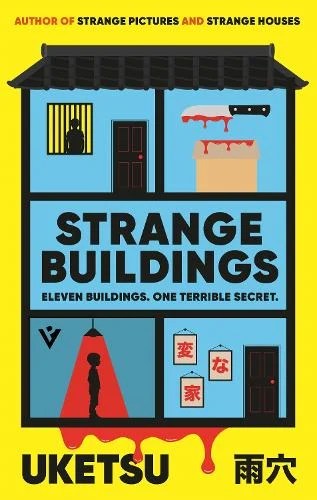
1. Strange Buildings by Uketsu, tr. Jim Rion (26th February 2026) – I loved Strange Pictures and Strange Houses, so I can’t wait for this one. It seems it will be in a similar format, with clues and secrets hidden within pictures and floorplans.

2. The Astral Library by Kate Quinn (26th February 2026) – This fantasy novel sounds very different from the other Kate Quinn books I’ve read, which were historical fiction, but I’m still interested in trying it.

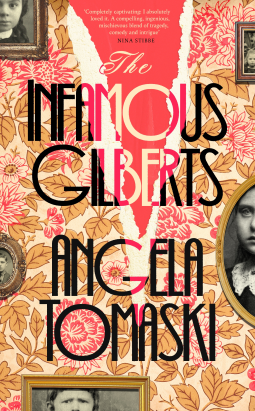
3. The Infamous Gilberts by Angela Tomaski (5th March 2026) – This is a debut novel, so I’m not sure what to expect but it’s a 20th century family saga and sounds appealing.

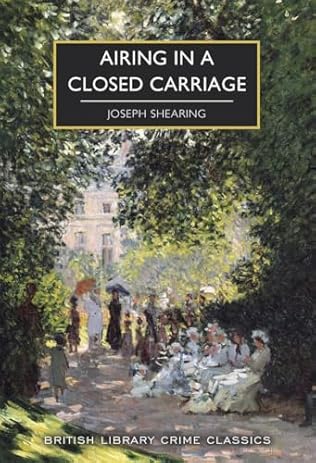
4. Airing in a Closed Carriage by Joseph Shearing (10th March 2026) – I noticed that this is one of the upcoming titles from British Library Crime Classics in the first half of the year. I’m particularly intrigued by this one as I’ve read two other books by Joseph Shearing (a pseudonym of Marjorie Bowen).

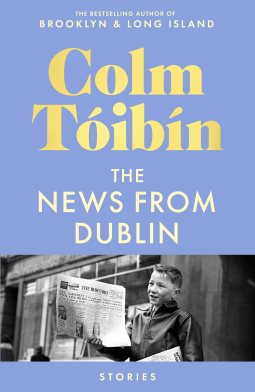
5. The News from Dublin by Colm Tóibín (26th March 2026) – A collection of short stories about people living far from home. I’ve had mixed experiences with Tóibín’s books so I’m hoping this will be a good one!

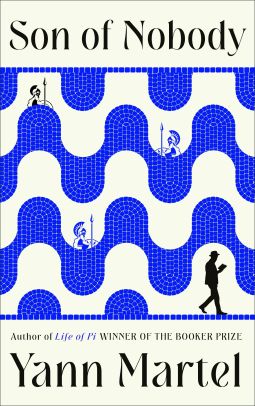
6. Son of Nobody by Yann Martel (2nd April 2026) – I haven’t read anything by Martel apart from Life of Pi, which I liked, and this new one about the Trojan War sounds interesting.

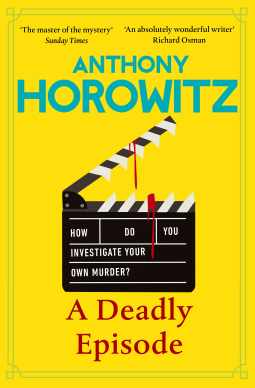
7. A Deadly Episode by Anthony Horowitz (23rd April 2026) – This will be the sixth book in the Hawthorne and Horowitz mystery series. I’ve enjoyed all five of the others so I’m looking forward to this one.

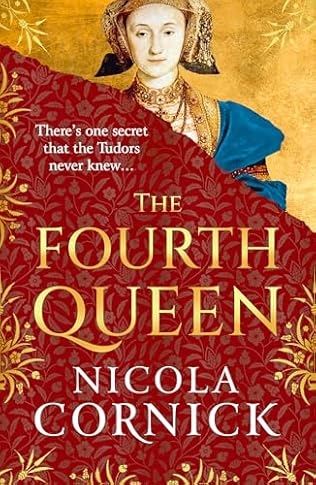
8. The Fourth Queen by Nicola Cornick (9th May 2026) – I can’t find any information on the plot of this book yet, but Nicola Cornick is an author I usually enjoy reading. Most of her novels are historical fiction with dual timelines and a touch of the supernatural, so I’m assuming this will be similar.

9. She Walks at Night by Seishi Yokomizo, tr. Jesse Kirkwood (21st May 2026) – Another Japanese book I’ll be looking out for this year. This is the eighth book featuring the detective Kosuke Kindaichi to be published by Pushkin Press; I’ve read all of the others and they’re always fascinating!

10. Whistler by Ann Patchett (2nd June 2026) – I’m sure this one will be on other people’s lists this week too. I’ve only read two Ann Patchett books so far and loved one but not the other, so I’m curious to see what I’ll think of this one.

~

Do you want to read any of these? Are there any new releases you’re looking forward to in the first half of 2026?