Detailed Description
For the purposes of describing the innovative aspects of the present disclosure, the following description is directed to certain implementations. However, those skilled in the art will readily appreciate that the teachings herein may be applied in a number of different ways. The described implementations may be in any device, system, or apparatus capable of transmitting and receiving RF signals according toOr in a network: any standard in the IEEE 16.11 standard, or any standard in the IEEE 802.11 standard,
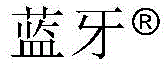
Standard, Code Division Multiple Access (CDMA), Frequency Division Multiple Access (FDMA), Time Division Multiple Access (TDMA), global system for mobile communications (GSM), GSM or General Packet Radio Service (GPRS), Enhanced Data GSM Environment (EDGE), terrestrial trunked radio (TETRA), wideband-CDMA (W-CDMA), evolution-data optimized (EV-DO), 1xEV-DO, EV-DO RevA, EV-DO revb, High Speed Packet Access (HSPA), High Speed Downlink Packet Access (HSDPA), High Speed Uplink Packet Access (HSUPA), evolved high speed packet access (HSPA +), Long Term Evolution (LTE), AMPS, or other known signals for communicating within a wireless, cellular, or internet of things (IOT) network (e.g., a system utilizing 3G, 4G, or 5G, or other implementations, techniques thereof).
A master device (e.g., a wireless access point, a cellular base station, etc.) may operate on a frequency band shared by other master devices in the vicinity. For example, the 6GHz band may be shared by Wi-Fi and various cellular communication technologies (e.g., LTE). To avoid interference between different wireless networks and technologies, it may be desirable to schedule or otherwise coordinate access to the wireless medium between master devices operating on the same frequency band. Thus, implementations described herein may enable a master device to reserve at least a portion of a shared medium for exclusive access by the master device. For example, during a period in which the master device has reserved access to the shared medium, the master device may serve its associated client devices (e.g., STAs or user devices) without interference from neighboring networks.
In some implementations, a master device may contend for access to a shared medium during a Medium Reservation Window (MRW). For example, during MRW, master devices may advertise their intent to reserve at least a portion (e.g., multiple channels or spatial dimensions) of the shared medium for one or more time slots within a subsequent Medium Utilization Period (MUP). A reservation message may be broadcast to all master devices in the vicinity (or on a given channel) to prevent other master devices from accessing the wireless medium (or at least a portion thereof) during the reserved time slots. In some implementations, the owner of a particular slot may share at least a portion of its slot with one or more other master devices. For example, the owner of a particular time slot may have reserved a larger portion of the wireless medium (than needed). Thus, the slot owner may enable other master devices to utilize unused portions of the wireless medium (e.g., unused channels or spatial streams).
Particular implementations of the subject matter described in this disclosure can be implemented to realize one or more of the following potential advantages. These implementations may reduce interference to wireless devices and networks configured to operate on a shared frequency band. For example, by requiring a master device to contend for access to a shared medium, aspects of the present disclosure may ensure that each owner of a particular time slot has exclusive access to the wireless medium during its assigned time slot within the MUP. Further, because the reservation message is broadcast on one or more predetermined channels during the scheduled MRW, the client device may intercept the reservation message to determine a respective medium access time for each master device in the vicinity. This may allow unassociated client devices to quickly identify all available master devices and select a particular master device to associate with. This may also allow associated client devices to enter or remain in a power saving state when their master device does not have access to the shared medium.
In the following description, numerous specific details are set forth (e.g., examples of specific components, circuits, and processes) in order to provide a thorough understanding of the present disclosure. The term "master device" may refer to any device that provides wireless services (e.g., a wireless network) to one or more client devices. For example, the master device may correspond to an Access Point (AP) of a WLAN or a Base Station (BS) of a cellular network. Thus, the term "client device" may refer to any wireless device that may connect to or be associated with a master device. For example, the client device may correspond to a wireless Station (STA) of a WLAN or a User Equipment (UE) of a cellular network. The term "associated client device" refers to a client device that has been associated with a particular master device, while the term "unassociated client device" refers to a client device that has not been associated with any particular master device. Additionally, although described herein in terms of exchanging data frames between wireless devices, these implementations may be applied to the exchange of any data unit, packet, or frame between wireless devices. Thus, the term "frame" may include any frame, packet, or data unit, such as a Protocol Data Unit (PDU), a Media Access Control (MAC) protocol data unit (MPDU), an aggregate MPDU (a-MPDU), and a physical layer convergence Procedure Protocol Data Unit (PPDU).
Fig. 1 shows a block diagram of an example wireless system 100. Wireless system 100 is shown to include two wireless networks 110 and 120 in relatively close proximity to each other. The first wireless network 110 is formed, at least in part, by a first Master Device (MD)112 serving a plurality of client devices CD 1-CD 3. Second wireless network 120 is formed, at least in part, by a second Master Device (MD)122 that serves a plurality of client devices CDs 4-CD 6. Although only two master devices 112 and 122 and six client devices CD 1-CD 6 are shown in the example of fig. 1 for simplicity, it should be understood that the wireless system 100 may include any number of master or client devices.
Client devices CD 1-CD 6 may include any suitable wireless device including, for example, cellular telephones, Personal Digital Assistants (PDAs), tablet devices, laptop computers, and the like. In some implementations, one or more of client devices CD 1-CD 6 may be wireless Stations (STAs) configured to operate in accordance with the IEEE 802.11 standard. In some other implementations, one or more of the client devices CD 1-CD 6 may be User Equipment (UE) configured to operate in accordance with one or more cellular communication standards (e.g., Long Term Evolution (LTE), Global System for Mobile (GSM), etc.). Each of the master devices 112 and 122 may be any suitable device that allows one or more wireless devices to connect to a network (e.g., a Local Area Network (LAN), a Wide Area Network (WAN), a Metropolitan Area Network (MAN), a cellular network, or the internet) using Wi-Fi, bluetooth, LTE, or any other suitable wireless communication standard. Thus, each of wireless networks 110 and 120 may correspond to a WLAN, a cellular (LTE) network, or other wireless communication network. The masters 112 and 122 and client devices CD 1-CD 6 may each include one or more transceivers, one or more processing resources (e.g., processors or ASICs), one or more memory resources, and a power supply.
In some implementations, the master devices 112 and 122 may be configured to operate on the shared wireless medium 101. For example, shared wireless medium 101 may correspond to a 6GHz frequency band. Due to the relatively close proximity of the master devices 112 and 122, wireless transmissions within one of the wireless networks 110 or 120 may cause interference in the other wireless network. Thus, in some implementations, the master devices 112 and 122 may schedule or otherwise coordinate access to the shared wireless medium 101 such that communications within the first wireless network 110 do not interfere with communications within the second wireless network 120. In some aspects, each of the master devices 112 and 122 may contend for access to the shared wireless medium 101.
In some implementations, access to the shared wireless medium may be divided into a Medium Reservation Window (MRW) followed by a Medium Utilization Period (MUP). The master devices may compete for access to the shared wireless medium during MRW and may serve their associated client devices during MUP. Thus, MRW may be relatively short in duration compared to MUP. In some aspects, the duration of MRW and MUP may be fixed. In some other aspects, the duration of the MRW may vary depending on the number of master devices contending for access to the shared wireless medium. Additionally, in some aspects, the duration of the MUP may vary according to the channel access requirements of the primary device.
During MRW, the master device may sense the wireless medium using carrier sense multiple access collision avoidance (CSMA/CA) techniques and wait for a random backoff period before attempting to transmit on the wireless medium. In some aspects, each of the master devices may listen and contend for a single common channel of the shared frequency band during MRW. In some other aspects, the master device may contend for different channels of the shared frequency band. The device that "wins" (any device that gains access to the wireless medium during the MRW) may reserve a time slot within the subsequent MUP to have exclusive access to the shared medium. For example, each winning device may broadcast a Reservation Message (RM) advertising the portion of the shared medium that it wishes to reserve for subsequent MUPs. In some implementations, the reservation message may be formatted in a manner that is generally understood by any master device (including Wi-FiAP and cellular base stations) operating in accordance with any wireless technology. Further, in some implementations, the reservation message may include a bitmap indicating the time slots to be reserved for a given master device. For example, the duration of the MUP may be subdivided into 4ms increments. Thus, each bit of the bitmap may represent a 4ms interval within the upcoming MUP.
Within a given time slot, the master device may reserve the entire frequency band, multiple channels, multiple spatial streams (or dimensions), or any combination thereof. For example, if a master device reserves the entire frequency band, none of the other master devices may access the shared wireless medium during the time slot reserved for that master device. If a master device reserves only a subset of the channels within the frequency band, other master devices may access or reserve unused channels in the shared wireless medium during the time slots reserved for that master device. If a master device reserves only a subset of spatial streams, other master devices may use or reserve up to the number of unused spatial streams or dimensions of the master device during the master device's reserved time slots.
Fig. 2A shows a timing diagram 200A depicting an example channel access scheme for a shared wireless medium. In the example of fig. 2A, multiple master devices MD1-MD3 may contend for access to a shared wireless medium (or frequency band). For example, each of the master devices MD1-MD3 may be located within a relatively close proximity (e.g., within wireless communication range) of each other. Each of master devices MD1-MD3 may be an example implementation of master device 112 or master device 122 of fig. 1. For simplicity, only three master devices MD1-MD3 are shown in the example of FIG. 2A. However, in actual implementations, there may be any number of master devices sharing the same wireless medium (or frequency band).
Medium Reservation Window (MRW) at time t0And begins. During MRW (from time t)0To t3) Master devices MD1-MD3 may contend for access to the shared wireless medium. In some implementations, each of the master devices MD1-MD3 may listen to and contend for a single common channel in the shared frequency band. For example, the first master MD1 may be at time t0A Reservation Message (RM) is broadcast when gaining access to the shared wireless medium. The reservation message broadcast by the first master MD1 may announce the duration of the first slot TS1 within a subsequent Medium Utilization Period (MUP) (from time t)3To t4) Within a shared wireless medium (or at least a plurality of channels or spatial streams within a shared wireless medium). The other master devices MD2 and MD3 may receive the reservation message broadcast by the first master device MD1 and avoid accessing any portion of the shared wireless medium reserved by the first master device MD1 during the first time slot TS 1.
The second master MD2 may be at time t1The reservation message is broadcast when gaining access to the shared wireless medium. The reservation message broadcast by the second master MD2 may announce the duration of the second slot TS2 within the subsequent MUP (from time t4To t5) Within a shared wireless medium (or at least a plurality of channels or spatial streams within a shared wireless medium). The other master devices MD1 and MD3 may receive the reservation message broadcast by the second master device MD2 and avoid accessing any portion of the shared wireless medium reserved by the second master device MD2 during the second time slot TS 2.
The third master MD3 may be at time t2The reservation message is broadcast when gaining access to the shared wireless medium. The reservation message broadcast by the third master MD3 may announce the duration of the third time slot TS3 within the subsequent MUPs (from time t5To t6) Within a shared wireless medium (or at least a plurality of channels or spatial streams within a shared wireless medium). Other main facilitiesThe standby MDs 1 and MD2 may receive the reservation message broadcast by the third master MD3 and avoid accessing any portion of the shared wireless medium reserved by the third master MD3 during the third time slot TS 3.
At the beginning of the MUP (at time t)3At), the first master MD1 may be granted exclusive access to the shared wireless medium (or at least a portion thereof) for the duration of the first time slot TS 1. During the first time slot TS1 (from time t)3To t4) The first master MD1 may serve its associated client devices (not shown for simplicity) without interference from the remaining master MD2 or MD 3. At the end of the first time slot TS1 (at time t)4At), the second master MD2 may be granted exclusive access to the shared wireless medium (or at least a portion thereof) for the duration of the second time slot TS 2. During the second time slot TS2 (from time t)4To t5) The second master MD2 may serve its associated client devices without interference from the remaining master MD1 or MD 3. At the end of the second time slot TS2 (at time t)5At), the third master MD3 may be granted exclusive access to the shared wireless medium (or at least a portion thereof) for the duration of the third time slot TS 3. During the third time slot TS3 (from time t)5To t6) The third master MD3 may serve its associated client devices without interference from the remaining master MD1 or MD 2. At time t6At this point, the master device MD1-MD3 may again contend for access to the shared wireless medium. Thus, the end of the current MUP (at time t)6At) may coincide with the start of another MRW.
In some aspects, the client device may also be able to determine from time t0To t3Common channels associated with the MRWs are listened to intercept reservation messages broadcast by the master MD1-MD 3. For example, an associated client device may determine a time at which its master device has access to the shared wireless medium and is therefore available for wireless communication. Thus, an associated client device may schedule its power saving state around the availability of its master device. Furthermore, there is no correlationThe client device of (2) may detect the presence of a nearby master device without scanning each wireless channel available on the shared wireless medium. For example, only a relatively small subset of the available channels may be allocated for each MRW. In some implementations, the reservation message may include additional information to advertise the capabilities of the master device MD1-MD 3. Thus, unassociated client devices may use the information provided in the reservation message (or the signal strength of the reservation message) in selecting a particular master device to associate with.
In some implementations, a client device may be prohibited from unsolicited access to the wireless medium during a time slot reserved by its master device. For example, any access to the shared wireless medium during a reserved time slot may be scheduled and provided by the master device that reserved the time slot. Thus, the client device may not contend for access to the wireless medium during the reserved time slot within the MUP. In some aspects, the master device may disable any form of unscheduled access to the reserved time slots within the MUPs (e.g., Enhanced Distributed Channel Access (EDCA) or CSMA/CA) so long as the master device operates as a co-located BSS. More specifically, as a co-located BSS, a master device may perform the functions of the BSS in two or more frequency bands (e.g., 2.4, 5, or 6GHz frequency bands).
For example, a master device may share a 6GHz frequency band with other master devices and may therefore compete with other master devices for access to 6 GHz. More specifically, the master device may contend for access to the 6GHz band during the MRW and may serve its client devices on the 6GHz band during its reserved time slots within the MUP. However, if the master device is also acting as a BSS in the 2.4 or 5GHZ band, the master device may prohibit unscheduled access by its client devices to the 6GHZ band (specifically, during its reserved time slots within the MUP), while allowing client devices to contend for access to other bands (e.g., the 2.4 or 5GHZ band).
Fig. 2B shows a timing diagram 200B depicting another example channel access scheme for a shared wireless medium. In the example of fig. 2B, master devices MD1-MD3 may contend for access to a shared wireless medium (or frequency band) on a per-channel basis. More specifically, each of the master devices MD1-MD3 may contend for a respective channel CH _ 0-CH _ N (or subset of channels) within the shared frequency band. For example, the 6GHz band may be subdivided into 10-60 channels (depending on regulatory constraints), each having a bandwidth of 20 MHz. Thus, many master devices are able to serve their associated client devices using only a subset (e.g., one or more channels) of the total available bandwidth in the shared frequency band.
MRW at time t0And begins. During MRW (from time t)0To t2) Master devices MD1-MD3 may contend for access to the shared wireless medium. In the example of fig. 2B, the first and second master devices MD1 and MD2 may listen to and contend for the first channel CH _0 in the shared frequency band during MRW. In contrast, the third master device MD3 may listen and contend for the second channel CH _1 in the shared frequency band during MRW. For example, the first master MD1 may be at time t0A Reservation Message (RM) is broadcast when gaining access to the first channel CH 0. The reservation message broadcast by the first master MD1 may announce the first slot TS1 within a subsequent Medium Utilization Period (MUP)0Duration of (from time t)2To t3) A reservation for the first channel CH 0. The second master MD2 may receive the reservation message broadcast by the first master MD1 and avoid the TS1 in the first time slot0During which the first channel CH 0 is accessed. Since the third master MD3 is not listening to the first channel CH _0, the third master MD3 may not receive (or be affected by) the reservation message broadcast by the first master MD 1.
The second master MD2 may be at time t1The reservation message is broadcast when gaining access to the shared wireless medium. The reservation message broadcast by the second master MD2 may announce the second time slot TS2 within the subsequent MUP0Duration of (from time t)3To t4) A reservation for the first channel CH 0. The first master MD1 may receive the reservation message broadcast by the first master MD1 and avoid during the second time slot TS20During which the first channel CH 0 is accessed. Because the third main deviceThe standby MD3 is not listening to the first channel CH _0, so the third master MD3 may also not receive (or be affected by) the reservation message broadcast by the second master MD 2.
Since there are no other master devices competing for access to the second channel CH _1, the third master device MD3 may be at time t0The reservation message is broadcast when gaining access to the shared wireless medium. It should be noted that the first and third master MD1 and MD3 may be at substantially the same time (e.g., at time t)0Where) broadcast reservation messages without interference because they are operating on different channels. The reservation message broadcast by the third master MD3 may announce the first time slot TS1 within the subsequent MUPs1Duration of (from time t)2To t4) A reservation for the second channel CH _ 1. Because the first and second master MD1 and MD2 are not listening to the second channel CH _1, the first and second master MD1 and MD2 may not receive (or be affected by) the reservation message broadcast by the third master MD 3.
At the beginning of the MUP (at time t)2At), the first master MD1 may be authorized to be in its corresponding timeslot TS10And the third master MD3 may be granted exclusive access to the first channel CH _0 in its corresponding time slot TS11For the duration of exclusive access to the second channel CH _ 1. A first time slot TS1 on a first channel CH _00During (from time t)2To t3) The first master MD1 may serve its associated client devices (not shown for simplicity) without interference from the remaining master MD2 or MD 3. Furthermore, a first time slot TS1 on the second channel CH _11During (from time t)2To t4) The third master MD3 may serve its associated client devices without interference from the remaining master MD1 or MD 2. A first time slot TS1 on a first channel CH _00At the end (at time t)3At), the second master MD2 may be authorized to reserve time slots TS2 at it0For the duration of time of the first channel CH _0And (6) adding. A second time slot TS2 on the first channel CH _00During (from time t)3To t4) The second master MD2 may serve its associated client devices without interference from the remaining master MD2 or MD 3.
At time t4At this point, the master device MD1-MD3 may again contend for access to the shared wireless medium. Thus, the end of the current MUP (at time t 4) may coincide with the start of another MRW. In some aspects, the client device may also listen to one or more of the channels CH _ 0-CH _ N in the shared frequency band during MRW to intercept reservation messages broadcast by the master devices MD1-MD 3. For example, an associated client device may listen to a channel on which its master device operates to determine when the master device is available for wireless communication. Thus, an associated client device may schedule its power saving state around the availability of its master device. Further, unassociated client devices can detect the presence of nearby master devices without having to scan every wireless channel available on the shared wireless medium. For example, only a relatively small subset of the available channels (CH _ 0-CH _ N) may be allocated for each MRW. In some implementations, the reservation message may include additional information to advertise the capabilities of the master device MD1-MD 3. Thus, unassociated client devices may use the information provided in the reservation message (or the signal strength of the reservation message) in selecting a particular master device to associate with.
In some implementations, a client device may be prohibited from unsolicited access to the wireless medium during a time slot reserved by its master device. For example, any access to the shared wireless medium during a reserved time slot may be scheduled by the master device that reserved the time slot. Thus, the client devices may not contend for access to the wireless medium during the reserved time slots. In some aspects, the master device may disable any form of unscheduled access (e.g., EDCA or CSMA/CA) to reserved time slots within the MUPs (while allowing unscheduled access on one of the other frequency bands in which the master device operates) so long as the master device operates as a co-located BSS.
Fig. 3A shows a timing diagram 300A depicting an example channel access scheme with a fixed medium reservation window and fixed medium utilization periods. In the example of fig. 3A, multiple master devices MD1-MD4 may contend for access to a shared wireless medium (or frequency band). For example, each of the master devices MD1-MD4 may be located within a relatively close proximity (e.g., within wireless communication range) of each other. Each of master devices MD1-MD4 may be an example implementation of master device 112 or master device 122 of fig. 1. For simplicity, only four master devices MD1-MD4 are shown in the example of FIG. 3A. However, in actual implementations, there may be any number of master devices sharing the same wireless medium (or frequency band).
MRW at time t0And begins. In some implementations, the MRW may have a fixed duration (e.g., from time t)0To t1). However, the duration of the MRW may be periodically adjusted based at least in part on the number of master devices sharing the wireless medium at a particular time instance (e.g., at certain points in time). During MRW (from time t)0To t1) Master devices MD1-MD4 may contend for access to the shared wireless medium. In some implementations, the master devices MD1-MD4 may listen to and contend for a single common channel in the shared frequency band (e.g., as described with respect to fig. 2A). In some other implementations, master devices MD1-MD4 may contend for access to the shared wireless medium on a per-channel basis (e.g., as described with respect to fig. 2B).
During MRW (from time t)0To t1) The first master MD1 may broadcast a message announcing the duration of time in the first time slot TS1 (from time t)1To t2) The second master MD2 may broadcast a reservation message announcing the duration of the second slot TS2 (from time t) within a reservation of the shared wireless medium2To t3) A reservation message for a reservation of the shared wireless medium, and the third master MD3 may broadcast a message announcing the duration of the time in the third slot TS3 (from time t)3To t4) A reservation message that includes a reservation for the shared wireless medium. In the example of figure 3A of the drawings,the MRW has a fixed duration (e.g., from time t) that can accommodate a maximum of three reservation messages0To t1). Thus, it should be noted that the fourth master device does not have a termination at MRW (at time t)1Where) the time of the previous broadcast reservation message.
At the beginning of the MUP (at time t)1At), the first master MD1 may be granted exclusive access to the shared wireless medium (or at least a portion thereof) for the duration of the first time slot TS 1. During the first time slot TS1, the first master device MD1 may serve its associated client devices without interference from the remaining master devices MD2-MD 4. At the end of the first time slot TS1 (at time t)2At), the second master MD2 may be granted exclusive access to the shared wireless medium (or at least a portion thereof) for the duration of the second time slot TS 2. During the second time slot TS2, the second master MD2 may serve its associated client devices without interference from the remaining master MD1, MD3, or MD 4. At the end of the second time slot TS2 (at time t)3At), the third master MD3 may be granted exclusive access to the shared wireless medium (or at least a portion thereof) for the duration of the third time slot TS 3. During the third time slot TS3, the third master MD3 may serve its associated client devices without interference from the remaining master MD1, MD2, or MD 4.
Subsequent MRW at time t4And begins. During the subsequent MRW (from time t)4To t5) The master device MD1-MD4 may again contend for access to the shared wireless medium. For example, the fourth master MD4 may broadcast a message announcing the duration (from time t) in the fourth time slot TS45To t6) The third master MD3 may broadcast a reservation message announcing the duration of the reservation for the shared wireless medium in the fifth slot TS5 (from time t)6To t7) A reservation message for a reservation of the shared wireless medium, and the first master MD1 may broadcast a duration (from time t) announcing the duration of the TS6 in the sixth slot7To t8) A reservation message that includes a reservation for the shared wireless medium. It should be noted that it is preferable that,due to the fixed duration of the MRW (from time t)4To t5) So the second master device does not terminate at MRW (at time t)5Where) the time of the previous broadcast reservation message.
At the beginning of the next MUP (at time t)5At), the fourth master MD4 may be granted exclusive access to the shared wireless medium (or at least a portion thereof) for the duration of the fourth time slot TS 4. During the fourth time slot TS4, the fourth master MD4 may serve its associated client devices without interference from the remaining master MDs 1-MD 3. At the end of the fourth time slot TS4 (at time t)6At), the third master MD3 may be granted exclusive access to the shared wireless medium (or at least a portion thereof) for the duration of the fifth time slot TS 5. During the fifth time slot TS5, the third master MD3 may serve its associated client devices without interference from the remaining master MD1, MD2, or MD 4. At the end of the fifth time slot TS5 (at time t)7At), the first master MD1 may be granted exclusive access to the shared wireless medium (or at least a portion thereof) for the duration of the sixth time slot TS 6. During the sixth time slot TS6, the first master MD1 may serve its associated client devices without interference from the remaining master MDs 2-MD 4.
In the example of fig. 3A, the MUP also has a fixed duration. E.g. the duration of the first MUP (from time t)1To t4) Equal to the duration of the second MUP (from time t)5To t9). However, the master MD1, MD3, and MD4 may not use the entire duration of the MUPs. For example, the last reserved time slot TS6 ends at the MUP (at time t)9At time t) is terminated (at time t)8At (c). Thus, there is a period of time (from time t) during which the shared wireless medium is not being utilized8To t9). In some implementations, one or more master devices (e.g., the second master device MD2) that fail to reserve a time slot within a given MUP may access the shared wireless medium during periods of non-utilization. In some aspects, the master device may use a contention-based channel access technique (e.g., CSMA/CA) without being granted accessThe shared wireless medium is reserved during the utilized time period. In some other aspects, the owner of the last time slot (e.g., the first master MD1) may arbitrate access to the wireless medium during the unutilized period.
Fig. 3B shows a timing diagram 300B depicting an example channel access scheme with a fixed medium reservation window and variable medium utilization periods. In the example of fig. 3B, the duration of the MUPs may be (dynamically) changed according to the medium access requirements of the master device MD1-MD 4. More specifically, the MUPs may terminate at the end of the last reserved slot within a given MUP. Therefore, there are no unutilized periods within any MUP. In some implementations, the last master to reserve a slot during the corresponding MRW may broadcast a message indicating when the upcoming MUP is expected to terminate (and when the next MRW is expected to start). In some other implementations, each of the master devices MD1-MD4 may determine the start of the next MRW based on the end of the last reserved slot (e.g., by monitoring reservation messages broadcast during the MRWs).
MRW at time t0And begins. In some implementations, the MRW may have a fixed duration (e.g., from time t)0To t1). However, the duration of the MRW may be periodically adjusted based at least in part on the number of master devices sharing the wireless medium at a particular time instance (e.g., at certain points in time). During MRW (from time t)0To t1) Master devices MD1-MD4 may contend for access to the shared wireless medium. For example, the first master MD1 may broadcast a message announcing the duration of time in the first time slot TS1 (from time t)1To t2) The second master MD2 may broadcast a reservation message announcing the duration of the second slot TS2 (from time t) within a reservation of the shared wireless medium2To t3) A reservation message for a reservation of the shared wireless medium, and the third master MD3 may broadcast a message announcing the duration of the time in the third slot TS3 (from time t)3To t4) A reservation message that includes a reservation for the shared wireless medium.
In some implementationsThe master device MD1-MD4 may determine the start of the next MRW based on the reservation message broadcast during the current MRW. For example, the start of the next MRW may coincide with the end of the last time slot (TS3) reserved during the current MRW. Thus, in the example of FIG. 3B, master devices MD1-MD4 may determine that the next MRW is expected at time t4And begins. It should be noted that due to the fixed duration of the MRW (from time t)0To t1) So the fourth master does not terminate at MRW (at time t)1Where) the time of the previous broadcast reservation message.
At the beginning of the MUP (at time t)1At), the first master MD1 may be granted exclusive access to the shared wireless medium (or at least a portion thereof) for the duration of the first time slot TS 1. During the first time slot TS1, the first master device MD1 may serve its associated client devices without interference from the remaining master devices MD2-MD 4. At the end of the first time slot TS1 (at time t)2At), the second master MD2 may be granted exclusive access to the shared wireless medium (or at least a portion thereof) for the duration of the second time slot TS 2. During the second time slot TS2, the second master MD2 may serve its associated client devices without interference from the remaining master MD1, MD3, or MD 4. At the end of the second time slot TS2 (at time t)3At), the third master MD3 may be granted exclusive access to the shared wireless medium (or at least a portion thereof) for the duration of the third time slot TS 3. During the third time slot TS3, the third master MD3 may serve its associated client devices without interference from the remaining master MD1, MD2, or MD 4.
Subsequent MRW at time t4And begins. During the subsequent MRW (from time t)4To t5) The master device MD1-MD4 may again contend for access to the shared wireless medium. For example, the fourth master MD4 may broadcast a message announcing the duration (from time t) in the fourth time slot TS45To t6) A reservation message, including a reservation for the shared wireless medium, the third master MD3 may broadcast a duration (slave time) announcing the duration of the TS5 in the fifth slott6To t7) A reservation message for a reservation of the shared wireless medium, and the first master MD1 may broadcast a duration (from time t) announcing the duration of the TS6 in the sixth slot7To t8) A reservation message that includes a reservation for the shared wireless medium. In some implementations, the master device MD1-MD4 may determine the start of the next MRW based on the last slot (TS6) reserved during the current MRW. Thus, in the example of FIG. 3B, master devices MD1-MD4 may determine that the next MRW is expected at time t8And begins. It should be noted that due to the fixed duration of the MRW (from time t)4To t5) So the second master device does not terminate at MRW (at time t)5Where) the time of the previous broadcast reservation message.
At the beginning of the next MUP (at time t)5At), the fourth master MD4 may be granted exclusive access to the shared wireless medium (or at least a portion thereof) for the duration of the fourth time slot TS 4. During the fourth time slot TS4, the fourth master MD4 may serve its associated client devices without interference from the remaining master MDs 1-MD 3. At the end of the fourth time slot TS4 (at time t)6At), the third master MD3 may be granted exclusive access to the shared wireless medium (or at least a portion thereof) for the duration of the fifth time slot TS 5. During the fifth time slot TS5, the third master MD3 may serve its associated client devices without interference from the remaining master MD1, MD2, or MD 4. At the end of the fifth time slot TS5 (at time t)7At), the first master MD1 may be granted exclusive access to the shared wireless medium (or at least a portion thereof) for the duration of the sixth time slot TS 6. During the sixth time slot TS6, the first master MD1 may serve its associated client devices without interference from the remaining master MDs 2-MD 4.
In the example of fig. 3B, the MUP ends at the sixth time slot TS6 (at time t)8At) is terminated. In contrast to the example channel access scheme depicted in fig. 3A, there are no periods of unutilized in the MUP of fig. 3B. Thus, the duration of the MUP may be based on the media of the master devices MD1-MD4The access requirements change. For example, as shown in FIG. 3B, during the second MUP (from time t)5To t8) In contrast, the master MD1-MD4 is during the first MUP (from time t)1To t4) Collectively requiring longer access to the shared wireless medium. Thus, the duration of the second MUP is much shorter than the duration of the first MUP.
Fig. 4A shows a timing diagram 400A depicting an example channel access scheme with a variable medium reservation window and fixed medium utilization periods. In the example of fig. 4A, multiple master devices MD1-MD4 may contend for access to a shared wireless medium (or frequency band). For example, each of the master devices MD1-MD4 may be located within a relatively close proximity (e.g., within wireless communication range) of each other. Each of master devices MD1-MD4 may be an example implementation of master device 112 or master device 122 of fig. 1. For simplicity, only four master devices MD1-MD4 are shown in the example of FIG. 4A. However, in actual implementations, there may be any number of master devices sharing the same wireless medium (or frequency band).
MRW at time t0And begins. During MRW, master devices MD1-MD4 may contend for access to the shared wireless medium. In some implementations, the master devices MD1-MD4 may listen to and contend for a single common channel in the shared frequency band (e.g., as described with respect to fig. 2A). In some other implementations, master devices MD1-MD4 may contend for access to the shared wireless medium on a per-channel basis (e.g., as described with respect to fig. 2B). Further, in some implementations, the duration of the MRW may be (dynamically) changed according to the number of master devices competing for access to the shared wireless medium. For example, the MRW may not terminate until each of the master devices MD1-MD4 has had an opportunity to access the shared wireless medium (e.g., to broadcast a reservation message). In some aspects, the MRW may terminate after a period of inactivity has elapsed.
During MRW (from time t)0To t1) The fourth master MD4 may broadcast a message announcing the duration of time in the first time slot TS1 (from time t)1To t2) Internal pair sharing does not haveA reservation message for reservation of the line medium, the third master MD3 may broadcast a reservation message announcing the duration in the second slot TS2 (from time t2To t3) The first master device MD1 may broadcast a reservation message announcing the duration of the third time slot TS3 (from time t) within a reservation message for a reservation of the shared wireless medium3To t4) A reservation message announcing a reservation of the shared wireless medium, and the second master MD2 may broadcast a time duration (from time t) announcing the duration of the TS4 in the fourth time slot4To t5) A reservation message that includes a reservation for the shared wireless medium. In the example of fig. 4A, when no additional reservation messages are broadcast on the shared wireless medium for at least a threshold period of time (e.g., at time t) following the reservation message broadcast by the second master device MD21At), master device MD1-MD4 may determine that the MRW has terminated.
At the beginning of the MUP (at time t)1At), the fourth master MD4 may be authorized for the duration of the first time slot TS1 (from time t)1To t2) Exclusive access to the shared wireless medium (or at least a portion thereof). At the end of the first time slot TS1 (at time t)2At), the third master MD3 may be authorized for the duration of the second slot TS2 (from time t)2To t3) Exclusive access to the shared wireless medium (or at least a portion thereof). At the end of the second time slot TS2 (at time t)3) The first master MD1 may be authorized for the duration of the third slot TS3 (from time t)3To t4) Exclusive access to the shared wireless medium (or at least a portion thereof). At the end of the third time slot TS3 (at time t)4At), the second master MD2 may be authorized for the duration of the fourth time slot TS4 (from time t)4To t5) Exclusive access to the shared wireless medium (or at least a portion thereof).
Subsequent MRW at time t5And begins. During subsequent MRWs, the master device MD1-MD4 may again contend for access to the shared wireless medium. For example, the first master MD1 may broadcast a message announcing the duration (from time t) in the fifth timeslot TS56To t7) Internal pair shared wireless mediumThe second master MD2 may broadcast a reservation message announcing the duration of time in the sixth time slot TS6 (from time t)7To t8) A reservation message for a reservation of the shared wireless medium, and the third master MD3 may broadcast a message announcing the duration of the TS7 in the seventh slot (from time t)8To t9) A reservation message that includes a reservation for the shared wireless medium.
It should be noted that even though the MRW may be configured to accommodate reservation messages from each of the master MD1-MD4, the fourth master MD4 may not be able to reserve any remaining time slots due to the fixed duration of the MUPs. For example, the master MD1-MD3 has reserved all available time in the upcoming MUPs. Thus, with the first MRW (from time t)0To t1) In contrast, the duration of the second MRW (from time t)5To t6) It may be shorter. In some aspects, when no additional reservation messages are broadcast on the shared wireless medium for at least a threshold period of time (e.g., at time t) following the reservation message broadcast by the third master device MD36At), master device MD1-MD4 may determine that the MRW has terminated.
At the beginning of the next MUP (at time t)6At), the first master MD1 may be authorized for the duration of the fifth slot TS5 (from time t)6To t7) Exclusive access to the shared wireless medium (or at least a portion thereof). At the end of the fifth time slot TS5 (at time t)7At), the second master MD2 may be authorized for the duration of the sixth time slot TS6 (from time t)7To t8) Exclusive access to the shared wireless medium (or at least a portion thereof). At the termination of the sixth time slot TS6 (at time t)8At), the third master MD3 may be authorized for the duration of the seventh slot TS7 (from time t)8To t9) Exclusive access to the shared wireless medium (or at least a portion thereof). In the example of fig. 4A, the MUP terminates at the end of the seventh time slot TS7 (at time t) before all of the master devices MD1-MD4 have had an opportunity to access the shared wireless medium9At (c).
Fig. 4B shows a timing diagram 400B depicting an example channel access scheme with a variable medium reservation window and a variable medium utilization period. In the example of fig. 4B, the duration of the MUPs may be (dynamically) changed based on the medium access requirements of the master device MD1-MD 4. More specifically, the MUPs may terminate at the end of the last reserved slot within a given MUP. In some implementations, the last master to reserve a slot during the corresponding MRW may broadcast a message indicating when the upcoming MUP is expected to terminate (and when the next MRW is expected to start). In some other implementations, each of the master devices MD1-MD4 may determine the start of the next MRW based on the end of the last reserved slot (e.g., by monitoring reservation messages broadcast during the MRWs).
MRW at time t0And begins. During MRW, master devices MD1-MD4 may contend for access to the shared wireless medium. In some implementations, the duration of the MRW may be (dynamically) changed according to the number of master devices competing for access to the shared wireless medium. In the example of fig. 4B, the duration of the MRW may be long enough to allow each of the master devices MD1-MD4 to access the shared wireless medium and broadcast reservation messages thereon. However, only the master device MD2-MD4 may require access to the shared wireless medium for the upcoming MUPs. For example, the first master device MD1 may not have any associated client devices to service at that time. In some other implementations, the master MD1-MD4 may determine that the start of the next MRW will coincide with the end of the last slot (TS3) reserved during the current MRW. Thus, in the example of FIG. 4B, master devices MD1-MD4 may determine that the next MRW is expected at time t4And begins.
During MRW (from time t)0To t1) The fourth master MD4 may broadcast a message announcing the duration of time in the first time slot TS1 (from time t)1To t2) A reservation message for a reservation of the shared wireless medium, the third master MD3 may broadcast a duration (from time t) announcing the duration of the TS2 in the second slot2To t3) A reservation message including a reservation of a shared wireless medium, and a second masterThe standby MD2 may broadcast a message announcing the duration of time in the third time slot TS3 (from time t)3To t4) A reservation message that includes a reservation for the shared wireless medium. In the example of fig. 4B, when no additional reservation messages are broadcast on the shared wireless medium for at least a threshold period of time (e.g., at time t) following the reservation message broadcast by the second master device MD21At), master device MD1-MD4 may determine that the MRW has terminated.
At the beginning of the MUP (at time t)1At), the fourth master MD4 may be authorized for the duration of the first time slot TS1 (from time t)1To t2) Exclusive access to the shared wireless medium (or at least a portion thereof). At the end of the first time slot TS1 (at time t)2At), the third master MD3 may be authorized for the duration of the second slot TS2 (from time t)2To t3) Exclusive access to the shared wireless medium (or at least a portion thereof). At the end of the second time slot TS2 (at time t)3At), the second master MD2 may be authorized for the duration of the third time slot TS3 (from time t)3To t4) Exclusive access to the shared wireless medium (or at least a portion thereof). In the example of fig. 4B, the MUPs terminate at the end of the third time slot TS3 (at time t, t) after each master requesting access to the shared wireless medium (e.g., master MD2-MD 4) has had an opportunity to access the shared wireless medium4At (c).
Subsequent MRW at time t4And begins. During subsequent MRWs, the master device MD1-MD4 may again contend for access to the shared wireless medium. For example, the first master MD1 may broadcast a message announcing the duration (from time t) in the fourth time slot TS45To t6) The second master MD2 may broadcast a reservation message announcing the duration of the reservation for the shared wireless medium in the fifth slot TS5 (from time t)6To t7) The third master MD3 may broadcast a reservation message announcing the duration of the time in the sixth slot TS6 (from time t)7To t8) A reservation message including a reservation of the shared wireless medium, and a fourth master deviceMD4 may broadcast a message announcing the duration of TS7 in the seventh time slot (from time t)8To t9) A reservation message that includes a reservation for the shared wireless medium.
It should be noted that at this time, all four master devices MD1-MD4 may require access to the wireless medium for the upcoming MUP. Thus, the duration of the first MRW (from time t)0To t1) In contrast, the duration of the second MRW (from time t)4To t5) It can be longer. In some aspects, when no additional reservation message is broadcast on the shared wireless medium for at least a threshold period of time (e.g., at time t) after the reservation message broadcast by the fourth master device MD45At), master device MD1-MD4 may determine that the MRW has terminated. In some other aspects, the master device MD1-MD4 may determine the start of the next MRW based on the last slot (TS7) reserved during the current MRW. Thus, in the example of FIG. 4B, master devices MD1-MD4 may determine that the next MRW is expected at time t9And begins.
At the beginning of the next MUP (at time t)5At), the first master MD1 may be authorized for the duration of the fourth time slot TS4 (from time t)5To t6) Exclusive access to the shared wireless medium (or at least a portion thereof). At the end of the fourth time slot TS4 (at time t)6At), the second master MD2 may be authorized for the duration of the fifth slot TS5 (from time t)6To t7) Exclusive access to the shared wireless medium (or at least a portion thereof). At the end of the fifth time slot TS5 (at time t)7At), the third master MD3 may be authorized for the duration of the sixth time slot TS6 (from time t)7To t8) Exclusive access to the shared wireless medium (or at least a portion thereof). At the termination of the sixth time slot TS6 (at time t)8At), the fourth master MD4 may be authorized for the duration of the seventh slot TS7 (from time t)8To t9) Exclusive access to the shared wireless medium (or at least a portion thereof).
In the example of FIG. 4B, each of the masters MD1-MD4 already has access sharingAfter the opportunity for the wireless medium, the MUP terminates at the end of the seventh time slot TS7 (at time t)9At (c). Thus, the duration of the MUPs may vary based on the medium access requirements of the master devices MD1-MD 4. For example, as shown in FIG. 4B, during the first MUP (from time t)1To t4) In contrast, the master MD1-MD4 is during the second MUP (from time t)5To t9) Collectively requiring longer access to the shared wireless medium. Thus, the duration of the second MUP is much longer than the duration of the first MUP.
Fig. 5A shows a timing diagram 500A depicting example operations for sharing unused spatial streams (or dimensions) of a shared wireless medium during a medium access slot. In the example of fig. 5A, multiple master devices MD1-MD4 may contend for access to a shared wireless medium (or frequency band). For example, each of the master devices MD1-MD4 may be located within a relatively close proximity (e.g., within wireless communication range) of each other. Each of master devices MD1-MD4 may be an example implementation of master device 112 or master device 122 of fig. 1. For simplicity, only four master devices MD1-MD4 are shown in the example of FIG. 5A. However, in actual implementations, there may be any number of master devices sharing the same wireless medium (or frequency band).
MRW at time t0And begins. During MRW, master devices MD1-MD4 may contend for access to the shared wireless medium. For example, the first master MD1 may broadcast a message announcing the duration of time in the first time slot TS1 (from time t)1To t2) The second master MD2 may broadcast a reservation message announcing the duration of the second slot TS2 (from time t) within a reservation of the shared wireless medium2To t3) A reservation message for a reservation of the shared wireless medium, and the third master MD3 may broadcast a message announcing the duration of the time in the third slot TS3 (from time t)3To t4) A reservation message that includes a reservation for the shared wireless medium. In the example of fig. 5A, at least one of the MRW or MUP may have a fixed duration. Thus, the fourth master MD4 may not be able to obtain access to the shared wireless medium during the upcoming MUPAnd (6) adding.
At the beginning of the MUP (at time t)1At), the first master MD1 may be granted exclusive access to the shared wireless medium for the duration of the first time slot TS 1. During the first time slot TS1 (from time t)1To t2) The first master MD1 may serve its associated client devices without interference from the remaining master MDs 2-MD 4. In some implementations, the owner of a slot may allow another master to utilize one or more unused spatial dimensions (or spatial streams) in the shared wireless medium during its reserved slot. For example, two or more devices may belong to the same master "cluster". In some implementations, master devices belonging to the same cluster may coordinate access to the shared wireless medium such that two or more master devices may share the wireless medium during time slots reserved for only one of the master devices in the cluster.
For example, the first master device MD1 may have multiple unused spatial dimensions (or spatial streams) depending on the number of antennas needed to serve its associated STAs. In some aspects, the first master MD1 may use coordinated multipoint (COMP) or joint MIMO communication techniques to share its unused spatial dimension with another master in its cluster (e.g., the fourth master MD 4). For example, the first master MD1 may use its remaining spatial dimension to "null" signals transmitted or received by the fourth master MD4 so that they do not interfere with communications between the first master MD1 and its associated client devices. In the example of fig. 5A, first master MD1 may allow fourth master MD4 to communicate with its associated client devices using up to (but not more than) the number of unused spatial dimensions.
At the end of the first time slot TS1 (at time t)2At), the second master MD2 may be granted exclusive access to the shared wireless medium (or at least a portion thereof) for the duration of the second time slot TS 2. During the second time slot TS2 (from time t)2To t3) The second master MD2 may be able to operate without interference from the remaining masters MD1, MD3 or MD4Serving its associated client device. At the end of the second time slot TS2 (at time t)3At), the third master MD3 may be granted exclusive access to the shared wireless medium (or at least a portion thereof) for the duration of the third time slot TS 3. During the third time slot TS3 (from time t)3To t4) The third master MD3 may serve its associated client devices without interference from the remaining master MD1, MD2, or MD 4. Thus, in the example of fig. 5A, each of the master devices MD1-MD4 may be granted access to the shared wireless medium even though only three master devices MD1-MD3 are able to reserve slots within the MUPs.
As described above, the first master MD1 and the fourth master MD4 may belong to the same master cluster. In some implementations, master devices belonging to the same cluster may contend for the shared wireless medium in turn during each MRW. For example, because a master belonging to a master cluster may share its time slots with other masters in the same cluster, this may be an inefficient allocation of resources that allows multiple masters belonging to the same cluster to reserve individual time slots within the MUP. In some aspects, once a master belonging to a master cluster successfully reserves a time slot during an MRW, other masters belonging to the same cluster may subsequently avoid contending for access to the shared wireless medium during the MRW.
In some aspects, client devices associated with masters belonging to a master cluster may schedule their power saving states based on the availability of any masters belonging to the same cluster. For example, even if the fourth master MD4 is not during MRW (slave time t)0To t1) The reservation message is broadcast, but the client device associated with the fourth master MD4 may wake up (or remain awake) during any time slot allocated for another master (e.g., the first master MD1) belonging to the same cluster as the fourth master MD 4. Thus, in the example of fig. 5A, a client device associated with the fourth master MD4 may be during the first time slot TS1 (from time t)1To t2) Awake in anticipation of the first master MD1 being able to potentially share its reserved slot with the fourth master MD 4.
Fig. 5B shows a timing diagram 500B depicting example operations for sharing unused channels in a shared wireless medium during a medium access slot. In the example of fig. 5B, each of the master devices MD1-MD4 may be configured to reserve the entire shared wireless medium for a given duration. For example, each of the master devices MD1-MD4 may listen to and contend for a single common channel of the shared frequency band. Each reservation message broadcast by a master device MD1-MD4 may reserve the entire frequency band for the requested time slot.
MRW at time t0And begins. During MRW, master devices MD1-MD4 may contend for access to the shared wireless medium. For example, the first master MD1 may broadcast a message announcing the duration of time in the first time slot TS1 (from time t)1To t2) The second master MD2 may broadcast a reservation message announcing the duration of the second slot TS2 (from time t) within a reservation of the shared wireless medium2To t3) A reservation message for a reservation of the shared wireless medium, and the third master MD3 may broadcast a message announcing the duration of the time in the third slot TS3 (from time t)3To t4) A reservation message that includes a reservation for the shared wireless medium. In the example of fig. 5B, the fourth master MD4 may not be able to gain access to the shared wireless medium during the upcoming MUP (since the MRW or MUP may have a fixed duration).
At the beginning of the MUP (at time t)1At), the first master MD1 may be granted exclusive access to the shared wireless medium for the duration of the first time slot TS 1. During the first time slot TS1 (from time t)1To t2) The first master MD1 may serve its associated client devices without interference from the remaining master MDs 2-MD 4. In some implementations, the owner of a slot may allow another master to utilize one or more unused channels in the shared wireless medium during its reserved slot. For example, although the entire shared frequency band (CH _ 0-CH _ N) may be reserved for the first master MD1 during the first time slot TS1, the first master MD1 may only need to beA subset of the channels (CH _0) in the frequency band are shared to serve their associated STAs. Thus, the first master MD1 may announce its availability of unused channels (CH _ 1-CH _ N) during "quiet periods" at the beginning of the first slot TS 1. In some aspects, other master devices may contend for access to the unused channels (CH _ 1-CH _ N) using a contention-based channel access technique (e.g., CSM/CA). In some other aspects, the owner of the time slot (e.g., the first master MD1) may arbitrate access to the unused channels (CH _ 1-CH _ N) among other masters sharing the wireless medium. Additionally, in some aspects, some of the unused channels may be reserved for logged-in (associating) new master devices to share the wireless medium (e.g., for communicating management information between master devices). In the example of fig. 5B, the first master MD1 may allow the fourth master MD4 to communicate with its associated client devices during the first time slot TS1 using one or more of the unused channels (CH _ 1-CH _ N).
At the end of the first time slot TS1 (at time t)2At), the second master MD2 may be granted exclusive access to the shared wireless medium (or at least a portion thereof) for the duration of the second time slot TS 2. During the second time slot TS2 (from time t)2To t3) The second master MD2 may serve its associated client devices without interference from the remaining master MD1, MD3, or MD 4. At the end of the second time slot TS2 (at time t)3At), the third master MD3 may be granted exclusive access to the shared wireless medium (or at least a portion thereof) for the duration of the third time slot TS 3. During the third time slot TS3 (from time t)3To t4) The third master MD3 may serve its associated client devices without interference from the remaining master MD1, MD2, or MD 4. Thus, in the example of fig. 5B, each of the master devices MD1-MD4 may be granted access to the shared wireless medium even though only three master devices MD1-MD3 are able to reserve slots within the MUPs.
Fig. 5C shows a timing diagram 500C depicting an example operation for sharing unused portions of a reserved slot. In some implementations, the master devices MD1-MD4 may listen to and contend for a single common channel in the shared frequency band (e.g., as described with respect to fig. 2A). In some other implementations, master devices MD1-MD4 may contend for access to the shared wireless medium on a per-channel basis (e.g., as described with respect to fig. 2B).
MRW at time t0And begins. During MRW, master devices MD1-MD4 may contend for access to the shared wireless medium. For example, the first master MD1 may broadcast a message announcing the duration of time in the first time slot TS1 (from time t)1To t3) The second master MD2 may broadcast a reservation message announcing the duration of the second slot TS2 (from time t) within a reservation of the shared wireless medium3To t4) A reservation message for a reservation of the shared wireless medium, and the third master MD3 may broadcast a message announcing the duration of the time in the third slot TS3 (from time t)4To t5) A reservation message that includes a reservation for the shared wireless medium. In the example of fig. 5C, the fourth master MD4 may not be able to gain access to the shared wireless medium during the upcoming MUP (since the MRW or MUP have a fixed duration).
At the beginning of the MUP (at time t)1At), the first master MD1 may be granted exclusive access to the shared wireless medium for the duration of the first time slot TS 1. During the first time slot TS1 (from time t)1To t3) The first master MD1 may serve its associated client devices without interference from the remaining master MDs 2-MD 4. In some implementations, the owner of a slot may allow another master to utilize a portion of the unused time during its reserved slot. For example, although the first master MD1 may have reserved the slave time t1To t3But the first master MD1 may only need a portion of the reserved time to serve its associated client devices (from time t)1To t2). Thus, the first master device MD1 may advertise, after serving its associated client devices, the non-represented time slots in its time slotAvailability of the used part (at time t)2At (c). In some aspects, other master devices may contend for access to the wireless medium during the unused portion of the first time slot TS1 using a contention-based channel access technique (e.g., CSM/CA). In some other aspects, the owner of the time slot (e.g., the first master MD1) may arbitrate access to the wireless medium during an unused portion of its time slot. Additionally, in some aspects, at least some of the unused portion of the first time slot TS1 may be reserved for the new master device sharing the wireless medium for login (e.g., for communicating management information between master devices). In the example of fig. 5C, the first master MD1 may allow the fourth master MD4 to communicate with its associated client devices during the unused portion of the first time slot TS 1.
At the end of the first time slot TS1 (at time t)3At), the second master MD2 may be granted exclusive access to the shared wireless medium (or at least a portion thereof) for the duration of the second time slot TS 2. During the second time slot TS2 (from time t)3To t4) The second master MD2 may serve its associated client devices without interference from the remaining master MD1, MD3, or MD 4. At the end of the second time slot TS2 (at time t)4At), the third master MD3 may be granted exclusive access to the shared wireless medium (or at least a portion thereof) for the duration of the third time slot TS 3. During the third time slot TS3 (from time t)4To t5) The third master MD3 may serve its associated client devices without interference from the remaining master MD1, MD2, or MD 4. Thus, in the example of fig. 5C, each of the master devices MD1-MD4 may be granted access to the shared wireless medium even though only three master devices MD1-MD3 are able to reserve slots within the MUPs.
Fig. 6 shows a block diagram of an example master device 600. For example, the master device 600 may be an example implementation of any of the master devices 112 or 122 of FIG. 1, or the master devices MD1-MD3 of FIGS. 2A and 2B, or the master devices MD1-MD4 of FIGS. 3A-5C. The master device 600 may include a PHY610, a MAC 620, a processor 630, a memory 640, and a plurality of antennas 650(1) -650 (n).
PHY610 may include a plurality of transceivers 612 and a baseband processor 614. The transceiver 612 may be coupled to antennas 650(1) - (650 (n), either directly or through antenna selection circuitry (not shown for simplicity). The transceiver 612 may be used to wirelessly communicate with one or more client devices, with one or more host devices, or with other suitable devices. Baseband processor 614 may be used to process signals received from processor 630 or memory 640 and forward the processed signals to transceiver 612 for transmission via one or more of antennas 650(1) - (650 (n), and may be used to process signals received via transceiver 612 from one or more of antennas 650(1) - (650 (n), and forward the processed signals to processor 630 or memory 640.
Although not shown in fig. 6 for simplicity, transceiver 612 may include any number of transmit chains for processing signals and transmitting signals to other wireless devices via antennas 650(1) -650(n), and may include any number of receive chains for processing signals received from antennas 650(1) -650 (n). Thus, in some implementations, the master device 600 may be configured for MIMO operation, including, for example, single-user MIMO (SU-MIMO) operation and multi-user MIMO (MU-MIMO) operation. Additionally, the master device 600 may be configured for OFDMA communication or other suitable multiple access mechanisms (e.g., as may be specified by any of the IEEE 802.11 standards).
MAC 620 may include at least a plurality of contention engines 622 and a frame format circuit 624. Contention engine 622 may contend for access to the shared wireless medium and may store packets for transmission over the shared wireless medium. In some implementations, contention engine 622 may be separate from MAC 620. Additionally, in some implementations, contention engine 622 may be implemented as one or more software modules (stored in memory 640 or in memory provided within MAC 620). Frame formatting circuitry 624 may be used to create or format frames received from processor 630 or memory 640 (e.g., by adding a MAC header to PDUs provided by processor 630) and may be used to reformat frames received from PHY610 (e.g., by removing a MAC header from frames received from PHY 610).
The memory 640 may include a Client Device (CD) profile data store 641 that stores profile information for one or more client devices. The profile information for a particular client device may include, for example, its MAC address, supported data rates, connection history with the master device 600, one or more Resource Units (RUs) assigned to the client device, and any other suitable information relating to or describing the operation of the client device.
The memory 640 may also include a non-transitory computer-readable medium (one or more non-volatile memory elements (e.g., EPROM, EEPROM, flash memory, a hard drive, etc.)) that may store at least the following Software (SW) modules:
a Time Slot (TS) reservation SW module 642 for reserving the shared wireless medium for a given time slot within an upcoming Medium Utilization Period (MUP), the TS reservation SW module 642 comprising:
a Medium Reservation Window (MRW) identification submodule 643 for identifying a start time and an end time of an MRW in which access to the shared wireless medium is to be contended; and
a coordinated multipoint (COMP) detection sub-module 644 for determining whether another master belonging to the same master cluster has reserved a time slot within the upcoming MUP, and avoiding contending for access to the shared wireless medium during the current MRW when it is determined that another master has already had a reserved time slot; and
a TS-sharing SW module 645 for sharing at least a portion of the wireless medium with another master device during the reserved time slot, the TS-sharing SW module 645 comprising:
a channel sharing submodule 646 for announcing availability of one or more unused channels during the silence period at the start of the reserved slot;
an omicron dimension sharing submodule 647 for sharing one or more unused spatial dimensions (or spatial streams) with another master belonging to the same master cluster; and
a time sharing submodule 648 for advertising the availability of unused portions (or remaining duration) of the reserved slots after serving their associated client devices.
Each software module includes instructions that, when executed by the processor 630, cause the master device 600 to perform the corresponding functions.
For example, the processor 630 may execute the TS reservation SW module 642 to reserve the shared wireless medium for a given time slot within the upcoming MUP. In executing the TS reservation SW module 642, the processor 630 may also execute an MRW identification sub-module 643 or a COMP detection sub-module 644. For example, the processor 630 may execute the MRW identification sub-module 643 to identify a start time and an end time of an MRW in which access to the shared wireless medium is to be contended. The processor 630 may also execute the COMP detection sub-module 644 to determine whether another master belonging to the same master cluster has reserved a time slot within the upcoming MUP and to avoid contending for access to the shared wireless medium during the current MRW when it is determined that another master has already had a reserved time slot.
The processor 630 may execute the TS-sharing SW module 645 to share at least a portion of the wireless medium with another master device during the reserved time slot. In executing TS-sharing SW module 645, processor 630 may also execute channel-sharing submodule 646, dimension-sharing submodule 647, or time-sharing submodule 648. For example, processor 630 may execute channel sharing submodule 646 to advertise availability of one or more unused channels during a silence period at the beginning of a reserved slot. Processor 630 may also execute dimension sharing submodule 647 to share one or more unused spatial dimensions (or spatial streams) with another master belonging to the same master cluster. Additionally, processor 630 may execute time-sharing submodule 648 to advertise availability of unused portions (or remaining duration) of reserved slots after serving its associated client device.
Fig. 7 shows a block diagram of an example client device 700. For example, client device 700 may be an example implementation of any of client devices CD 1-CD 6 depicted in FIG. 1. Client device 700 may include PHY 710, MAC 720, processor 730, memory 740, and a plurality of antennas 750(1) -750 (n).
The PHY 710 may include a plurality of transceivers 712 and a baseband processor 714. The transceiver 712 may be coupled to the antennas 750(1) -750(n), either directly or through antenna selection circuitry (not shown for simplicity). The transceiver 712 may be used to wirelessly communicate with one or more host devices, with one or more client devices, or with other suitable devices. Baseband processor 714 may be used to process signals received from processor 730 or memory 740 and forward the processed signals to transceiver 712 for transmission via one or more of antennas 750(1) -750(n), and may be used to process signals received via transceiver 712 from one or more of antennas 750(1) -750(n) and forward the processed signals to processor 730 or memory 740.
Although not shown in fig. 7 for simplicity, the transceiver 712 may include any number of transmit chains for processing signals and transmitting signals to other wireless devices via the antennas 750(1) -750(n), and may include any number of receive chains for processing signals received from the antennas 750(1) -750 (n). Thus, in some implementations, client device 700 may be configured for MIMO operation, including, for example, single-user MIMO (SU-MIMO) operation and multi-user MIMO (MU-MIMO) operation. Additionally, client device 700 may be configured for OFDMA communications or other suitable multiple access mechanisms (e.g., as may be specified by any of the IEEE 802.11 standards).
MAC 720 may include at least a plurality of contention engines 722 and a frame formatting circuit 724. Contention engine 722 may contend for access to the shared wireless medium and may store packets for transmission over the shared wireless medium. In some implementations, contention engine 722 may be separate from MAC 720. Additionally, in some implementations, contention engine 722 may be implemented as one or more software modules (stored in memory 740 or in memory provided within MAC 720). Frame formatting circuitry 724 may be used to create or format frames received from processor 730 or memory 740 (e.g., by adding a MAC header to PDUs provided by processor 730) and may be used to reformat frames received from PHY 710 (e.g., by removing a MAC header from frames received from PHY 710).
Memory 740 may include a Master Device (MD) profile data storage unit 741 that stores profile information for one or more master devices. Profile information for a particular master device may include, for example, BSSID, MAC address, channel information, Received Signal Strength Indicator (RSSI) value, actual throughput value, Channel State Information (CSI), supported data rates, connection history with the master device, trustworthiness value of the master device (indicating a confidence level regarding the location of the master device or other attributes associated with the master device), and any other suitable information relating to or describing the operation of the master device.
The memory 740 may also include a non-transitory computer-readable medium (one or more non-volatile memory elements (e.g., EPROM, EEPROM, flash memory, a hard drive, etc.)) that may store at least the following Software (SW) modules:
a Medium Reservation Window (MRW) scanning SW module 742 for scanning (or listening) one or more channels associated with the MRW to intercept medium reservation messages exchanged by one or more master devices competing for access to the shared wireless medium, the MRW sharing SW module 645 comprising:
a Master Device (MD) detection submodule 743 to identify and detect one or more capabilities of a master device based at least in part on a medium reservation message intercepted during the MRW; and
an omicron association sub-module 744 for selectively associating with one of the master devices based at least in part on the capabilities detected during the MRW; and
a Time Slot (TS) detection SW module 745 for identifying reserved time slots within an upcoming Medium Utilization Period (MUP) based at least in part on medium reservation messages exchanged by one or more master devices during MRW, the TS detection SW module 745 comprising:
a communication scheduling submodule 746 for scheduling communications with the selected master device over the shared wireless medium during time slots reserved by the selected master device; and
a power save scheduling submodule 747 for scheduling a power save state for the client device 700 outside of the time slots reserved by the selected master device.
Each software module includes instructions that, when executed by the processor 730, cause the client device 700 to perform corresponding functions.
For example, processor 730 may execute an MRW scanning SW module 742 for scanning (or listening) one or more channels associated with the MRW to intercept medium reservation messages exchanged by one or more master devices competing for access to the shared wireless medium. In executing the MRW scan SW module 742, the processor 730 may also execute an MD detection submodule 743 or an MD correlation submodule 744. For example, processor 730 may execute MD detection submodule 743 to identify and detect one or more capabilities of a master device based at least in part on a medium reservation message intercepted during an MRW. Processor 730 may also execute MD association sub-module 744 to selectively associate with one of the master devices based at least in part on the capabilities detected during the MRW.
Processor 730 may execute TS detect SW module 745 to identify reserved slots within the upcoming MUP based at least in part on medium reservation messages exchanged by one or more master devices during the MRW. In executing TS detection SW module 745, processor 730 may also execute communication schedule sub-module 746 or power save schedule sub-module 747. For example, the processor 730 may execute the communication scheduling submodule 746 to schedule communication with the selected master device over the shared wireless medium during time slots reserved by the selected master device. The processor 730 may also execute a power save scheduling submodule 747 to schedule a power save state for the client device 700 outside of a time slot reserved by the selected master device.
Fig. 8 shows a flowchart depicting example operations 800 for reserving a wireless medium shared by multiple master devices. The operations 800 may be performed by a master device, including any of the master devices 112 or 122 of FIG. 1, or the master devices MD1-MD3 of FIGS. 2A and 2B, or the master devices MD1-MD4 of FIGS. 3A-5C.
The master device contends for access to the wireless medium with other master devices during a medium reservation window (810). In some aspects, the MRW may have a fixed duration. In some other aspects, the duration of the MRW may vary depending on the number of master devices competing for access to the wireless medium. During MRW, the master device may listen to the wireless medium using CSMA/CA techniques and wait for a random backoff period before attempting to access or transmit on the wireless medium. In some implementations, only a relatively small subset of the available channels (in the shared band) may be allocated for MRW. For example, in some aspects, each master device may listen to and contend for a single common channel during MRW. In some other aspects, the master device may contend for a different channel in the shared frequency band.
Upon gaining access to the wireless medium during the MRW, the master device may transmit a message to other master devices announcing a reservation of the wireless medium for a time slot within the medium utilization period (820). Within a given time slot, a master device may reserve an entire frequency band, a subset of channels, a subset of spatial dimensions (or spatial streams), or any combination thereof. For example, the master device may broadcast a reservation message advertising the portion of the shared medium that it wishes to reserve for the upcoming MUP. In some implementations, the reservation message may be formatted in a manner that can be understood by any master device, including Wi-FiAP and cellular base stations. Further, in some implementations, the reservation message may include a bitmap indicating the time slots to be reserved for the upcoming MUPs. In some aspects, the MUP may have a fixed duration. In some other aspects, the duration of the MUP may vary according to the channel access requirements of the primary device.
The master device may serve one or more client devices over the wireless medium during the reserved time slots within the MUP (830). For example, no other master devices (or their associated client devices) may access the shared wireless medium during the reserved time slots. Thus, a master device may serve its associated client devices with little (or no) interference from other neighboring devices.
In some implementations, the master device may also share at least a portion of the wireless medium with another master device during the reserved time slots (840). For example, if a master device reserves or uses only a subset of channels in the shared wireless medium, other master devices may access or reserve unused channels during the master device's time slot. Similarly, if a master reserves or uses only a subset of its available spatial streams, other masters (e.g., masters belonging to the same master cluster) may use or reserve up to the number of unused spatial streams or dimensions of the master during the time slots reserved by the master. In addition, if a master device completes servicing its client devices before its reserved time slot expires, other master devices may use or access the wireless medium for the remainder of the master device's time slot.
Fig. 9 shows a flowchart depicting example operations 900 for scheduling access to a wireless medium shared by multiple master devices. Operations 900 may be performed by client devices, including any of client devices CD 1-CD 6 of fig. 1.
The client device may detect a reservation message transmitted by the master device during a medium reservation window (910). For example, a client device may scan or listen to a common channel associated with the MRW to intercept reservation messages sent or broadcast by master devices competing for access to the shared wireless medium. In some implementations, only a relatively small subset of the available channels in the shared wireless medium may be allocated for MRW. In some aspects, a client device may scan or listen to a single common channel associated with the MRW or a particular channel on which an associated master device is configured to operate. In some other aspects, the client device may scan or listen to each channel associated with the MRW to identify and select the master device to associate with.
The client device may determine, based on the reservation message, a time slot within the medium utilization period for which the master device has reserved access to the shared wireless medium (920). For example, each reservation message may announce the time slots within the upcoming MUP that a particular master wishes to reserve. In some implementations, the reservation message may include a bitmap indicating the time slots to be reserved for the upcoming MUPs. Within a given time slot, a master device may reserve an entire frequency band, a subset of channels, a subset of spatial dimensions (or spatial streams), or any combination thereof. In some aspects, a client device may only detect time slots reserved by its associated master device. In some other aspects, the client device may detect time slots reserved by one or more non-associated master devices (e.g., to determine the total duration of the MUP or the start of the next MRW).
The client device may schedule communication with the master device over the shared wireless medium based at least in part on the time slots reserved by the master device (930). For example, no other master devices (or their associated client devices) may access the shared wireless medium during the reserved time slots. Thus, a client device may communicate with its associated master device with little (or no) interference from other neighboring devices.
In some implementations, the client device may also schedule one or more power saving states based on the reserved time slots (940). More specifically, a client device may schedule its power saving state around the availability of its associated master device. Because the associated master device has access to the shared wireless medium only during its reserved time slot, the client device may operate in a power-saving state for any period of time (e.g., the remainder of the MUP) outside of the time slot reserved by its associated master device.
In some implementations, a client device may be prohibited from unsolicited access to the wireless medium during a time slot reserved by its master device. For example, any access to the shared wireless medium during a reserved time slot may be scheduled by the master device that reserved the time slot. Thus, the client devices may not contend for access to the wireless medium during the reserved time slots. In some aspects, the master device may disable any form of unscheduled access (e.g., EDCA or CSMA/CA) to the time slots reserved within the MUPs (while allowing unscheduled access on one of the other frequency bands in which the master device operates) so long as the master device operates as a co-located BSS.
As used herein, a phrase referring to "at least one of a list of items refers to any combination of those items, including a single member. For example, "at least one of a, b, or c" is intended to encompass: a. b, c, a-b, a-c, b-c and a-b-c.
The term "client device" as used herein may also be referred to as User Equipment (UE), a subscriber station, a mobile unit, a subscriber unit, a wireless unit, a remote unit, a mobile device, a wireless communication device, a remote device, a mobile subscriber station, an access terminal, a mobile terminal, a wireless terminal, a remote terminal, a handset, a user agent, a mobile client, a client, or some other suitable terminology.
The various illustrative logical units, logical blocks, modules, circuits, and algorithm processes described in connection with the implementations disclosed herein may be implemented as electronic hardware, computer software, or combinations of both. The interchangeability of hardware and software has been described generally in terms of functionality and illustrated in the various illustrative components, blocks, modules, circuits, and processes described above. Whether such functionality is implemented as hardware or software depends upon the particular application and design constraints imposed on the overall system.
The hardware and data processing apparatus used to implement the various illustrative logical units, logical blocks, modules, and circuits described in connection with the aspects disclosed herein may be implemented or performed with a general purpose single-or multi-chip processor, a Digital Signal Processor (DSP), an Application Specific Integrated Circuit (ASIC), a Field Programmable Gate Array (FPGA) or other programmable logic device, discrete gate or transistor logic, discrete hardware components, or any combination thereof designed to perform the functions described herein. A general purpose processor may be a microprocessor or any conventional processor, controller, microcontroller, or state machine. A processor may also be implemented as a combination of computing devices, e.g., a combination of a DSP and a microprocessor, a plurality of microprocessors, one or more microprocessors in conjunction with a DSP core, or any other such configuration. In some implementations, certain processes and methods may be performed by circuitry that is specific to a given function.
In one or more aspects, the functions described may be implemented in hardware, digital electronic circuitry, computer software, firmware, including the structures disclosed in this specification and their structural equivalents, or any combination thereof. Implementations of the subject matter described in this specification can also be implemented as one or more computer programs, i.e., one or more modules of computer program instructions, encoded on computer storage media for execution by, or to control the operation of, data processing apparatus.
If implemented in software, the functions may be stored on or transmitted over as one or more instructions or code on a computer-readable medium. The processes of the methods or algorithms disclosed herein may be implemented in process executable software modules that may reside on computer readable media. Computer-readable media includes both computer storage media and communication media including any medium that can be used to transfer a computer program from one place to another. A storage media may be any available media that can be accessed by a computer. By way of example, and not limitation, such computer-readable media can comprise RAM, ROM, EEPROM, CD-ROM or other optical disk storage, magnetic disk storage or other magnetic storage devices, or any other medium that can be used to store desired program code in the form of instructions or data structures and that can be accessed by a computer. Also, any connection is properly termed a computer-readable medium. Disk and disc, as used herein, includes Compact Disc (CD), laser disc, optical disc, Digital Versatile Disc (DVD), floppy disk and blu-ray disc where disks usually reproduce data magnetically, while discs reproduce data optically with lasers. Combinations of the above should also be included within the scope of computer-readable media. Additionally, the operations of a method or algorithm may reside as any one or any combination or set of codes and instructions on a machine readable medium and computer readable medium, which may be incorporated into a computer program product.
Various modifications to the implementations described in this disclosure may be readily apparent to those skilled in the art, and the generic principles defined herein may be applied to other implementations without departing from the spirit or scope of the disclosure. Thus, the claims are not intended to be limited to the implementations shown herein but are to be accorded the widest scope consistent with the present disclosure, the principles and novel features disclosed herein.
Certain features that are described in this specification in the context of separate implementations can also be implemented in combination in a single implementation. Conversely, various features that are described in the context of a single implementation can also be implemented in multiple implementations separately or in any suitable subcombination. Moreover, although features may be described above as acting in certain combinations and even initially claimed as such, one or more features from a claimed combination can in some cases be excised from the combination, and the claimed combination may be directed to a subcombination or variation of a subcombination.
Similarly, while operations are depicted in the drawings in a particular order, this should not be understood as requiring that such operations be performed in the particular order shown or in sequential order, or that all illustrated operations be performed, to achieve desirable results. Further, the figures may schematically depict one or more example processes in the form of a flow diagram. However, other operations not depicted may be incorporated in the example process schematically shown. For example, one or more additional operations may be performed before, after, concurrently with, or between any of the illustrated operations. In some cases, multitasking and parallel processing may be advantageous. Moreover, the separation of various system components in the implementations described above should not be understood as requiring such separation in all implementations, but rather should be understood to mean that the described program components and systems can generally be integrated together in a single software product or packaged into multiple software products. Additionally, other implementations are within the scope of the following claims. In some cases, the actions recited in the claims can be performed in a different order and still achieve desirable results.