

When the police in a German city are unable to catch a child-murderer, other criminals join in the manhunt.When the police in a German city are unable to catch a child-murderer, other criminals join in the manhunt.When the police in a German city are unable to catch a child-murderer, other criminals join in the manhunt.
- Director
- Writers
- Stars
- Awards
- 2 wins total




- Director
- Writers
- All cast & crew
- Production, box office & more at IMDbPro
Summary
Featured reviews
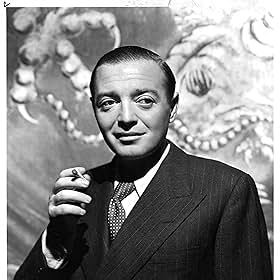
Even though M was Lang's (and Germany's) first sound film, many historians cite it as the initial masterpiece of cinema to appear following the introduction of sound into films in the late 1920's. While most early "talkies" return films to their static, visually monotonous, stage- imitative beginnings and thus limit rather than expand the artistic possibilities of the medium, M avoids the failing by skillfully balancing asynchronous, off-screen sounds with the more limiting use of synchronous dialogue. The film's editing, particularly its elaborate use of parallel cutting, also contributes kinetic energy and fluidity to the storytelling. Of course, many of the film's sound effects are also imaginative and memorable, none more so than the compulsive whistling of the film's central character, the stalker and serial killer of little girls Hans Beckert (magnificently played by Peter Lorre).
Sound is also an important contributor to M's rich and influential use of off screen space. One famous example is the scene that introduces Beckert as a shadow against his own Wanted poster, creepily intoning to his next victim, Elsie Beckmann, "You have a very pretty ball." Not only is Beckert's shadow a bow toward Lang's expressionist artistic roots, but it ironically places the murderer in the implied space in front of the image - that is, among us, the human community of viewers of which he is an innocuous-appearing, albeit monstrous, member. Another example of Lang's use of off-screen space is the montage of shots whose common denominator is Elsie's absence from them: an empty chair at the Beckmann dinner table, the vertiginous stairwell down which Elsie's mother searches compulsively and futilely for signs of her daughter's arrival, the attic play area that awaits Elsie's return from school. Most memorable of all - and most often alluded to visually in other films - is the series of shots that indirectly record Beckert's assault and murder of the innocent child, representing these off screen events metonymically via the entry of Elsie's ball from bushes along on the right edge of the frame and the release of her balloon from telephone wires and off the left edge of the frame. Never in the history of cinema has something so terrible been communicated through such powerfully understated images.
Beyond its technical brilliance, the keys to M's lasting impact are its psychologically convincing portrait of Hans Beckert's twisted compulsion and the still relevant ambivalence of his capture and "trial." Unlike contemporary cinematic examples of the serial killer, Beckert is not presented simply as a grotesque psychopath. Nor is the issue of how society should deal with him at all clear-cut. To be sure, the gut-reaction of most film audiences is to root on the underworld mobsters and petty thieves who, beating the established authorities to their mutual quarry, capture Beckert and bring him to a mock- formal trial whose conclusion is foregone. Like many in America today, Beckert's accusers are disinclined to listen to insanity pleas and would just as soon be rid of the "monster" in the surest way possible: a summary death penalty with as little fretting about legal rights as possible.
Considering the heinousness of Beckert's crimes and the imperfections of a legal/medical system that could well turn him loose to kill again, this emotional response is hard to resist. Yet M is by no means an endorsement of vigilantism - quite the contrary. Through the unlikely rhetorical persuasions of Beckert's unkempt "court appointed" defense attorney and Beckert's own impassioned monologue, Lang strongly implies that impatience with democratic judicial procedure and a paranoid eagerness to scapegoat others (guilty or not) in the name of order are symptomatic of the social hysteria breeding Nazism in 1930s Germany. That the ruthless killer who heads the underworld looks, dresses, and gestures like a Gestapo officer is no accident. Moreover, the letter "M" chalked on Beckert's back by one of his pursuers not only stands for "murderer" but also alludes to God's marking of Cain. While the popular misconception holds that the mark of Cain symbolizes his evil, it in fact represents God's warning to Cain's flawed fellow creatures not to mete out wrathful vengeance, but to leave justice in God's hands. Translated into secular terms (and literally entering the shot from the top of the frame), God's hands in M belong to the legitimate authorities that intervene at the last moment to arrest and try Hans Beckert "in the name of the Law."
Lang, a master of the German expressionist film, shot his first talkie, a crime drama considered a landmark in the story of suspense movies... It was a shocking idea for its time, based on the real-life killer Peter Kurten, headlined as the Vampire of Düsseldorf...
'M' is about a terrorized city, and a plump little man with wide eyes (often chewing candy) who is a pathological child-killer, unable to control his urge for killing...
The film embodies several Lang themes: the duality between justice and revenge, mob hysteria, the menacing anticipation of watching a helplessly trapped individual trying fruitlessly to escape as greater forces move inexorably in, and, for probably the first time in the cinema, it adds a new dimension to suspense: pity... For the killer is clearly mentally sick... He cannot overcome the overwhelming compulsion of his murderous disease, and yet, we see him hunted down and almost lynched as a criminal, rather than treated as a sick man...
Early in the film, the killer is heard whistling the Grieg theme from 'In the Hall of the Mountain King'. This theme inexorably becomes imbued with menace... And when we see no more than a girl looking in a shop window, the melody on the sound-track told us chillingly that the murderer is there, just out of sight...
The Murderer is played by Peter Lorre in a virtuoso performance that has barely been matched in all the thrillers he has made since 'Casablanca,' 'The Maltese Falcon,' and 'The Mask of Dimitrios.' When the photographs of his victims, all little girls, are shown to him, he jumps back and twitches with horror...
With powerful visuals, Lang's motion picture is Lorre's first film... His performance as the corpulent, hunted psychopath is a masterpiece of mime and suggestion... Lorre is the archetypal outsider-outside the law and society because of his compulsive crimes, outside the balancing society of the underworld because he is not a professional criminal... He had only twelve lines of dialog...
In the most famous of all about a pathological killer - Alfred Hitchcock's 'Psycho' - Anthony Perkins lacked not only the threat of the tortured Peter Lorre, but also the dimension of invoking our incredulous sympathy...
'Psycho' reeked with blood and horror, whereas the suspense of 'M' is subtle... A child's balloon without an owner, a rolling ball, are enough to tell us that another murder had been committed... The audience, trapped in its seats, torn by ambivalent feelings towards the killer, watched him trapped as the net is pulled tight...
It is a film devoid of typical humanitarian propaganda, yet it is not the case that we immediately feel the need to relate to the child murderer Hans Beckert ( Peter Lorre ) since Fritz Lang also shows us the effects his gruesome crimes have in the form of the police constantly raiding establishments, the grieving parents & random people accusing eachother of the murders. It is not a movie that forces its opinion on you, but causes you to think about what is truly right and wrong. Hans later claims he cannot help himself because he has an irresistible compulsive urge to kill which cannot be stopped, much to the dismay of other career crooks who claim they only commit crimes to survive and take no pleasure or feel no compulsion towards it. It is a psychological kind of movie that is still as relevant as ever today as it was in 1931.
Peter Lorre is ofcourse the perfect fit for the psychopathic child murderer, he has the perfect innocent wide eyed look for a psychopath, who seems to even be likeable when he is not murdering children. His signature whistle by Edvard Grieg - In the Hall of the Mountain King is a nice creepy addition to his character which he uses to lure kids to their doom. Ofcourse the incredible shot at the start which focuses on Hans's shadow on the poster that lists his crimes and reward for capture while talking to a little girl before killing her is a great ironic symbolism to announce his character.
It was Lang's first sound picture, yet only two third of the movie was shot with actual sound while everything else was shot silent. This was primarily to keep the costs down since sound equipment was very expensive at the time. It creates a weird mix in constant transitioning from silent to sound. Yet as Lang has stated it adds another layer to the eeriness the movie has, so it only enhances the experience instead of unimmersing you out of the film.
The cinematography is revolutionary in its use of low key lightning, which is a technique that was used many times after in the classic Film Noir era in Hollywood. The result is many Film Noirs share a visual resemblance with M due to their dark tone. Not only visually, but psychologically many themes of M have been repeated throughout the years in cinema. It was one of the first instances of a semi-sympathetic look on a pure psychopathic murderer, which has been repeated countless times in later years.
Some might feel sorry for Beckert for having this affliction of which he cannot be helped while others would prefer to see him hang, the movie doesn't shove the right answer down our throats, and it's possible to look at it from either way without having a right answer. It is a sociological thinking man's picture that is as relevant now as it ever was.
The story of M concerns a serial killer who preys on children & presents an underworld society whose usual business is disrupted due to the everyday raids carried out by the police to apprehend the killer-on-loose. Driven by police's continued failure & increasing losses in their business, the criminal bosses ultimately decide to take matters in their own hands & try to capture the killer all by themselves.
Directed by Fritz Lang, this is the film that the esteemed director called his finest & it's not really difficult to see why. The screenplay & direction brims with creativity, the suspense is wonderfully created & utilized, black-n-white photography is crisp & inventive, editing never lets the story settle down, score & sound effects work in seamless harmony, and Peter Lorre steals the show with a highly compelling performance.
On an overall scale, M is a cinematic treasure that has innovation written all over it. Whether it's the narrative style, leitmotifs, camera angles, sound mixing, symbolism or expressions, the contribution this German classic has made in the world of filmmaking is groundbreaking. A thought-provoking & well-researched study into the mind of a disturbed character, M is a strong meditation on the morals of right & wrong, that has a lot to say about our very own society.
Thoroughly recommended.
The film is lead by Peter Lorre in a transcending performance who plays the serial killer and rapist in which the film is centered around. In this performance Lorre is successful in something that at the very least is rare to see in any kind of film, compassion for a child killer and rapist. Lorre makes the viewer see, that he is not a criminal by choice but by a sickness of compulsion. Too often then not is our perception of a psychotic killer having that look that puts fear into his or hers victims' eyes. Lorre doesn't do that but rather displays a frightened man, a scared man. One in which his desperation leads to his hazardous behavior. His portrayal of a killer is not of a fearless one but of one consumed by fear. Something that even today we as a people cannot understand, let alone in 1931.
The direction and writing of Fritz Lang is beyond comprehensible as he taps into the mind of a serial killer and his complexities. He does so in such that we get an empathetic and compassionate illustration of all sides of the story. This in which by then end of the film all points of view are more then well delivered to the audience. Fritz Lang here, has simply created here a timeless masterpiece. One that excels in its technical aspects and enlightens the audience on a topic that other films still have not yet to match M in.
I highly recommend this film for many obvious reasons and conclusions. This film was created by one of the all time great directors in Fritz Lang, Lang's command for the screen is mesmerizing and a joy to witness and so on and so forth. Yet much of this is mostly superficial and a waste of time to continuously state. M, as I mentioned before takes a strong and original stance on an issue that we as a society yet have not fully resolved. This film may not give you THE answer on this issue but it may sway that moral compass of yours that lies inside of all of us.


Did you know
- TriviaContrary to popular belief, Fritz Lang did not change the title from "The Murderers are Among Us" to "M" due to fear of persecution by the Nazis. He changed the title during filming, influenced by the scene where one of the criminals writes the letter on his hand. Lang thought "M" was a more interesting title.
- GoofsWhen the gangsters find M in the attic and turn on the light, the clock behind M moves back five minutes from 11:55 to 11:50.
- Quotes
Hans Beckert: I can't help what I do! I can't help it, I can't...
Criminal: The old story! We never can help it in court!
Hans Beckert: What do you know about it? Who are you anyway? Who are you? Criminals? Are you proud of yourselves? Proud of breaking safes or cheating at cards? Things you could just as well keep your fingers off. You wouldn't need to do all that if you'd learn a proper trade or if you'd work. If you weren't a bunch of lazy bastards. But I... I can't help myself! I have no control over this, this evil thing inside of me, the fire, the voices, the torment!
Schraenker: Do you mean to say that you have to murder?
Hans Beckert: It's there all the time, driving me out to wander the streets, following me, silently, but I can feel it there. It's me, pursuing myself! I want to escape, to escape from myself! But it's impossible. I can't escape, I have to obey it. I have to run, run... endless streets. I want to escape, to get away! And I'm pursued by ghosts. Ghosts of mothers and of those children... they never leave me. They are always there... always, always, always!, except when I do it, when I... Then I can't remember anything. And afterwards I see those posters and read what I've done, and read, and read... did I do that? But I can't remember anything about it! But who will believe me? Who knows what it's like to be me? How I'm forced to act... how I must, must... don't want to, must! Don't want to, but must! And then a voice screams! I can't bear to hear it! I can't go on! I can't... I can't...
- Crazy creditsAll of the original credits appear only in the beginning with no music.
- Alternate versionsIn the English and French language versions, in addition to having been dubbed, had some footage re shot. These scenes include the telephone conversation between the minister and the police commissioner, and the ending of the film. Peter Lorre's performance in the trial was re shot, however this time he spoke his lines in English or French, depending upon the version. The shots of him are lit and photographed much differently than Fritz Lang's original footage. Additionally, a shot of the police arriving was inserted, taken from an earlier part of the film (whereas in the original German version no police forces are shown at all). The court scenes have been eliminated and replaced with happy endings where young children play a game similar to the one seen in the opening (English) or a smiling couple watching their children play in the street (French).
- ConnectionsEdited into Juden ohne Maske (1937)
Details
Box office
- Gross US & Canada
- $35,566
- Opening weekend US & Canada
- $6,123
- Mar 17, 2013
- Gross worldwide
- $35,566
- Runtime
- 1h 58m(118 min)
- Color
- Sound mix
- Aspect ratio
- 1.19 : 1
- 1.20 : 1