

A naive and wealthy young man seeks to impress a girl and then unwittingly signs up for army service.A naive and wealthy young man seeks to impress a girl and then unwittingly signs up for army service.A naive and wealthy young man seeks to impress a girl and then unwittingly signs up for army service.
- Awards
- 1 win total


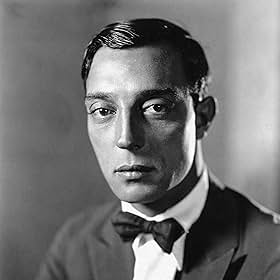


Ann Dvorak
- Chorine
- (scenes deleted)

Ann Sothern
- Chorine
- (scenes deleted)

Bobby Barber
- Doughboy
- (uncredited)

Sidney Bracey
- Recruiter
- (uncredited)

John Carroll
- Doughboy in Elmer's Squad
- (uncredited)

Jack Cheatham
- Guard House Sentry
- (uncredited)

Jimmie Dundee
- Riveter
- (uncredited)

Joseph W. Girard
- General Hull
- (uncredited)

Pat Harmon
- Induction Non-Com
- (uncredited)
Featured reviews
Keaton had more control over this film than he had on the previous "Free and Easy". MGM had tried to portray him as a sad clown, but happily they left him alone on this feature. Buster based this film on his experiences in the army during World War I. It is obvious from this movie that Buster was a peace loving man who really detested war. In his social satire, he is more subtle than Chaplin, but it's there. Buster is closer to his silent character here, but he does have to handle dialogue. He's still a little aprehensive, but remember, this was only his second sound film! The gags in this film are as clever as anything he did in his silent features and there is even a little, charming, impromptu musical interlude with Buster and Cliff "Jiminy Cricket" Edwards fooling around on ukeleles. This film was partially remade by Buster as a Columbia two-reeler called "General Nuisance". It is one of his better Columbia efforts.
This film seems like no one was sure of what to do now that they had to include sound. Keaton shares a number of scenes with Cliff Richards, an odd talent who most reminds me of Charlie McCarthy. Much of the dialog is spoken by the drill Sergent as he screams at Keaton. Keaton's gags are reduced to the sort that would have been throw-aways in his silent films. Many of the pratfalls are forced as you can see Keaton set himself up for another mishap. The entire cast seems unrehearsed. Some of the film is so oddly edited that I wonder if the print we have now was chopped up after the initial release. Compare this film with "Spite Marriage" from a year before and you'll wonder too how the same crew could have made both films. Not recommendable.
After "Free and Easy", I was seriously starting to wonder if I could bear to stick out the rest of Buster Keaton's MGM talkies. But in fact I not only managed to tolerate this; I actually enjoyed it.
"Doughboys" is never going to be anybody's classic, but it's a perfectly decent little picture. The quality of the contents is not great, but pretty consistent; its best moments never quite reach the heights of the best of "Three Ages" or "Spite Marriage", let alone, say, "Steamboat Bill, Jr"... but quite frankly, its worst moments are actually better than the more tedious sections of the former two movies. MGM's script department have, apparently, finally got their act together, and the dialogue is far more fluid -- and funnier -- than the laboured humour of "Free and Easy". Such a benchmark scarcely implies, of course, that the scenes necessarily sparkle in any way, but they're entertaining and seldom outstay their welcome. The cardinal virtue of this film in comparison with its predecessor is that it's rarely an embarrassment to watch.
Keaton himself appears much happier with his material here, and -- again unlike "Free and Easy" -- "Doughboys" clearly bears his stamp. This may be a talkie, but it's recognisably a Buster Keaton film, and allegedly one with autobiographical elements, as when he asks for a smaller pair of Army boots! We see the welcome return of Buster's trademark range of deadpan reactions, and revisit a couple of silent-era gags -- funnier when seen for the first time, but still old friends. The balance of visual versus verbal humour is much more even overall in this film, and it's better for it.
Sadly, given the age-distorted soundtrack of the print one problem this non-American viewer faced was considerable difficulty with some of the actors' accents. Buster himself is fine, but there were a couple of scenes -- including, unfortunately, the finale -- where I completely failed to understand what had just happened because a vital line was delivered in what appeared to be thick dialect.
My other principal dialogue issue is that (apparently gratuitous) line about Buster's being twenty-three, when he is quite evidently ten years older! Since the character is represented at both start and end of the film as being in a fairly senior position in the firm, and since his father and namesake is apparently old enough to have retired, I simply can't see any script logic in wrong-footing the audience in this way.
"Doughboys" doesn't have anything like the inventiveness or laugh quotient of Keaton's own early short films, or the depth of his great silent features, but there's nothing too much wrong with it bar a few mildly tedious stretches. An inoffensive lightweight comedy that no-one -- studio included -- need be ashamed of; as an apprenticeship in the technique of talkie humour this is fine, and it's nice to see places where Keaton is clearly enjoying himself again. Personally, I'd rather watch this than, say, "The Love Nest": at any rate it really doesn't deserve Leonard Maltin's dismissal as "one of Buster's worst films".
"Doughboys" is never going to be anybody's classic, but it's a perfectly decent little picture. The quality of the contents is not great, but pretty consistent; its best moments never quite reach the heights of the best of "Three Ages" or "Spite Marriage", let alone, say, "Steamboat Bill, Jr"... but quite frankly, its worst moments are actually better than the more tedious sections of the former two movies. MGM's script department have, apparently, finally got their act together, and the dialogue is far more fluid -- and funnier -- than the laboured humour of "Free and Easy". Such a benchmark scarcely implies, of course, that the scenes necessarily sparkle in any way, but they're entertaining and seldom outstay their welcome. The cardinal virtue of this film in comparison with its predecessor is that it's rarely an embarrassment to watch.
Keaton himself appears much happier with his material here, and -- again unlike "Free and Easy" -- "Doughboys" clearly bears his stamp. This may be a talkie, but it's recognisably a Buster Keaton film, and allegedly one with autobiographical elements, as when he asks for a smaller pair of Army boots! We see the welcome return of Buster's trademark range of deadpan reactions, and revisit a couple of silent-era gags -- funnier when seen for the first time, but still old friends. The balance of visual versus verbal humour is much more even overall in this film, and it's better for it.
Sadly, given the age-distorted soundtrack of the print one problem this non-American viewer faced was considerable difficulty with some of the actors' accents. Buster himself is fine, but there were a couple of scenes -- including, unfortunately, the finale -- where I completely failed to understand what had just happened because a vital line was delivered in what appeared to be thick dialect.
My other principal dialogue issue is that (apparently gratuitous) line about Buster's being twenty-three, when he is quite evidently ten years older! Since the character is represented at both start and end of the film as being in a fairly senior position in the firm, and since his father and namesake is apparently old enough to have retired, I simply can't see any script logic in wrong-footing the audience in this way.
"Doughboys" doesn't have anything like the inventiveness or laugh quotient of Keaton's own early short films, or the depth of his great silent features, but there's nothing too much wrong with it bar a few mildly tedious stretches. An inoffensive lightweight comedy that no-one -- studio included -- need be ashamed of; as an apprenticeship in the technique of talkie humour this is fine, and it's nice to see places where Keaton is clearly enjoying himself again. Personally, I'd rather watch this than, say, "The Love Nest": at any rate it really doesn't deserve Leonard Maltin's dismissal as "one of Buster's worst films".
Buster's talkie years get a bad rap but this one is solid. It's fascinating to watch Buster's take on WWI, especially now that I know he actually was a WWI veteran and saw combat. There's some genuine movie magic here. If you're a Buster fan, it's worth a watch.
Doughboys (1930)
* (out of 4)
Horrendous and embarrassing "comedy" features Buster Keaton playing a rich man who accidentally signs up for the Army but once there he's pleasantly surprised and happy to see the woman (Sally Eilers) who kept turning him down on the outside. After a classic (THE CAMERAMAN) and a good film (SPITE MARRIAGE) it pretty much went downhill for Keaton when he signed with MGM. I think some of the movies he made for the studio are underrated or at least overly criticized but DOUGHBOYS is without question the worst and I'd say it's also probably one of the worst to come from a major studio during this era. I'm really not sure where the start because the entire film is just one embarrassing moment after another but I guess we can start with the screenplay. This type of comedy certainly didn't go hand and hand with Keaton because he's the last type of comedian who should be playing a part like this. The actor constantly looks as if he's being held back by the screenplay and what's even worse is that every once in a while we're given "classic Keaton" routines but even these here fail miserably. There are a few instances where Keaton's style of slapstick is used but it just never works because the script is so lazy. Keaton slips and slides around in some mud, gets in trouble with the drill sergeant and for the first twenty-minutes of the movie he just comes across annoying by constantly giving dumb answers to questions. Eddie Brophy plays the drill sergeant and he too comes across quite annoying as he does nothing but scream and it's not funny. The direction is weak, the comedy has no laughs and the entire production just has a very cheap feel to it. There are a few chuckles here and there but that's not good enough for someone with as much talent as Keaton.
* (out of 4)
Horrendous and embarrassing "comedy" features Buster Keaton playing a rich man who accidentally signs up for the Army but once there he's pleasantly surprised and happy to see the woman (Sally Eilers) who kept turning him down on the outside. After a classic (THE CAMERAMAN) and a good film (SPITE MARRIAGE) it pretty much went downhill for Keaton when he signed with MGM. I think some of the movies he made for the studio are underrated or at least overly criticized but DOUGHBOYS is without question the worst and I'd say it's also probably one of the worst to come from a major studio during this era. I'm really not sure where the start because the entire film is just one embarrassing moment after another but I guess we can start with the screenplay. This type of comedy certainly didn't go hand and hand with Keaton because he's the last type of comedian who should be playing a part like this. The actor constantly looks as if he's being held back by the screenplay and what's even worse is that every once in a while we're given "classic Keaton" routines but even these here fail miserably. There are a few instances where Keaton's style of slapstick is used but it just never works because the script is so lazy. Keaton slips and slides around in some mud, gets in trouble with the drill sergeant and for the first twenty-minutes of the movie he just comes across annoying by constantly giving dumb answers to questions. Eddie Brophy plays the drill sergeant and he too comes across quite annoying as he does nothing but scream and it's not funny. The direction is weak, the comedy has no laughs and the entire production just has a very cheap feel to it. There are a few chuckles here and there but that's not good enough for someone with as much talent as Keaton.


Did you know
- TriviaIn 1941, after President Franklin Roosevelt and Congress passed the first peacetime draft in U.S. history, Buster Keaton approached MGM to see if they would be interested in making a sequel to "Doughboys." He had found that all the principal actors in "Doughboys" were still alive and living in the L.A. area, and he intended to use them in the sequel as they had naturally aged. MGM's executives turned him down because they didn't think a comedy about the peacetime draft would draw audiences. Then Universal released Abbott and Costello's "Buck Privates," a comedy about the peacetime draft, and it became the most successful film of 1941.
- GoofsThe story takes place in 1917-1918, but all of the women's clothes, hats, and hairstyles are strictly 1930.
- Quotes
Elmer J. Stuyvesant Jr.: I'll run into you - some other war, sometime.
- ConnectionsAlternate-language version of De frente, marchen (1930)
- SoundtracksSing
(1930) (uncredited)
Music by Joseph Meyer
Lyrics by Howard Johnson
Performed by Cliff Edwards (vocals and ukelele), Sally Eilers (dance) and chorus
Details
- Release date
- Country of origin
- Languages
- Also known as
- Forward March
- Filming locations
- Production company
- See more company credits at IMDbPro
- Runtime
- 1h 19m(79 min)
- Color
Contribute to this page
Suggest an edit or add missing content