







An unclassifiable but whimsically rewarding anti-neocolonialist travelogue that sees the director turn the camera onto himself as he leaves his poor village and discovers how ridiculously modern the Western world is.
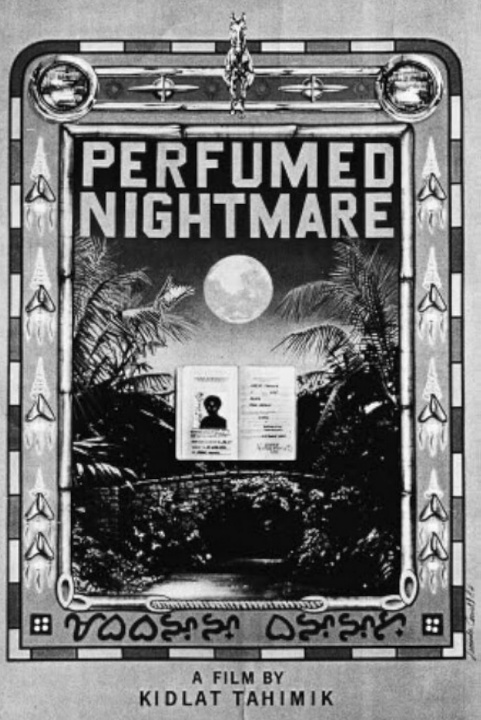
Review #2,863
Dir. Kidlat Tahimik
1977 | Philippines | Documentary | 95 min | 1.33:1 | English, Tagalog, French & German
PG (passed clean)
Cast: –
Plot: Young Kidlat is a jeepney driver in the Philippines, but his dream is to leave his village and travel to Europe, the embodiment of the technological advancement he idolizes. Instead, he discovers inhumane modernity no better than what he left behind.
Awards: Won FIPRESCI Prize, OCIC Award & Interfilm Award (Berlinale)
Distributor: –
Accessibility Index
Subject Matter: Moderate – Tradition vs. Modernity; The Technological West; Personal Travelogue
Narrative Style: Slightly Complex
Pace: Slightly Slow
Audience Type: Slightly Arthouse
Viewed: MUBI
Spoilers: No
Winner of multiple awards at the Berlinale despite being Kidlat Tahimik’s feature debut, Perfumed Nightmare has garnered some kind of legendary reputation in Philippine cinema for being, firstly, a film quite unlike anything else that was conceptualised and produced at the time and, secondly, a work that engages with how the Philippines sees itself in the modern world.
Through the eyes of Tahimik himself, Perfumed Nightmare captures life in his poor village through what seems like a no-frills 16mm camera as he amusingly introduces himself and his ‘Third World’ environment.
With an old squeaky radio in hand that broadcasts the ‘Voice of America’, he learns about the Western world and obsesses about rockets and going to space.
Much of the documentary’s first half is ethnographic, including an explicit ‘look-away’ scene of boys being circumcised, but what follows sees Tahimik having a rare opportunity to travel to France (as well as Germany and the US) for a year’s worth of work.
“You cannot build rocket ships from bamboo.”
And so, he continues to document like a travelogue, shocked by technological advancements like moving stairs (escalators!) and futuristic architecture (supermarkets!) in the West.
As the oxymoronic title ‘Perfumed Nightmare’ suggests, this is a film about the tantalising prospect of human progress (or is it the perils of modernity?) Like a dream, only nightmarish, but to whom?
Can Tahimik’s village survive such a radical—or perhaps ridiculous—transformation one day as Western influences inevitably creep in and capitalism triggers a dog-eat-dog corporatisation of ancient lands?
At once unclassifiable and also an anti-neocolonialist treatise, Perfumed Nightmare reminds us that progress and development may be welcome but not at the expense of what makes us human beings from a place of real history and tradition, especially one haunted by the spectre of colonialism.
The film’s whimsical quality takes us through this eternal debate over tradition and modernity with a twinkle in the eye. At the same time, it also asks: what compromises can we allow ourselves to make in our desire to become a citizen of the world?
Grade: B+
Trailer:
 Eternality Tan