Science, technology and the Third World
Abdus Salam believed that the gap between rich and poor nations is one of science and technology. His former student Riazuddin describes efforts to bridge that gap.

Abdus Salam believed that the gap between rich and poor nations is one of science and technology. His former student Riazuddin describes efforts to bridge that gap.
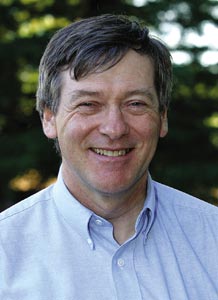 Read article 'Understanding the physics of the universe'
A new institute at Stanford comes at just the right time, says Roger Blandford, future director of the Kavli Institute for Particle Astrophysics and Cosmology.
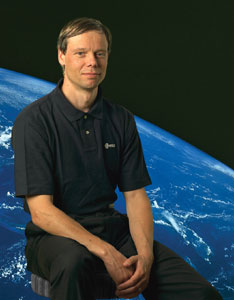 Read article 'From research at CERN to working in space'
European Space Agency astronaut Christer Fuglesang explains how his training in particle physics at CERN prepared him for a career in space.
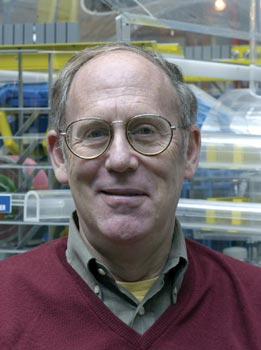 Read article 'LHC and the Grid: the great challenge'
Ultra-high performance distributed computing software is vital for a successful LHC physics programme. This presents a challenge and an opportunity, says Robert Eisenstein.
 Read article 'Berkeley Lab: evolving for the future'
Originally an accelerator laboratory, LBNL now covers a broad range of fields. Deputy director Pier Oddone outlines the vibrancy of the multidisciplinary approach.
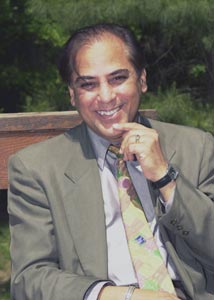 Read article 'Accelerators for nano- and biosciences'
Practical, affordable yet unique and exciting new accelerator facilities could advance vital research capabilities for nano- and bioscience, says Swapan Chattopadhyay.
 Read article 'Particle physics: a world without borders'
It's about time particle physics laboratories collaborated in their communication, says Judy Jackson.
 Read article 'Globalization, collaboration and trust'
Big science needs its own brand of globalization, argues chairman of the DESY directorate, Albrecht Wagner.
 Read article 'Changing the culture of big science'
As scientific facilities become larger and more costly, so the management challenge grows. CERN director-general Luciano Maiani says that lessons learned from the LHC cost overrun will ultimately bene...
 Read article 'Accelerator science needs more brain power'
Although the application of accelerators to science grew in the early 20th century, Maury Tigner says that further technical advances depend on greater intellectual input.