CCUIH Policy
What We Do
Legislative Updates
Click on any month to expand and read that report. Check back in each month to see what the CCUIH policy team has been up to!
2025 Year in Review & 2026 Look Ahead
Click here to download the full Legislative Report!
2025 was a year of significant operational and policy shifts for Urban Indian Organizations. Federal oversight increased, state reforms were delayed, and the federal shutdown disrupted funding and timelines. Behavioral health needs rose, Medi-Cal navigation demands grew, and UIOs continued supporting communities through MMIP-related needs and increasing youth behavioral health concerns. Workforce pressures and public health demands also persisted.
Looking ahead to 2026, UIOs will implement new privacy and data requirements and prepare for the return of major two-year bills early in the legislative session. Federal appropriations, grant timelines, and Medicaid policy proposals will continue to shape stability. UIOs enter this new year focused on continuity, preparation, and maintaining community-centered care amid ongoing system transition.
MEDICAID & MEDI-CAL: Navigating a Shifting Landscape
Medi-Cal and Medicaid were highly dynamic in 2025. UIOs supported patients through coverage interruptions, administrative updates, and benefit planning.
- The federal shutdown delayed some grants, payments, and agency communications; IHS clinical operations continued due to advance appropriations.
- Federal Medicaid proposals created additional monitoring needs to ensure AI/AN protections remained intact.
- Medi-Cal redeterminations increased UIO administrative work on reinstatements and continuity of care.
- Several Medi-Cal bills were carried into 2026.
- TH–NH services began early Medi-Cal implementation, with UIOs and DMC-ODS counties working through reimbursement and documentation steps under the waiver through December 31, 2026
Bottom Line: Coverage and administrative changes increased navigation needs, and UIOs remained the main support for helping patients maintain Medi-Cal access.
BEHAVIORAL HEALTH: Rising Needs in a Transition Year
Behavioral health needs continued to increase for AI/AN communities, especially youth and families experiencing trauma and chronic stress.
- UIOs reported increased behavioral health demand, particularly for youth and families navigating trauma, stress, and crisis support needs.
- While new behavioral health funding was introduced statewide, no new funding streams were created specifically for UIOs or the I/T/U system.
- CYBHI advanced statewide, yet its school-centered design left gaps for youth receiving care in community settings such as UIO clinics.
- Documentation modernization required workflow adjustments.
-
The statewide behavioral health system transformation under BHSA shifts reforms from individual bills to a broad system overhaul effective July 1, 2026; counties are preparing integrated plans under the new framework.
-
Federal shutdown delays affected HRSA and SAMHSA grants.
-
Federal proposals and litigation affecting Medicaid/CHIP gender-affirming care required monitoring.
Bottom Line: Behavioral health needs grew while system updates were delayed, requiring UIOs to meet rising demand within existing resources.
MMIP: Ongoing Impacts on Health and Safety
MMIP continued to shape UIO work in crisis response, behavioral health, and family support.
- UIOs supported families through crisis navigation and follow-up care.
- Coordination challenges persisted across jurisdictions.
- MMIP bills stalled in 2025, with all major proposals continuing as two-year bills for action in 2026.
- Data access gaps remained across agencies.
Bottom Line: MMIP remains a major health and safety concern, and UIOs provide critical support without dedicated funding streams.
PUBLIC HEALTH & PREVENTION
Demand increased for prevention, chronic disease care, STI response, and MCH services.
- Increased volumes in MCH, chronic disease, and prevention programs.
- Federal shutdown delayed prevention grant timelines.
- Uncertainty about Marketplace subsidies beyond 2025 may cause more people to cycle in and out of coverage.
- Several reproductive and oral health laws take effect January 1, 2026.
Bottom Line: Public health needs grew in 2025 while funding stayed flat.
WORKFORCE
Workforce shortages remained a core challenge for UIOs in 2025.
- Shortages persisted across SUD, primary care, MCH, and prevention roles.
- Workforce bills moved to 2026.
- Specialty care wait times increased across systems.
Bottom Line: Workforce limitations continued to affect service access and program growth.
DATA, REPORTING & PRIVACY
UIOs experienced a growing set of state and federal data requirements.
- SB 1016 Indigenous category planning began.
- New state privacy and health-data laws (including AB 45 and SB 278) taking effect January 1, 2026 will require new workflows and consent processes.
- Federal oversight increased under new directives.
- IHS/HHS modernization created uncertainty about Urban data pathways.
Bottom Line: New state and federal data requirements require planning and system updates in early 2026.
340B & PHARMACY
Major changes to 340B will affect UIO pharmacy operations in 2026.
- A federal 340B rebate model pilot begins January 1, 2026 for selected drugs and participating entities.
- Certain drugs must be purchased at WAC up front.
- Rebates will come later, requiring new tracking processes.
- Contract pharmacy arrangements may need adjustments.
Bottom Line: The 340B rebate model will require operational and cash flow adjustments.
FEDERAL LANDSCAPE
Federal policy shifts in 2025 shaped funding, timelines, and oversight.
- Executive Orders increased oversight and documentation requirements.
- HHS restructuring created uncertainty around modernization timelines and Urban Confer. This is paused due to pending legal action.
- Shutdown delayed grants, payments, and technical assistance.
- SDPI remained on temporary authorization.
- PRWORA-related discussions required ongoing monitoring.
- Federal Medicaid proposals — including eligibility tightening, gender-affirming care restrictions, and work-requirement discussions — required monitoring to ensure AI/AN protections remained intact.
Bottom Line: Federal activity introduced delays, oversight requirements, and shifting priorities that UIOs had to plan around.
Key Dates● January 1, 2026: Most 2025 chaptered laws take effect ● January 1, 2026: 340B rebate model begins ● January 31, 2026: Two-year bill deadline ● Federal appropriations remain unresolved entering 2026 Operational Priorities● TH–NH documentation and reimbursement workflows ● Implementation of 2026 privacy and data laws ● Adjustments for 340B rebate model ● Ongoing Medi-Cal redeterminations ● Rising Behavioral health needs linked to CARE Court and FSP updates
|
October End-of-Session
The 2025 California Legislative Session adjourned on September 13, and the Governor’s October 13 deadline to sign or veto bills has passed, finalizing the state’s legislative actions for the year. Several key health and public safety bills were signed, while many others moved to the inactive file, becoming two-year bills for 2026. Federally, the government shutdown that began on October 1 remains unresolved, with Congress still in recess, delaying appropriations and impacting grant processing and operational stability for UIOs. A special election in early November adds further uncertainty as state and federal budget debates evolve.
August 2025
August brought critical developments for Urban Indian Organizations (UIOs) at both the federal and state levels. Federally, we are deeply concerned with HHS’ reinterpretation of PRWORA, which expands verification requirements across benefit programs and creates new administrative and access risks for UIOs. FY 2026 appropriations remain unsettled, with the House proposing a $15M increase for Urban Indian Health and the Senate holding flat, while implementation of H.R. 1 (“One Big Beautiful Bill”) will begin in January 2026, reshaping Medicaid through cost-sharing, asset tests, and work rules—though AI/AN exemptions remain in place. Risks also persist around SAMHSA funding and new federal grant restrictions tied to equity language. At the state level, several Medi-Cal State Plan Amendments were noticed in August with September comment deadlines, and key bills on telehealth, community health workers, perinatal care, and patient privacy are advancing, while AB 1113 (restricting FQHC spending) became a two-year bill. Over 650 measures faced suspense hearings at the end of August, and SEIU-UHW has filed a 2026 ballot initiative that would impose new financial mandates on community health centers, raising significant concerns for UIO operations.
June 2025
May 2025
CCUIH 2025–26 MAY REVISION BUDGET POLICY ANALYSIS
Impacts on Urban Indian Organizations and AI/AN Communities
BUDGET LANDSCAPE :
The May Revision to the Governor’s 2025–26 Budget reflects a projected $12 billion shortfall, with significant reliance on deferrals, program delays, and spending reductions. While General Fund spending in Health and Human Services increases on paper, this section begins the detailed analysis of each budget area. It provides the foundation of the document by addressing the most direct and significant implications for Urban Indian Organizations (UIOs), particularly in Medi-Cal and public health policy. While the total Health and Human Services budget increases on paper, this growth is driven by rising Medi-Cal caseloads and federally mandated costs. For Urban Indian Organizations (UIOs), the budget presents serious structural risks, including care disruptions, uncompensated care burdens, and defunding of culturally grounded care models. The May Revision offers few, if any, targeted protections for American Indian and Alaska Native (AI/AN) communities in urban areas.
April 2025
All eyes are on May 14, when the Governor’s May Revision will be released—expected to outline a two-year spending plan with deep cuts across health and human services. CCUIH is monitoring closely for impacts to Urban Indian health, especially in behavioral health, workforce, and prevention. At the federal level, IHS announced it will maintain competitive behavioral health grant funding through FY27, continued its PATH EHR rollout, and included UIOs in revenue cycle planning. Meanwhile, the Trump administration’s upcoming budget proposal is expected to target Medicaid, IHS, and non-defense discretionary programs. In April, CCUIH testified on AB 1113, tracked 74 active state bills, and held nine congressional meetings during the NCUIH Annual Conference to defend UIO funding and share patient impact stories. The policy team also advanced coalition efforts with CPCA, CPEHN, DHCS, Cal Wellness, and others to shape state and federal policy for AI/AN health equity.
March 2025
The March 2025 Legislative Report highlights CCUIH’s advocacy at both the federal and state levels to ensure Urban Indian Organizations (UIOs) are prioritized in key policy decisions. At the federal level, CCUIH participated in the California Area IHS Urban Confer, emphasizing IHS accountability, data transparency, and financial stability for UIOs. As federal budget cuts loom, CCUIH is ramping up advocacy to protect UIO funding following the recent stopgap extension. The report also addresses potential IHS lease terminations and the urgent need for continued support. On the state side, CCUIH is advancing legislation on healthcare expansion, telehealth, and workforce development, with several priority bills moving forward. Additionally, DHCS released the long-awaited BHIN on reimbursement for Traditional Healers and Natural Helpers under the 1115 waiver—an important milestone for culturally responsive care. CCUIH will host an informational session for UIOs on March 31 to support implementation.
February 2025
The year has started with major challenges for Urban Indian health, from funding threats to policy changes that could impact care. CCUIH is actively engaged in advocacy, tracking key legislation, and preparing for critical discussions at the February 24 budget hearing. Now is the time for action—your voice and engagement are crucial to protecting Urban Indian health services.
January 2025
Legislative Developments:
Multiple bills we are tracking in the California State Assembly have been accepted and are currently being assigned to committees. (Expect a list of bills we are tracking coming your way in February). If there are any bills you are particularly interested in, please let us know.
Policy Updates:
1115 Waiver: The Department of Health Care Services (DHCS) guidance and opt-in guidance were submitted.
Upcoming Meeting: DHCS Tribal Health/Native Health (TH/NH), Tribes, and Indian Health Program Representatives Meeting is scheduled for Monday, February 3rd, 1-3 PM.
2024 Updates
Pocket-Sized Policy
View and download any graphic by clicking on it!
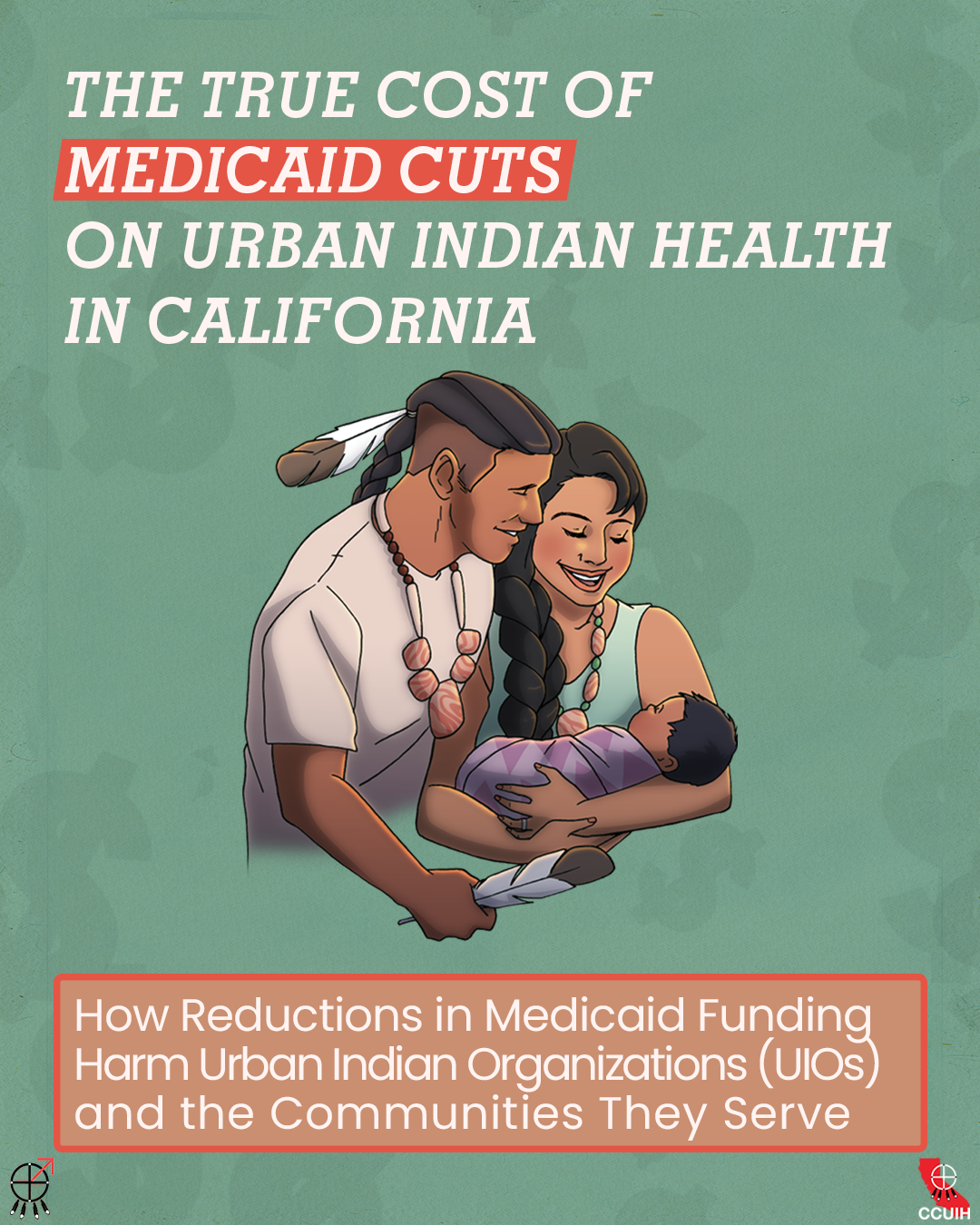
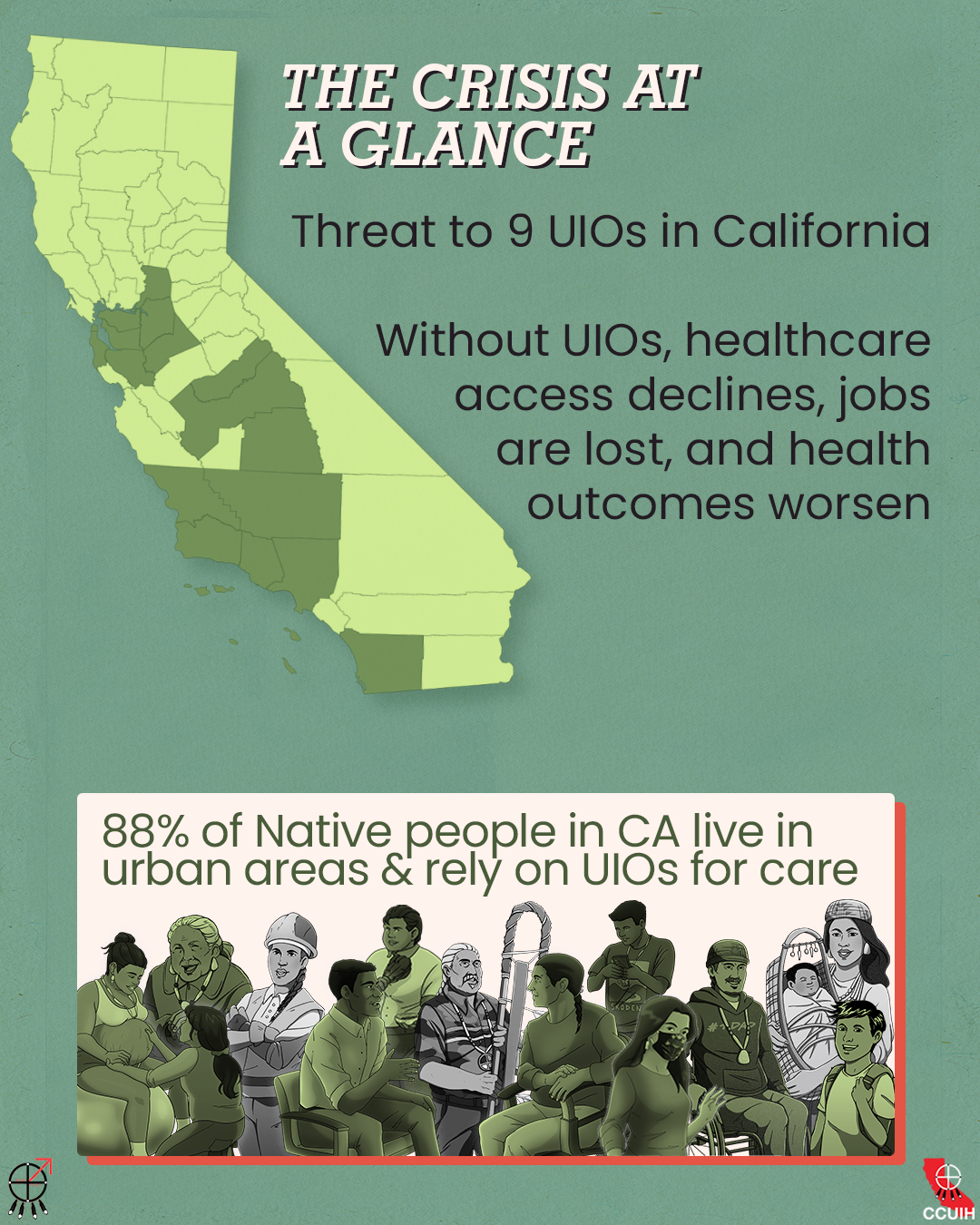
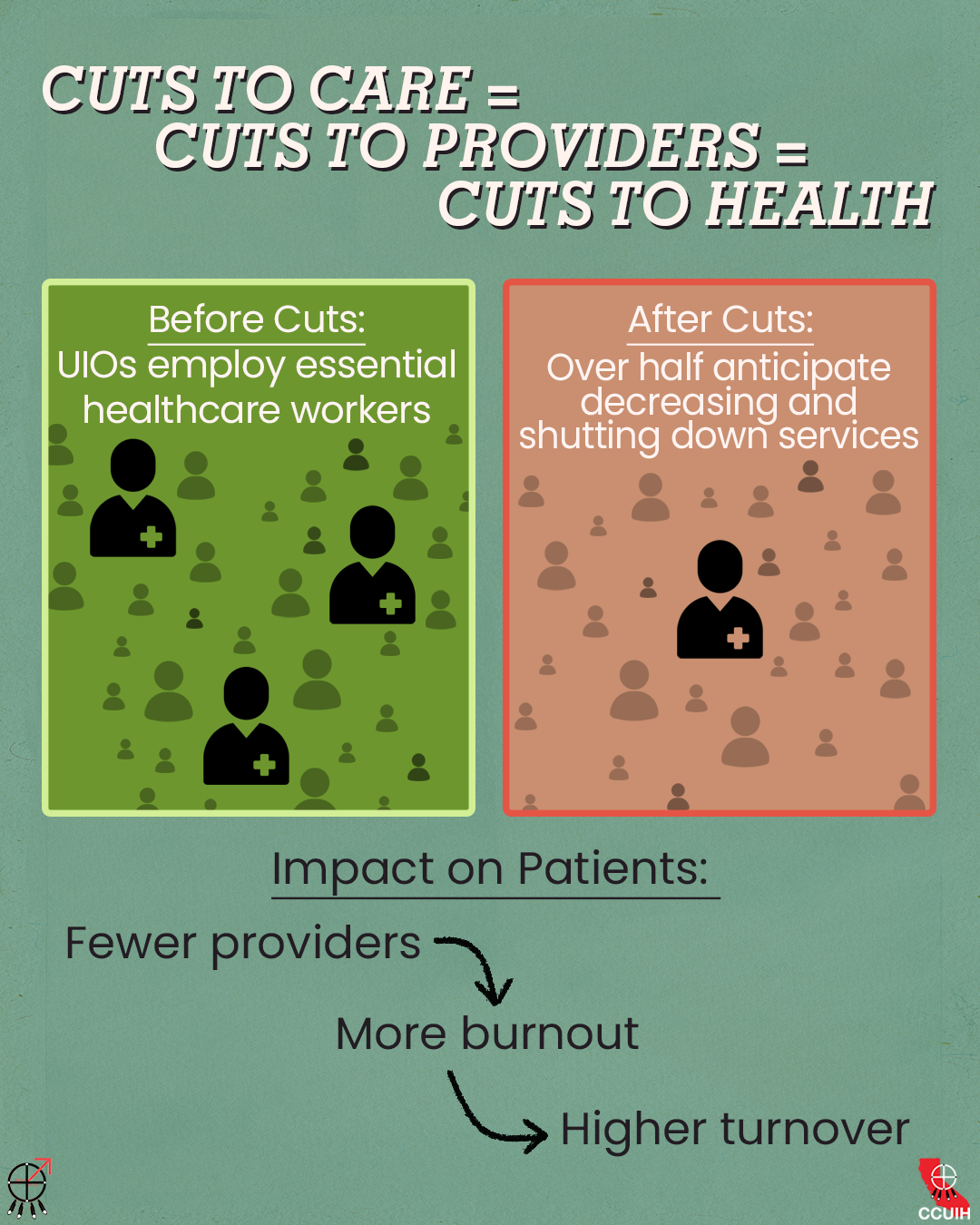
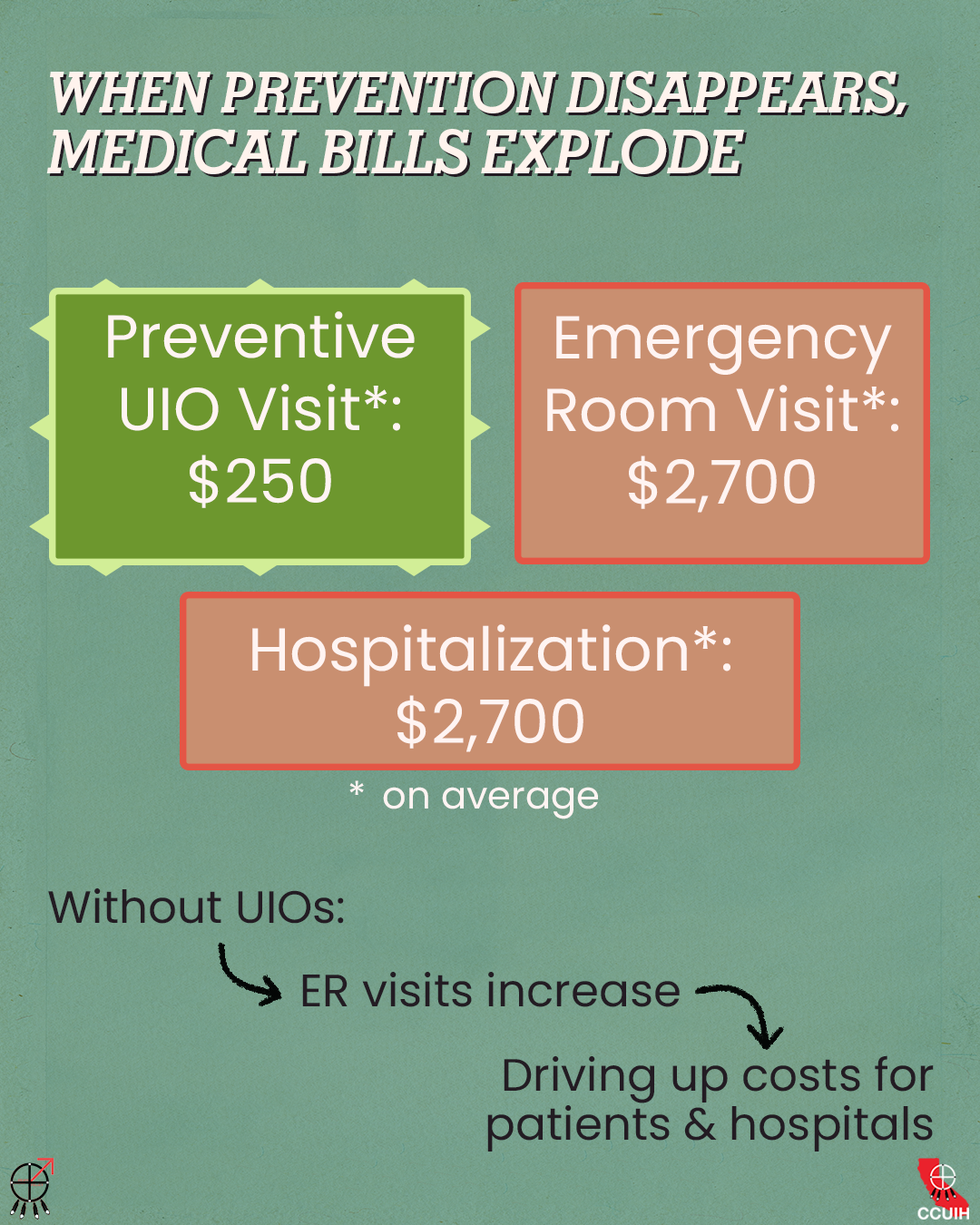
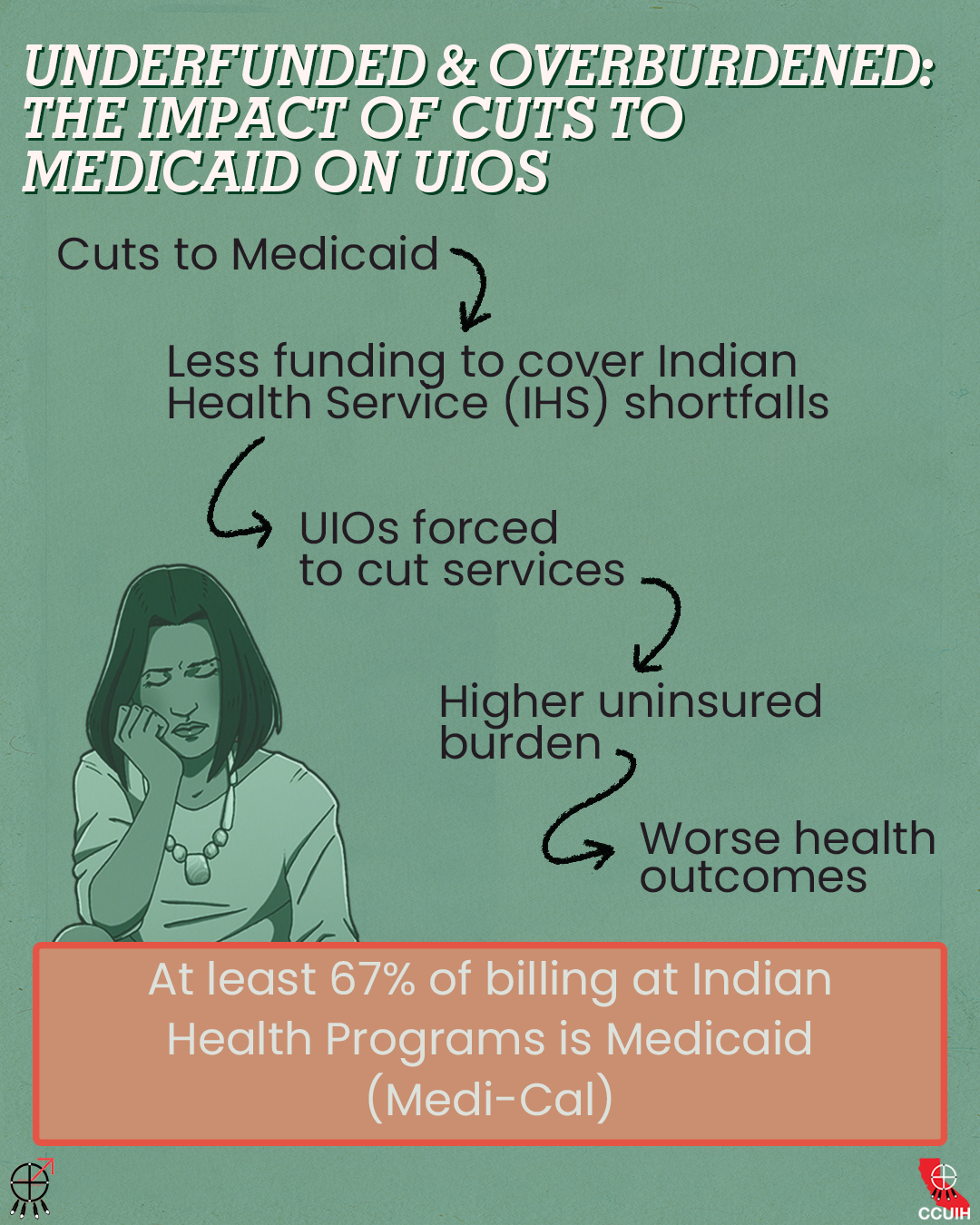
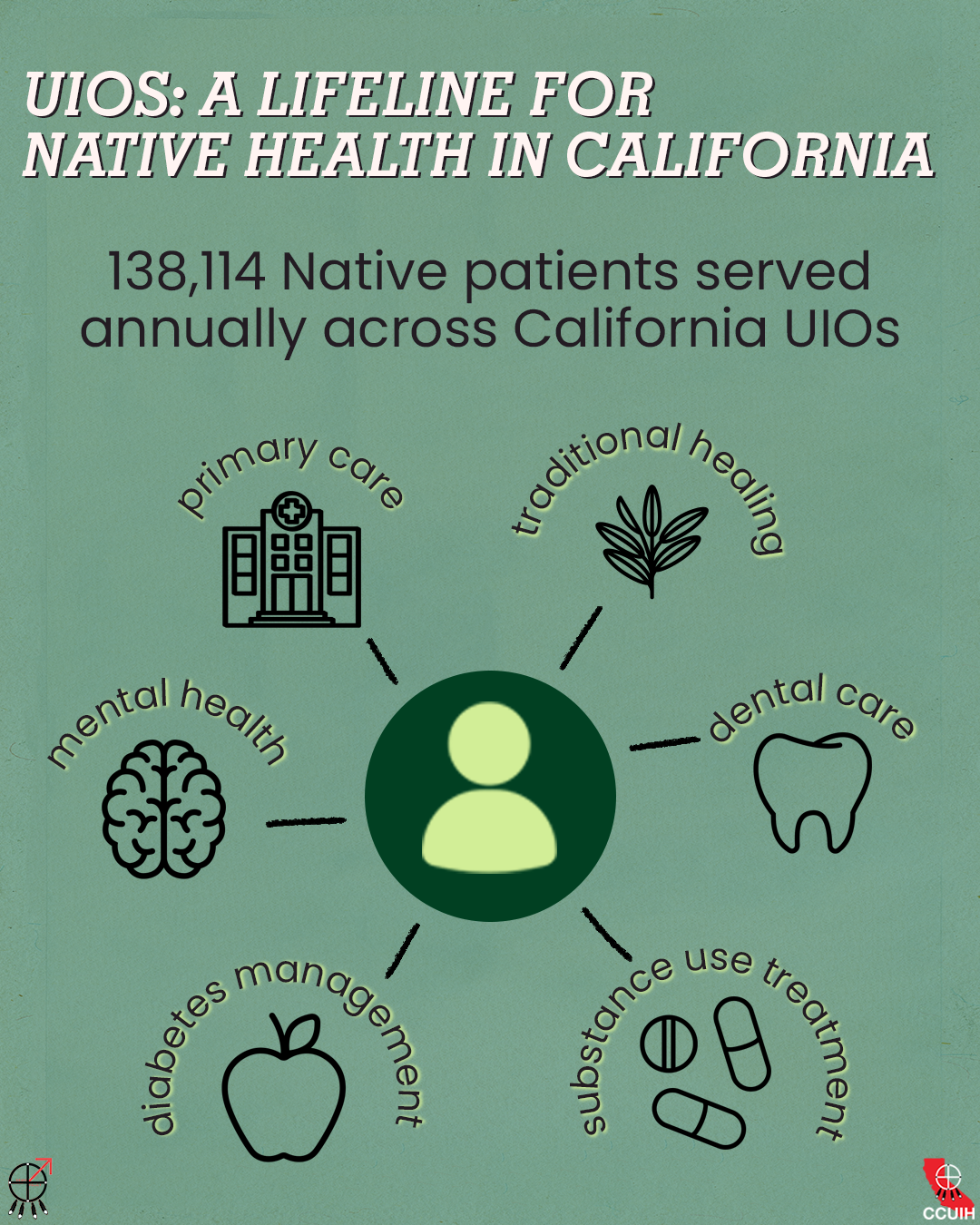
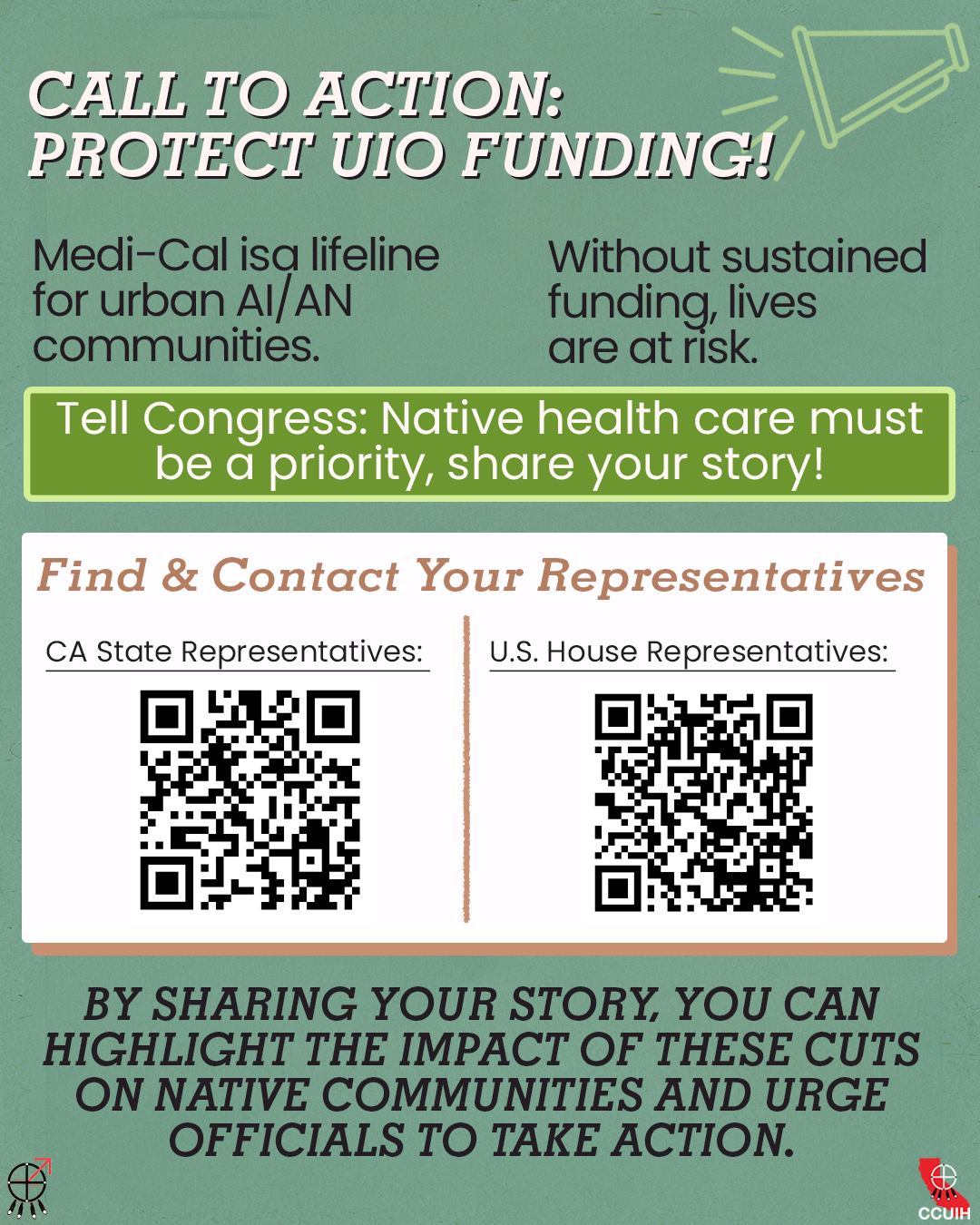
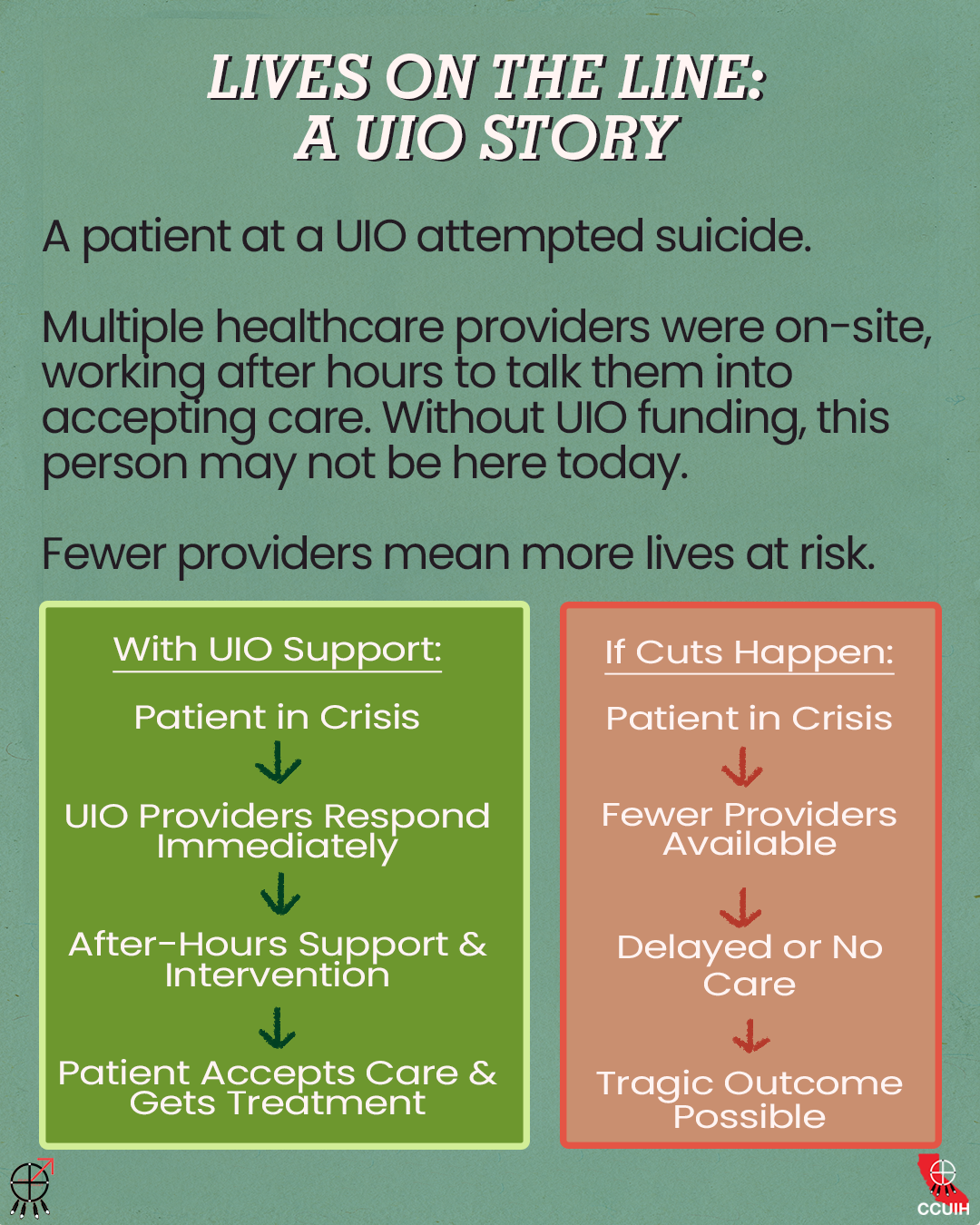
The True Cost of Medicaid Cuts on Urban Indian Health in California:
How Reductions in Medicaid Funding Harm Urban Indian Organizations (UIOs) and the Communties they Serve
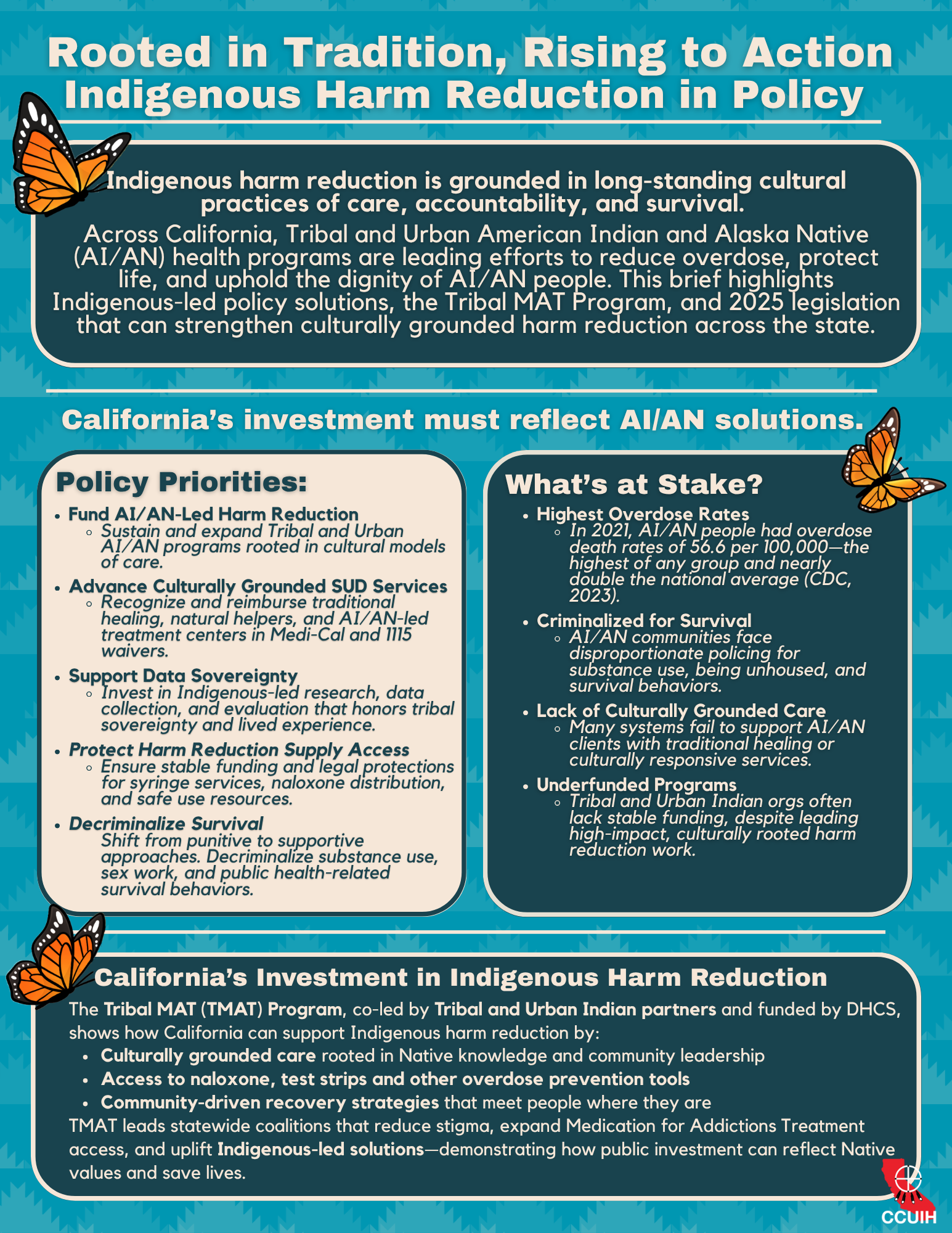
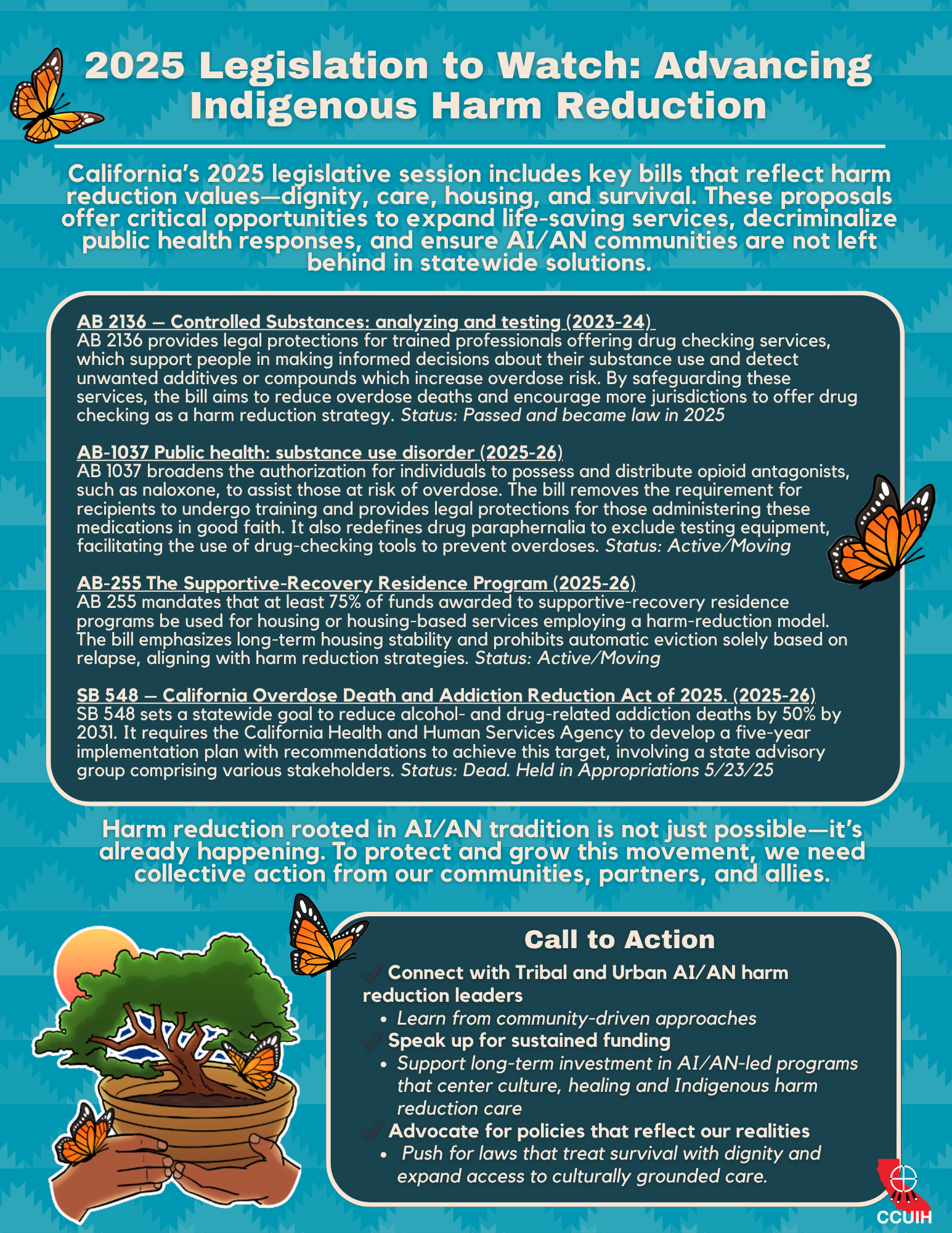
Rooted in Tradition, Rising to Action:
Indigenous Harm Reduction in Policy
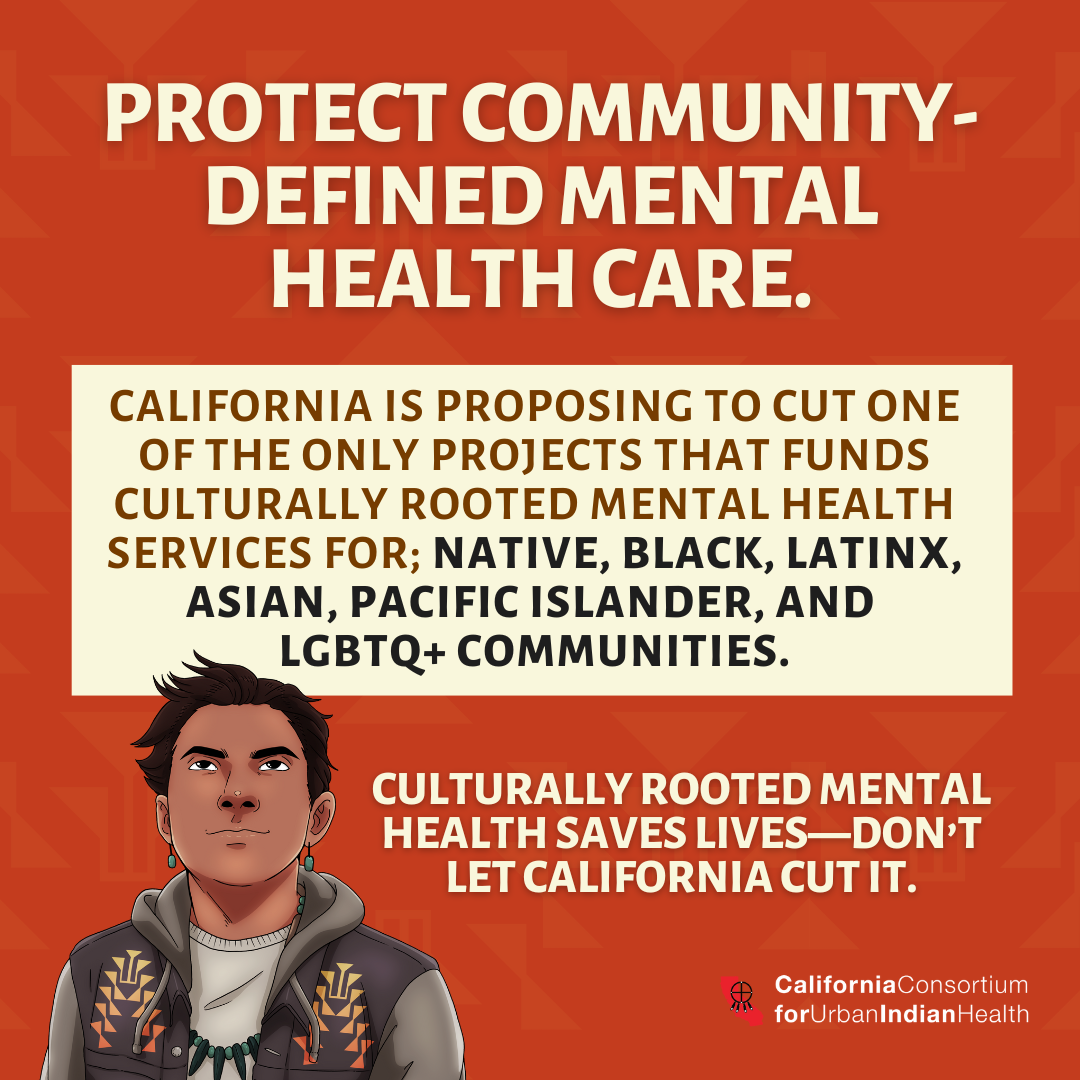
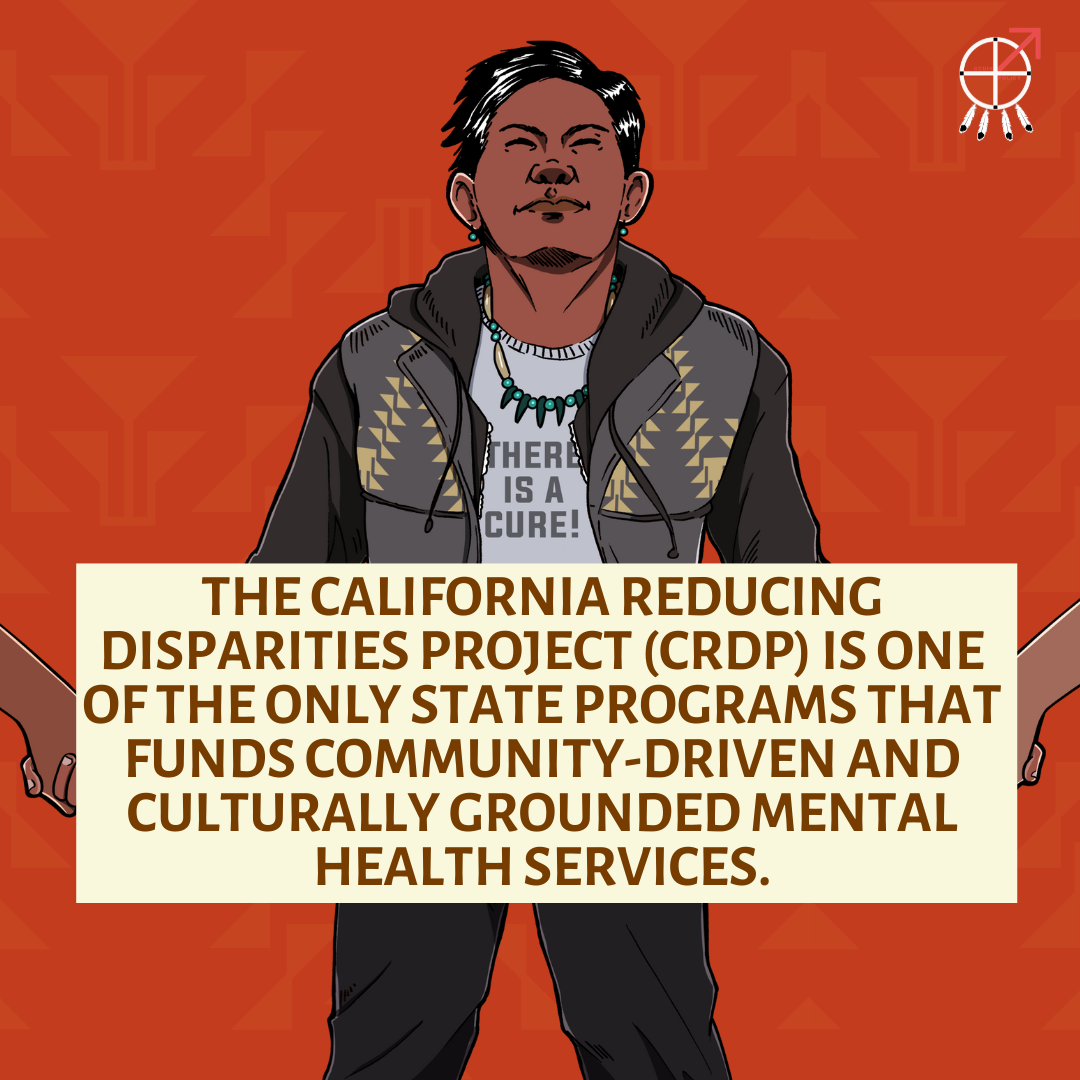
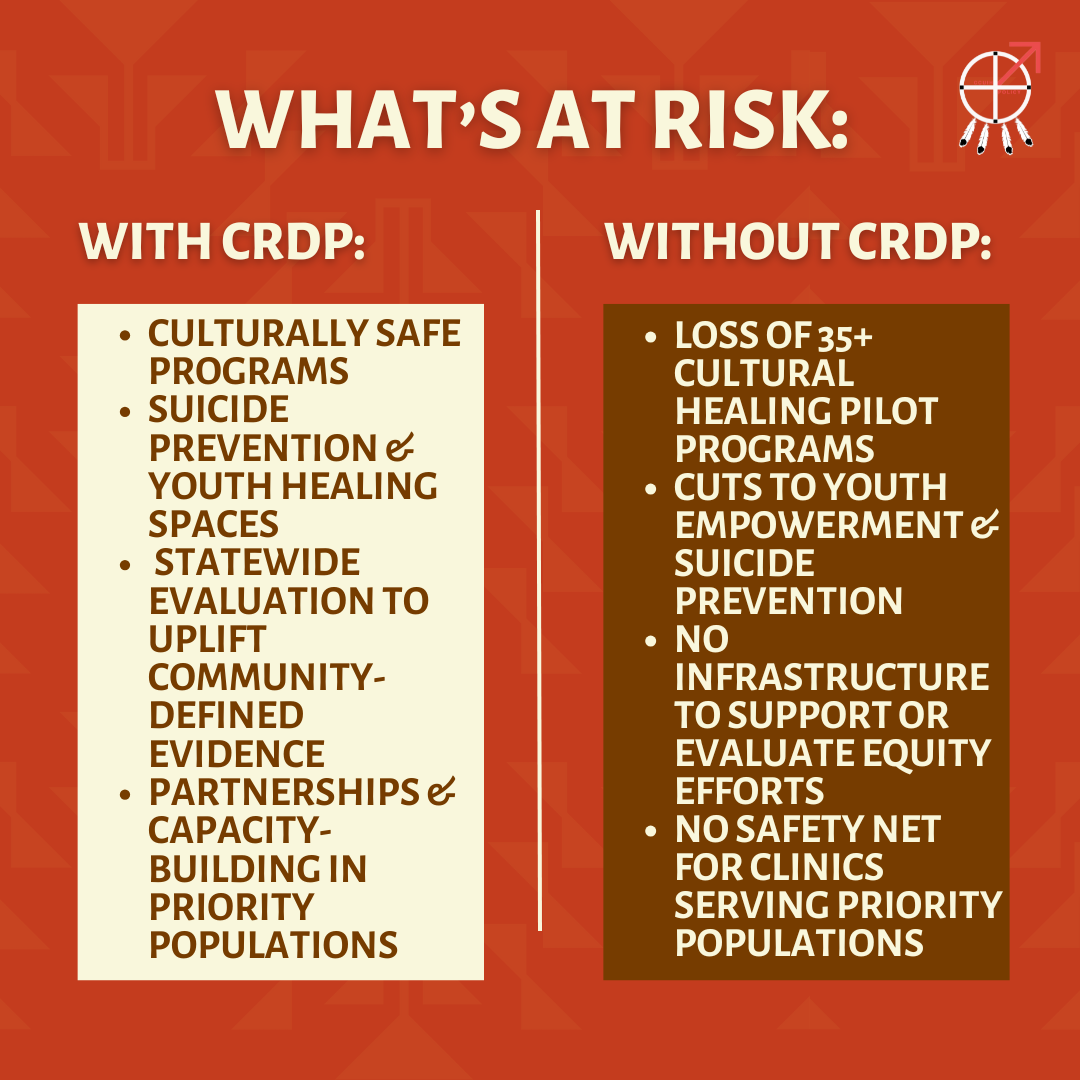
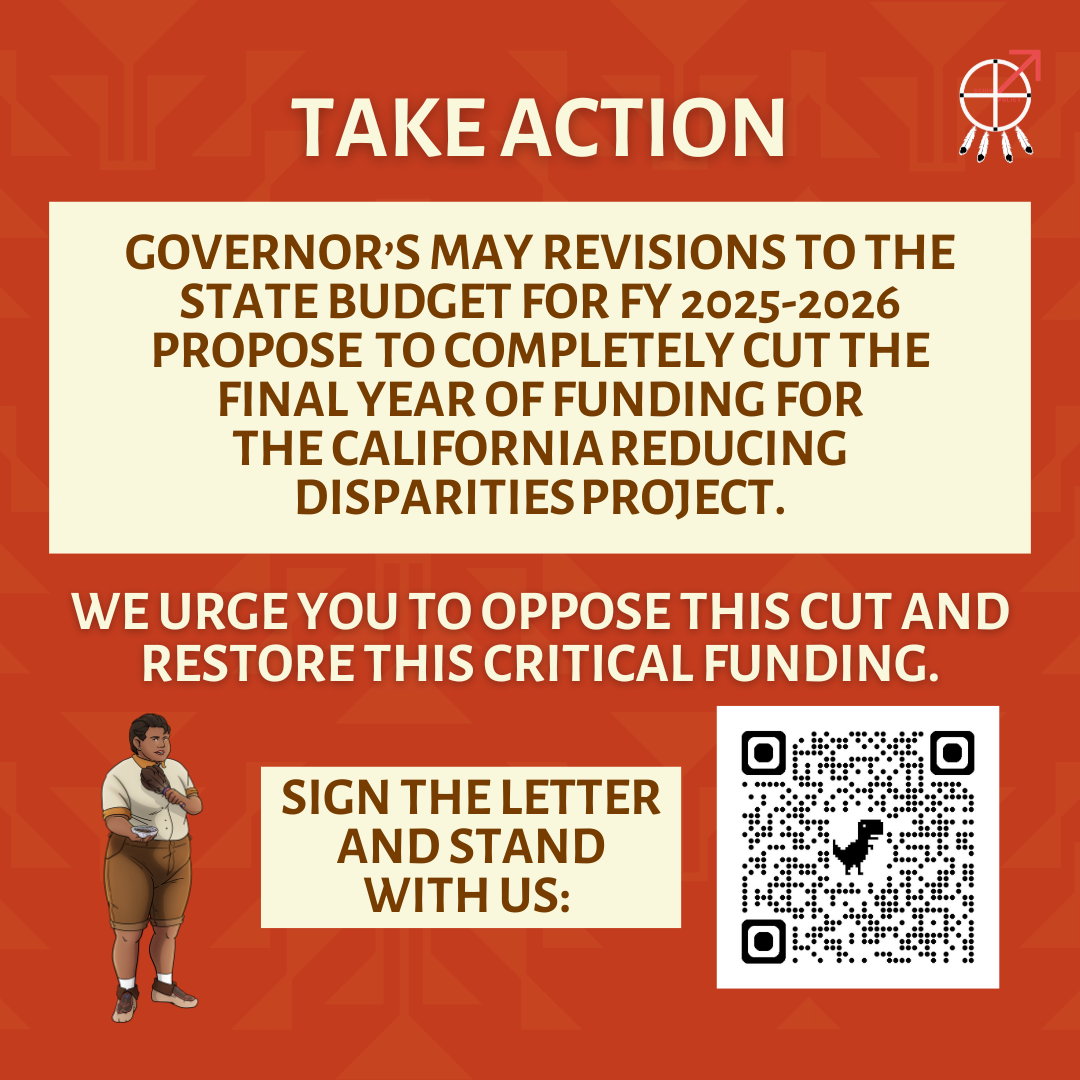
The California Reducing Disparities Project (CRDP)
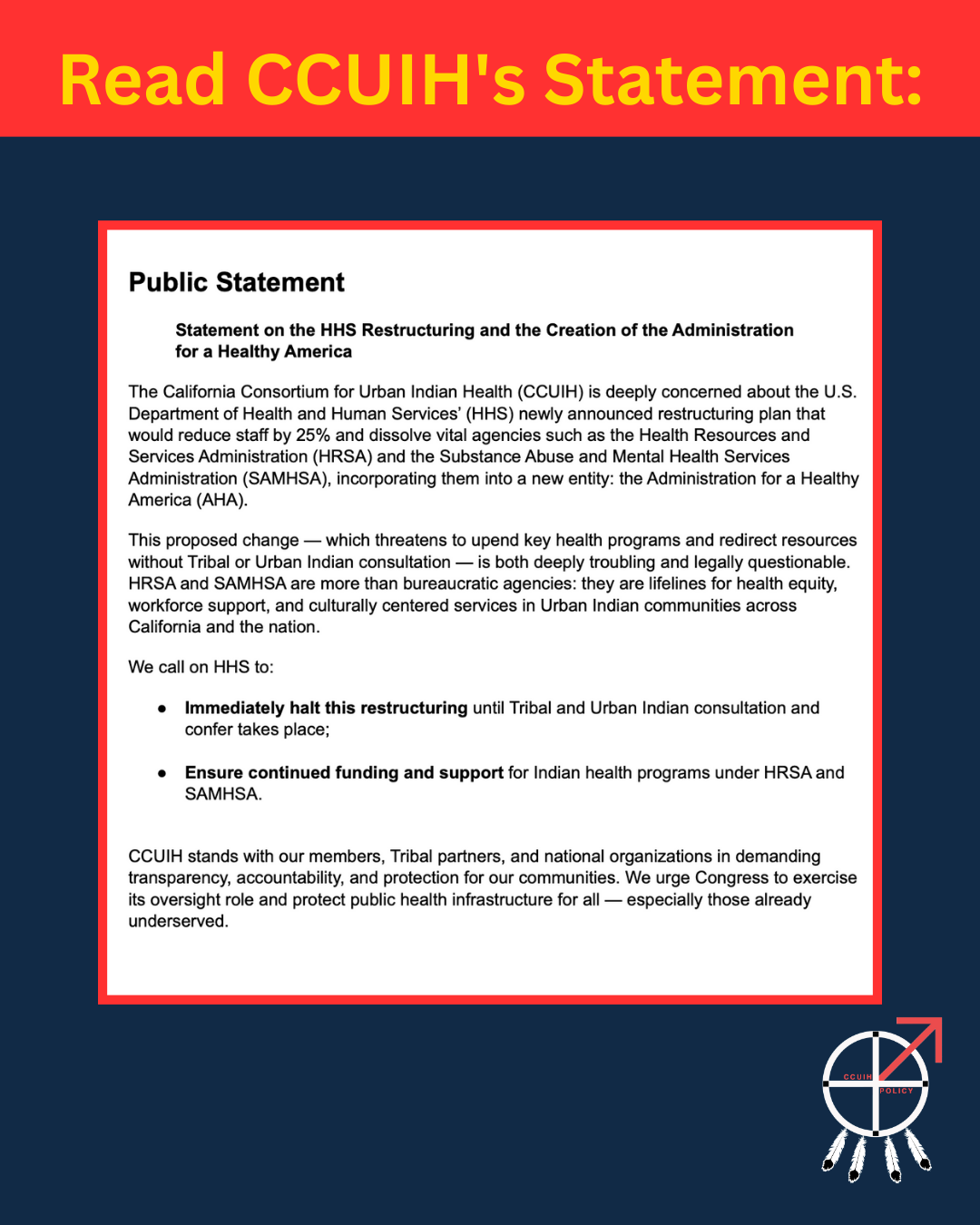
CCUIH’s Public Statement on the HHS Restructuring and the Creation of the Administration for a Healthy America