Eliminating the friction that was suppressing trial-to-paid conversion and annual recurring revenue.
ArthurAI is an AI/ML model deployment and monitoring platform used by enterprise teams to observe, explain, and optimize machine learning models in production. Their frontend had fragmented into multiple separate applications — each requiring its own login, offering inconsistent interfaces, and creating an 8-hour onboarding process that was measurably suppressing trial-to-paid conversion and ARR growth.
Size: SME
Industry: Software Development
Location: New York City, USA
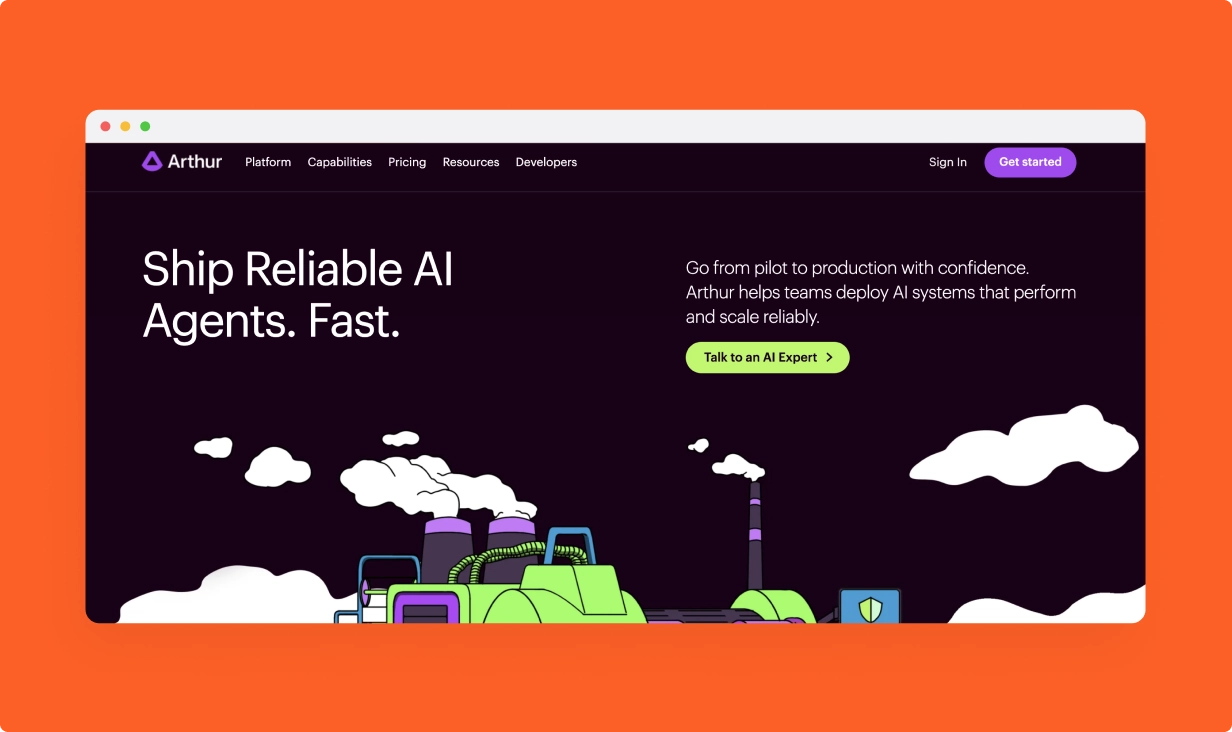
ArthurAI's product had grown into multiple disconnected frontend applications. Users faced separate logins, inconsistent dashboards, and an onboarding process that took 8 hours to complete — a manual workflow involving account provisioning, model registration, dashboard configuration, and data pipeline setup across disconnected interfaces. With no internal frontend team to address these issues, the platform's UX was becoming a bottleneck to growth. We embedded directly into their product team to unify the experience and automate the friction away.
Multiple separate frontend codebases meant multiple logins, inconsistent UI patterns, and a fragmented experience that undermined user confidence in the platform. The 8-hour onboarding process was a conversion barrier — prospective customers experienced friction before they could experience value. Each step (account creation, model registration, inference table configuration, alert setup) lived in a different application with different UI conventions. Without internal frontend expertise, ArthurAI had no path to resolving these issues independently.
ArthurAI needed more than a UI refresh. The fundamental architecture — separate codebases, separate auth systems, separate design patterns — had to be unified without disrupting the existing user base. The unified platform needed to support heterogeneous model types (classification, regression, NLP, computer vision), deliver real-time monitoring dashboards with live data, and scale with the platform's growth. And the team building it needed to integrate seamlessly into ArthurAI's existing engineering organization — operating as an extension of the product team, not an outside vendor.
We embedded engineers and a dedicated Technical Program Manager (TPM) directly into ArthurAI's product team. The engagement covered both frontend unification and the workflow automation required to collapse the onboarding process:
- Architecture: Merged separate codebases into a unified monorepo with shared internal UI component packages, ensuring consistent patterns across every feature surface.
- Authentication: Consolidated multiple auth flows into a single OAuth2-based system, eliminating the multi-login problem entirely.
- Data Visualization: Built flexible inference tables that dynamically adapt to any model type — classification, regression, NLP, and computer vision outputs rendered through a single abstraction. Enhanced real-time alert dashboards with WebSocket-driven live updates.
- Onboarding Automation: Re-engineered the customer onboarding flow from a manual 8-hour process to a guided 10-minute setup — automating account provisioning, model registration, and initial dashboard configuration through a unified wizard. This required both frontend workflow design and coordination with backend API changes.
- Foundation: Component library and design system built for long-term consistency as the platform scales.
Engagement model: Embedded team with dedicated TPM, working as a direct extension of ArthurAI's product engineering organization. The TPM managed sprint planning, cross-team coordination, and delivery accountability.
Onboarding dropped from 8 hours to 10 minutes — a 48x improvement that removed the single largest barrier to trial-to-paid conversion. The unified interface eliminated login friction and delivered a consistent experience across every feature. ArthurAI's VP of Engineering confirmed the work "increased annual recurring revenue" — the direct result of reducing the friction between a prospective customer and the platform's value. The embedded team model, with a dedicated TPM, meant the engagement operated with enterprise-grade program management from day one.
We'll respond within 24 hours with next steps.