
As megaprojects surge and the workforce thins, builders will have to create capacity through efficiency, not headcount.

Capital isn’t the problem. Projects aren’t the problem.

The problem is bodies.

Over the next decade, the U.S. will need roughly 650,000-725,000 construction and extraction workers every year just to fill open roles and replace people retiring or leaving the industry.

That’s not to grow capacity. That’s just to keep the lights on.

At the same time, demand is tilting toward the most labor-hungry, skill-intensive projects the industry has ever seen:

  • AI-driven data centers.
  • Grid and transmission buildouts.
  • Clean-energy and storage projects.
  • Semiconductor fabs and advanced manufacturing.
  • Plus, the unfinished business of housing and traditional infrastructure.

In 2026, those curves intersect: an aging workforce, a smaller pipeline of young workers and a wall of megaprojects all competing for the same electricians, linemen, pipefitters and supers.

There’s no plausible hiring plan that closes that gap.

That’s why 2026 isn’t just going to be “another busy year.” It’s the start of what you could call the efficiency mandate: If each worker isn’t effectively doing the work of 1.2-1.5 traditional workers — without burning out — projects will slip, get de-scoped or never break ground.

This is what that means in practice.

Why is the labor problem structural, not just “a hot cycle”?

This isn’t just another tight market that will ease after a rate cycle. Structural forces — demographics, replacement needs, immigration dependence and a thin pipeline of young workers — mean the industry is running out of experienced people faster than it can bring new ones in. That imbalance defines the next decade.

Is this different from every other “skilled labor shortage” headline you’ve seen for 30 years?

Yes. For a few reasons.

Replacement demand dwarfs new job growth

U.S. construction employment today sits around 8.3 million workers, including roughly 3.4 million in residential. The raw growth story doesn’t look explosive; the Bureau of Labor Statistics (BLS) projects only single-digit percentage job growth over the next decade.

But that’s not the real issue.

The real issue is replacement demand:

  • The BLS expects about 650,000 openings per year in construction and extraction roles through the mid-2030s, mostly to replace people retiring or leaving the occupation.
  • NAHB/HBI’s labor market analysis pegs it even higher: around 723,000 construction occupational openings per year right now, implying more than 2.1 million hires needed just in 2024-26.
  • ABC’s modeling says the industry needed about 500,000 additional workers in 2024, and a similar order of magnitude in 2025-26, on top of those replacement needs.

The math is simple and ugly: Replacing today’s workforce is a much bigger job than adding new positions.

“Openings are down” is not the good news it sounds like

If you look at job openings data, you’ll see a story that, at first glance, looks like relief. Open construction job postings have fallen from roughly 375,000 in mid-2024 to about 245,000 in mid-2025. That’s a big drop. It’s also misleading.

At the same time:

  • Overall construction employment remains near record highs.
  • The unemployment rate in construction is hovering near historic lows.
  • National contractor surveys still show 70-80% of firms struggling to fill hourly craft roles, especially in mechanical, electrical and civil trades.

In other words, we’re close to full employment for skilled craft labor. Openings are dropping not because there’s suddenly plenty of talent, but because many contractors are posting fewer jobs they know they can’t fill and stretching the people they have.

Demographics are destiny

The age profile is even more telling:

These aren’t interchangeable heads, either. The workers retiring are often your most experienced supers, foremen and specialist trades. When they walk off the job for the last time, you don’t just lose a pair of hands; you lose institutional memory and productivity that took decades to build.

Immigration is the quiet keystone

On top of that, construction is highly dependent on immigrant labor:

  • Immigrants make up roughly 25-30% of construction workers nationally.
  • In key trades — roofers, drywallers, laborers, carpenters — immigrants account for a third to more than half of the workforce in many markets.
  • In states like California and Texas and fast-growing metros, those shares are even higher.

Any tightening or uncertainty in immigration policy isn’t an abstract political debate for this industry but directly caps the maximum achievable headcount, especially in the trades that already feel tightest.

Put all that together and you get a simple conclusion: This isn’t just a hot cycle where “we’ll hire once rates fall.” The constraint is structural and baked into demographics and policy for the next decade.

How are four megacycles colliding over one shared talent pool?

Over the next several years, multiple policy- and technology-driven buildouts hit at once: data centers, grid upgrades, clean energy and advanced manufacturing. Each needs overlapping trades in overlapping regions. Instead of balanced cycles, contractors face stacked megacycles that all pull from the same shallow talent pool at the same time.

If the labor side of the equation weren’t bad enough, look at what’s arriving on the demand side.

1. Data centers and AI’s power appetite

You don’t need to be in the tech world to feel the ripple effects of AI. Data centers already used about 176 TWh of electricity in 2023, roughly 4.4% of total U.S. power demand. Updated federal and independent studies now project that number could reach 325-580 TWh by 2028, or 6.7-12% of total U.S. demand.

Private-sector forecasts like Goldman Sachs are even more aggressive, projecting data centers could hit about 8% of U.S. power demand by 2030 and require tens of gigawatts of new generation capacity.

All of that must be designed, permitted and built:

  • Hyperscale and colocation campuses
  • Substations, high-voltage lines and interconnections
  • Cooling infrastructure and high-density MEP systems
  • Supporting roads, water and utilities

These are complex, coordination-heavy projects with intense demands on mechanical, electrical and civil trades.

2. Grid modernization and transmission

At the same time, the grid those data centers rely on is being rebuilt in real time. The U.S. Department of Energy’s transmission needs analysis concludes that to meet reliability and clean-energy goals, the country must effectively double regional transmission capacity and increase interregional transfer capacity fivefold by 2035.

That translates into:

  • Tens of thousands of new line miles over the next decade
  • Hundreds of billions of dollars in capital expenditures
  • Thousands of substations, towers, foundations and associated civil work

Federal programs are already moving money: multibillion-dollar grid resilience grants, transmission facilitation loans and direct federal support for marquee lines. Those aren’t hypothetical white papers; they’re construction pipelines.

3. Clean energy and storage

Then layer in the clean energy buildout: utility-scale solar, onshore and offshore wind, storage, hydrogen hubs and more.

Analysts tracking the Inflation Reduction Act estimate:

  • Hundreds of new clean energy projects announced in its first couple of years.
  • Hundreds of thousands of construction job years generated during buildout alone.

Again, these need line workers, civil crews, steelworkers, electricians and commissioning specialists — the same people AI data centers and the grid are trying to hire.

4. Semiconductors and advanced manufacturing

Finally, there’s the semiconductor wave. CHIPS-backed fabs in Arizona, New York, Texas and Ohio are already confronting labor shortages severe enough to delay timelines. We’ve seen:

  • High-profile fabs pushing production dates out by several years.
  • Public commentary from project sponsors citing a lack of skilled construction workers, especially for high-purity process piping, power distribution and controls.

Fab projects, like data centers, demand the best of the best: highly experienced mechanical, electrical and process trades, plus tight QA/QC and commissioning.

Now put all four together: data centers, grid, clean energy, fabs — plus ongoing housing and infrastructure backlogs. They all want the same people, in the same timeframe, often in the same regions.

That’s the 2026-30 collision.

Why doesn’t “just pay more” solve the labor crunch?

Raising wages helps but can’t overcome time, geography and policy. Apprenticeships still take years, workers can’t instantly relocate to every hot market and immigration rules sit outside contractors’ control. Compensation becomes table stakes, not a silver bullet, in a market where the total pool of skilled labor is capped.

In a textbook market, high demand and short supply should mean one thing: Pay more. Problem solved. Reality isn’t that simple.

Yes, wages have moved:

And yet the shortages persist, for reasons that aren’t fixable with a line item in a budget:

  • Training takes time: You don’t turn a new hire into a journeyman electrician in 18 months, no matter what you pay.
  • Work is geographically sticky: Projects don’t neatly line up where the workers are. Convincing specialized trades to move across the country at scale is slow and expensive.
  • Immigration policy is out of contractors’ control: The industry can’t unilaterally expand the pool of eligible workers.

There are also early signs of cooling in a few regions — more applicants here, fewer job openings there — but that’s cyclical noise on top of a structural trend. If your plan is simply “we’ll pay up when things get tight,” you’re already behind.

How are rework and bad data draining hidden capacity?

Even before the crunch peaks, many projects effectively operate with smaller crews than they think. Time lost to rework, poor information flow and mismatched documents quietly burns a double-digit share of available hours. In a world where new people are scarce, recovering that wasted capacity becomes existential.

Even with today’s workforce, the industry is leaving a massive amount of capacity on the table.

Productivity has flatlined

Global construction productivity has grown at about 1% per year over the past two decades — roughly one-third the rate of manufacturing and well below the broader economy. In many advanced economies, including the U.S., construction labor productivity has stagnated or declined since 2000.

That would be annoying in a balanced market. In a market with structural labor tightness, it’s lethal.

Rework is a phantom workforce

Look at rework and bad data:

Translate that into people: If an average project team is losing 10-20% of its time to rework, hunting for documents or fixing coordination errors, that’s the equivalent of phantom crews you’re paying for but not actually getting. In a world where you can’t conjure up an extra 10% headcount, the only rational move is to stop wasting the 10% you already have.

What does the efficiency mandate look like in practice?

The efficiency mandate is less about heroic overtime and more about redesigning how work flows. Firms that standardize, digitize and industrialize — through BIM, coordination, prefab and lean planning — unlock more value from every hour on site. Those choices determine who can still deliver complex work when the talent pool tightens.

“Be more efficient” is meaningless. The question is: How? The data and the leading case studies point to a clear answer: standardized, digital, industrialized workflows that unlock more output per worker without asking people to simply sprint harder.

BIM and model-based coordination

When BIM is used consistently — not as a one-off experiment — contractors report:

  • Dramatic reductions in clashes and RFIs
  • Fewer constructability problems in the field
  • Lower defect rates at handover
  • More predictable schedules

That is pure capacity. Less time fixing what shouldn’t have been built in the first place means more time building what matters.

Prefabrication and modular

Industrialized construction isn’t theoretical anymore. On the right types of projects, the numbers are well established:

  • 20-50% faster delivery for suitable projects.
  • Up to 20% cost reductions in some modular case studies.
  • Hospital projects that moved more than 150,000 work hours off site, cut more than two months from the schedule and still reduced overall cost once you count rework and safety benefits.
  • Data center and health care jobs where 70% of complex piping or MEP assemblies were prefabricated, shrinking onsite headcount and congestion.

Again: That’s what making each worker “count for more” looks like in the real world.

Lean/IPD and digital planning

Lean construction and integrated project delivery aren’t just management buzzwords. In projects where they’re taken seriously, documented results include:

  • Schedules 30% faster than traditional delivery
  • Double-digit reductions in total labor hours
  • Lower peak onsite crew counts
  • Higher safety performance

When pull planning and Last Planner systems move from sticky notes on a trailer wall to digital environments tied to actual model and schedule data, those gains become repeatable instead of a one-off success story.

Put it all together and you get the heart of the efficiency mandate: Firms that combine BIM, prefab, lean/IPD and structured data can realistically get 1.2-1.5 times the effective output per worker on complex projects. In a structurally tight labor market, that isn’t a nice differentiator. It’s survival.

How should construction really think about automation and AI?

Robotics and AI are best understood as amplifiers sitting on top of strong digital foundations, not magical replacements for crews. Where data is clean and scopes are repetitive, they can meaningfully shift labor curves. Where workflows are messy, they mostly expose underlying problems instead of solving them.

Then there’s the current obsession: robotics and AI. They matter. But not in the way the marketing suggests.

Where robotics is paying off

Real projects — not glossy concept videos — show robotics moving the needle in specific scopes:

The pattern: Robots do well on repetitive, physically demanding tasks where there’s a strong digital model and clear tolerances.

Where the hype runs into the wall

You don’t hear as much about the pilots that stall out. But they’re common:

Survey data is telling: Optimism about construction robotics is high, but actual adoption has dipped in some studies, as contractors pull back to a smaller number of well-chosen use cases instead of chasing every new demo.

AI as a force multiplier for knowledge work

AI is already proving its worth in less glamorous but more fundamental ways:

  • Progress tracking: comparing 3D scans to BIM to automatically flag deviations, delays and billing issues — something that would otherwise soak up scarce VDC staff.
  • Predictive scheduling: using historical performance, weather and resource data to surface likely schedule risks weeks before a human would see them.
  • Estimating and document search: reducing the time preconstruction and field teams spend digging through drawings, RFIs and emails to figure out what’s current and what’s not.
  • Safety and quality monitoring: computer vision systems that spot PPE noncompliance or installation defects at scale.

The common denominator is obvious: None of this works without clean, standardized, current project data. AI doesn’t rescue bad workflows; it amplifies whatever you feed it.

How are leading builders already closing the efficiency gap?

Large builders are already operating on a blunt assumption: they can’t simply hire their way through the next decade.

Instead, they’re quietly redesigning how work gets delivered. That means shifting hours offsite, tightening coordination through BIM, standardizing data environments and focusing automation on a small number of high leverage use cases that move schedules and margins. Their project results offer a preview of what’s becoming the new baseline.

If all this still sounds theoretical, look at what’s happening on the industry’s most complex work:

  • On large, multi-building data center campuses and similarly fast-moving programs, leading builders are increasingly leaning on scan-versus-BIM comparison and AI-assisted deviation detection to maintain quality and schedule when internal VDC capacity can’t keep pace with field progress.
  • Automated reality capture handles monotonous documentation, allowing superintendents and project engineers to focus on coordination and problem-solving instead of clerical work. In preconstruction, AI-assisted estimating and standardized data environments are reducing friction and compressing timelines before crews ever mobilize.

The motivation isn’t trend-chasing but structural. These firms can’t simply triple their VDC staff or double their superintendent bench.

The same logic shows up in how industrialized construction is being applied across data centers, health care and hospitality.

Multi-trade prefabrication is shaving weeks off schedules. Hundreds of thousands of labor hours are being shifted offsite, reducing peak headcount, congestion and safety exposure. Volumetric modular systems are delivering finished components faster and with far less onsite disruption.

Again, the through-line is clear: when you can’t find more labor, you change where and how the work happens.

On major infrastructure and complex building projects, builders are also combining lean delivery models, BIM and digital twins to tighten feedback loops between design and construction. By continuously comparing as-built conditions to design intent using drones, sensors and model-based workflows, teams are reducing rework, improving material efficiency and compressing project durations without adding headcount.

Why isn’t this pure doom — and what’s still different this time?

Short-term signals can be confusing — local slowdowns, softer openings data, mixed technology results — but they sit on top of deeper trends that don’t reverse quickly. Leaders must read both layers at once: acknowledge regional cooling where it exists without mistaking it for a return to the old, labor-abundant normal.

To be fair, there are countersignals:

All true.

But those nuances don’t change the underlying structural picture:

You might get temporary pockets of relief. You won’t get a return to the world where you could always solve problems by “adding a few more workers.”

What hard choices does 2026 force construction leaders to make?

As projects and people diverge, 2026 becomes a forcing function. Owners, general contractors and trades all must decide whether they will privilege partners and practices that create capacity — through digital coordination, prefab and smarter planning — or hope the market loosens. Those choices shape who can even bid certain work.

In 2026, the stories you tell yourself about staffing will collide with reality. Practically, that means a few hard choices.

If you’re an owner or developer

You can’t just pick the lowest bidder and assume they’ll “figure it out.” You need to ask:

  • How standardized and digital are their workflows?
  • How do they handle coordination, rework and data?
  • Can they realistically staff this project in this market, or are they gambling?

Soft factors like BIM maturity and prefab capability are now directly tied to your schedule and risk profile.

If you’re a GC or EPC

You must decide whether you’re going to be a capacity creator or a capacity victim. That means:

  • Treating BIM, structured data and digital collaboration as core operations, not side projects.
  • Identifying where prefab and modular can be standard practice, not an exception.
  • Choosing a small number of automation and AI use cases tied to real bottlenecks — progress tracking, scheduling, layout, documentation — and doing the change management to scale them.
  • Investing in training so your people can operate confidently in this environment.

The firms that do this will bid — and deliver — projects their competitors literally can’t staff.

If you’re a trade contractor

Your choice is stark:

  • Become the partner who can integrate with model-based workflows, prefab assemblies and digital QA/QC, or
  • Become the shop that only makes sense on smaller, less time-sensitive work.

There’s a lot of business in both lanes. But you can’t pretend they’re the same.

Where does Bluebeam fit in the efficiency mandate?

Bluebeam doesn’t manufacture robots or design fabs; it quietly shapes how information moves. When drawings, markups and reviews live in a single, structured environment, teams waste less time chasing clarity and fixing preventable errors. That document layer is often the fastest, least disruptive way to unlock real capacity.

None of this is about a single tool solving a structural problem. The firms winning the efficiency game are doing it with systems: people, process, data and technology working together.

But if you strip away the buzzwords, a few foundational needs show up repeatedly:

  • Teams need clean, current documents everyone trusts.
  • They need standardized markups, layer conventions and workflows so data can be reused — not recreated — across scopes and phases.
  • They need fast, transparent review cycles that don’t leave junior staff guessing which version is “real.”
  • They need digital guardrails that help a less experienced engineer, coordinator or foreman perform closer to how a veteran would.

That’s where a platform like Bluebeam sits: not as the robot or the AI “brain,” but as the collaboration and data-quality layer that makes those bigger moves possible.

If rework and bad data are burning the equivalent of whole crews off your projects, then tightening up how drawings are shared, reviewed, marked up and standardized is one of the fastest ways to create capacity without hiring a single extra person.

What’s the bottom line for construction in 2026 and beyond?

The industry isn’t running out of projects or capital; it’s running out of time and people. Firms that treat efficiency as a strategic mandate — re-engineering how they coordinate, document and deliver work — will still have room to grow. Everyone else will find that the real constraint is no longer negotiable.

In 2026, the industry’s binding constraint isn’t going to be money. It isn’t going to be projects.

It’s going to be people.

You won’t hire your way through a decade where:

  • A third or more of your workforce retires.
  • Immigration inflows are uncertain.
  • Data centers, the grid, clean energy and fabs are all demanding the same scarce trades you need.

The only lever left with enough throw is efficiency — real, structural efficiency, not just working longer hours. The companies that treat 2026-30 as an efficiency mandate — and industrialize how they plan, coordinate and build — will get to say yes to the best projects and deliver them.

Everyone else will be stuck bidding work they can’t reliably staff.
Create capacity without adding headcount.
Manual processes are still draining time and money from projects, and AI may finally give teams the edge they need.

Across construction, one complaint echoes from project to project: the workload is climbing while the workforce is shrinking.

The labor shortage already stretches teams thin — and supply chain chaos piles on more pressure. A May 2025 industry poll found that 71% of respondents cited material availability and supply chain issues as the leading cause of construction project delays. No wonder owners and project managers scramble daily to keep things moving.

Something has to give. And for some, that means turning to agentic AI — not to replace people, but to relieve pressure on human teams and squeeze more value out of the resources they have.

That’s where Ojonimi Bako and Nick Selz come in.

From Walmart and Google to Construction

Bako, a mechanical engineer, spent years refining Walmart’s e-commerce strategy and operations before starting his own construction business. That’s when he ran headfirst into the industry’s messy supply chain reality.

His idea: merge his expertise in retail logistics with Selz’s background in systems design at Google. Together, they built Kaya AI, a platform aimed at fixing construction’s most painful bottleneck.

“Between our tech and construction backgrounds, we saw a massive problem in the construction supply chain space,” Selz said. “So many processes are manual, time-consuming and prone to human error. Meaningful insights that could have a measurable impact on projects often go unnoticed.”

AI That Thinks Like a Project Team Member

Kaya AI is designed to facilitate better collaboration and communication between stakeholders — general contractors, project managers and executives alike.

“The thing I love and find so interesting about the supply chain is it’s an incredibly collaborative workstream,” Selz said. “The different stakeholders on projects are actually on the same team.”

The stakes are real: if a generator lands on site four weeks early, nobody benefits. “Better collaboration and coordination are in everyone’s best interest.”

Here’s how it works:

  • Kaya AI digests construction data: drawings, specs and equipment lists.
  • It cross-checks for missing items and connects equipment lists to scheduling and submittals.
  • The result: a holistic view of what needs to be onsite, when and with which approvals.

And instead of asking crews to learn yet another system, Kaya uses autonomous AI agents that communicate by text, phone or email. To suppliers and contractors, it looks like the usual lead-time confirmation requests, but behind the scenes, AI is handling the heavy lifting.

Meet Jarvis, the AI Assistant

One example is Jarvis, Kaya AI’s project management agent.

“Jarvis helps customers identify schedule risk sooner,” Selz said. Project managers often miss the dependencies between fabrication, shipping and the submittal approval process. Jarvis surfaces those risks in real time.

“For example, when the lead time changes, Jarvis gathers that data and alerts you via text with a new submittal approval date.”

While the platform includes a web-based app and dashboards, Selz says most stakeholders still interact through everyday channels.

“It works with the communication channels they’re already using, meaning they don’t have to learn a new system or download another app.”

Kaya also integrates directly with scheduling and submittal software, cutting down on re-entry and manual work. Users can even generate calls, emails and texts to release project data or validate lead times. “That is saving folks a tremendous amount of manual work.”

From Pilot to Billions in Active Projects

Founded in 2023, Kaya AI was accepted into the Suffolk BOOST Accelerator and quickly found traction.

“We’re now the most quickly adopted software in Suffolk’s portfolio,” Selz said. Client projects span everything from single-family homes to data centers. “Everyone has issues with the supply chain, and we’re grateful we’re able to help.”

Following its official 2024 launch, Kaya now manages supply chain coordination across billions of dollars in active construction projects.

Selz sees it as more than a business opportunity. “Ultimately, I think integrating tools like AI can enable teams to do more with the same number of workers. That’s going to be imperative to the survival of the industry.”

The Human Factor

Still, Selz is quick to note: AI won’t replace people in construction.

“There’s too much complexity and risk in construction to turn any project over to AI. This is about how to capitalize on the strengths of AI, such as its ability to analyze data, recognize patterns and expand your team’s capabilities. That gives humans time to focus on the higher-order strategic work and relationships that this industry is built on.”

The Hard Truth

Supply chain headaches are crushing projects. AI alone won’t solve them. But platforms like Kaya AI point to a smarter path forward — one where machines crunch the numbers and humans focus on building.

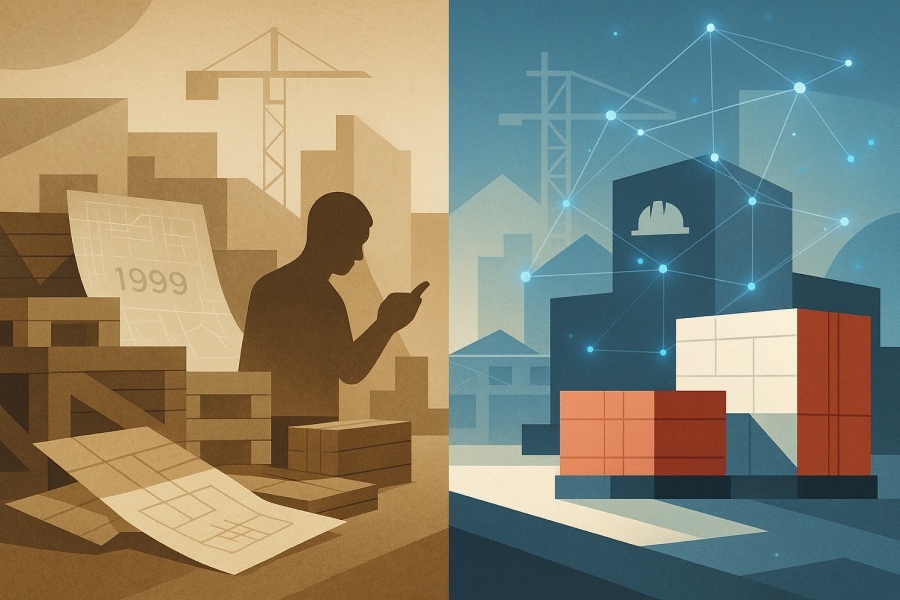
Because if construction keeps running supply chains like it’s 1999, the industry’s survival is what’s really at risk.

See how Bluebeam can streamline your projects.
From AI-powered workflows to mobile breakthroughs, Day 2 of Unbound 2025 showed how Bluebeam is turning big ideas into practical tools for builders everywhere

If Day 1 at Unbound was about setting the stage, Day 2 was about getting real.

The spotlight shifted from vision and inspiration to the nuts and bolts of how teams will actually use Bluebeam’s newest tools in the field, in the office and everywhere in between.

What came through clearly: the future of construction isn’t about buzzwords but about cutting wasted time, simplifying messy workflows and giving crews the freedom to focus on building.

Product Innovations That Stole the Show

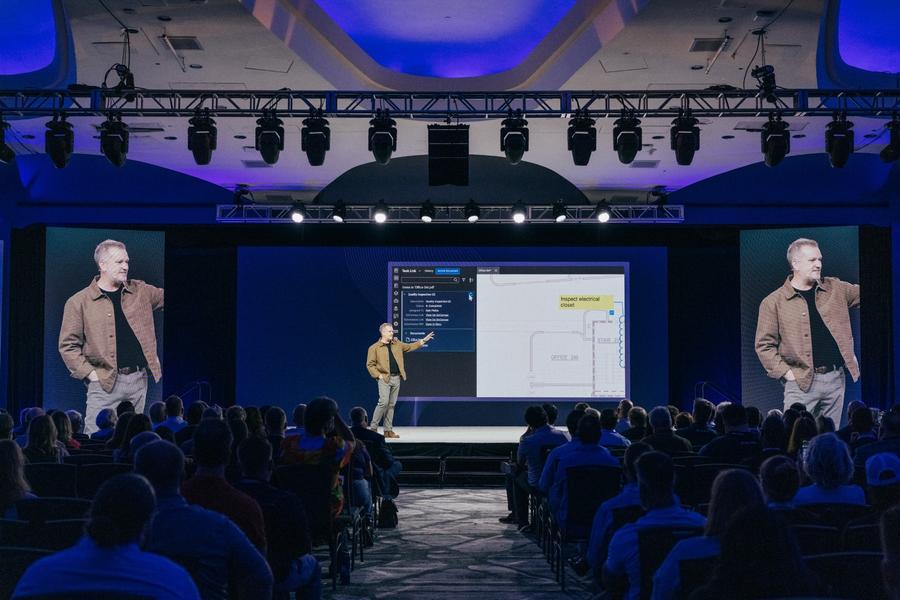
TaskLink: A markup in Revu can now spark a real task in GoCanvas, creating a seamless loop between office and field. No more “heads down in forms”—supers can stay focused on the work.

DocuSign in Projects: Digital signatures are finally embedded directly into Studio Projects. Downloading and re-uploading? Dead.

Attendees stream into the main hall at Unbound 2025 in Washington, D.C., ready for a full day of keynotes, product launches, and industry insights.

Magic Wand Tools: A crowd favorite. Markups can be converted, duplicated or reimagined in clicks, saving hours of rework when designs change.

Org Admin Pro: A single dashboard for IT and project admins to track users, sessions and external collaborators. Control without chaos.

Mobile Milestones: Studio Projects on iOS and Android with offline sync. Real PDF power, anywhere.

When AI Gets Practical

AI made a strong showing on Day 2—not as a headline grabber, but as a problem-solver.

From stitching civil drawings into one clean sheet to surfacing updated floor plans with natural language search, AI was framed less as a gimmick and more as a workhorse.

Smiles, conversations, and plenty of energy filled the room as attendees settled in for Day 2 keynotes at Unbound 2025.

The acquisition of Firmus stood out. Their AI-driven design review and sheet comparison tools are now merging into Bluebeam, cutting days off review cycles and catching drawing changes before they become costly errors.

The Energy in the Room

There was laughter at live demos, audible relief at long-requested features and plenty of phones snapping QR codes to test-drive beta tools.

“We aren’t building software for software’s sake,” said Bluebeam’s Luke Prescott during the product keynote presentation. “We’re building it for the people who build everything else.”

Why Day 2 Mattered

Construction moves fast, and technology has to keep pace.

Day 2 at Unbound proved that Bluebeam isn’t chasing hype but clearing roadblocks. For project managers, estimators and supers, these aren’t abstract promises. They’re tools you can put to work now.

And that’s the real takeaway: the conference may wrap, but the work is just beginning.

The future of construction is already under construction—and Bluebeam is putting the tools in builders’ hands.

See how Bluebeam can transform your workflows.
Why the first day of Bluebeam’s new industry conference wasn’t just about features but about the mindset to use them

Most conferences start the same way: an emcee points to the bathrooms, the CEO thanks the sponsors and everyone claps politely before checking their email.

Day 1 of Unbound could have gone that way. It didn’t.

Instead, Bluebeam CEO Usman Shuja walked out and told more than 1,000 attendees that sticking to the old playbook is the surest way to lose. The industry, he said, is entering a “new season,” and the companies that survive won’t be the ones that play it safe; they’ll be the ones who prepare before the rules change.

That was the tone-setter: not another speech about “innovation” or “digital transformation,” but a call to become what he called “dual athletes”—builders fluent in both construction and AI.

And if that wasn’t enough to jolt the audience out of autopilot, the next keynote did the trick.

Former Disney exec Duncan Wardle had the crowd designing parachutes for elephants and brainstorming the Pet Olympics. Silly? Sure. But his point was serious: adults are professional idea-killers, and the future will belong to the teams that trade “no, because” for “yes, and.”

Season Change

Usman framed the moment in blunt terms: construction is entering a “new season.” Like Formula 1, you can’t win using last year’s playbook. He called on the industry to become “dual athletes”—people fluent in both construction craft and artificial intelligence.

And instead of talking in vague terms, he went concrete.

Turner Construction’s 100,000-square-foot cancer treatment center in Pasadena, California, wasn’t delivered by buzzwords but by superintendents rolling up their sleeves, ordering pizza and building their schedule inside Bluebeam so every contractor could stay aligned.

Bluebeam CEO Usman Shuja shares a personal moment during his Unbound 2025 opening keynote, showing his 11-year-old son’s Lego build of Real Madrid’s stadium—a reminder that creativity, problem-solving, and building start early.

The project hit every milestone. More importantly, it hit the only milestone that mattered: first patient.

That’s the stakes of this “new season.” It’s not AI for AI’s sake. It’s AI that gives back 1,000 hours across a project—time that translates into fewer missed handoffs, fewer change orders, more lives saved.

The Disney Guy

If Usman’s challenge was about technology, Duncan Wardle’s was about mindset.

The former head of innovation at Disney walked on stage to Toy Story’s “You’ve Got a Friend in Me,” and within five minutes had people out of their seats.

Former Disney head of innovation Duncan Wardle energizes the Unbound 2025 audience with his keynote on breaking down barriers to creativity and sparking fresh ideas.

Wardle’s entire keynote was a reminder that adults are “professional idea killers.” We default to “No, because…” instead of “Yes, and…”—and in doing so, we shrink ideas before they have a chance to grow.

He had receipts:

  • Pixar brainstorms that birthed Finding Nemo and Toy Story in a single lunch.
  • A “what if” exercise in Mumbai that turned empty bottles into daylight lamps for a million homes without electricity.
  • And the insight that Disney’s $1.7 billion-a-year MagicBand wasn’t born from asking “How do we make more money?” but from asking “What if there were no lines?”

His closer hit hardest:

“The opposite of bravery isn’t cowardice. It’s conformity.”

Why It Landed

It would’ve been easy for Day 1 to be another parade of AI hype and soft-focus innovation jargon. But the pairing of Usman and Wardle made the themes land:

  • Season change is real. The industry can’t rely on yesterday’s playbook.
  • Dual athletes will win. Construction mastery plus AI fluency isn’t optional; it’s the baseline.
  • Mindset matters. Creativity dies in cultures that reward conformity.
  • Playfulness is a tool. “Yes, and” cultures grow bigger ideas faster.

What’s Next

Day 1 wasn’t only about vision and mindset. It also delivered major product announcements, including the debut of Bluebeam Max. But those deserve their own deep dive, which we’ll cover in a dedicated post.

Because if Day 1 made anything clear, it’s this:

The future of construction won’t be won by the companies that conform. It’ll be won by the ones willing to rethink how work gets done—and who have the courage to act before the rules change.

See how Bluebeam helps you build smarter.

A North Carolina nonprofit is blending supply chain innovation, contractor collaboration and community labor to rebuild after Hurricane Helene

At a gas station in western North Carolina, days after Hurricane Helene tore through the mountains, Stephanie Johnson watched a mother count out quarters to buy food for her kids.

“That’s when I understood that this is really bad,” Johnson said.

Helene had already left Johnson and her family stranded on their property for three days, sawing their way out through downed trees. But the sight of parents scraping for food showed her the storm’s devastation was deeper than wrecked roads and washed-out homes. It was survival.

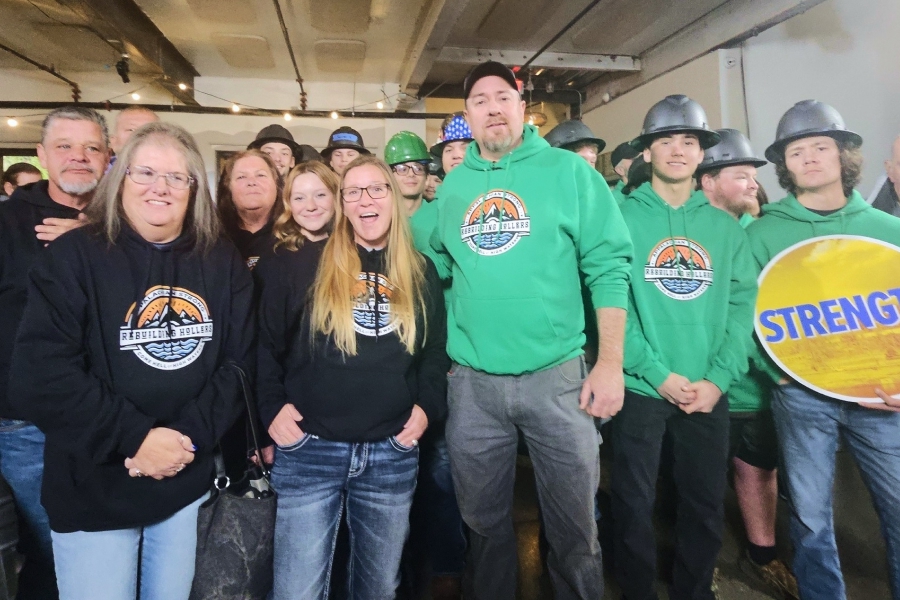
For Johnson—a former commercial contractor turned real estate agent—that moment launched a mission that has since grown into Rebuilding Hollers, a nonprofit coordinating hundreds of recovery projects. Drawing on her construction background, Johnson built a system that blends supply chain innovation, contractor collaboration and community labor—an approach with lessons for construction professionals far beyond North Carolina’s hollers.

From Chainsaws to Sheetrock: Meeting Material Needs

Johnson leaned on her contracting background to see past the immediate food crisis to the larger task: rebuilding. From fall 2024 to spring 2025, Rebuilding Hollers had distributed at least:

  • 400 chainsaws.
  • 300 generators.
  • 50 water filtration systems.
  • Multiple 18-wheeler loads of lumber, sheetrock, siding and other building materials.

Support came from local businesses and national brands alike. Loggers donated lumber, a distributor contributed siding, Ryobi provided tools and a business pooled money to supply sheetrock. An empty storefront became storage space, and Starlink internet helped Johnson coordinate needs quickly on social media.

“It was just amazing how God was sending everything the community needed,” Johnson said.

A Construction-Informed Funding Model

Johnson’s team quickly recognized a familiar challenge for disaster recovery: getting the right materials to the right site at the right time. To solve it, they partnered with Summit Building Supply, a local supplier, to create a gift certificate system tied to each project’s material list.

Here’s how it works:

  • Rebuilding Hollers raises funds and directs them into a prepaid escrow at Summit.
  • Once a project is approved, the owner receives gift certificates linked to their specific list of materials.
  • Families use them at Summit to collect exactly what they need—reducing waste, avoiding mismatched supplies and keeping dollars circulating locally.

For some projects, Rebuilding Hollers also has paid contractors and subcontractors and covered costs at other stores.

A mountain hollow in western North Carolina shows the scars left by Hurricane Helene—washed-out banks, downed trees and debris. Rebuilding Hollers, founded by Stephanie Johnson, has supported more than 450 recovery projects like this one, supplying chainsaws, lumber, and skilled labor to help families rebuild.

As of spring 2025, the nonprofit has provided more than $284,000 in direct financial support. “It’s totally mind-blowing to me when you really get into what is going on,” Johnson said.

Workforce Partnerships and Skilled Labor

Rebuilding Hollers’ model emphasizes collaboration across the construction ecosystem:

  • Local contractors and tradespeople are working alongside families.
  • High school carpentry students, through a partnership with the nonprofit, are gaining hands-on training while contributing labor.
  • Nonprofits, businesses and individuals have joined in to provide both skilled and volunteer support.

By May 2025, the nonprofit was backing 457 projects—including 51 total losses. Two families had already moved back into fully rebuilt homes with help from the organization.

Rebuilding Communities and Stabilizing Economies

Johnson stresses that rebuilding homes isn’t just about shelter but about keeping the regional economy intact.

“If we don’t rebuild, our entire economy will crash,” Johnson said. “Families will leave, property values will plummet and the community will never recover.”

Tourism is central to the mountain economy, and in May 2025, Rebuilding Hollers hosted a fundraising event that brought tourists into the hollers, both to witness the devastation and support local businesses.

Lessons for the Construction Industry

Rebuilding Hollers’ experience offers several takeaways for professionals across construction, engineering and supply chain sectors:

  • Material management systems like project-specific gift certificates can reduce waste and misallocation.
  • Local supplier partnerships keep dollars in the community and streamline logistics.
  • Blended labor models—combining contractors, student trainees and volunteers—expand capacity in a strained workforce.
  • Community-focused rebuilding strengthens not just housing stock but the broader economy.

As Johnson put it: “We’re saying we’re going to stand by you as you rebuild. If you’re brave enough to rebuild, we’re brave enough to get you whatever you need.”

Rebuild stronger with the right construction tools.
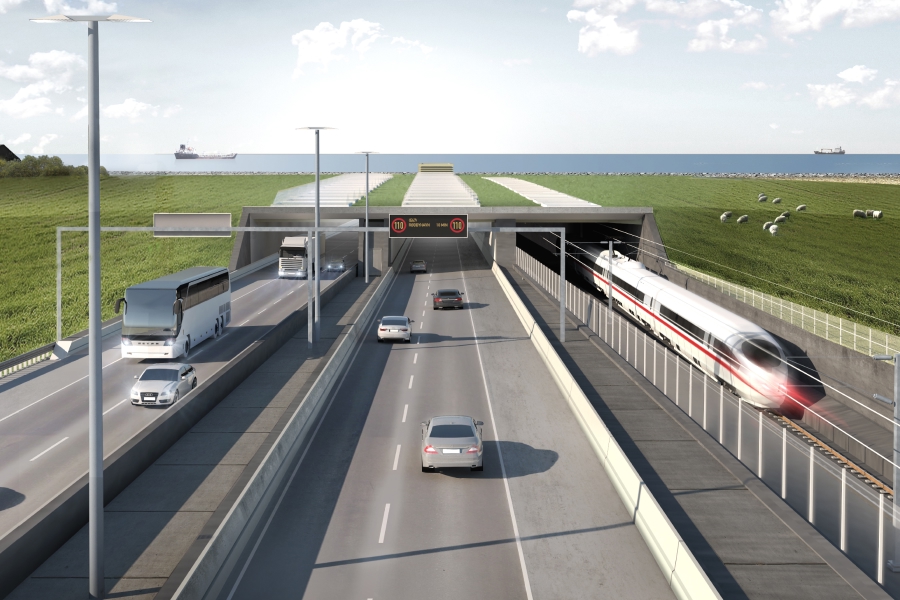
It’s one of the longest immersed tunnels ever built. Its 73,000-ton concrete segments float—barely—and it’s being assembled with millimeter precision beneath the Baltic Sea

Relatively unknown outside Europe, the Fehmarnbelt tunnel is quietly becoming one of the most ambitious civil engineering projects on the planet.

Slated to open in 2029, this 18-kilometer (11.2-mile) submerged connection between Germany and Denmark will cut travel time across the Baltic Sea from nearly 60 minutes—including a ferry ride—to just seven minutes by train or 10 minutes by car.

But the real story isn’t about speed. It’s about how engineers in one of Europe’s flattest regions decided not to drill or bridge, but to sink nearly 80 massive tunnel elements—each weighing roughly as much as 365 blue whales—directly into the seafloor.

This wasn’t the obvious choice, but it was the one that best balanced risk, cost and environmental impact, according to more than a decade of cross-border feasibility studies and analysis.

Drilling Was a Gamble. So They Didn’t.

In 2011, after extensive study, planners narrowed their options to three: a bored tunnel, a suspension bridge or an immersed design.

“A bored tunnel would have proved to be a very expensive and risky solution since the seabed is not suitable for drilling,” said Denise Juchem, a spokesperson for Femern A/S, the Danish state-owned firm overseeing the project.

A bridge might have saved money upfront, but wind conditions across the Fehmarnbelt are severe, and anything high enough to avoid disrupting shipping would’ve had a massive ecological and visual footprint.

“In terms of finance, environmental considerations and risk, the immersed tunnel was therefore the optimal solution,” Juchem said.

Assembly Line to Ocean Floor

The construction strategy sounds like science fiction, but it’s playing out in real time.

Crews are casting 79 concrete tunnel elements, each measuring 712 feet long and weighing 73,000 tons, at a purpose-built 1,235-acre facility on the Danish island of Lolland. Each element is formed from nine concrete segments poured in sequence.

“Production runs on an assembly line principle,” said Gerhard Cordes, a project director with Femern A/S. “A steel framework is first constructed for each segment, which is approximately 24 meters long. It’s then cast in concrete, allowed to cure and pushed forward one section at a time so that the next segment can be cast.”

Once complete, each tunnel element is sealed with steel bulkheads, floated into a lock system and guided to its final position in the trench, about 40 feet below the seabed.

Despite their weight, the elements float with just enough buoyancy to be maneuvered using specially designed pontoons and steel cables. A GPS-enabled alignment system ensures they’re guided with millimeter accuracy.

“The elements are immersed on steel cables and joined to the elements already installed by positioning the immersion pontoons,” Cordes said. “A locking system (pin and catch) secures the exact position relative to the preceding element and the alignment is ensured by adjustable supports.”

Once aligned, the joint is sealed using only water pressure.

“The water pressure from the opposite end of the element compresses the joint,” Cordes said. “The gravel layer in the tunnel trench is laid out before immersion and serves as an accurate foundation.”

It’s not welding. It’s more like interlocking stone, except each piece weighs more than a fully loaded aircraft carrier.

No Room for Error

A single misalignment could stall progress, delay schedules and complicate the precision required to connect the next segment.

There’s no easy do-over. Once placed, these elements aren’t coming back up.

That’s why the team runs detailed simulations in advance and monitors every placement in real time using underwater cameras and sensors. Each segment is a calculated risk—and a high-stakes test of coordination and trust in the system.

Environmental Tradeoffs—Without the Greenwashing

The Baltic Sea is home to porpoises, nesting seabirds and fragile marine ecosystems. Environmental scrutiny of the project has been intense—and justified.

But Femern A/S leaned heavily on experience from previous fixed links, like Denmark’s Øresund and Great Belt projects, to reduce the project’s footprint.

“The planning of the Fehmarnbelt tunnel draws on the experiences from the fixed links across the Great Belt and the Øresund, which have shown that negative environmental impacts can be avoided through careful planning and implementation of construction work,” Juchem said.

That includes relocating or replanting affected areas, minimizing on-site disruption and restoring natural habitats. In Lolland, Femern A/S has pledged to replace at least twice the area of disturbed land.

Is it perfect? No. But it’s a far cry from the zero-mitigation approach common to megaprojects just a few decades ago.

The Project So Big They Built a Tourist Platform

Public interest has been unexpectedly strong. When Femern A/S opened a viewing platform near the construction site, more than 10,000 people showed up in the first month.

Engineers have become de facto tour guides. And a project once known only to planners is now attracting visitors, photographers and school groups—long before its ribbon-cutting.

What Megaprojects Can Learn from Fehmarnbelt

This endeavor to link Denmark and Germany is about proving that modular construction, real-time simulation, environmental offsetting and international coordination don’t have to be mutually exclusive.

Want a playbook?

Modular builds. Digital modeling. Live underwater alignment. Mitigation-first planning. Public transparency. It’s a strategy other megaprojects would be smart to copy.

The Fehmarnbelt tunnel, above all, is showing what’s possible when you combine high-stakes logistics with long-term thinking—and pour 73,000 tons of concrete at a time.

Want to see construction tech at full throttle?
As the 2026 World Cup and 2028 Olympics approach, US builders are racing to retrofit stadiums, expand transit and deliver under intense global pressure

The United States’ construction industry is on the hook for delivering not one but two global spectacles: the 2026 FIFA World Cup and the 2028 Summer Olympics in Los Angeles.

We’re talking high-stakes retrofits, billion-dollar transit overhauls and a clock that won’t stop ticking. The world’s watching—and the pressure’s mounting.

A National Sprint with Global Pressure

The 2026 World Cup will hit 16 cities across North America, 11 of them in the US. Think Dallas, Philadelphia, Atlanta and Seattle, among others. Two years later, the Olympics return to LA for round three.

Combined, the events are projected to add more than $28 billion to the domestic economy and support more than 250,000 jobs, according to the most optimistic and recent estimates by the Boston Consulting Group and LA28 organizers.

Still, these events aren’t just about dollars but about delivering infrastructure that holds up under the weight of the world stage.

This won’t be easy, especially for LA’s Olympic preparations. A devastating series of wildfires struck large pockets of LA County in January 2025, destroying more than 18,000 structures and forcing more than 200,000 residents to evacuate. This resulted in extended emergency response and diverted city crews away from Olympic preparations.

Stadiums Get a Second Life

The build must go on, however. And this time around, we’re not building shiny new stadiums. We’re fixing up what we’ve got—and making it work harder.

  • MetLife Stadium in New Jersey is getting a major retrofit to fit FIFA’s field rules. Skanska is ripping out more than 1,700 seats to rework the layout with modular steel seating.
  • AT&T Stadium in Texas is dropping $350 million on upgrades: AV, accessibility and fan experience.
  • NRG Stadium in Houston is adding lighting, locker rooms and a widened field for seven World Cup matches.

Over in LA, SoFi Stadium in Inglewood will co-host the opening ceremonies of the 2028 Olympics alongside the Los Angeles Memorial Coliseum, marking the first dual-venue debut in Olympic history. Rather than building a new $1 billion Olympic Village, LA28 plans to repurpose existing UCLA dormitories, using nearby student housing and dining facilities to reduce cost and environmental impact.

Then there’s the Intuit Dome, a $2 billion, all-electric arena built for the Clippers and prepped for Olympic basketball. It’s targeting LEED Platinum certification, runs on solar and stores enough energy to power a game off-grid.

Infrastructure Is Where the Real Work Happens

Everyone loves a good stadium shot, but the real grind is in the infrastructure.

L.A. Metro’s “28 by 28” plan is the backbone—28 major projects done by the Olympics. That includes a $3.3 billion Purple Line extension to UCLA and a $13.8 billion Sepulveda Transit Corridor, one of the region’s most ambitious rail projects.

LAX, meanwhile, is adding a people mover and a new transit hub to cut down on car traffic. A “car-free” Olympics was the dream. Now, Mayor Karen Bass says: just take the train.

Beyond L.A., cities like Kansas City and Seattle are revamping roads, rails and terminals. Kansas City opened a new $1.5 billion airport terminal in early 2023 as part of a long-term modernization strategy—timed to support the World Cup but planned well before it was awarded hosting rights.

Tech Is the Backbone

With timelines this tight, tech isn’t optional—it’s survival:

  • BIM and digital twins are being used to model venues, simulate crowd flows and test emergency plans before a shovel hits dirt. According to Autodesk and Turner Construction, these tools are streamlining design validation and reducing rework on site.
  • Bluebeam, Procore and Autodesk BIM 360 are powering documentation, markup workflows and project tracking across stadium and transit jobs.
  • Turner and AECOM Hunt are using AR headsets and prefab systems to cut labor hours and improve build precision.
  • Public dashboards let stakeholders monitor progress, track RFIs and flag delays in real time.

Greener Builds, Fewer Footprints

FIFA mandates natural grass, so US stadiums are testing modular turf systems that won’t destroy NFL fields. LA28, meanwhile, is committed to carbon neutrality, prioritizing adaptive reuse and temporary construction wherever possible.

The Intuit Dome leads the charge. Solar panels. Battery storage. Fully electric. It’s a prototype for what modern arenas could be.

Still, some critics say this reuse-first approach lacks legacy. Olympic events like canoe slalom are being hosted at Riversport Rapids in Oklahoma City—more than 1,300 miles away—raising questions about what physical footprint LA will leave behind.

Labor Crunch and Supply Chain Scramble

Labor is tight. Supply chains are still glitchy. So, cities are getting creative.

  • Union apprenticeships and local hiring mandates are ramping up.
  • Projects are leaning on prefab and off-site builds to reduce on-site labor needs.
  • Materials like steel, glass and electronics are being pre-ordered in bulk, with secondary suppliers on standby.

Budgets are walking a tightrope. As of mid-2025, LA28 had raised $5.1 billion of its $7.1 billion target. If the city falls short, LA covers the first $270 million in overruns and the state picks up the next $270 million—despite a projected $12 billion California budget deficit, according to the Legislative Analyst’s Office.

What’s Next

We’re inside three years to the Olympics and under a year for the World Cup. Stadiums are being ripped apart and rebuilt. Trains are being tunneled. Budgets are bending. And the whole world is watching.

This is a stress test for American construction, one that could rival past US megaprojects like the Interstate Highway System or Hoover Dam.

If the industry pulls this off, it won’t just be about medals. It’ll be about modernized cities, tougher teams and a blueprint for how to build smarter—under pressure.

The clock’s running. Let’s get it done.

Build better under pressure with smarter tools.
Federal agencies are racing to digitize permitting. Here’s how tools built for AEC workflows are cutting delays and delivering results

The April 15 White House memo wasn’t subtle: Federal agencies must digitize their permitting workflows—and the clock is ticking.

You’ve got fewer than 45 days to draft a strategy. Fewer than 90 days to start modernizing. The era of binders, stamps and buried PDF chains is officially over.

We’ve already covered the mandate and the tools. This time, we’re showing what success looks like, and how your agency can follow suit without reinventing the wheel.

Generic Tech Isn’t Cutting It Anymore

Permitting isn’t just paperwork. It’s regulatory, political and deeply collaborative. You’re juggling compliance reviews, interagency coordination and public scrutiny, all while trying to hit infrastructure deadlines.

And yet many agencies are still stuck with general-use tech: email chains, untrackable PDFs, generic DMS platforms. These tools weren’t built for permitting. They were built for office workflows that don’t involve public comment periods or NEPA deadlines.

So, if your review process feels slow, fragmented or unpredictable, it’s not your fault. It’s the software.

What AEC-Specific Tools Actually Do Better

Here’s what happens when permitting teams use tools made for their world—not just “document management” in general:

Real-Time, Multi-Stakeholder Reviews: Everyone—from city engineers to federal reviewers—can comment, mark up and approve plans in the same session. No delays, no version confusion.

Built-In Audit Trails: Every comment. Every signature. Every revision. Automatically logged, trackable and compliant.

Paperless by Default: Stop printing 500-page plan sets just to mark up one elevation. Save money, reduce waste and move faster.

Transparent by Design: Create a digital chain of custody. Open review statuses to stakeholders. Build trust without sacrificing control.

Fewer Delays, Less Rework: With centralized access and shared standards, teams spend less time hunting files and more time pushing projects forward.

And yes—tools like Bluebeam do all of this. But don’t take our word for it.

Cities Are Already Doing It—and Winning

Agencies across the U.S. at the state and local level are showing what digital permitting done right actually looks like:

  • Coral Springs, Florida, cut plan review times by 66%, dropping from 15 days to just five by combining Bluebeam with its existing permitting platform.
  • Las Vegas, Nevada, processes more than 3,500 permits a month—fully digitally—without adding headcount. The city also saves around $600,000 annually by eliminating print costs.
  • Merced County, California, accelerated plan reviews and reduced printing costs by adopting Bluebeam across multiple departments, streamlining workflows for everything from fire safety to code enforcement.

None of these municipalities started from scratch. They didn’t rip out core systems. They didn’t need five-year roadmaps.

They started with what they had. They added tools that worked. They got results.

You’re Not Behind. But You Can’t Wait.

The technology is here. The benefits are proven. And the deadlines are real.

The good news: You don’t need to overhaul your entire tech stack. Bluebeam plugs into your existing environment, supports secure federal workflows and has been helping public sector teams digitize permitting and plan review for years.

We’ll help you start fast, scale smart and stay compliant. You’ve got enough complexity. Your permitting software shouldn’t add to it.

Let’s Talk

Permitting is a public trust. It’s also a chance to lead.

You don’t need to figure it all out alone. Agencies across the country are already modernizing, and we’re helping them do it.

Ready to get started? Email our public sector team and let’s build what’s next—together.

Featured Guides