[go: up one dir, main page]

Tag: writer
  • 2023 Artist Updates

    Well, this year has not gone to plan. I don’t have nearly such a long and glorious list of publications as I did at this time last year. Part of me feels I owe some accounting for my “low” output or publication stats, though I am fairly confident no one reading this would demand such a thing.

    This year has been unexpected in some not-so-great ways. There have been long stretches of time where I haven’t been able to write.

    I’ve been dealing with chronic health/pain issues, and with the poor health of a beloved pet. I had my first bout with Autistic burnout this year, too, partly due to emotional stress; 0/10, do not recommend. Thankfully, we are both doing fairly well here at the end of December 2023, but a lot of time, energy, and mental space was diverted to get us through. 

    I placed two pieces this year: The Ring of Contradictions in Electric Spec, and Baba Yaga Goes North in Crow & Cross Keys! I’m very proud of both of these publications.

    I finished and have two longer stories on sub—which seem to be tricky to place. (If you know of anyone who would be interested in a reflective gargoyle-come-to-life meets chronic-pain meets neurodivergence in an opera house piece, or a retelling of Hamlet with Ophelia as the main character, do reach out…) [UPDATE: These have both been placed! Never give up, just keep submitting compulsively and every day until you find someone who likes your stuff.]

    I submitted my finished book, Blood Moon Rising (queer, feminist, cozy, menstrual magic, Handmaid’sTale-esque world, JaneEyre-style prose), to a few small presses. No progress was made there.

    I’ve been working on some new novel-length stories. One (an urban fantasy story about a fae garage rock band) turned into a novel without me realizing it and needs quite a bit of TLC to tidy up. Another (a dark, Icelandic-fairy-tale-inspired gender-swapped Rapunzel retelling) popped back to life after two years of inactivity. I’ve also had some breakthroughs with the plot of the Blood Moon Rising sequel (it’s a planned duology, still in development), as well as a cool new idea (modern-day/futuristic sci-fi involving AI, religion, and fanaticism) that might be sprouting roots. That last idea came to me in the shower, so it’s probably a good one.

    Perhaps most surprising to me is the chapbook of poems I wrote. These were born out of the rage of religious deconstruction and the late-in-life discovery of self that I’ve been processing for the last five-ish years. I have no idea if the poems are for anyone but me, but I love them and am viciously proud of them.

    I have project goals for all of my WIPs, loose ones that I hope will be motivating without being punishing. My overall goal for 2024 is to focus more on the work of writing and the psycho-spiritual delving that work requires, to focus less on the fact that I don’t know if any of these books will ever see publication. Tricky. It’s also difficult to do while working full-time to support myself, and being an Autistic, chronically ill person.

    All of this sounds heavy, because it is. Full of unexpected difficulty (and corresponding unexpected growth), 2023 has been a heavy year. I am not the only person for whom that rings true. Bad things happen. But sometimes good things happen. That is my assigned mantra for the new year.

    So, here’s to 2024. To good things, to wins, to rest, to laughter, to making art, to ever-deepening authenticity, and to the friends, allies, and family to be made. May 2024 be the Year of Unexpected Good Things.

  • What Magic We Make

    When I was a kid, magic was essential to my inner world. I read fantasy books full of witches and magicians and children with innate powers over the elements. I read about magic rings and wishing stones. I read about fairies and their glamours, about dragons and djinns.

    In The Real World, there was no such thing as magic, unless it was black magic and sorcery, which was evil and must be avoided at all costs. Or so I was told.

    But magic isn’t like that. And it isn’t a flashy, sparks-flying wand duel. It’s not turning into an animal or flying on a broom. It’s more like alchemy.

    Alchemy, in the medieval sense, isn’t something I was familiar with as a kid, and I’m by no means an expert now. The loose-ish way I’m using it here is combining disparate elements to make something new and valuable. The medieval alchemists sought to make gold out of baser materials. Carl Jung interpreted alchemy as the steps toward individuation, or wholeness of the self.

    I think art is alchemy. Or maybe I should say, art can be alchemy.

    I didn’t truly begin to practice art as magic until I found my Material. I was writing long before that. But the pieces I wrote weren’t necessarily alchemy. I was honing craft, I was learning, but I wasn’t transforming. And that’s what alchemy is: transformation.

    By Material, I mean those themes and ideas that are the closest and deepest heart of the artist’s lived experience. The places that are the most in need of exploration and healing. Maureen Murdock wrote about the Heroine’s Journey as not an external experience, but an internal one: journeying ever deeper within to recover the parts of ourselves we have discarded to survive in hostile environments.

    The trick is, we can’t know our Material unless we know (1) who we are and (2) what has happened to us.

    Maybe this seems elementary. Silly. “I lived my life; I know what happened to me!” But do you? Do you really know what happened, and the significance of those events? Do you know what parts you have buried deep down in the dark of your subconscious?

    Who we are is at the root of our actions and reactions. Who we are is shaped by what we has happened to us. That is our Material. Until we find it out, we cannot use it.

    There are so many reasons we might not know ourselves.

    The mind protects us from pain. It hides memories. It shades the past with rose-gold sparkle. It denies that we have suffered, that we could have suffered at the hands of friends or family, because those people love us and would never hurt us. It conceals identities that are unsafe to live outwardly.

    Capitalism rushes us ever onward without a moment to rest or reflect. And if we do have moments, the endless data stream that is the internet clamors for attention. We have families, children, spouses. We have jobs, households, obligations.

    I think a lot of people might find their Material sooner than I found mine. Some people probably find it even later in life.

    Once I found my Material, I put it into my alchemical chalice: into words on the page. Blending, my Material and my skill flowed together into writing that was urgent, aware, responsive, authentic. I had something to say. I had a perspective. I wasn’t writing just to tell a story. I needed to write this.

    The story on the page was big and beautiful and upsetting and terrible and glorious. The story made demands. I had to explore deep, difficult emotions. I had to take parts of myself and infuse them into the story: alchemy. In using my Material, I was creating the most true thing I had ever written. In using my Material, I was healing myself.

    That is the second alchemy, the second magic. That when artists use their Material to create, brokenness in them begins to become whole. We make ourselves when we make our art.

    Then, perhaps, we present the creation, the byproduct of our alchemy, to others. Our creations can engage them in an alchemical process of their own. And this is the third alchemy.

    I think alchemical art sings louder, shines brighter in general. But it doesn’t necessarily speak to all people. I’ve read a lot of books. There are plenty out there that are not magic. And by that I mean, in which I do not find myself, in which I do not make myself more whole. That doesn’t make them bad art or even bad books. The artist may have found magic. Someone else may find magic. But paths to wholeness, though they may overlap, are not identical. This also is beautiful.

    The northern hemisphere turns to autumn, transforming itself in preparation for the long dark of winter. If we live with the rhythm of the seasons, we prepare to turn inward toward our own inner dark. What will we find there? What parts of ourselves will we recover? What alchemy will we perform?

    What magic we make will also make us.

    Happy Halloween.


  • Short Stories, $1

    Imagine a perfect morning. You’re walking down a cobblestone street. Sun rays peer through leaves in the trees, around roofs and chimneys. A cool breeze bobs the geraniums in the window boxes. You have a coffee or a tea in hand. It is made exactly the way you like, from an open-air cafe just up the hill. You are alone. You are with a beloved companion.

    At the end of this gently sloping street is the sea. You stroll toward it, past shops just opening. The smell of fresh bread comes from a patisserie down the way. You know exactly which of the elaborate pastries you’ll get. Birdsong spills out into the blue sky.

    On a morning like this, the whole world is new and full of possibilities.

    Then, you see a vendor you’ve never noticed before in your morning walks down to the sea. At a little table, there is a typewriter and stacks of paper. Behind them sits a person. Taped to the front of the table is a sign that reads, “Short Stories, $1.”

    You know you have a dollar—these days, a dollar isn’t much. So you ask, “What is the short story about?”

    The Writer tells you. But it almost doesn’t matter. On this morning, you would take a chance on a  short story. There is something adventurous and mystical in the encounter. Even if the story you buy is terrible or strange, this will all make a good story in itself.

    So you pay your dollar and the Writer hands you the story.

    You tuck the story under your arm, and keep walking. You purchase that pastry (it comes in a little paper bag), and continue on to the sea. All the while, the story is calling to you.

    You sit down on the pier, drink your coffee, take a bite of your pastry, and begin to read.

    Where does the story take you? What foreign place do you explore? It could be anywhere, any time. And for this limitless trip, your ticket was only one dollar—less than the pastry, which, while delicious, is already gone, and will not linger in the memory the way these words will.

    When you finish, you watch the waves and the seagulls diving and think about the story you’ve bought. Or, you hand it to your beloved, and they read it too. No matter how many people read it, the story will never wear out. It will never be consumed. This experience of stepping into another life, another voice, is eternal.

    So here I am, the Writer, now intruding on this beautiful morning. I have a short story for sale. And it is $0.99. I do not ask you to rush to buy it. I ask you to consider, if you feel a resistance to spend $0.99 on a story, where that resistance comes from. To examine how our money does or does not value creators.

    There are some who would miss that dollar, and if you do need it, by all means, keep it! But for those who would not miss a dollar here or there, I ask the question of all perfect mornings full of promise and cool ocean breezes:

    Why not?

    ***

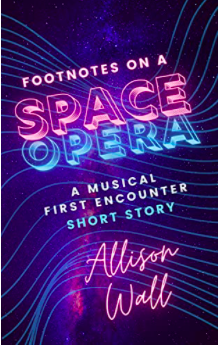
    My comic science-fiction short story FOOTNOTES ON A SPACE OPERA is out Labor Day, Sept. 6!

    When aliens land on Earth, opera—one of Western culture’s greatest but most polarizing musical traditions—becomes our planet’s greatest interstellar export.

    Hitchhiker’s Guide to the Galaxy meets Arrival on the stage of the Metropolitan Opera.

    Told from the distant future, this short story imagines a reality in which aliens are opera fans, the representative of the human race is a retired coloratura soprano, and classical music is the ticket to the stars. What could possibly go wrong?

    PREORDER: https://amzn.to/3BeXo7g


  • Finding Inspiration in the Artist’s Statement: Matsuo Bashō

    I love a good artist’s statement. Hearing from others about why they pursue their craft is inspirational and thought-provoking. It also helps me clarify and understand my own motivation. I feel a connection with the artist in question, and usually hit the keyboard with a great deal more energy.

    I’m currently reading The Narrow Road to the Deep North and Other Travel Sketches, which is a collection of Japanese haiku master Matsuo Bashō’s travel journals. In them, Bashō writes in haibun style, which means prose reflections and poetry stand side by side. At the beginning of “The Records of a Travel-Worn Satchel,” Bashō includes what seems to be his own artist’s statement.

    In this mortal frame of mine which is made of a hundred bones and nine orifices there is something, and this something is called a wind-swept spirit for lack of a better name, for it is much like a thin drapery that is torn and swept away at the slightest stir of the wind. This something in me took to writing poetry years ago, merely to amuse itself at first, but finally making it its lifelong business. It must be admitted, however, that there were times when it sank into such dejection that it was almost ready to drop its pursuit, or again times when it was so puffed up with pride that it exulted in vain victories over the others. Indeed, ever since it began to write poetry, it has never found peace with itself, always wavering between doubts of one kind and another. At one time it wanted to gain security by entering the service of a court, and at another it wished to measure the depth of its ignorance by trying to be a scholar, but it was prevented from either because of its unquenchable love of poetry. The fact is, it knows no other art than the art of writing poetry, and therefore, it hangs on to it more or less blindly.

    Matsuo Bashō, from The Records of a Travel-Worn Satchel (translated by Nobuyuki Yuasa)

    I love Bashō’s romantic, and perhaps somewhat humorous, description of his own soul, and his view of it as something with its own agency. In another poem, he writes:

    On to a bridge
    Suspended over a precipice
    Clings an ivy vine,
    Body and soul together.

    Matsuo Bashō, from A Visit to Sarashina Village (translated by Nobuyuki Yuasa)

    His description of his own journey as an artist dedicating himself to his craft is very valuable. The fact that one of Japan’s most accomplished haiku poets struggled with the same push and pull I and many other artists describe is encouraging: there is nothing wrong with me/us; we simply need to forge ahead.

    These words of Matsuo Bashō are fascinating in themselves, but also totally fascinating is the fact that they were written down in 1687, almost four hundred years ago. Yet the connection I feel when reading Bashō is immediate. There is no time lag, no misunderstanding. Words written down and preserved are extremely powerful.

    Bashō’s soul clings to the letters of a language he never spoke, never heard, and now, to this screen, to this technology he would never have imagined, like ivy to a bridge.


  • Writing in Community

    I just got back from a week-long novel-writing retreat in Wisconsin. After recovering from the shock of stepping out of the airport into 95ºF with 80% humidity (and it’s not even June God help Kansas), I thought I’d share some reflections from that experience.

    We often think of ourselves as solitary creatures of coffee shops, basements, closets, and libraries, ink stained, prone to eye strain, our preferred writing utensils now just another extension of our bodies. Popular media portrays writers this way, too, and to an extent, it’s accurate. The work we do involves the page and the brain. This caricature is the bare minimum of what we need to do our thing. I don’t know about you, but bare minimum has never been appealing to me.

    Working intensely in isolation may be productive for a while. I need these times, when my ideas are mine and nobody else’s opinions are in the mix. But it gets…exhausting. The task takes on Herculean proportions. Everything is endless and impossible.

    Change of scenery is medicinal in and of itself. Being surrounded by people–writers!–who are passionate and determined about their own projects? Inspirational.

    Never imagine you can’t learn something about the craft. Even if you have every upper-level degree and tons of industry experience, hearing another writer describe their process in their words can open up new ideas and ways of understanding your own work that you would never have come to by yourself.

    I’ve also come away with a greater sense of pride in the work of writing. Because it is work. It is a job. Getting published is an entirely different animal. It’s always nice, but it doesn’t have anything to do with the work of writing. We write. We’re writers. We do our work.

    I had the chance to practice pitching to three agents. All of them were taken with the premise of my novel-in-progress (hugely encouraging!), and talked to me about next steps. Step One, finish the book. And they talked about that step so matter-of-factly. It wasn’t a matter of whether I could finish it, but of HOW and WHEN.

    So I’m working on my self-discipline. I’m working to keep to a stricter daily routine, to spend increasingly longer periods of time writing, and to always write at my desk. In the end, writing is really up to me. Though some of my fellow retreaters might get after me from time to time, no one will hound me. If I give up, no one will make me start again. It’s down to me.

    So I’m plunging back into the solitary part, refreshed, rejuvenated, and ready to finish this dang book.


  • In the wake of Ursula K. Le Guin’s passing

    As testimonies, tributes, and memorials flood the internet, many refer to the product of Ursula K. Le Guin’s writing career, her art, as a body of work.

    I am fascinated by the phrase.

    In leaving her physical body, Le Guin draws attention to that other body, the one she built with words. The body she created, the wake of her living, is extensive, dense, gorgeous, precise, urgently important, and breathing.

    In library shelves, old hardback novels, stained by the fingerprints of generations of readers. On bookstore displays, pages crisp and fresh, smelling of new ink. Dog-eared on bedroom nightstands, piled together with co-conspirators of every genre.

    It is right to mourn the passing of a person of such integrity, wit, intelligence, talent, dedication, discipline, someone who has influenced whole generations, and worlds, with her art. We should be grief-stricken. We have lost a giant.

    And yet, she is not gone. Not totally. Her body of work now stands in for her person. It is not a fair trade, bound pages for a soul, but it is a glittering legacy. Every time her words are read aloud, mentally, heard, understood, pondered over, she grins and winks. She whispers in our ears words of power, passion, truth, and imagination. In this way, she is not dead at all, and never will be.

    Do not stand at my grave and weep
    I am not there. I do not sleep.
    I am a thousand winds that blow.
    I am the diamond glints on snow.
    I am the sunlight on ripened grain.
    I am the gentle autumn rain.
    When you awaken in the morning’s hush
    I am the swift uplifting rush
    Of quiet birds in circled flight.
    I am the soft stars that shine at night.
    Do not stand at my grave and cry;
    I am not there. I did not die. 

    “Do Not Stand at My Grave and Weep,” Mary Elizabeth Frye


  • imposter syndrome: writer’s edition

    I am not very kind to myself or my writing. It’s a funny thing. I am kind when offering feedback on other’s work. I always try to give their work in progress the benefit of the doubt. I don’t extend this courtesy to my own writing.

    I’m never really satisfied with my work, and it takes a lot to convince me something I have written is successful. This lack of kindness is especially present for me in the revision process, when I am forced to assess what I have done on the page. Garbage. Unfortunately, because what I write feels like an extension of who I am, of my mind and my imagination, I also assess myself in the revision process. Garbage.

    Writers also feel inadequate when writing first drafts. Staring down that blank page. Aren’t I supposed to be a writer? So why can’t I write? And then, after eeking out a paragraph or two, garbage.

    Imposter syndrome sets in. Hard.

    Self-criticism leading to self-hatred will not help us. In fact, habitually patronizing those mental states may keep us from being successful writers. A successful writer is: someone who keeps writing and never quits. 

    In their wonderful book Art & Fear, David Bayles and Ted Orland write,

    Quitting is fundamentally different than stopping. The latter happens all the time. Quitting happens once. Quitting means not starting again — and art is all about starting again.

    art_fear

    What separates artists from ex-artists is that those who challenge their fears, continue; those who don’t, quit.

    One of the fears I believe I share with many other writers is that my work isn’t good enough. I read amazing writers like China Mieville, Kazuo Ishiguro, Susanna Clarke, Jeff Vandermeer, and it’s very clear to me (as an English Literature major) that the sentences I have strung together in NO WAY compare. It’s like I’m using a lesser version of the English language.

    I stumbled across this quote by Ira Glass a year-and-a-half ago in video format. Here’s a link: https://vimeo.com/24715531. It’s about 2 minutes long.

    Here’s a transcript as well. I’ll add some bold lines for emphasis, but it’s worth reading the whole thing.

    All of us who do creative work, we get into it because we have good taste. But there is this gap. For the first couple years you make stuff, it’s just not that good. It’s trying to be good, it has potential, but it’s not. But your taste, the thing that got you into the game, is still killer. And your taste is why your work disappoints you. A lot of people never get past this phase, they quit. Most people I know who do interesting, creative work went through years of this. We know our work doesn’t have this special thing that we want it to have. We all go through this. And if you are just starting out or you are still in this phase, you gotta know its normal and the most important thing you can do is do a lot of work. Put yourself on a deadline so that every week you will finish one story. It is only by going through a volume of work that you will close that gap, and your work will be as good as your ambitions. And I took longer to figure out how to do this than anyone I’ve ever met. It’s gonna take a while. It’s normal to take awhile. You’ve just gotta fight your way through.

    Bayles and Orland also write,

    vision is always ahead of execution — and it should be.

    On an early spring day last year, I sat in a patch of sunlight with a growing kitten. The window gave me a good view of the vines growing on the fence outside. It’s an old network of vines, and an old fence, and the strands of it wind in an inextricable knot through the wood. And then, there are little branches dangling loose into the air. One tendril in particular was reaching out for the house. It bobbed on the wind. I could almost see it straining.

    The vine stretches, reaching for where it wants to be. It will get there, eventually, but only by growing. So slow, imperceptible from day to day. Vines are patient. They know they will get there. It’s a matter of preparation, growth, and time. When it can touch the house, the fence, the pole, and grasp it, it is ready to do so. It is thick enough to support the weight of its branch.

    You may see where you want to be as a writer so clearly, but you can’t get there. It’s like the chasm between the fence where you started to grow and the house where you can flourish, climb all over the walls and windows. You can’t jump. There are no shortcuts. We grow into the writers we will be slowly. By doing a lot of work.

    Nothing in life is a sprint. Even literal sprinting competitions take years of training. You can’t do it all in a day, or a week. Do your work for today. Trust the work you are doing. That 1/8 inch you grew will one day exceed your expectations. You’re reaching for the house? Reach for the sky. You will get there, but only if you don’t quit.

    So don’t.


  • writer unblocked

    One of my students is obsessed with the concept of writer’s block. In her mind, writer’s block is this metaphysical monster or force that’s totally impossible to overcome. If she’s got it, she finished.

    She’s right to be worried. An unknown entity that stops her from being able to write completely? Yikes. If her conception of writer’s block is accurate, we should all be terrified.

    I happen to think she’s wrong.

    That sense of being frozen, staring at a blank page or screen, with no idea what to do next can be conquered. It belongs to us, after all: writer’s block. It’s our block, not some opposing dark energy from without. It comes from us, and we can move it out of our way.

    What makes writer’s block difficult to maneuver is the sense of a total absence of words. Too often I assume that what I’m feeling is truth. But emotions aren’t always trustworthy. This one in particular. Because of course, the words are there. As long as we breathe and think and move, we have words.

    Don’t believe me? Try this free-writing exercise.

    Get some paper and your preferred writing utensil. Set a timer for five minutes. Once it starts, you have to start writing and keep writing, NO MATTER WHAT. Write about anything. Your earliest memory. A place you love. Something that bothers you that is really quite small. Take the first idea that occurs to you, commit to it, and write. Don’t spend time wondering if it’s good enough to write about. Just commit and write.

    I had to do this a lot in a classroom setting. A professor would give us a prompt and we’d write. Sometimes, they’d want us to share from what we wrote after, so I didn’t have the option to sit and stare at my paper. It was terrifying. But once I did it a couple of times, I started to realize that there are always words available. There is always something to write. The ideas fill from beneath, writes Annie Dillard, like well water.

    The ability to grab the first idea you think of and write it out is one of the most important skills I’ve learned since I started writing seriously. It takes practice.

    Practicing that skill through free writing is a great way to jumpstart your writing time. Find a prompt you like or think about a problem in the piece you’re working on, set a timer, and write until the timer goes off. Once you start letting the words out, they’ll keep coming.

    Speaking of writing time.

    I know there are mixed feelings in the writing world about scheduling writing time, writing every day, and etc. I recently saw Twitter light itself on fire over an article claiming that if you don’t write every day you’re not a writer (or something to that effect). Some of this is personal preference. It has to do with the way your brain works and the circumstances you need for optimal creative processing. However, there is something to be said for the heavy lifting writing habits and rituals can do in the fight against writer’s block.

    In her book The Creative Habit, choreographer Twyla Tharp writes about her daily workout ritual. She gets up, hails a cab, and goes to the gym every day at 5:30am. She doesn’t think about it. She just does it.

    It’s vital to establish some rituals–automatic but decisive patterns of behavior–at the beginning of the creative process, when you are most at peril of turning back, chickening out, giving up, or going the wrong way.

    I had a teacher who lights a candle before she writes. It’s a ritual, a signal that now she is leaving the every day and entering writing time. I often make myself a cup of tea before writing. The process of making tea and having a mug next to my computer helps me settle down. I’m going to be there at least as long as it takes to drink the tea. This is also the reason it’s a good idea to have a dedicated writing space. It adds to the ritual, which strengthens the habit.

    Because if writing is a habit, just another thing we do, a regular activity, it will come to us naturally. Defeating writer’s block, filling emptiness with words, will be something we do daily. And the more we practice defeating it, the better we’ll get.

    John Cleese advocates a dedicated creative time of 90 minutes. Not too long to burn out, but long enough for ideas to develop. He believes that knowing you’ll be doing this creative thing for a set period of time helps you surrender to the idea and begin to be creative. If you’re going to be there for an hour and a half, you might as well get something done.

    Flannery O’Connor also advocated a dedicated writing time. She set aside 2 hours every morning and did not allow herself to do anything else during that time. No reading, no research. Only writing or staring into space. Some days she’d just sit at her desk and stare. But she’d be there, ready to write, every day.

    I love that image of her just sitting there, waiting. Even if we make writing a habit, if we develop our own rituals, if we practice free writing, put words down on the page even when it feels like there aren’t any, we may still have days where no words are written. This is not failure or writer’s block. It’s just another part of the writing process’s cycle. A lot of the work in my process happens internally. Me getting things straight in my own head. Sometimes my subconscious needs time to process, too. Our subconsciousnesses don’t always let us know what they’re up to, the jerks…

    But before we blame our subconsciousnesses and sit passively through our writing times, we need to make sure we’ve done everything in our power to deal with our impulse to not write.

    Because no one will ask us to keep writing.

    Because we will only be writers if we keep writing.

    Because the only thing that will keep us from being writers is if we stop.


  • prequel: why write about writing

    I’ve been practicing creative writing since I was a kid. Never studied it formally. My education was free at my local public library. After college, I thought, well, heck, I’ve read all these books. I’m going to write one.

    So I did.

    It was bad.

    I had no idea what I was doing. I could feel all the flaws but I couldn’t define them or point to them on the page.

    I got into graduate school to study creative writing. That’s when I really started being a writer. Not just performing the act of writing, but understanding what it means to develop a story, to read like a writer, and to engage purposefully with the creative process.

    In grad school, I had this amazing opportunity to teach a classroom of undergraduates a multi-genre intro to creative writing course. It was a total blast.

    Now, I have graduated with a Master of Fine Arts in Creative Writing, applied to over 30 academic jobs, and had one dud phone interview. There’s this one requirement in all applications to teach creative writing. Strong history of publication. Code for: Published one book, minimum.

    I’m working on a book. (It’s going to be great. If I can get it finished. Then published.) But until it’s done, my chances of teaching creative writing are slim. So what do I do until then? Write lesson plans for an imaginary class? Never write down, and thus forget, all of the little things the work teaches me every day?

    No. In The Writing Life, Annie Dillard writes:

    One of the few things I know about writing is this: spend it all, shoot it, play it, lose it, all, right away, every time. Do not hoard what seems good for a later place in the book, or for another book; give it, give it all, give it now. The impulse to save something good for a better place later is the signal to spend it now. Something more will arise for later, something better. These things fill from behind, from beneath, like well water. Similarly, the impulse to keep to yourself what you have learned is not only shameful, it is destructive. Anything you do not give freely and abundantly becomes lost to you. You open your safe and find ashes.

    My goal is to record and share my writing life: strategies, frustrations, triumphs, what works, what doesn’t work, and what I learn. To keep giving, freely and abundantly, so nothing is lost.

    If all this is just me preaching to no one on a soapbox in my little corner of the internet, that’s fine. I take myself too seriously anyway.

    But if you do happen to find this blog, and you like what you see, read along, friend, and let’s see where the page takes us.