With filming nearing completion on the final season of What We Do in the Shadows (WWDITS)—looks like they’re wrapping on May 3 (see Harvey Guillen’s Instagram post)—I am finally sorting through my thoughts about last season.
For the first four seasons, WWDITS was the funniest sitcom I’d seen in years: quirky, off-beat, queer-inclusive, edgy… Then season 5 dropped.
I’m somewhat hesitant to publish this, as it’s probably not a popular take. But it’s an important opportunity to talk about audience betrayal.
Yeah, betrayal. Dramatic word choice. Intentional word choice.
And yeah, WWDITS is a comedy. But just because it’s intended to make you laugh doesn’t mean its impact isn’t serious.
TLDR: I had a very strong negative reaction to WWDITS season 5.
If you loved season 5, you may not love this essay. Great news! It’s not required reading.
If season 5 turned you off, and you couldn’t quite figure out why…I might have the answer.
***SPOILERS AHEAD***
Made by FX, streaming on Hulu, WWDITS is based loosely on the 2014 film of the same name by New Zealand icons Jemaine Clement and Taika Waititi. It’s a 30-minute situational mockumentary/horror-comedy show about a group of vampires living as roommates in modern-day Staton Island, NY.
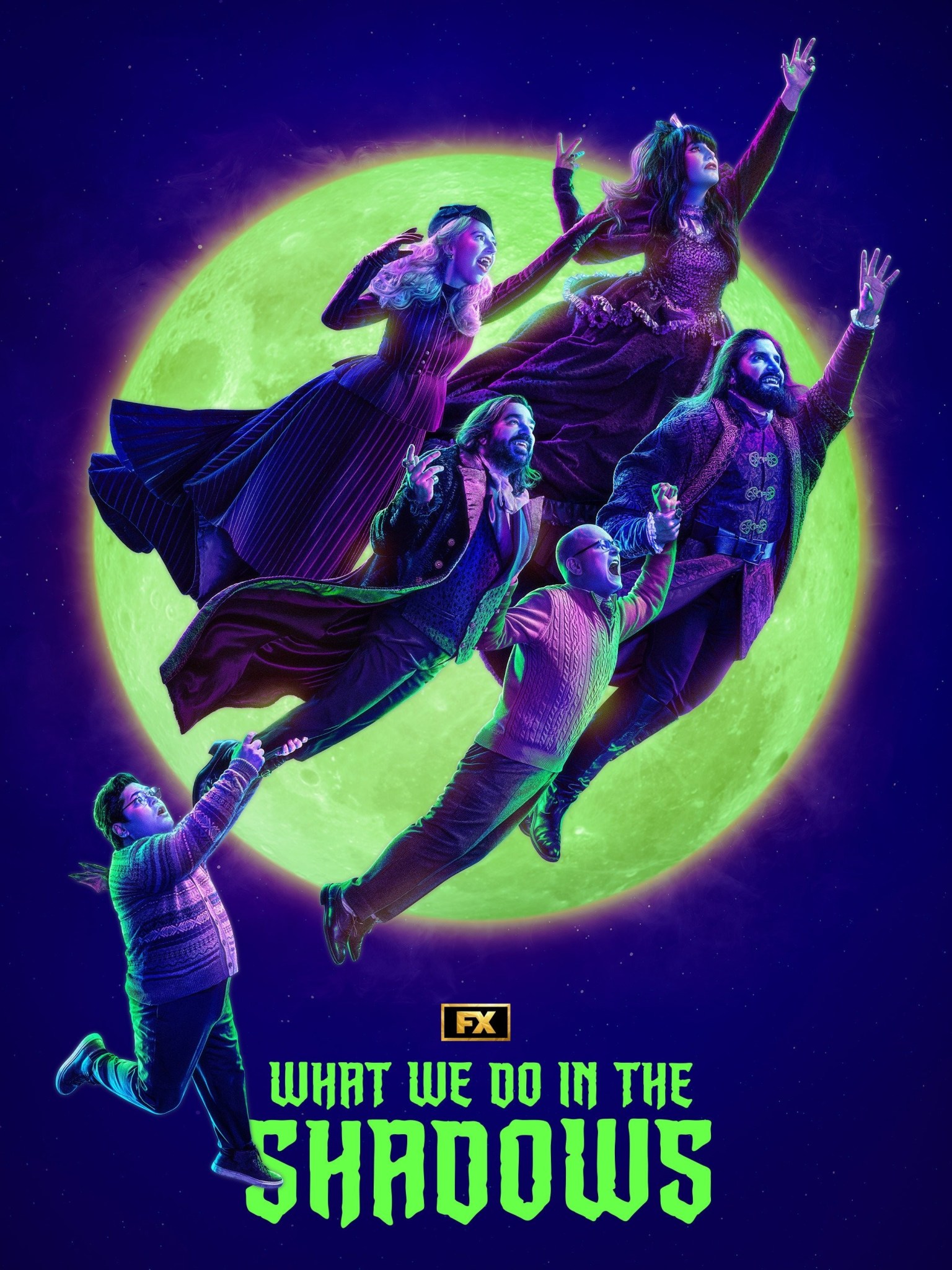
Thematically, WWDITS is about outcasts. A lot of its humor is drawn from the clash of ancient, Old-World vampires in modern human society—somewhere they clearly do not belong and are not welcome. This group of vampires also doesn’t seem to fit in with vampire society; they’re the outcasts of the outcast. Guillermo (vampire Nandor’s familiar and the show’s human main character, played by Harvey Guillen) doesn’t fit in with humans or vampires. He longs to be a vampire, but has Van Helsing lineage that makes him preternaturally good at killing vampires. He also comes out as gay in season 4, yet another kind of human outcast (though I hope this will be less so in coming years; the vampires surely didn’t care). Guillermo fights constantly to make a place for himself, to make his voice heard.
I know a lot of neurodivergent (ND) folks who love WWDITS. If I project a little, I theorize part of the reason is that they feel resonance with the outcast theme of the show. ND folks understand outcast themes deeply. We’ve lived them.
As an Autistic fan, I was ultimately disappointed, crushed even, by season 5.
The problem’s center is a supporting character called The Guide (played by Kristen Schaal). Throughout season 5, she desperately wants to be included in the main vampire gang, who consistently ignore and exclude her. Each instance of exclusion appears to be written for laughs: Isn’t her desperation funny? Isn’t she awkward? LOL like we’d be friends with her…
This didn’t sit right with me. But it was always a quick moment, sidelined instantly for the flow of the episode’s plot, so I could ignore it. Until it culminates in the double-episode season finale. To sum up, The Guide turns vindictive, punishing and imprisoning the gang for shutting her out. Trapped in silver cages, they apologize. They tell her they’ll be her friend, and she lets them go. In the credits scene, it’s revealed they are lying to her, making plans to dump her off on another vampire later.
I had a strong reaction to this.
When I have strong reactions to film, books, television, etc., and I voice them, I often hear, “It’s just a show.” “It’s just a story.” I absolutely do not experience it that way.
Studies on Autistic brains have shown structural differences (~25% more dendritic spines, 50% more synapses) that implicate more and more active mirror neurons, which means we can watch something happen and feel it in our own bodies. “Just stories” become embodied, visceral experiences. Other ND brain types also experience heightened emotional empathy and synesthesia that contributes to a more physical involvement.
Stories are extremely important to me, and to a lot of ND people. They’re a way we can achieve a sense of belonging, both with the characters and with other fans. ND people can have a shaky sense of self, so a story can help us understand ourselves and the world around us in new ways. When we find a story that resonates with our lived experience, it means even more; these are rare. We can identify our experience, identify our emotions, learn, and grow.
Stories broadcast messages. They are cultural containers, reflecting and shaping how we think. Who we are.
This is a show about outcasts…who then create their own in-group and cast out someone else. Maybe that would work, if there was any sense of awareness in the script or story that there was a lesson to be learned here. But there’s not.
The vampires in WWDITS aren’t the brightest or the most morally upstanding. I don’t need them to be. But this betrayal of one of the show’s major themes (outcast-ness), and its audience (who relate to being outcast), cuts deep.
A lot of ND folks deal with Rejection Sensitivity Dysphoria (RSD), partly as a result of having tried over and over to fit in and been rejected. We are constantly held to neurotypical standards and fall short. We are fish being compared to birds. Even if we don’t understand our own neurodivergence, neurotypical people can sense it. Even if they don’t know what they’re sensing, they don’t like it or want to associate with it. After a lifetime, rejection, real or perceived, becomes a fight-flight-freeze-fawn threat, and our bodies react accordingly.
Seeing The Guide go through repeated rejection…and then become the villain because of it? I was shocked that this is how WWDITS handled her character. It’s a no for me.
Being left out is only funny if you aren’t the one being left out. It’s only a joke if you’re laughing with the group. The fact that The Guide turns violent/evil is especially troubling. This is the left-out, bullied kid who brings a gun to school. This is the kid, who, when the news anchors tell us they’ve learned they were “Autistic,” everyone nods, as if that explains everything. They understand now.
Is my own RSD triggered by The Guide’s arc? Is it coloring and maybe even fueling the writing of this essay? Hell yes! Of course it is! Rather than invalidating my point, though, it strengthens it. This is the harm that comes of audience betrayal—not just leaving unfulfilled the initial promises of the show, but actively working against them in what feels like a “fuck you” to fans.
Why did the writers choose this? Why not write about inclusion instead of an exclusion that leads to retaliation?
Unfortunately, I suspect all of this goes down just to get Nandor (played by Kayvan Novak) in a position (a cage made of silver) to hear Guillermo confess a secret safely, so Nandor couldn’t physically retaliate. But there are a hundred other ways that could have been achieved, plot wise. That’s the thing about ableism in storytelling that makes me extra angry: It’s lazy. There are so many ways to write Nandor into a silver cage that would avoid this. (I had the same problem with the celebrated Netflix film Don’t Look Up.)
It is so frustratingly careless.
It is possible for modern sitcoms (a genre built on “friend groups” mocking each other for laughs; see Friends, The Big Bang Theory, How I Met Your Mother, etc.) to explore radical inclusion. This is one of the many beauties of shows like Schitts Creek or the hilarious, queer, pirate sitcom/romcom Our Flag Means Death (OFMD), cancelled tragically early after only two seasons. OFMD also carries the theme of the outcast experience (and involves Taika Waititi, interestingly enough), but in contrast to WWDITS, it is intentionally, insistently inclusive. So much so that the toxic, prickly villain from season 1 is transformed to a beloved central character in season 2, singing a sensitive, heartfelt (if anachronistic) rendition of “La Vie en Rose” a la Lady Gaga from A Star is Born. The impact of this on me and thousands (millions?) of other OFMD fans has been healing and transformative—in a comedy-centered space.
WWDITS writers went one step further to twist the knife in the final episode of season 5. They had the opportunity to include another kind of outcast: a character with a vampiric autoimmune disorder. Despite my revulsion at The Guide’s treatment, I got excited, as a chronically ill person, imagining avenues this would open to examine this new kind of outcast-ness…and in season 5’s final moments, they undid it. The character was healed.
The remedy is not inclusion. It’s removal of the disability.
Season 6 will be the show’s last season, and honestly, I’m glad. WWDITS has turned against its own underlying themes, and in the process, turned against the audience it initially attracted. It has lost its identity severely…also evidenced by season 5’s meandering, boring episode plots, which I’m not going to touch on here. It’s not worth it.
A world that felt tailor-made for me turned into one in which I no longer feel welcome or represented. It’s exhausting, to be cut out of a space that had previously felt inclusive. Unfortunately, it’s not a new experience (see: RDS).
If you relate, I’m sorry. We deserve stories where being excluded isn’t funny or inevitable. Where being excluded—a social experience out of our control—doesn’t mean we are villains capable of violence.
I may check in with season 6 to see if they make attempts at redeeming any of this and/or to see how they wrap the show overall. I am curious to see if they’ve been queerbaiting with Nandor/Guillermo this whole time… I’m not holding my breath, though.
 Allison Wall