Category: KiwiSDR

Echo iOS KiwiSDR & OpenWebRX App now in Beta Testing

Back in January, we first posted about "Echo", an upcoming iOS app designed for browsing global web-based KiwiSDR and OpenWebRX software-defined radios.

Mark now notes that Echo is now in beta, and has been released to testers via TestFlight. He notes that new users can access the beta by making a small donation on his Ko-fi page. Mark writes:

Users have already reported being able to listen to some euro ham chat on their bike ride today. Where they’d usually have to put their entire iPhone in that locked guided access mode to block touch inputs on Safari, Echo allows multitasking & lock screen playback. For every SDR, any frequency. Someone else throwing the phone in their pocket & taking their walk with AirPods in their ear listening to CW. This was truly the most requested feature by far.

I’ve made several improvements since we last talked, even added support for not just Kiwi & OpenWebRX but also WebSDR & FM-DX. All built in. Over 2000+ global tuners at people’s fingertips. 11,000+ frequencies in a categorized database.

If you were unaware, OpenWebRX is a piece of server software that allows you to access and share SDRs over a network connection, such as the internet, via a web browser interface. OpenWebRX is a core component of the KiwiSDR, an SDR designed to operate as a shared receiver over a network connection. Around the world, many people have set up public KiwiSDR, RTL-SDR, and other SDR systems accessible via OpenWebRX. Echo is designed to make it easy to search for and view public OpenWebRX receivers on iOS devices.
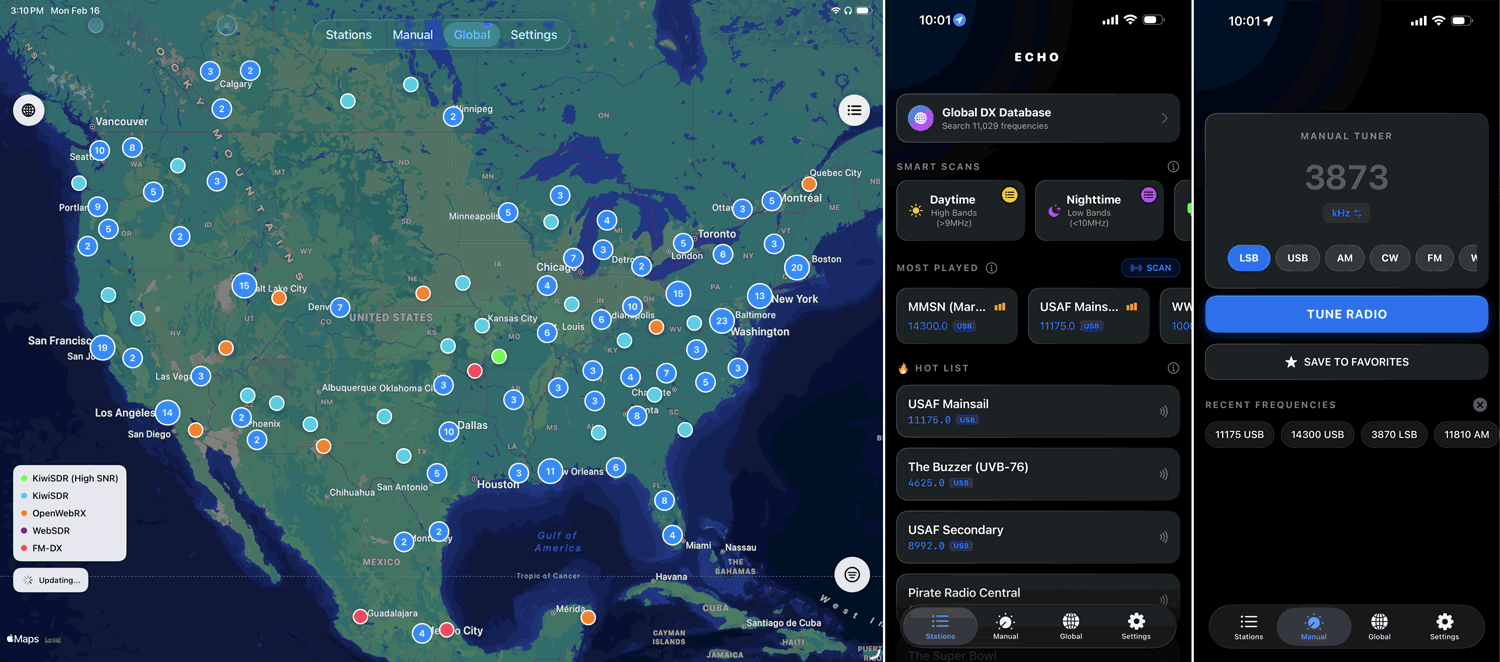
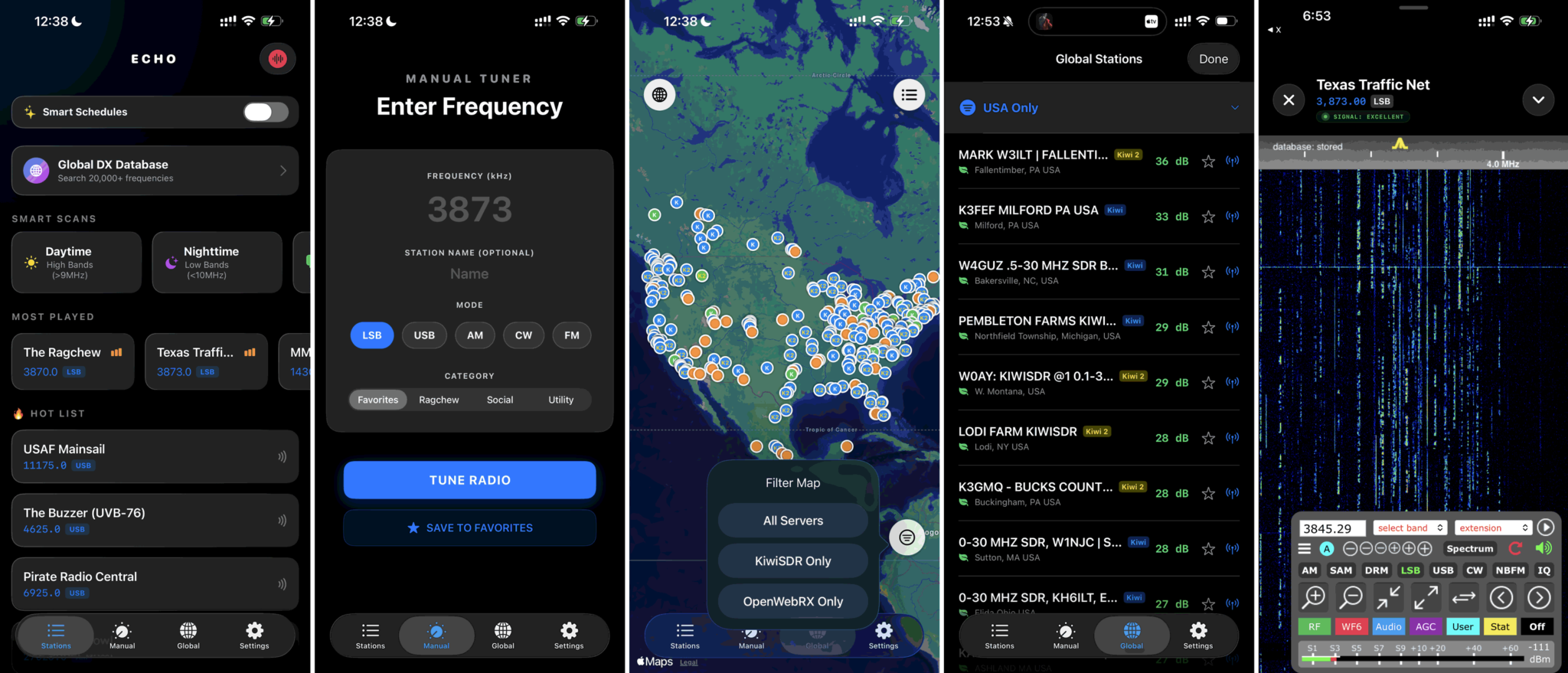
EchoSDR Beta Screenshots
Echo iOS Beta Screenshots

Echo – A Native iOS Client for KiwiSDR & OpenWebRX

Thank you to Mark Garrison Jr. for writing in and sharing with us a new iOS app he's developing called "Echo". Echo is an app designed to provide a streamlined mobile companion for the KiwiSDR and OpenWebRX ecosystems. Note that the app is currently not yet released, but Mark is planning a TestFlight beta in February. Follow his Twitter/X @SDRecho for updates, and sign up to the beta tester waiting list if you are interested.

OpenWebRX is a piece of server software that allows you to access and share SDRs over a network connection, such as the internet, via a web browser interface. OpenWebRX is a core component of the KiwiSDR, an SDR designed to operate as a shared receiver over a network connection. Around the world, many people have set up public KiwiSDR, RTL-SDR, and other SDR systems that can be accessed via OpenWebRX. Echo is designed to make searching for and viewing public OpenWebRX receivers easy on iOS devices.

Mark writes:

[Echo] is a native iOS app built entirely in SwiftUI, designed to provide a streamlined mobile companion to the KiwiSDR and OpenWebRX ecosystems.

The goal is to offer a modern interface optimized for iPhone, making it easier to explore the spectrum on the go.

Key Features:

Global Connectivity: Access any public KiwiSDR or OpenWebRX server via a live global map with 500+ active stations.

Smart Scans: Station scanner with presets for Shortwave, Ham, and Military bands.

Audio Intelligence: Integrated recording with speech-to-text transcription for logging signals.

Native Performance: 100% SwiftUI for smooth waterfall rendering and low battery impact.

The app is currently in active development. I am sharing progress updates and will be announcing the upcoming TestFlight beta over on Twitter at @SDRecho. I’m planning to launch a beta in February.

Echo iOS App for KiwiSDR and OpenWebRX
Echo for iOS: The Native SDR Experience
Watch this video on YouTube

TechMinds: Testing the SDR++ Brown Fork with Built-In DSD and Remote KiwiSDR Support

Over on YouTube, Matt from Tech Minds has uploaded a video in which he demonstrates and tests an unofficial fork of the popular SDR++ software called "SDR++ Brown."

SDR++ Brown has some unique features such as the ability to connect to remote KiwiSDR WebSDRs directly within the UI, built-in FT8 and FT4 decoders with PSK reporter, a built-in DSD decoder allowing for DMR, P25 and NXDN to be decoded directly in the software, Hermes Lite 2 support, and various Android UI improvements for small screens.

Matt also notes a few bugs with the software, such as PSK Reporter and Multi-WebSDR waterfall display features being broken.

Over on X, Alexandre Rouma, creator of the original SDR++, has expressed concern about this fork. He notes that this is an unofficial fork that is not up to his standards and that support requests for SDR++ Brown should not be made to him. Instead, support requests should be made directly to the fork owner, Sanny Sanoff.

SDR Plus Plus - Brown Edition Adds New Features Including DSD!
Watch this video on YouTube

Tech Minds: Review of the KiwiSDR 2

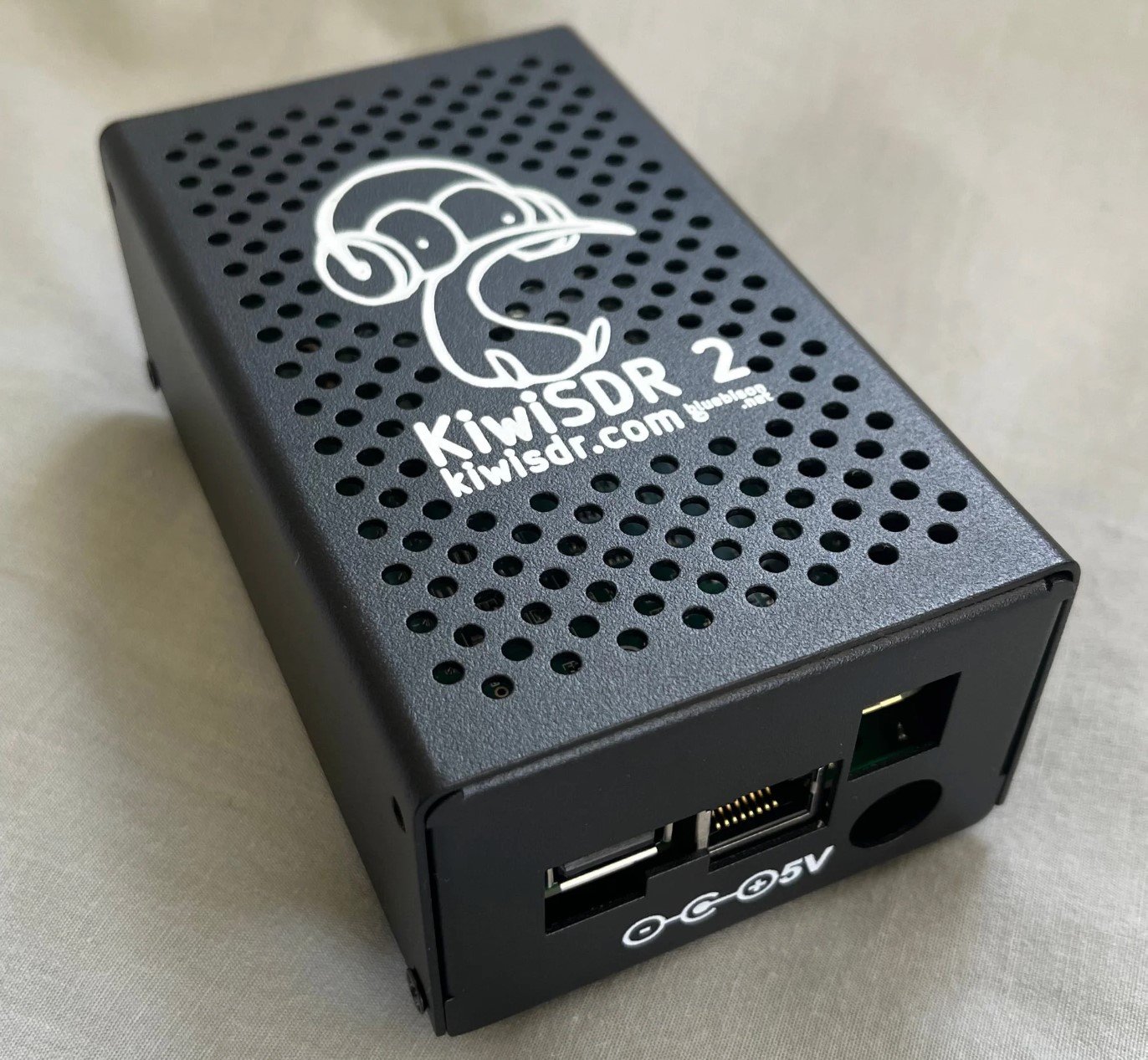
Earlier this year the KiwiSDR 2 became available for purchase and began shipping out to customers. The KiwiSDR 2 is an upgraded version of the original KiwiSDR with the main upgrades being an enhanced RF front end and the addition of a digital attenuator.

Over on the Tech Minds YouTube channel, Matt received his KiwiSDR 2 and uploaded a review and demonstration of the product. In the video, Matt shows the external ports of the KiwiSDR and discusses the differences between the KiwiSDR 2 and the original version. Matt goes on to show how to set up the KiwiSDR 2 and shows it receiving through it's web-based receiving software.

KiwiSDR is a 14-bit wideband RX-only HF software-defined radio created by John Seamons (ZL/KF6VO). The KiwiSDR has up to 32 MHz of bandwidth, so it can receive the entire 10 kHz - 30 MHz VLF/LF/MW/HF spectrum all at once. Other than the specifications, the main interesting feature about the KiwiSDR is that it is designed to be operated entirely as an online web-based SDR which is accessed over a network connection. Owners can optionally share their KiwiSDRs online with anyone who wants to access it, which also allows for interesting distributed applications, such as TDoA direction finding, which allows users to pinpoint the location of unknown HF transmissions such as numbers stations.

KiwiSDR 2 - A Standalone Software Defined HF Radio Receiver
Watch this video on YouTube

KiwiSDR 2 Now Available For Purchase

Back in August 2023 we posted about the pre-announcement of the KiwiSDR 2, an upgraded version of the original KiwiSDR. Most of the upgrades are minor or due to some chips becoming EOL. The main upgrades are an enhanced RF front end and the addition of a digital attenuator. One change is also the manufacturing country. Instead of being manufactured in China, the KiwiSDR 2 is now manufactured in New Zealand.

The new KiwiSDR 2 can be purchased from kiwisdr.nz. Pricing is $648 NZD ($395 USD) for the full KiwiSDR 2 cape + Beaglebone and enclosure set. The cape by itself is also available for $484 NZD ($295 USD). Currently the second production run is selling, and a third production run is in progress. 

Previously the original KiwiSDR sold for $299 USD. Considering inflation, component changes and additions, and the change to a more expensive country to manufacture in, the price increase seems reasonable. 

KiwiSDR is a 14-bit wideband RX only HF software defined radio created by John Seamons (ZL/KF6VO). The KiwiSDR has up to 32 MHz of bandwidth, so it can receive the entire 10 kHz - 30 MHz VLF/LF/MW/HF spectrum all at once. Other than the specifications, the main interesting feature about the KiwiSDR is that it is designed to be operated entirely as an online web based SDR which is accessed over a network connection. Owners can optionally share their KiwiSDRs online with anyone who wants to access it, which also allows for interesting distributed applications, such as TDoA direction finding, which allows users to pinpoint the location of unknown HF transmissions such as numbers stations.

KiwiSDR 2 with BeagleBone and Enclosure Set

KiwiSDR 2 Pre-Announcement

KiwiSDR is a 14-bit wideband RX only HF software defined radio created by John Seamons (ZL/KF6VO). The KiwiSDR has up to 32 MHz of bandwidth, so it can receive the entire 10 kHz - 30 MHz VLF/LF/MW/HF spectrum all at once. Other than the specifications, the main interesting feature about the KiwiSDR is that it is designed to be operated entirely as an online web based SDR which is accessed over a network connection. Owners can optionally share their KiwiSDRs online with anyone who wants to access it, which also allows for interesting distributed applications, such as TDoA direction finding, which allows users to pinpoint the location of unknown HF transmissions such as numbers stations.

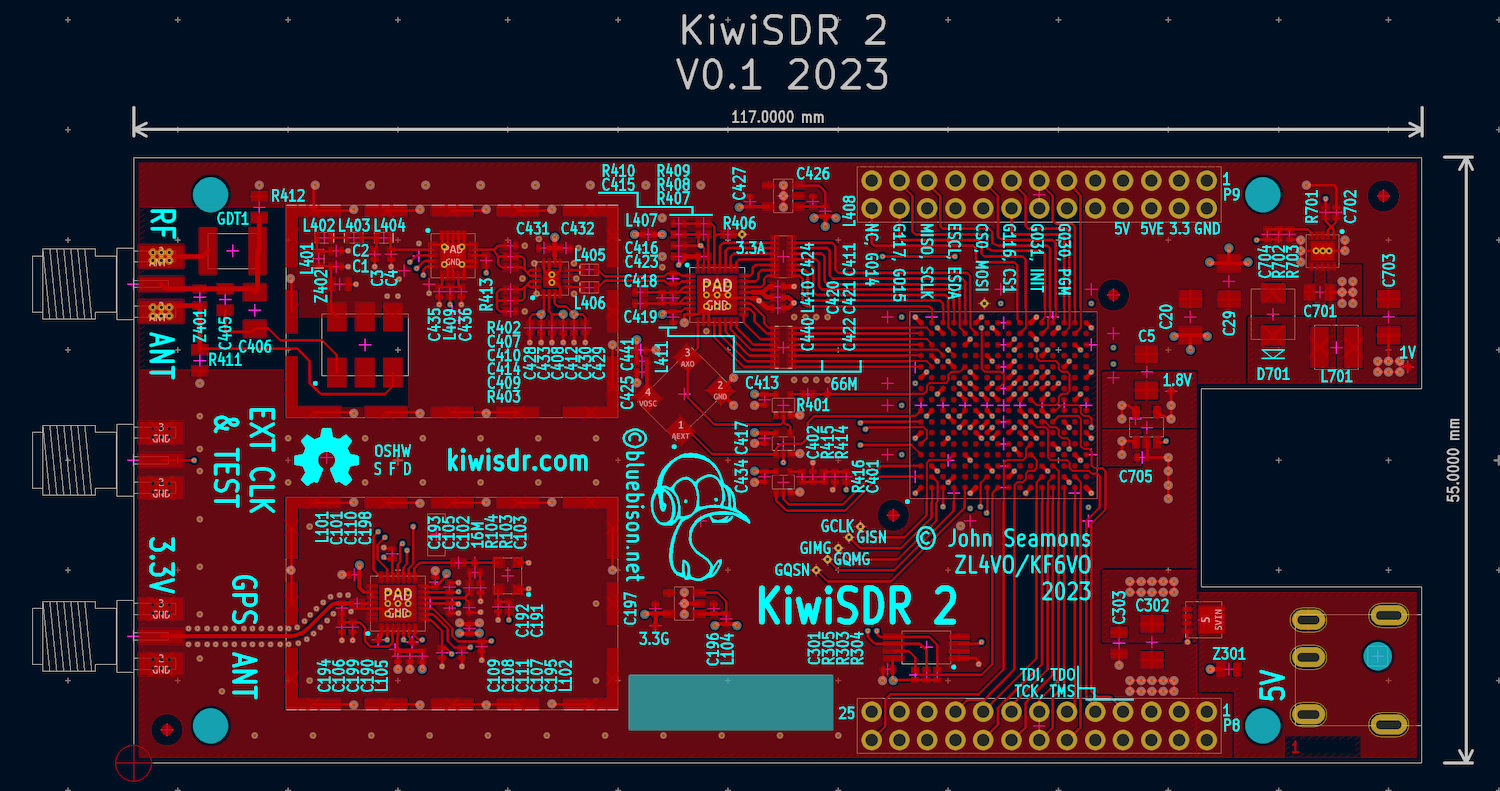
KiwiSDR 2 has recently been "pre-announced" by creator John Seamons on the KiwiSDR forums. The changes to the design are not huge, but they bring a few iterative improvements. He writes:

KiwiSDR 2 Goals:

Minimal changes. Fastest time-to-market with lowest possible risk. BUT since the PCB is going to be re-spun fix some of the known limitations that don't add too much risk:

  • New RF front-end:
  • Balanced input via balun transformer
  • Digital attenuator (per the advisory group: pSemi PE4312, 0 - 31.5 dB, 0.5 dB steps)
  • Gas discharge tube (GDT) across input in addition to TVS diodes
  • Static drain resistors (100K) from input connections to ground
  • External ADC clock brought out on third SMA connector
  • Self test loopback mode using a short cable between this SMA and antenna input
  • New GPS chip to replace current one which is now EOL
  • Reverse polarity protection (via P-FET) on 5V DC input
  • TVS diode across 5V input
KiwiSDR 2 PCB Design

Financial Times Story about Ukraine Radio Monitoring with WebSDRs

The Financial Times has recently run a video story on how hobbyist WebSDR setups are being use to record Russian radio communications during the war on Ukraine.

In these modern times, we would expect the Russian military to be making full use of encrypted radio communications on the battlefield. But early on in the invasion it came to be clear that much of the Russian forces are much less advanced than first thought, and are using cheap civilian unencrypted radios that anyone nearby can listen to with an RTL-SDR or via a web connected SDR.

The FT story focuses on how open source contributors from all over the world are helping to monitor internet connected WebSDRs that are close enough to receive Russian radio communications. And how volunteers are helping translate, confirm authenticity, and collect information about possible war crimes. 

If you are interested, previously we posted about a similar video story from the New York Times, and have covered various bits of radio related news from the war in two previous posts [1][2].

Ukraine's battle of the airwaves | FT
Watch this video on YouTube

SDRAngel Features Overview: ADS-B, APT, DVB-S, DAB+, AIS, VOR, APRS, and many more built-in apps

SDRAngel is a general purpose software defined radio program that is compatible with most SDRs including the RTL-SDR. We've posted about it several times before on the blog, however we did not realize how much progress has occurred with developing various built in plugins and decoders for it.

Thanks to Jon for writing in and sharing with us a demonstration video that the SDRAngel team have released on their YouTube channel. From the video we can see that SDRAngel now comes stock with a whole host of built in decoders and apps for various radio applications making it close to an all-in-one SDR platform. The built in applications include:

  • ADS-B Decoder: Decodes aircraft ADS-B data and plots aircraft positions on a map
  • NOAA APT Decoder: Decodes NOAA weather satellite images (in black and white only)
  • DVB-S: Decodes and plays Digital TV DVB-S and DVB-S2 video
  • AIS: Decodes marine AIS data and plots vessel positions on a map
  • VOR: Decodes VOR aircraft navigational beacons, and plots bearing lines on a map, allowing you to determine your receivers position.
  • DAB+: Decodes and plays DAB digital audio signals
  • Radio Astronomy Hydrogen Line: With an appropriate radio telescope connected to the SDR, integrates and displays the Hydrogen Line FFT with various settings, and a map of the galaxy showing where your dish is pointing. Can also control a dish rotator.
  • Radio Astronomy Solar Observations: Similar to the Hydrogen line app, allows you to make solar measurements.
  • Broadcast FM: Decoding and playback. Includes RDS decoding.
  • Noise Figure Measurements: Together with a noise source you can measure the noise figure of a SDR.
  • Airband Voice: Receive multiple Airband channels simultaneously
  • Graves Radar Tracker: For Europeans, track a satellite and watch for reflections in the spectrum from the French Graves space radar. 
  • Radio Clocks: Receive and decode accurate time from radio clocks such as MSF, DCF77, TDF and WWVB.
  • APRS: Decode APRS data, and plot APRS locations and moving APRS enabled vehicles on a map with speed plot.
  • Pagers: Decode POCSAG pagers
  • APRS/AX.25 Satellite: Decode APRS messages from the ISS and NO-84 satellites, via the built in decoder and satellite tracker.
  • Channel Analyzer: Analyze signals in the frequency and time domains
  • QSO Digital and Analog Voice: Decode digital and analog voice. Digital voice handled by the built in DSD demodulator, and includes DMR, dPMR and D-Star.
  • Beacons: Monitor propagation via amateur radio beacons, and plot them on a map.

We note that the video doesn't show the following additional features such as an analog TV decoder, the SDRAngel "ChirpChat" text mode, a FreeDV decoder and several other features.