Bipolar support groups may help people with bipolar disorder feel seen and understood. There is also evidence that feeling supported can improve the well-being of those with the condition.
A 2019 study found that people with bipolar disorder who feel they lack social support are more likely to experience longer episodes and more suicide attempts.
Finding the right support may help reduce these risks, but it is important that people combine this with ongoing treatment from a doctor or mental health professional.
Here, learn more about the support groups available for people with bipolar disorders and their families.
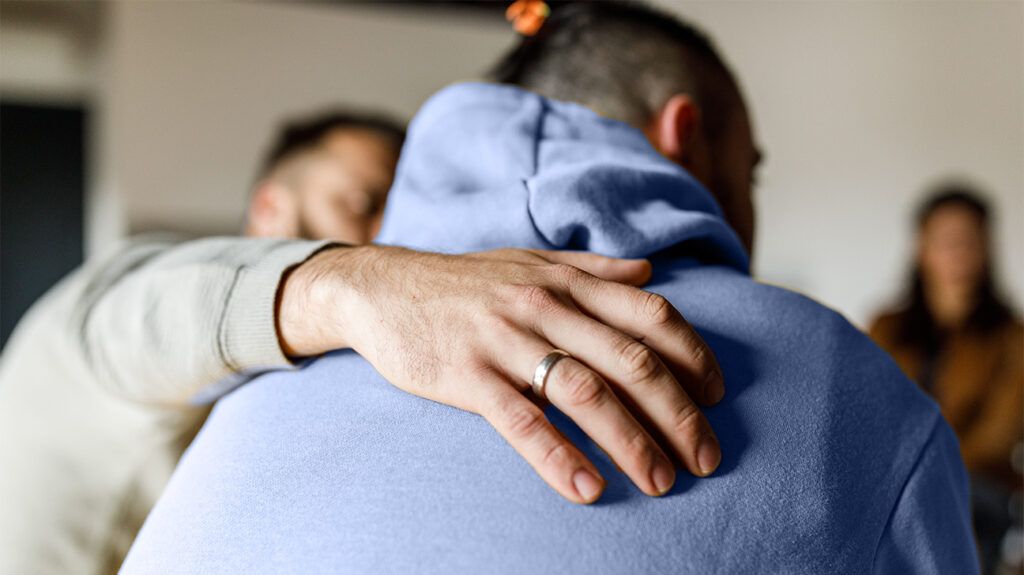
If a person with bipolar disorder feels an episode is starting, it is vital that they seek support right away.
The first step may be to speak with a supportive family member or friend to let them know what is happening. A loved one may:
A person also needs to contact their doctor. If they are in crisis and cannot take this step, a loved one may need to take the initiative.
People can use the Substance Abuse and Mental Health Services Administration’s online tool for finding treatment.
Help is out there
If you or someone you know is in crisis and considering suicide or self-harm, please seek support:
- Call or text the 988 Lifeline at 988 or chat at 988lifeline.org. Caring counselors are available to listen and provide free and confidential support 24/7.
- Text HOME to the Crisis Text Line at 741741 to connect with a volunteer crisis counselor for free and confidential support 24/7.
- Not in the United States? Find a helpline in your country with Befrienders Worldwide.
- Call 911 or your local emergency services number if you feel safe to do so.
If you’re calling on behalf of someone else, stay with them until help arrives. You may remove weapons or substances that can cause harm if you can do so safely.
If you’re not in the same household, stay on the phone with them until help arrives.
Various online support groups can help people with bipolar disorder, including:
Depression and Bipolar Support Alliance (DBSA)
The DBSA runs support online groups that aim to provide “a safe, welcoming space to share experiences, discuss coping skills, and offer each other hope.”
There are more than 200 groups to choose from, which are:
- free to join
- monitored by peers with experience in living with a mood disorder
- diverse in focus, with groups for Black people, the LGBTQIA+ community, those from rural communities, friends, parents, and more
People can find DBSA online support groups online and look for groups that focus on mood disorders. The DBSA also provides a full list of cultural and identity support groups.
However, a person needs to note that the DBSA is a peer-focused organization. Mental health professionals may advise the groups but do not act as monitors.
National Alliance on Mental Illness (NAMI) online support groups
NAMI also provides online support through video calls. These are local events, and timings vary between areas.
A person can contact a local NAMI branch to find out what is available and when.
Dailystrength
For more personal views, the DailyStrength Bipolar Disorder Support Group offers a friendly, chatty environment for people to share experiences. The chat has two strands: general and crisis.
It is free to join, but health professionals do not monitor posts. The organizers depend on members to notify them if any abuse occurs. The posts are visible to anyone in the group, but people can use an alias.
Bipolar Support for Perinatal (Pregnancy and Postpartum) Moms and Birthing People
This group focuses specifically on bipolar symptoms that occur during or after pregnancy. The leaders of each group have lived experience of bipolar disorder and use a peer-to-peer model of support.
The groups run twice a month for 90 minutes each. For the first 30 minutes, group leaders offer information and establish guidelines for the group. The remaining hour is “talk time,” during which people can discuss their experiences.
All the groups are free, but individuals need a webcam to introduce themselves. This is a safety measure that ensures only members are on the call.
People can learn more and register to join online.
Nationally, the two main providers of in-person bipolar support groups are DBSA and NAMI. A local healthcare center can advise on other groups in the area.
DBSA
The DBSA runs in-person support groups. People can find an in-person support group online.
The organization also offers a range of cultural and identity-focused groups. These groups are peer-led and free of charge.
NAMI Connection Recovery Support Group
NAMI’s Connection Recovery Support Group is another network offering free, peer-led support. Groups meet weekly, biweekly, or monthly, depending on the location, and follow a structured model that mental health professionals have developed.
Each session lasts 90 minutes and aims to support people without judgment. It is open to adults ages 18 and up.
Find a local branch on the NAMI Connection webpage.
Support groups can vary in how they operate, who runs or moderates them, and their aims.
Some groups and forums are informal and do not have a facilitator to lead the conversation, while others are structured and led by mental health professionals.
Some form of moderation by people who understand bipolar disorder is important, as they can potentially take action if someone needs help. Feeling the group is a safe space to talk openly is also important.
Other factors to consider include:
- the location of the group
- how easy it is to visit
- when and how regularly the group meets
- the group’s policies on privacy and confidentiality
Some questions to ask when looking for support groups could include:
- Do I want something more formal or more personal?
- Will I have to use my real name?
- If the group is local, how do I feel about maybe seeing people I know?
- Who can see my posts?
- Does a healthcare professional monitor the chat, forum, or discussion?
- Do I need to go physically to a place, or can I do this from home?
- Does it matter if the sessions are at specific times?
- How do I feel about the posts that are already there?
- Is it free to join? If not, why not?
Always check the small print on support groups to make sure they provide a suitable level of privacy and professionalism. Checking any FAQ pages may also help.
Some support groups for loved ones and caregivers of people with bipolar disorder include:
- NAMI’s Family Support Group
- the DBSA’s National Online Parent and Caregiver support groups, which run on the platform HeyPeers
- the Robert Louis Stevenson School Parent-to-Parent support network, which is open to primary caregivers of children and adolescents with bipolar disorder
Learn moreThe following articles may be useful:
A range of online and in-person support groups can help those living with or caring for someone with bipolar disorder. They can offer support, advice, and hope for people with bipolar disorder.
Other local or online communities may also be suitable, but it is best to check carefully before joining. A local doctor or healthcare center can refer people to reputable local groups.
Many resources are available free of charge, but it is important to note that support groups cannot replace medical treatment for bipolar disorder. If someone with mental health issues is not already doing so, they need to seek a diagnosis and treatment from a mental health professional.