Some people may experience acne along the jawline. Possible causes include hormonal imbalances, the use of cosmetic products, and more.
A person may be able to treat jawline acne by washing the face twice a day and applying over-the-counter acne creams.
For more severe jawline acne or acne caused by hormonal imbalances, a person should speak with a doctor or dermatologist.
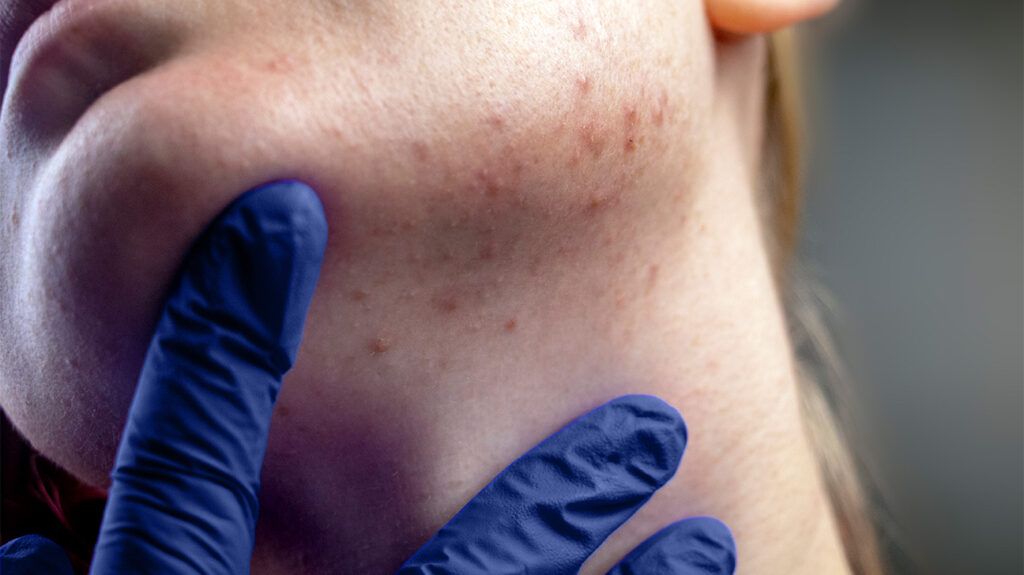
According to a
The sebaceous glands produce a substance called sebum, which lubricates the hair and prevents the skin from drying out. When the glands produce too much sebum, it mixes with dead skin cells, blocking the follicles and causing acne.
Contributing factors of jawline acne include:
- Fluctuating hormone levels: Some people may have an acne flare-up before their period and during the first 3 months of pregnancy.
- Hormonal imbalances: A condition called polycystic ovary syndrome (PCOS)
can cause acne on the face, chest, and upper back. PCOS is a condition in which there is an imbalance of the reproductive hormones. - Cosmetic products: Some cosmetic products, such as makeup, contain ingredients that can cause acne. People may also find it beneficial to regularly cleanse tools used to apply cosmetics, like brushes and sponges.
Other potential causes include:
- wearing items that cover the jawline, such as chin straps
- playing instruments that come into contact with the jawline, such as the violin
- medications, such as lithium, steroids, and anticonvulsants
- excessive exposure to sunlight
- scrubbing the face with soaps and detergents
- insulin resistance, which is when the body
does not react to insulin as it should
While there is no cure for acne, there are several safe and effective treatments.
People with mild blemishes, such as a few blackheads, whiteheads, or pimples, can often treat their acne with over-the-counter gels or creams.
Those with more severe acne may need to see a dermatologist. After an examination, the dermatologist may suggest the following treatment options:
- Topical treatments: People can apply these products directly to the skin. Topical treatments include retinoids, antibiotics, and benzoyl peroxide.
- Oral antibiotics: People may need to take these for several months, usually in combination with a topical treatment.
- Birth control pills: The combined birth control pill can help reduce acne. It can also help treat the symptoms of PCOS. Progesterone-only birth control tablets may help ease symptoms of PCOS if they are unable to take the combined pill.
- Other medications: Other options include isotretinoin and spironolactone. Spironolactone can help treat stubborn hormonal acne that has not responded to other treatment options, and isotretinoin can help treat stubborn nodular acne.
Other possible treatment options include:
- chemical peels
- light therapy
- acne surgery
- corticosteroid injections
There are several ways to prevent and treat breakouts of jawline acne. These can include:
- washing the face twice a day with a gentle, non-abrasive cleanser, then rinsing with lukewarm water
- avoiding scrubbing the skin, which can make acne worse
- resisting the urge to pick or pop acne, which can lead to scarring and infection
- using skincare products that are oil-free and noncomedogenic
- avoiding products that may irritate the skin, such as astringents, toners, and exfoliants
- shaving the face lightly, keeping razors clean, and changing them regularly
- washing the face after wearing a helmet or other equipment to remove sweat and bacteria
- avoiding touching the face, which can spread bacteria and worsen outbreaks
A person should contact a doctor or dermatologist if over-the-counter acne treatments have not worked or if a person suspects they have a condition like PCOS.
Other PCOS symptoms
- irregular menstrual cycle
- thinning hair
- hair growth on the face and chin
- weight gain
- skin tags
- darkening of the skin, often along the neck creases, groin, and under the breasts
Jawline acne can develop due to hormonal imbalances. It can also happen for the same reasons that other types of acne develop. For example, using cosmetics, excessive exposure to sunlight, and scrubbing the face with soaps and detergents.
A person can treat and prevent jawline acne by washing the face twice a day and using OTC acne products. However, more severe jawline acne will require advice and treatment given by a doctor or dermatologist.