Strange things start happening when a withdrawn girl named Lain becomes obsessed with an interconnected virtual realm known as "The Wired".Strange things start happening when a withdrawn girl named Lain becomes obsessed with an interconnected virtual realm known as "The Wired".Strange things start happening when a withdrawn girl named Lain becomes obsessed with an interconnected virtual realm known as "The Wired".
Browse episodes
Featured reviews
I feel like I have to say a few things about zetes's rant. For one, it's kind of depressing when people watch 4 episodes of a show and feel like they know everything about it. To put things in perspective, this is like watching the first 35 minutes of a movie and being convinced that it's worthless. But onto his points:
1. Yeah, a lot of effort does go into making the show more mysterious, but eventually it really does touch on themes that would appeal to those looking for something intellectual, especially functionalism, descriptive materialism, and the problems with a wholly materialistic interpretation of identity. Don't expect hardcore analytic philosophy, just a nice sprinkling of references and some interesting perspectives.
2. When you first start watching the series, it makes absolutely no sense, and every episode just seems to be adding to the complexity by introducing new aspects. But by the time you finish it, I guarantee that all of these things will make perfect sense (even why Lain's family seems so shallow and undeveloped). In this sense, the series creates perfect order out of total chaos, an aspect that I particularly liked.
3. I'm not going to pretend to be a film critic, but the directing seemed pretty effective at creating the kind of atmosphere that the series needed. And many of the episodes ended with great "what the hell just happened?" moments, that forced me to revise all my theories and definitely made me want watch more.
No offense to zetes, but you shouldn't watch this anime expecting to find character portraits or traditional "slice-of-life" drama. Just like any good existentialist movie ("Donnie Darko" comes to mind here) it won't make too much sense until you've watched the whole thing and maybe even thought about it a bit. So if you feel like you won't be satisfied unless you get your moral straight-up, then this series isn't for you. It'll make you think and will only provide you with more question, not answers.
1. Yeah, a lot of effort does go into making the show more mysterious, but eventually it really does touch on themes that would appeal to those looking for something intellectual, especially functionalism, descriptive materialism, and the problems with a wholly materialistic interpretation of identity. Don't expect hardcore analytic philosophy, just a nice sprinkling of references and some interesting perspectives.
2. When you first start watching the series, it makes absolutely no sense, and every episode just seems to be adding to the complexity by introducing new aspects. But by the time you finish it, I guarantee that all of these things will make perfect sense (even why Lain's family seems so shallow and undeveloped). In this sense, the series creates perfect order out of total chaos, an aspect that I particularly liked.
3. I'm not going to pretend to be a film critic, but the directing seemed pretty effective at creating the kind of atmosphere that the series needed. And many of the episodes ended with great "what the hell just happened?" moments, that forced me to revise all my theories and definitely made me want watch more.
No offense to zetes, but you shouldn't watch this anime expecting to find character portraits or traditional "slice-of-life" drama. Just like any good existentialist movie ("Donnie Darko" comes to mind here) it won't make too much sense until you've watched the whole thing and maybe even thought about it a bit. So if you feel like you won't be satisfied unless you get your moral straight-up, then this series isn't for you. It'll make you think and will only provide you with more question, not answers.
Anime existentialism, generally speaking, is largely inaccessible to western audiences... and it's almost totally inaccessible to myself. I'm not ashamed to admit that I had to watch Akira three or four times before I fully understood it, and Ghost in the Shell had to live in my VCR for a couple weekends until I was satisfied I'd eked whatever shred of understanding out of it that I could. I grew very tired of essays on where mankind came from and where it was going. I decided, at that point, that I would never understand anime to a degree where I could be pleased with it, and abstained from watching it for a while (with the exception of the occasional Ranma1/2 episode, at the behest of my then-girlfriend).
Then, along came Lain.
I was very, very skeptical about watching Lain. Not only did it look like your typical "what is it all about" anime, but it was a thirteen-episode series, clocking in at well over five hours. I figured I'd watch the first four episodes and scrap the rest.
Lain sucked me in.
I can't stress how shocked I was when I swapped DVD #3 for DVD #4 and looked at my watch to realize I'd been sitting in one place for over four and a half hours. Serial Experiment Lain is simply incredible. There's enough mystery and enough seeds planted to keep the viewer watching from one episode to the next. The artwork is friggin' incredible... minimalist yet so rich that each shot breathes with its own life. Even the opening title sequence draws you in, with its careful attention to camera, style, and its mournful score.
Mournful, indeed. I don't make it a point to cry when I'm watching cartoons, but Lain beat the living hell out of my emotions. In very broad strokes, Serial Experiment Lain is about family, alienation, friendship and humanity. It analyzes the differences between obligation and true love, and comes down to the question of what is right and what will make you happy... and most importantly, what happens when we're forced to choose between the two?
Lain takes a lot of chances with style and presentation, and is a truly refreshing breath of fresh air from a medium that has grown far too comfortable with itself. The combination of cel animation with computer graphics and live action footage creates a world not unique to anime, but totally unique unto itself. Serial Experiment Lain rekindled my faith in anime, which is saying a lot. It is a great experience (I wouldn't be here telling you about it if it wasn't) and a great piece of film. If you've got a few hours to kill, step into Lain's world for a while, you won't be disappointed.
Then, along came Lain.
I was very, very skeptical about watching Lain. Not only did it look like your typical "what is it all about" anime, but it was a thirteen-episode series, clocking in at well over five hours. I figured I'd watch the first four episodes and scrap the rest.
Lain sucked me in.
I can't stress how shocked I was when I swapped DVD #3 for DVD #4 and looked at my watch to realize I'd been sitting in one place for over four and a half hours. Serial Experiment Lain is simply incredible. There's enough mystery and enough seeds planted to keep the viewer watching from one episode to the next. The artwork is friggin' incredible... minimalist yet so rich that each shot breathes with its own life. Even the opening title sequence draws you in, with its careful attention to camera, style, and its mournful score.
Mournful, indeed. I don't make it a point to cry when I'm watching cartoons, but Lain beat the living hell out of my emotions. In very broad strokes, Serial Experiment Lain is about family, alienation, friendship and humanity. It analyzes the differences between obligation and true love, and comes down to the question of what is right and what will make you happy... and most importantly, what happens when we're forced to choose between the two?
Lain takes a lot of chances with style and presentation, and is a truly refreshing breath of fresh air from a medium that has grown far too comfortable with itself. The combination of cel animation with computer graphics and live action footage creates a world not unique to anime, but totally unique unto itself. Serial Experiment Lain rekindled my faith in anime, which is saying a lot. It is a great experience (I wouldn't be here telling you about it if it wasn't) and a great piece of film. If you've got a few hours to kill, step into Lain's world for a while, you won't be disappointed.
Lain is by far one of my favorite animes of all time. The story is deep, well thought out, and very entertaining throughout. The characters develop perfectly, the atmosphere is incredible, and the story is flawless. Some of the story is left slightly open ended, leaving the viewer to fill in his or her own conclusions.
Tech heads will relate to this story effortlessly. The Wired is easily a souped up version of our own Internet, and the history isn't outrageously far from our own and well explained. The parallels between our world and this fictional world really make things interesting. This series really hits a sweet spot for sci-fi technological dramas.
Every anime fan should see this series, but be prepared for a brain twister. I've watched it a good five times and I can honestly say I still find new tidbits of the story every time. You just can't sit back and put your brain on cruise control; You must make an effort to follow the story or it will leave you mercilessly lost and confused.
And remember folks, this is fiction. You have to be willing to suspend belief a few times and accept the universe of the work at hand. Those unwilling or unable to do this, need not apply. Think of it as a deep mystery novel. Even when following the concrete parts of the story with great attention, there's enough misdirection to leave you wondering what if... and that's half the fun.
If you simply can't accept that the story isn't handed to you neatly gift wrapped, and that you may have to fill in the details from your own imagination, then go watch a simpler anime. This isn't for you. If you like the confusing story of animes like Neon Genesis Evangelion, or Boogiepop Phantom then you'll love this. If you live and breath technology, you'll only love it that much more. All in all, this is a masterpiece of animation.
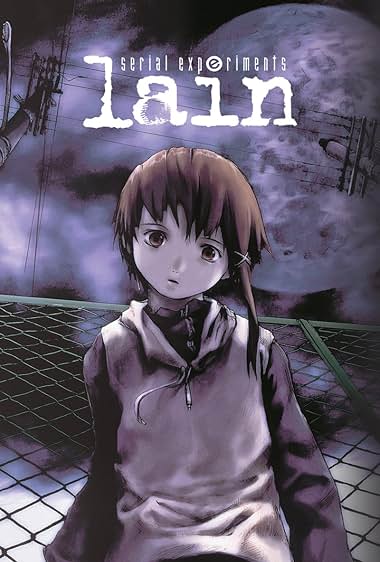
Tech heads will relate to this story effortlessly. The Wired is easily a souped up version of our own Internet, and the history isn't outrageously far from our own and well explained. The parallels between our world and this fictional world really make things interesting. This series really hits a sweet spot for sci-fi technological dramas.
Every anime fan should see this series, but be prepared for a brain twister. I've watched it a good five times and I can honestly say I still find new tidbits of the story every time. You just can't sit back and put your brain on cruise control; You must make an effort to follow the story or it will leave you mercilessly lost and confused.
And remember folks, this is fiction. You have to be willing to suspend belief a few times and accept the universe of the work at hand. Those unwilling or unable to do this, need not apply. Think of it as a deep mystery novel. Even when following the concrete parts of the story with great attention, there's enough misdirection to leave you wondering what if... and that's half the fun.
If you simply can't accept that the story isn't handed to you neatly gift wrapped, and that you may have to fill in the details from your own imagination, then go watch a simpler anime. This isn't for you. If you like the confusing story of animes like Neon Genesis Evangelion, or Boogiepop Phantom then you'll love this. If you live and breath technology, you'll only love it that much more. All in all, this is a masterpiece of animation.
- Rirath_com
10Andy_K
As most have already pointed out, `Serial Experiments: Lain' is a rather unique Japanese anime series. Watching `Lain' is not an easy trip to take, certainly, but one that is totally engaging nonetheless. Although exactly what the show is `about' is subjective and is open to interpretation to all who see it, I believe some people are completely missing some key points. Some have complained about the lack of character development during the series. But one must understand, that's the whole essence of the series: alienation. Look at the shots in Lain's classroom when the teacher is writing on the blackboard; all the other students except Lain are grayed-out. Look at the scene where Lain shows her father the Psyche processor and look how far she stands from him. Even look at the name of the club, Cyberia (as in Siberia: a cold, desolate place of exile). It's all done to emphasize how far, how detached, how alienated Lain is from everyone else. The direction in `Lain' is brilliant in depicting this. We, the audience, exist in the real world as we watch Lain, but we hardly ever get to know her. Yet we know she has a deeper personality because of what other characters say about her (`weren't you the girl at Cyberia?' Etc). These facets, which we only get a rare glimpse of, are her `online-self'. There have been studies that have shown a paradoxical relationship between time spent on the Internet and isolation and loneliness. Japan is one of the most `online' nations in the world, with almost 40% of the population having Internet access. At the same time, Japan also has one of the highest suicide rates amongst developed nations (which brings to mind a scene early in the series of the girl who commits suicide). Many are concerned with Japan's trouble youths and the increasing difficulty many have forming meaningful relationships with others. The only meaningful relationship we, the audience, see Lain have with another person is with Arisu. Other than some brief instant messaging via a palm pilot, Lain and Arisu's relationship exists entirely in the real world, not on the Wired. So, to me, the entire series is a metaphor for this increasing isolation of Japanese youth in an ever-expanding high tech world. For those having troubling getting into this series, I say focus on the directing, the atmosphere, the metaphors used throughout. Come to your own conclusions. I highly recommend this bittersweet, highly unique series to any who want to branch out from familiar territory.
Something that could have only came when the internet was still mysterious in its working. But that doesn't change how philosophical and experimental it is, and beyond all focuses on emotions through an archetype that gets sidelined and turns into a unique experience. Even though it ends as a bit of a failed attempt to be Neon Genesis Evangelion this is still an amazing feat in visual media for executing something like this and not just dying in the minds of the brilliant people who made it.
Did you know
- TriviaThe two MIBs actually have names. The name of the short, Asian MIB is Lin Sui-Xi. The name of the tall, Caucasian MIB is Karl Haushofer. His character was the only one to be addressed by name during the series.
- Quotes
Lain Iwakura: No matter where you are, everyone is always connected.
- ConnectionsFeatured in Anime Unleashed TechTV Commercial (2002)
- SoundtracksDuvet
Performed by Boa
- How many seasons does Serial Experiments Lain have?Powered by Alexa
Details
- Release date
- Country of origin
- Languages
- Also known as
- Serial Experiments Lain
- Production companies
- See more company credits at IMDbPro
Contribute to this page
Suggest an edit or add missing content