IMDb RATING
6.9/10
6.9K
YOUR RATING


An art director in the 1930s falls in love and attempts to make a young woman an actress despite Hollywood who wants nothing to do with her because of her problems with an estranged man and ... Read allAn art director in the 1930s falls in love and attempts to make a young woman an actress despite Hollywood who wants nothing to do with her because of her problems with an estranged man and her alcoholic father.An art director in the 1930s falls in love and attempts to make a young woman an actress despite Hollywood who wants nothing to do with her because of her problems with an estranged man and her alcoholic father.
- Director
- Writers
- Stars
- Nominated for 2 Oscars
- 2 wins & 7 nominations total


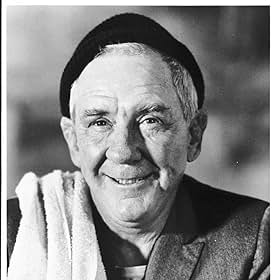


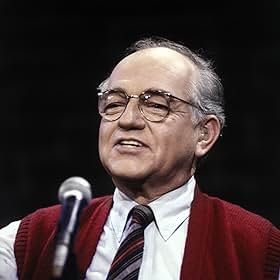
Richard Dysart
- Claude Estee
- (as Richard A. Dysart)


Jackie Earle Haley
- Adore
- (as Jackie Haley)

Gloria LeRoy
- Mrs. Loomis
- (as Gloria Le Roy)

Norman Leavitt
- Mr. Odlesh
- (as Norm Leavitt)


- Director
- Writers
- All cast & crew
- Production, box office & more at IMDbPro
Featured reviews
I first saw "Day of the Locust" because I thought Karen Black was keen. I liked the film, but I can't say I understood its point at the time. What's with the faceless people, Sutherland's hands, and the angry dwarf? Sounds like David Lynch to me, especially in light of "Mulholland Drive" and its scathing, unsympathetic view of Hollywood (it even has a cowboy!)
I finally got around to reading the Nathanael West novel -- which is absolutely brilliant -- and decided to watch the film again. And I need to say that, as much as I still appreciate and enjoy the movie, it really missed the boat, trying to cram bits and pieces of ideas from the novel (the strange, artificial relationship between Faye and her father, the barely-restrained violence of those who "come to Hollywood to die," the anachronistic and cold facade of Hollywood and the people in charge of it), meanwhile stuffing in some 70's ideas, reflecting back on the beginnings of WWII (which wasn't an issue in the book at all), and -- strangely enough -- adding warmth and humanity to characters whose sole characteristic (in the novel) was that they had NO warmth or humanity whatsoever.
And that's the weird thing about this movie. I remember, when I first saw it, I was amazed at how unlikeable all the characters were. After reading the book, however, I can say that the characters in the movie are FAR TOO likeable to support any of the book's themes. This is most notable when it comes to Faye's little breakdowns, letting the viewer know that she's really a good person who wants to be loved, turning her into a VICTIM of the star system. But the point of the book -- as I gathered, anyway -- was that these people aren't victims at all. They're greedy people who victimize each-other, and usually in sloppy, stupid ways ("Jeepers, Creepers!") Faye isn't capable of an unaffected tender moment, all she can do is pretend. The same goes for her father: even his moments of genuine sickness and pain are filtered through his never-ending vaudeville routine.
Homer Simpson, as well, is portrayed (in the film) as a sort of unfortunate lump, and a bible-thumper to boot, taken advantage of by Faye. But that destroys one of the great levels of nastiness in the novel: Homer is just as much as an opportunist as Faye, and he deserves everything he gets. Why is he being so generous, letting her stay with him and hold cock-fights in his garage? Because he's a pathetic, incapable human being who barely has a human feature to him: he's just a collection of nervous ticks. He lusts after her, and he seems to delight in his thwarted lust. He's got less going for him than that lizard on the cactus, eating flies.
The film suffers from an attempt to make the characters likeable, almost without exception. The only person who escapes this "Hollywood-ization" of the book is Adore, the horrible child star whose fate nobody who has seen the movie (or read the book) will ever forget. Jeez!
If you find yourself watching this movie and "just not getting it," do yourself a favour and read the book. It won't make the movie any clearer, but you can at least view the movie as a clear-cut example of the sort of thing the book was pointing out and railing against, way back in 1939 when this idea was still a novel one: Hollywood films are manipulative and full of fakery, and so are humans in general, and people in general are also ghoulish and horrible, and no amount of eyelash-fluttering or smooth tango-dancing will disguise that. You might be the owner of a big studio and have an inflatable dead horse in your pool, but you still can't relate to your wife, and the only thing left in your life is pathetic thrill-seeking (cock-fights, cheesy stag flicks).
(Incidentally, I'm amazed at how many quirky things ended up in the screenplay that WEREN'T part of the book! Kudos to the scriptwriter for that at least!)
I finally got around to reading the Nathanael West novel -- which is absolutely brilliant -- and decided to watch the film again. And I need to say that, as much as I still appreciate and enjoy the movie, it really missed the boat, trying to cram bits and pieces of ideas from the novel (the strange, artificial relationship between Faye and her father, the barely-restrained violence of those who "come to Hollywood to die," the anachronistic and cold facade of Hollywood and the people in charge of it), meanwhile stuffing in some 70's ideas, reflecting back on the beginnings of WWII (which wasn't an issue in the book at all), and -- strangely enough -- adding warmth and humanity to characters whose sole characteristic (in the novel) was that they had NO warmth or humanity whatsoever.
And that's the weird thing about this movie. I remember, when I first saw it, I was amazed at how unlikeable all the characters were. After reading the book, however, I can say that the characters in the movie are FAR TOO likeable to support any of the book's themes. This is most notable when it comes to Faye's little breakdowns, letting the viewer know that she's really a good person who wants to be loved, turning her into a VICTIM of the star system. But the point of the book -- as I gathered, anyway -- was that these people aren't victims at all. They're greedy people who victimize each-other, and usually in sloppy, stupid ways ("Jeepers, Creepers!") Faye isn't capable of an unaffected tender moment, all she can do is pretend. The same goes for her father: even his moments of genuine sickness and pain are filtered through his never-ending vaudeville routine.
Homer Simpson, as well, is portrayed (in the film) as a sort of unfortunate lump, and a bible-thumper to boot, taken advantage of by Faye. But that destroys one of the great levels of nastiness in the novel: Homer is just as much as an opportunist as Faye, and he deserves everything he gets. Why is he being so generous, letting her stay with him and hold cock-fights in his garage? Because he's a pathetic, incapable human being who barely has a human feature to him: he's just a collection of nervous ticks. He lusts after her, and he seems to delight in his thwarted lust. He's got less going for him than that lizard on the cactus, eating flies.
The film suffers from an attempt to make the characters likeable, almost without exception. The only person who escapes this "Hollywood-ization" of the book is Adore, the horrible child star whose fate nobody who has seen the movie (or read the book) will ever forget. Jeez!
If you find yourself watching this movie and "just not getting it," do yourself a favour and read the book. It won't make the movie any clearer, but you can at least view the movie as a clear-cut example of the sort of thing the book was pointing out and railing against, way back in 1939 when this idea was still a novel one: Hollywood films are manipulative and full of fakery, and so are humans in general, and people in general are also ghoulish and horrible, and no amount of eyelash-fluttering or smooth tango-dancing will disguise that. You might be the owner of a big studio and have an inflatable dead horse in your pool, but you still can't relate to your wife, and the only thing left in your life is pathetic thrill-seeking (cock-fights, cheesy stag flicks).
(Incidentally, I'm amazed at how many quirky things ended up in the screenplay that WEREN'T part of the book! Kudos to the scriptwriter for that at least!)
Critically much maligned but really rather an outstanding screen adaptation of Nathanael West's 'difficult' novel about Hollywood in the 1930's and based on West's own experiences there as a 'hack' writer. The British director John Schlesinger helmed the picture, bringing much the same jaundiced eye to bear on proceedings as he did in "Midnight Cowboy". Waldo Salt wrote the excellent script and the outstanding cast included Karen Black as the wannabe actress trying to make it big in the movies, Burgess Meredith as her drunken father, William Atherton as the young art director in love with her and Donald Sutherland as the sad and lonely Homer Simpson that Black all but destroys and whose presence instigates the films tragic ending. The great Conrad Hall photographed the picture and the monstrous child is Jackie Earle Haley.
I finished watching this movie half an hour ago and I am still trembling, my heart still pounding. I am a great admirer of John Schlesinger and he has been one of my favorite directors since I saw Midnight Cowboy. But this just beats it all. It is the most horrifying movie I have ever seen. I am normally not a sympathizer with human characters in movies, but the end made me CRINGE. Donald Sutherland was perfect for his role and Karen Black made me feel such hate for her. There is nothing I would change in this movie. It is perfect, and beautiful, and hit with such force that I would probably never see it again, but I will remember every detail.
The Day of The Locust is an adaptation of the highly powerful novel from Nathanael West, it focuses on the seamy underbelly of Hollywood in the 1930s. Pot boiling with pacey precision, director John Schlesinger crafts what is still to this day one of the hidden pieces of art from the 1970s.
We are witness to an assortment of odd characters on the outskirts Hollywood and it's big shiny star, fringe characters driven on by less than stellar ideals. The centre of it all is Karen Black's sexy but untalented actress, Faye, she lives with her father, Harry {a fabulous Burgess Meredith}, who was once a fine stage performer but now is old and dying and forced to peddle potions on door steps. Faye realises that her limitations are getting in the way of her starry ambitions, so thus she becomes the assembly line hump on the casting couch, she believes it's a small price to pay for the price of fame.
Caught up in Faye's maelstrom of shallow conniving worthlessness is William Atherton's art director, Tod, and Donald Sutherland's sympathetic dolt, Homer Simpson {Sutherland stunning and Atherton a career best}. All three of them will come crashing together as the story reaches it's cynical and terrifying conclusion. The Day Of The Locust failed at the box office, mid seventies audiences were clearly not ready for this unsavoury and stark look at the flip side of the industry we all follow with relish. Many of the characters featured in the piece are believed to be based on real life Hollywood figures, now here in this modern age the public embrace such titillation with glee, back then they clearly wasn't ready for it.
Conrad Hall's cinematography was rightly nominated for an Academy Award, as was Burgess Meredith in the Best Supporting Actor category, but Sutherland, John Lloyd {Art} and Ann Roth {Costumes} were criminally ignored, but it matters not for now this film can be viewed by a wider more open thinking audience, and hopefully as the finale grips you round the throat {and it should do}, you will be forced to think about it for some time after. 9/10
We are witness to an assortment of odd characters on the outskirts Hollywood and it's big shiny star, fringe characters driven on by less than stellar ideals. The centre of it all is Karen Black's sexy but untalented actress, Faye, she lives with her father, Harry {a fabulous Burgess Meredith}, who was once a fine stage performer but now is old and dying and forced to peddle potions on door steps. Faye realises that her limitations are getting in the way of her starry ambitions, so thus she becomes the assembly line hump on the casting couch, she believes it's a small price to pay for the price of fame.
Caught up in Faye's maelstrom of shallow conniving worthlessness is William Atherton's art director, Tod, and Donald Sutherland's sympathetic dolt, Homer Simpson {Sutherland stunning and Atherton a career best}. All three of them will come crashing together as the story reaches it's cynical and terrifying conclusion. The Day Of The Locust failed at the box office, mid seventies audiences were clearly not ready for this unsavoury and stark look at the flip side of the industry we all follow with relish. Many of the characters featured in the piece are believed to be based on real life Hollywood figures, now here in this modern age the public embrace such titillation with glee, back then they clearly wasn't ready for it.
Conrad Hall's cinematography was rightly nominated for an Academy Award, as was Burgess Meredith in the Best Supporting Actor category, but Sutherland, John Lloyd {Art} and Ann Roth {Costumes} were criminally ignored, but it matters not for now this film can be viewed by a wider more open thinking audience, and hopefully as the finale grips you round the throat {and it should do}, you will be forced to think about it for some time after. 9/10
The Day of the Locust takes place in one of the most bizarre settings to have ever existed in the real world. Hollywood in the 1930s was a place of grand illusions, with an incredible power to change people's lives for the better, or for the worse. The relics of that time are, for the most part, the films that were churned out on sound stages, generally very wholesome and carefree. The reality of what went on offstage is largely a mystery, although it is safe to assume it wasn't all glamor and good times. The Day of the Locust is dark historical fiction, and is utterly fascinating. It is a journey through Hollywood's golden age, guided by someone who comes to Hollywood a typical dream seeker, who finds himself helpless under the pressure of the industry and the misleading tactics of those who rule the screen. The characters that come in and out of his life are caricatures of the aspiring actresses, child stars, and crew members that help make Hollywood truly troubled and deeply strange.



Did you know
- TriviaActress Peg Entwistle actually did commit suicide by jumping from the top of the "Hollywood" sign in the hills above Hollywood in 1932. She is being talked about by a Tour Guide while Tod Hackett (William Atherton) and Faye Greener (Karen Black) are on a date.
- GoofsThe film opens at a sightseeing/tourist spot and parking area at the foot of the "H" in the Hollywoodland sign. No such facility has ever existed as that part of the hill is too steep for road construction. The real road passes behind the sign and above it.
- Quotes
Homer Simpson: [introducing himself] Simpson, Homer Simpson.
- Alternate versionsAlthough the UK cinema release was uncut the 2004 DVD version was cut by 46 secs by the BBFC to remove scenes of cockfighting.
- ConnectionsEdited into Give Me Your Answer True (1987)
- SoundtracksJeepers Creepers
Music by Harry Warren
Lyrics by Johnny Mercer
Sung by Louis Armstrong
Courtesy of MCA Records
- How long is The Day of the Locust?Powered by Alexa
Details
- Release date
- Country of origin
- Languages
- Also known as
- Como plaga de langosta
- Filming locations
- Ennis House - 2607 Glendower Avenue, Los Feliz, Los Angeles, California, USA(house of movie producer)
- Production companies
- See more company credits at IMDbPro
Box office
- Gross worldwide
- $42
Contribute to this page
Suggest an edit or add missing content