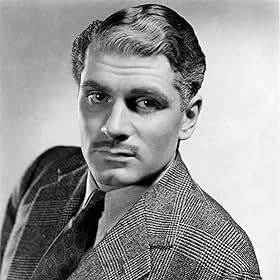
A groundbreaking 26-part documentary series narrated by the actor Laurence Olivier about the deadliest conflict in history, World War II.A groundbreaking 26-part documentary series narrated by the actor Laurence Olivier about the deadliest conflict in history, World War II.A groundbreaking 26-part documentary series narrated by the actor Laurence Olivier about the deadliest conflict in history, World War II.
- Won 1 BAFTA Award
- 2 wins & 3 nominations total
Browse episodes
Summary
Reviewers say 'The World at War' is lauded for its thorough World War II coverage, rich archival footage, and interviews with key figures. Themes of human cost, political impacts, and detailed battle examinations are prominent. Olivier's narration and Davis's score are highly praised. Criticisms include perceived biases, certain event portrayals, and omissions. Some find the focus on suffering overshadows strategic elements.
Featured reviews
10strek1
After all these years I still consider this series the finest example of World War II documentary film making. The interviews with the many participants from all countries set this apart from any other project. It would be great to see a contemporary documentarian(Ken Burns ?) take on this topic and try to gather information from veterans before they are all gone. With modern technology to improve old archival footage and lots of information that has been unearthed since 1974 when The World At War was produced, an updated version of this series would be welcome. The History Channel has made some fine shows dealing with many aspects of WWII but an expansive series such as the World At War has not been successfully attempted since the original. If you are interested in this era don't miss this series. It is required viewing.
10Rich-315
Utterly brilliant. Powerful and evocative. The most compelling documentary series ever made concerning war. It's tone offers a stark contrast to the often gung-ho attitude towards World War 2 that the media exhibits. Rather than opting for screaming about the horror of war, it allows Sir Laurence Olivier's quiet voice to take a back seat to the true images of war: corpses everywhere, explosions, terrified citizens and soldiers, broken men, indifferent politicians, mistakes that cost thousands of lives, the suffering of the innocents. Most of all it truly brings home that mankind is capable of when all normal rules of "civility" are removed. There is something distinctly Hobbesian about man in a true state of nature, he will return to a more beastly form capable of crimes that will still shock and fascinate 60 years on. Perhaps there could be a follow up series called "The century at war" for the twentieth century was truly the century of horrors. I feel it is an irony of immense magnitude that it took an event which caused the death of 50 million people to produce such a compelling and excellent series such as this.
10talley-1
My wife and I have watched this whole series at least three times. I can't imagine how it could be better. This isn't the "complete" history of WWIIno library could hold such a historybut it is the best summary of that history. Lots of detail, lots of personal stories, and still keeps the overall picture in view.
Olivier's narration is excellently written and, of course, superbly given. The interviews are from all sides, except the Russian, because the producers were not allowed to talk to many Russians. It is very much worth owning this complete program on DVD. We treasure our copy.
The producer's do an excellent job of providing pictures and action where there was almost none extant in any archive: There are almost no films of convoys and submarine battles, for instance, but still, the episode on this subject is very well done.
Olivier's narration is excellently written and, of course, superbly given. The interviews are from all sides, except the Russian, because the producers were not allowed to talk to many Russians. It is very much worth owning this complete program on DVD. We treasure our copy.
The producer's do an excellent job of providing pictures and action where there was almost none extant in any archive: There are almost no films of convoys and submarine battles, for instance, but still, the episode on this subject is very well done.
Even thirty years later this documentary has lost none of its power. Quite the opposite. It serves as a superb introduction, for those born after WWII, to an enormous conflict that radically re-shaped the world around us and subjected our grandparents/parents to dreadful hardship.
The series begins slowly, with an episode on Hitler's and the Nazi party's rise to power. It does skip a great deal of material on the origins and growth of National Socialism... but I suppose that is only to be expected. Despite being an epic thirty-two hours in length there is only so much time, and much material not directly about the war had to be skipped.
It is a fine antidote to the drivel put out by film studios... which, for the most part, show the war being almost entirely fought by the U.S.A, with the British involved in a few skirmishes here and there. Little do they realise the scale of British fighting and loss. Perhaps even more importantly it gives coverage of one of the most undervalued (particularly by Commie-bashing Hollywood) that Russia suffered more losses than any other country in WWII. Without their sacrifice it would have been a different outcome.
I can't stress enough how good this series is. From the title sequence with its stirring Carl Davis music and arresting images to the well-written and perfectly judged narration, it has the lot. If you get the chance to see it -- whether on DVD, or just a TV repeat -- do not miss it.
The series begins slowly, with an episode on Hitler's and the Nazi party's rise to power. It does skip a great deal of material on the origins and growth of National Socialism... but I suppose that is only to be expected. Despite being an epic thirty-two hours in length there is only so much time, and much material not directly about the war had to be skipped.
It is a fine antidote to the drivel put out by film studios... which, for the most part, show the war being almost entirely fought by the U.S.A, with the British involved in a few skirmishes here and there. Little do they realise the scale of British fighting and loss. Perhaps even more importantly it gives coverage of one of the most undervalued (particularly by Commie-bashing Hollywood) that Russia suffered more losses than any other country in WWII. Without their sacrifice it would have been a different outcome.
I can't stress enough how good this series is. From the title sequence with its stirring Carl Davis music and arresting images to the well-written and perfectly judged narration, it has the lot. If you get the chance to see it -- whether on DVD, or just a TV repeat -- do not miss it.
This series, produced at probably the most propitious time following the events of the second World War, is on a scale of value that stands far above any individual's presumption to criticize.
The timing of World at War's production in 1974, amounting to some three decades after the events of the war, permits an accurate relating of events in a manner uncoloured by residual propaganda and slant. The passage of thirty years allows the telling to be backed up by an impressive and fascinating panoply of the very individuals involved, ranging from some of the highest military and political figures down to the field soldiers, civilians, and such survivors of the death camps as have remained to bear witness to the unimaginable inhumanities of which civilized humans are capable. Most approaching or well into their senior years, the interviewed subjects have had enough time to reflect on their experiences and in most instances have had enough time for whatever propaganda and fervor may have affected them in the past to have receded away, leaving only the memories of what they saw and what they did.
The information that these survivors give, strikingly reinforced by the postures and expressions they display while telling their part, give their stories all the more impact. Such names as Ira Eaker, Adolph Galland, Louis Mountbatten, Albert Speer, Gertrude Junge (Hitler's personal secretary)... the list is far too long to relate.
Today, within the lifetime of the survivors of this enormous lesson in the hideous price of political ambition, are young people who chant the same sort of militaristic and nationalistic war promotion as led to WW2. The DVD series we discuss here ought to comprise the core of a mandatory history subject in schools, that the lessons bought at such a horrible cost in those days should not have been wasted but should be taken to heart by those who did not see firsthand the terrible price.
I am almost done watching the 11 disk set, having seen most of the series when a local TV channel aired it more than 10 years ago. It has lost none of its poignancy to me, indeed has become even more of a magnificent chronicle of some of the very darkest days of human times.
The highest possible rating seems unworthy of being applied to this presentation. I think the value of this series is beyond counting.
The timing of World at War's production in 1974, amounting to some three decades after the events of the war, permits an accurate relating of events in a manner uncoloured by residual propaganda and slant. The passage of thirty years allows the telling to be backed up by an impressive and fascinating panoply of the very individuals involved, ranging from some of the highest military and political figures down to the field soldiers, civilians, and such survivors of the death camps as have remained to bear witness to the unimaginable inhumanities of which civilized humans are capable. Most approaching or well into their senior years, the interviewed subjects have had enough time to reflect on their experiences and in most instances have had enough time for whatever propaganda and fervor may have affected them in the past to have receded away, leaving only the memories of what they saw and what they did.
The information that these survivors give, strikingly reinforced by the postures and expressions they display while telling their part, give their stories all the more impact. Such names as Ira Eaker, Adolph Galland, Louis Mountbatten, Albert Speer, Gertrude Junge (Hitler's personal secretary)... the list is far too long to relate.
Today, within the lifetime of the survivors of this enormous lesson in the hideous price of political ambition, are young people who chant the same sort of militaristic and nationalistic war promotion as led to WW2. The DVD series we discuss here ought to comprise the core of a mandatory history subject in schools, that the lessons bought at such a horrible cost in those days should not have been wasted but should be taken to heart by those who did not see firsthand the terrible price.
I am almost done watching the 11 disk set, having seen most of the series when a local TV channel aired it more than 10 years ago. It has lost none of its poignancy to me, indeed has become even more of a magnificent chronicle of some of the very darkest days of human times.
The highest possible rating seems unworthy of being applied to this presentation. I think the value of this series is beyond counting.
Did you know
- TriviaAlbert Speer's testimony in the series is now considered highly unreliable. Speer considerably downplayed his involvement in Nazi atrocities. After his death a letter he wrote in December 1971 proved he had full knowledge of the Holocaust throughout its course, despite his repeated public denials.
- ConnectionsEdited into Screenwipe: Episode #3.1 (2007)
- How many seasons does The World at War have?Powered by Alexa
Details
- Runtime
- 52m
- Color
- Sound mix
- Aspect ratio
- 1.33 : 1
Contribute to this page
Suggest an edit or add missing content