

A reserved English writer travelling to Crete on a matter of business finds his life changed forever when he meets the gregarious Alexis Zorba.A reserved English writer travelling to Crete on a matter of business finds his life changed forever when he meets the gregarious Alexis Zorba.A reserved English writer travelling to Crete on a matter of business finds his life changed forever when he meets the gregarious Alexis Zorba.
- Director
- Writers
- Stars
- Won 3 Oscars
- 8 wins & 16 nominations total


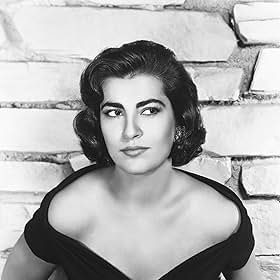


Giorgos Foundas
- Mavrandoni
- (as George Foundas)


Yorgo Voyagis
- Pavlo
- (as George Voyadjis)


George P. Cosmatos
- Acne Faced Boy
- (uncredited)
Nikos Papadakis
- Extra
- (uncredited)
- Director
- Writers
- All cast & crew
- Production, box office & more at IMDbPro
Featured reviews
Anthony Quinn's performance is phenomenal. In a world filled with ignorance, lack of vision, hate, and the most shameful examples of human depravity, Zorba provides beautifully imperfect goodness. There is no pretense about who Zorba is. Despite his imperfections (and there are so many), he is genuine love, kindness and passion. The scene where Zorba remains by his dying wife's (Madame Hortense) side is pure and sweet and extremely moving. While the greedy masses, like vultures, swoop in to steal any possible item from this woman's home, Zorba provides profound comfort, while most others would have reacted differently. I can't believe it took me 40 years to see this movie. Gracias, Señor Quinn!
However, the movie has nothing to do with the Crete of today. There are no tourists in Mihalis Kakogiannis's adaptation of the novel with the same name, no beautiful landscape and almost no feeling of the dramatic, even stunning landscape of Crete.
In fact, the movie is about a wild, uncivilised, rural, backward Crete. Anthony Quinn is simply magnific and the film is worth watching only for his performance, which I dare to say it is one of the best I have ever seen in any movie ever. Everything is beautiful shot, the plot develops nicely, the actors and the action is vivid and convincing. The movie diverges from the book in one, perhaps essential, detail. One of the main characters, the one who comes to Crete to revive the lignite mine as a hero full of good intentions and care for the locals is not a young Greek intelectual but a British one. From the perspective of our time this is a twist that turns the movie from what could have been a commentary about modernisation, traditions and rural/urban gaps in Greece to a neo-colonial narative about a civilised Westerner wanting to and ultimately failing to modernise a backward place. The director, even if Greek himself, does not care to look closer and to understand or perhaps only to give the point of view of the locals about their traditional habits, religion, actions. The camera lens are in fact a pair of Western eyes looking at everything with curiosity, sometimes with repugnance, sometimes with patronising understanding. Women are there just for love affairs, household chores and stealing. Men are cruel, heavy drinkers, weak and lazy. Maybe they are, maybe they have always been like this. The problem is not the historical veridicity but the striking lack of interest in the local culture from a Greek director of a film ultimately about Crete.
The movie is well worth watching but not to understand or to accompany your holiday in Greece.
In fact, the movie is about a wild, uncivilised, rural, backward Crete. Anthony Quinn is simply magnific and the film is worth watching only for his performance, which I dare to say it is one of the best I have ever seen in any movie ever. Everything is beautiful shot, the plot develops nicely, the actors and the action is vivid and convincing. The movie diverges from the book in one, perhaps essential, detail. One of the main characters, the one who comes to Crete to revive the lignite mine as a hero full of good intentions and care for the locals is not a young Greek intelectual but a British one. From the perspective of our time this is a twist that turns the movie from what could have been a commentary about modernisation, traditions and rural/urban gaps in Greece to a neo-colonial narative about a civilised Westerner wanting to and ultimately failing to modernise a backward place. The director, even if Greek himself, does not care to look closer and to understand or perhaps only to give the point of view of the locals about their traditional habits, religion, actions. The camera lens are in fact a pair of Western eyes looking at everything with curiosity, sometimes with repugnance, sometimes with patronising understanding. Women are there just for love affairs, household chores and stealing. Men are cruel, heavy drinkers, weak and lazy. Maybe they are, maybe they have always been like this. The problem is not the historical veridicity but the striking lack of interest in the local culture from a Greek director of a film ultimately about Crete.
The movie is well worth watching but not to understand or to accompany your holiday in Greece.
Anthony Quinn's Zorba became a point of reference, in fact I'm writing this review 54 years after its first release. He is everything and more. Alan Bates is outstanding walking that very thin line but totally committed to that duality that makes him so human, so real. Lila Kedrova won an Oscar for her performance, deservedly so. Simone Signoret had been offered the part and she was the one who suggested Lila Kedrova to the director, Michael Cacoyanis. I love that story. Zorba has also the power of Irene Papas who makes her silent calling absolutely riveting and the contagious Mikis Theodorakis's score all together in a beautiful, savage, compelling film that doesn't show any signs of aging
What an exuberant film - not to be missed! It chronicles sadness and joy so beautifully that one can't help but want to weep, laugh, and dance along. There are four wonderful performances, led by Anthony Quinn, whose enthusiam for life almost leaps from the screen, giving rise to an almost sacrilegious thought: How could Rex Harrison's stuffy, embalmed Professor Henry Higgins have won the Best Actor Oscar over Quinn as Zorba? Lila Kedrova is heartbreaking as Madame Hortense, the dying prostitute with a colorful past. The always-enjoyable Alan Bates, and the striking Irene Papas as the Widow. Like Anna Magnani, Papas was an actress who transcended any language barrier, who didn't need dialogue at all - her face and body said everything she needed to.
For the most part the film looks great on DVD, with crisp, clear black-and-white photography. But I have one quibble: the transfer seems to have been made from the same source as the videotape prints in circulation, because there are a couple of instances of obvious post-production looping (possibly for prime-time television broadcasts), changing 'goddam' to 'old damn,' for instance - they even do this in the English subtitles. But read Quinn's lips - there's no mistaking what the original lines were! I'd expected that the original unedited soundtrack would have been restored.
For the most part the film looks great on DVD, with crisp, clear black-and-white photography. But I have one quibble: the transfer seems to have been made from the same source as the videotape prints in circulation, because there are a couple of instances of obvious post-production looping (possibly for prime-time television broadcasts), changing 'goddam' to 'old damn,' for instance - they even do this in the English subtitles. But read Quinn's lips - there's no mistaking what the original lines were! I'd expected that the original unedited soundtrack would have been restored.
Contrary to others who may think this film is some sort of tribute to living life to the fullest, it is completely depressing, pessimistic, and detestible. There is not one likeable character in the entire film. Zorba is a jackass who f***s up the lives of everyone he comes in contact with because of his selfish "zest" for life, i.e., wasting other people's time and money while lying to them. He's a man who has left his wife and family behind with no regret and works odd jobs, including wrecking Basil's mine and depleting his money. Basil thinks this is wonderful. Why? It's almost as if Basil has latent gay love for Zorba. One of the 2 most disturbing moments in the film is when the widow (Irene Pappas) is murdered in broad daylight by a crowd which is angry that she has somehow driven an unrequited lover to suicide. Basil does nothing, even though the widow's his love interest (interestingly though Basil did not previously sleep with the widow). Zorba tries to protect the widow, but she's still murdered, her throat slit like a lamb to the slaughter. INCREDIBLY, Zorba and Basil go on about their business like this is some sort of acceptable crime. WHAT THE HELL!! The level of mysogyny is disturbing.
Then, when the French hotel woman dies, the author/director maligns the poor villagers (and the people of Greece) by making them look like vultures that steal her possessions before she's even croaked. This isn't a celebration of life, but a sad portrayal of common people as evil idiots. I wish this story had never been made into a film.
Then, when the French hotel woman dies, the author/director maligns the poor villagers (and the people of Greece) by making them look like vultures that steal her possessions before she's even croaked. This isn't a celebration of life, but a sad portrayal of common people as evil idiots. I wish this story had never been made into a film.


Did you know
- TriviaAnthony Quinn (Alexis Zorba) had a broken foot during filming, and thus couldn't perform the dance on the beach as scripted, which called for much leaping around. The dance is called "syrtaki", and contains elements from various traditional Greek dances. It was created especially for this movie.
- GoofsNear the end of the movie, when the log is coming down the hill it is seen as fairly round and the bark is rough and peeling, like a natural log. But when the log gets to the end of the cable, it appears to be a fake log with no bark and a visible framework that makes it look multi-sided rather than round.
- Quotes
Basil: I don't want any trouble.
Alexis Zorba: Life is trouble. Only death is not. To be alive is to undo your belt and *look* for trouble.
- ConnectionsFeatured in V.I.P.-Schaukel: Episode #3.2 (1973)
- SoundtracksRiri Ririka
from the operetta "Our Ririka" (1929) (uncredited)
Written by Stathis Mastoras
Performed by Madame Hortense (Lila Kedrova)
- How long is Zorba the Greek?Powered by Alexa
Details
- Release date
- Countries of origin
- Languages
- Also known as
- Zorba el griego
- Filming locations
- Chania, Crete, Greece(City Scenes)
- Production company
- See more company credits at IMDbPro
Box office
- Budget
- $783,000 (estimated)
- Gross worldwide
- $1,358
- Runtime
- 2h 22m(142 min)
- Color
- Sound mix
- Aspect ratio
- 1.66 : 1
Contribute to this page
Suggest an edit or add missing content