
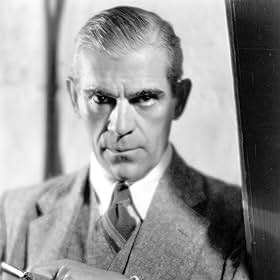
Boris Karloff hosts a trio of horror stories about a stalked call girl, a vampire-like monster who preys on his family, and a nurse who is haunted by her ring's rightful owner.Boris Karloff hosts a trio of horror stories about a stalked call girl, a vampire-like monster who preys on his family, and a nurse who is haunted by her ring's rightful owner.Boris Karloff hosts a trio of horror stories about a stalked call girl, a vampire-like monster who preys on his family, and a nurse who is haunted by her ring's rightful owner.
- Awards
- 2 wins & 1 nomination total


- Rosy
- (segment "Il telefono")

- Mary
- (segment "Il telefono")
- (as Lydia Alfonsi)
- Gorca
- (segment "I Wurdalak")

- Vladimir D'Urfe
- (segment "I Wurdalak")

- Sdenka
- (segment "I Wurdalak")

- Pietro
- (segment "I Wurdalak")
- Maria
- (segment "I Wurdalak")
- (as Rica Dialina)

- Giorgio
- (segment "I Wurdalak")

- Helen Chester
- (segment "La goccia d'acqua")


- Neighbor
- (segment "La goccia d'acqua")

- Police Inspector
- (segment "La goccia d'acqua")

- Frank Rainer
- (segment "Il telefono")
- (uncredited)
- Coroner
- (segment "La goccia d'acqua")
- (uncredited)
Featured reviews
This review is mainly for the dubbed American version. The original Italian version differs from the American with the order of the stories changed as well as some violent and suggestive content that was cut for American release. I give both versions the same score because, to me, the differences aren't enough to make one better than the other. "The Telephone" has the most significant changes but remains the weakest story in both versions. The Italian version has a score by Roberto Nicolosi and the American score is by Les Baxter. I preferred the Baxter score personally but I can see where others would prefer Nicolosi's more subtle score. I recommend you try both versions if you have the time. It's a colorful and beautiful-looking film that ranks high on the list of horror anthology movies I've seen. Karloff and Bava fans will love it.
Bava's second great hit (the first was Black Sunday or Mask of the demon) surprisingly realized with startling visual content and well scripted by Marcello Fondato and Albert Bevilacqua . This omnibus terror is plenty of thrills and chills in glimmer color and in lurid paste with sensational results . This genuinely creepy tale is photographed by Ubaldo Terzano and Bava himself with magentas , shades of ochre , translucently pale turquoises and deep orange-red reflecting paleness on the victims . Eerie and suspenseful musical score by Roberto Nicolisi , though in American version was composed by Lex Baxter , Corman's usual. The motion picture was stylishly and strikingly shot by Bava , filmed in parallel orbit to those Roger Corman ( Edgar Allan Poe cycle) and produced by American International (James H. Nicholson , Samuel Z. Arkoff) . Bava along with Riccardo Freda are fundamental kings of Italian horror , in fact collaborated deeply among them , as Bava terminated two films of Freda, ¨Il Vampiri¨ and ¨Caltiki¨ and they created the Giallo sub-genre. Rating : Good , acceptable atmospheric direction from genre master MarioBava , this is one more compelling horror ventures in which his camera stalks in sinister style throughout a tale with extraordinary visual skills . A must see for terror buffs.
After a colourful and campy introduction by the great Boris Karloff, we move straight into The Telephone. This tale is simple, yet effective and instantly grabs you not letting go until the end. The lesbian undertones give it an extra bit of verve (especially with the actresses being as tasty as they are!), and the way that Bava claustrophobically shoots almost the entire story in one apartment means that the tale is always easy to get to grips with. Bava's music is the main event style-wise. Music is a big part of Giallo, and this entry in Black Sabbath, along with The Girl Who Knew Too Much, ensures that we all know it was Bava who created the Giallo. The ironic ending seals the story and makes sure that you'll be in high spirits going into tale number two.
The Wardulak is the longest, most ambitious and also the weakest part of the trilogy. That's not to say that it's anything less than brilliant; the other two are just stronger. The Gothic sets and atmosphere are definitely the main draw here, and the way that Bava lights up every scene with his trademark use of lighting and colours is absolutely stunning. Being the most expansive, this is the story that best allows Bava full use of his directing ability and many of the shots could be easily be framed and hung on your wall. The tale is very reminiscent of the masterpiece Black Sunday, and gives a good impression of what the film might have looked like had it have been in colour. Boris Karloff takes the lead role here as a man trying to destroy a line of vampires like creatures known as Wardulak's. Karloff obviously enjoyed making this film, and his assured and camp performance in this part of the film, along with his intro and outro, really shows that. The conclusion to this story is really well done, and makes sure that this part of the film ends on a high.
My favourite tale is the first one, but The Drop of Water definitely isn't far behind! This tale is pure evil, and allows Bava to show his mastery of the horror genre the best. We follow a young female nurse who steals a ring from one of her patients...a medium...who died during a séance. Like the first tale, this one's effectiveness stems from it's simplicity and this allows Bava to implement his excellent use of lighting and colours. The sets are brilliantly lit, and the director manages to create a foreboding feel that runs throughout the film. The design of the elderly medium's face is really haunting, and seeing the corpse get it's revenge gives Black Sabbath it's main scare. Watching this tale, it's obvious why Bava is so well respected by cult and genre fans. There aren't many directors that can generate this kind of scare from such a simple plot - and all of The Drop of Water's frights are owed entirely to the director. On the whole, this is a superior omnibus horror film. All the elements are in place and if you want a great overview of Mario Bava's talents - this is the place to look!
The first story, The Telephone, is light on suspense but heavy on looks. The first Giallo in color, I believe, to some extent, with sexual overtones featured very prominently. Although it only takes place in one apartment Bava's crazy color schemes work beautifully and thanks to the two stunning ladies this episode goes down very well.
The Wurdulak scores heavy because of it's visuals and it's magnificent Gothic atmosphere. This should give a good example of how Black Sunday might have looked in color. However, this episode feels stretched quite a bit, it's relatively short running time seems longer than it is and therefore, in my opinion, is the weakest of the bunch.
The Drop of Water is the final, and best, episode. Bava was fond of the kind of horror that deals with a person who's totally alone in his/her surroundings. He goes into supernatural territory and creates a highly stylish (again) and quite the scary episode.
Black Sabbath is not the best Mario Bava has to offer, it could have been more scary but thanks to studio involvement he had to keep things light and not too scary. Under such restrictions I think Bava did extremely well and Black Sabbath is most definitely a must for Bava fans.


Did you know
- TriviaSegment "The Telephone" was the first Italian thriller to be shot in color.
- GoofsThe narration of this film's English-dubbed version claims that "The Wurdulak" was written by Tolstoy and that "The Drop of Water" was written by Chekhov. The first claim is misleading; "The Wurdulak" was not written by Lev Tolstoy, the famous author of "War and Peace", but by minor novelist Aleksei Tolstoy. The second claim is completely untrue; Anton Chekhov never wrote a short story titled "The Drop of Water" or any story with a plot resembling that of the so-named segment of this film.
- Quotes
[first lines]
Boris Karloff: Come closer, please! I've something to tell you. Ladies and gentlemen, how do you do? This is BLACK SABBATH. You are about to see three tales of terror... and the supernatural. I do hope you haven't come alone. As you will see from one of our tales, vampires - wurdulaks - abound everywhere. Is that one, sitting behind you now? You can't be too careful, you know. They look perfectly normal, and indeed they are. Except... they only drink the blood of those whom they love the best. Ah... there I go, talking shop again! Let's get on with our first tale.
- Alternate versionsAs documented by Tim Lucas (in Video Watchdog #5), the order of the segments was rearranged by AIP for the English-language release. The original ordering was: "The Telephone," "The Wurdalak," and "The Drop of Water." In addition, "The Telephone" was re-dubbed and slightly re-cut by Bava at AIP's request to create a supernatural angle and disguise the lesbian overtones of the story.
- ConnectionsFeatured in Une hache pour la lune de miel (1970)