Le mépris
- 1963
- Tous publics
- 1h 43m
IMDb RATING
7.4/10
38K
YOUR RATING


A French writer's marriage deteriorates while working on Fritz Lang's version of "The Odyssey", as his wife accuses him of using her to court favor with the film's brash American producer.A French writer's marriage deteriorates while working on Fritz Lang's version of "The Odyssey", as his wife accuses him of using her to court favor with the film's brash American producer.A French writer's marriage deteriorates while working on Fritz Lang's version of "The Odyssey", as his wife accuses him of using her to court favor with the film's brash American producer.
- Director
- Writers
- Stars
- Awards
- 1 win & 1 nomination total


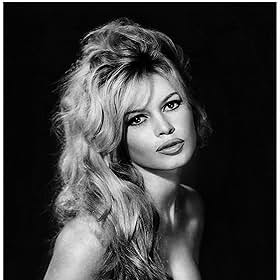


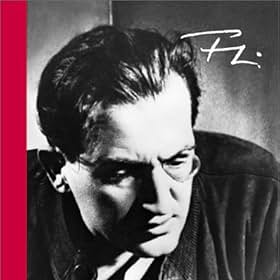


- Director
- Writers
- All cast & crew
- Production, box office & more at IMDbPro
Featured reviews
In 1963 Jean-Luc Godard directs this dramatic movie, which is one of the his most "mainstream" works.
At this time Godard is still able to tell stories, without loosing himself in intellectual games and political messages -the films he makes from 1966 are more and more hermetic. From 1968-69 they're incomprehensibles...
In "Contempt" a screenwriter is going to realize with Fritz Lang an adaptation of "Ulysses". There are tensions with the American producer, on the other hand there are tensions with his wife -who feels alone and treated more like an object by him. She despises him for that and for his being so coward. She thinks to find a revenge in flirting with the producer...
This films talks about coldness in human relationships and failures in communications. Colours, Italian atmospheres and Mediterranean locations increase this world of silence and frustration.
We can remember "Contempt" for many reasons: first the presence of a young Michel Piccoli and of a wonderful Brigitte Bardot (although she was delicious in every movie she made, here she's special -more sad, frailer ... a real actress). We can't help to appreciate, by the way, her body... this wonderful naked body (we're only in '63!!!). We can also remember the presence of a giant like Fritz Lang, who acts himself. And we can't forget this is a film about movie's world, a film which talks about films... That shows love Godard has for this art.
At this time Godard is still able to tell stories, without loosing himself in intellectual games and political messages -the films he makes from 1966 are more and more hermetic. From 1968-69 they're incomprehensibles...
In "Contempt" a screenwriter is going to realize with Fritz Lang an adaptation of "Ulysses". There are tensions with the American producer, on the other hand there are tensions with his wife -who feels alone and treated more like an object by him. She despises him for that and for his being so coward. She thinks to find a revenge in flirting with the producer...
This films talks about coldness in human relationships and failures in communications. Colours, Italian atmospheres and Mediterranean locations increase this world of silence and frustration.
We can remember "Contempt" for many reasons: first the presence of a young Michel Piccoli and of a wonderful Brigitte Bardot (although she was delicious in every movie she made, here she's special -more sad, frailer ... a real actress). We can't help to appreciate, by the way, her body... this wonderful naked body (we're only in '63!!!). We can also remember the presence of a giant like Fritz Lang, who acts himself. And we can't forget this is a film about movie's world, a film which talks about films... That shows love Godard has for this art.
It all starts, with so much elegance and grace, with such smooth outlines, that your eyes caress and trace, Paul Javal and bride Camille, she seeks assertion, he makes her feel, that he won't allow a soul to take his place. But the ties that bind are easy to let go, and Camille is feeling Paul isn't so true, like a plate than can be shared, causes contempt and despair, and attraction comes unstuck like perished glue.
An often tricky piece of cinema that hardly entertains but leaves a mark that you may or may not be able to reconcile. Brigitte Bardot is as elegant as ever, in a film about a film that leaves you pondering how on earth could Paul Jarval let her go and wondering how many times you need to re-watch it to gather the intent.
An often tricky piece of cinema that hardly entertains but leaves a mark that you may or may not be able to reconcile. Brigitte Bardot is as elegant as ever, in a film about a film that leaves you pondering how on earth could Paul Jarval let her go and wondering how many times you need to re-watch it to gather the intent.
1963's Le Mépris (Contempt) does little to hide what Director/Screenwriter Jean-Luc Godard thinks of Hollywood. On the surface Le Mépris presents an imploding marriage, but beneath the surface it is a contemptuous allegory of the commercialization and destruction of cinema as an art form.
Michel Piccoli plays Paul Javal, a novelist turned screenwriter who is offered the job of rewriting an adaptation of Homer's The Odyssey for lecherous Hollywood producer Jeremiah Prokosch (Jack Palance). Once an autonomous, self respecting and fulfilled artist, Paul has given in to the pressures of both his ambition and the lifestyle associated with Hollywood productions. Having done so, Paul has stepped onto a slippery slope where selling his soul has not only eroded his morality, it has put irreparable strains on his marriage to Camille (Brigitte Bardot).
Godard is famous for making movies concerned with big ideas and Le Mépris is no exception. In many of his films main characters and their story are vessels Godard uses to get across ideological, philosophical and intellectual arguments. As a result, many of Godard's films fail to engage their audiences in the typical ways movies do. Since the characters represent something more grandiose than individual people, these characters often come across as being inhuman. The result is, audiences can't identify with, or find an emotional attachment to the characters or stories in many Godard's films. Instead, the audiences either develop an intellectual relationship to the films, or they simply tune out. While the latter may lead to some scoffing at Godard's work as being pretentious, the work should still be respected for defying convention and forcing its audience to ask important questions.
Life imitates art and while making Le Mépris, Godard was at odds with his producers (most notably, the legendary Carlo Ponti). Like Paul, Godard was conflicted by the restraints of working on a large scale, big budget production. Unlike Paul, Godard's vision remained untainted, if not emboldened, yet...not altogether unaffected. When pushed to exploit the star power of Bardot, Godard made the choice of opening the film with Bardot sprawled nude across a bed. Instead of making it a nude scene for the sake of wanton sexuality, Camille expresses insecurity about her body, commenting on the psychologically damaging effects sexual exploitation has on women. Again, Godard makes us question why we want what we want and, like it or not, he affects the way we see things and, most importantly, movies. Love him or hate him, I don't think we have a choice but to respect him.
http://eattheblinds.blogspot.com/
Michel Piccoli plays Paul Javal, a novelist turned screenwriter who is offered the job of rewriting an adaptation of Homer's The Odyssey for lecherous Hollywood producer Jeremiah Prokosch (Jack Palance). Once an autonomous, self respecting and fulfilled artist, Paul has given in to the pressures of both his ambition and the lifestyle associated with Hollywood productions. Having done so, Paul has stepped onto a slippery slope where selling his soul has not only eroded his morality, it has put irreparable strains on his marriage to Camille (Brigitte Bardot).
Godard is famous for making movies concerned with big ideas and Le Mépris is no exception. In many of his films main characters and their story are vessels Godard uses to get across ideological, philosophical and intellectual arguments. As a result, many of Godard's films fail to engage their audiences in the typical ways movies do. Since the characters represent something more grandiose than individual people, these characters often come across as being inhuman. The result is, audiences can't identify with, or find an emotional attachment to the characters or stories in many Godard's films. Instead, the audiences either develop an intellectual relationship to the films, or they simply tune out. While the latter may lead to some scoffing at Godard's work as being pretentious, the work should still be respected for defying convention and forcing its audience to ask important questions.
Life imitates art and while making Le Mépris, Godard was at odds with his producers (most notably, the legendary Carlo Ponti). Like Paul, Godard was conflicted by the restraints of working on a large scale, big budget production. Unlike Paul, Godard's vision remained untainted, if not emboldened, yet...not altogether unaffected. When pushed to exploit the star power of Bardot, Godard made the choice of opening the film with Bardot sprawled nude across a bed. Instead of making it a nude scene for the sake of wanton sexuality, Camille expresses insecurity about her body, commenting on the psychologically damaging effects sexual exploitation has on women. Again, Godard makes us question why we want what we want and, like it or not, he affects the way we see things and, most importantly, movies. Love him or hate him, I don't think we have a choice but to respect him.
http://eattheblinds.blogspot.com/
Fritz Lang, playing himself, is set to direct a more commercial adaptation of Homer's "Odyssey". Jeremy Prokosch (Jack Palance), the producer, despises art films and hires screenwriter Paul Javal (Michel Piccoli) to help Lang commercialize the movie. Javal 'offers' his young wife, Camille (Brigitte Bardot, sexier than ever, in one of her few serious roles), to Prokosch, thinking he'll get a better payment. But he didn't know that would sparkle Camille's contempt and ruin their marriage.
"Le Mépris" aka "Contempt" is Godard's existentialist, provocative essay of the relationships between artistic and commercial cinema, man and woman/husband and wife (he was married to his then-muse Anna Karina, with whom he made some of his best films; after their divorce in 1967, he married Anne Wiazemsky, with whom he made "La Chinoise", "Week End" and others). Gorgeously photographed by Raoul Coutard and scored by the master Georges Delerue, and with some "influences" of Antonioni's trilogy (L'Avventura, La Notte and L'Eclisse), "Le Mépris" is not my favourite Godard, but it's certainly a vigorous film. 9/10.
"Le Mépris" aka "Contempt" is Godard's existentialist, provocative essay of the relationships between artistic and commercial cinema, man and woman/husband and wife (he was married to his then-muse Anna Karina, with whom he made some of his best films; after their divorce in 1967, he married Anne Wiazemsky, with whom he made "La Chinoise", "Week End" and others). Gorgeously photographed by Raoul Coutard and scored by the master Georges Delerue, and with some "influences" of Antonioni's trilogy (L'Avventura, La Notte and L'Eclisse), "Le Mépris" is not my favourite Godard, but it's certainly a vigorous film. 9/10.
French New Wave Director Jean-Luc Godard's apparent intent here is to portray film-making as a grubby, degrading commercial enterprise that taints everything it touches. Given this contemptuous premise, film producers are pimps; film directors are prostitutes. Thus, film-making is essentially artistic prostitution.
That's the major theme among a maze of interlocking themes, most of which are so subtle that trying to figure them out requires multiple viewings and/or college coursework.
The plot is undeniably slow. There are many single-shot sequences, and the entire film contains only about 150 shots. The result is that scenes are very lengthy. Further, the story is amazing in its almost total absence of melodrama. The result of slow pace and lack of melodrama, for many viewers, is abject boredom.
But I think that effect was intentional. My impression is that Godard expects viewers to work, to be part of the film process. In one scene Fritz Lang, the director character, says "One must suffer", in the context of film-making, of which the viewer is included.
"Contempt" has only five main characters. Prokosch (Jack Palance) is the archetype Hollywood producer: crass, stupid, money hungry, uninterested in culture or poetry. He's domineering and dictatorial. In one scene, he mutters: "When I hear the word culture, I grab my checkbook". Fritz Lang, as the film's moral center, counters by saying that in Nazi Germany, the word "checkbook" equated to "revolver", a veiled reference to an edict of Joseph Goebbels, Nazi propaganda czar under Hitler. Equating a Hollywood film producer (Prokosch) to Goebbels is about as contemptuous as one can be toward Hollywood.
But the plot in "Contempt" also features a writer named Paul (Michel Piccoli) and his pouty, sultry, rarely smiling wife, Camille (Brigitte Bardot). Prokosch wants Paul to write the script for "The Odyssey", the film within "Contempt". "The Odyssey" is supposed to be a story about ancient Greek gods. And the main characters in "Contempt" mirror to some extent the characters in "The Odyssey".
The plot of "Contempt" is segmented into three main parts. The first and third parts focus explicitly on film production, relative to "The Odyssey". The middle section focuses on the discordant relationship between Paul and Camille. Here, most of the plot takes place inside their apartment. The critique of film-making continues, but in a more subtle form, via "mis en scene" staging and framing. And it's presented almost in real time, the effect of which is to amplify boredom for viewers.
"Contempt" is shot in color and in French Cinema-Scope. I did not care for the widescreen projection. Godard uses lots of point-of-view shots. And the entire film is saturated with tracking shots. The use of camera filters symbolizes technical devices that "filter" reality, the implication being that films can never be like real life. Red, white, and blue are the film's main colors, a cinematographic reference to American film-making. Outdoor scenes, especially on the Mediterranean, are beautiful. Georges Delerue's haunting score sets the tone for the whole film, and can be described as tragic, mournful, and majestic, in keeping with epic Greek tragedy.
Acting is acceptable, if unremarkable. Jack Palance, however, is not terribly convincing as a corporate suit. The film's budget was roughly 5 million-franc. And interestingly, almost half of that went to pay the salary of actress Brigitte Bardot, whose presence in this film reeks of personal vanity.
Clearly lacking in entertainment value, the story in "Contempt" will be a pain for many viewers, as it was for me. However, the beautiful score and the gorgeous scenery at Capri help offset the film's script. Taken as a whole this film is important, historically. And what I most admire is that its thematic contempt for Hollywood film-making was courageous in 1963. Unfortunately, that theme is still valid, 46 years later.
That's the major theme among a maze of interlocking themes, most of which are so subtle that trying to figure them out requires multiple viewings and/or college coursework.
The plot is undeniably slow. There are many single-shot sequences, and the entire film contains only about 150 shots. The result is that scenes are very lengthy. Further, the story is amazing in its almost total absence of melodrama. The result of slow pace and lack of melodrama, for many viewers, is abject boredom.
But I think that effect was intentional. My impression is that Godard expects viewers to work, to be part of the film process. In one scene Fritz Lang, the director character, says "One must suffer", in the context of film-making, of which the viewer is included.
"Contempt" has only five main characters. Prokosch (Jack Palance) is the archetype Hollywood producer: crass, stupid, money hungry, uninterested in culture or poetry. He's domineering and dictatorial. In one scene, he mutters: "When I hear the word culture, I grab my checkbook". Fritz Lang, as the film's moral center, counters by saying that in Nazi Germany, the word "checkbook" equated to "revolver", a veiled reference to an edict of Joseph Goebbels, Nazi propaganda czar under Hitler. Equating a Hollywood film producer (Prokosch) to Goebbels is about as contemptuous as one can be toward Hollywood.
But the plot in "Contempt" also features a writer named Paul (Michel Piccoli) and his pouty, sultry, rarely smiling wife, Camille (Brigitte Bardot). Prokosch wants Paul to write the script for "The Odyssey", the film within "Contempt". "The Odyssey" is supposed to be a story about ancient Greek gods. And the main characters in "Contempt" mirror to some extent the characters in "The Odyssey".
The plot of "Contempt" is segmented into three main parts. The first and third parts focus explicitly on film production, relative to "The Odyssey". The middle section focuses on the discordant relationship between Paul and Camille. Here, most of the plot takes place inside their apartment. The critique of film-making continues, but in a more subtle form, via "mis en scene" staging and framing. And it's presented almost in real time, the effect of which is to amplify boredom for viewers.
"Contempt" is shot in color and in French Cinema-Scope. I did not care for the widescreen projection. Godard uses lots of point-of-view shots. And the entire film is saturated with tracking shots. The use of camera filters symbolizes technical devices that "filter" reality, the implication being that films can never be like real life. Red, white, and blue are the film's main colors, a cinematographic reference to American film-making. Outdoor scenes, especially on the Mediterranean, are beautiful. Georges Delerue's haunting score sets the tone for the whole film, and can be described as tragic, mournful, and majestic, in keeping with epic Greek tragedy.
Acting is acceptable, if unremarkable. Jack Palance, however, is not terribly convincing as a corporate suit. The film's budget was roughly 5 million-franc. And interestingly, almost half of that went to pay the salary of actress Brigitte Bardot, whose presence in this film reeks of personal vanity.
Clearly lacking in entertainment value, the story in "Contempt" will be a pain for many viewers, as it was for me. However, the beautiful score and the gorgeous scenery at Capri help offset the film's script. Taken as a whole this film is important, historically. And what I most admire is that its thematic contempt for Hollywood film-making was courageous in 1963. Unfortunately, that theme is still valid, 46 years later.




Did you know
- TriviaJean-Luc Godard had been curious about making a big budget production. He later confessed that he hated making the film.
- GoofsIt is possible that all "mistakes" in the film that involve visible equipment are intentional, or at least intentionally uncorrected: the film, after all, is about the artificiality of making a film, and the initial credit sequence shows filmmakers shooting the film itself.
- Quotes
Paul Javal: After dinner we'll see a movie. It'll give me ideas.
Camille Javal: Use your own ideas instead of stealing them from everyone else.
- Crazy creditsThe opening cast and crew credits are read by Jean-Luc Godard, without any accompanying titles.
- ConnectionsEdited into Bande-annonce de 'Le mépris' (1963)
- How long is Contempt?Powered by Alexa
Details
- Release date
- Countries of origin
- Official site
- Languages
- Also known as
- El desprecio
- Filming locations
- Production companies
- See more company credits at IMDbPro
Box office
- Budget
- $900,000 (estimated)
- Gross US & Canada
- $1,151,804
- Opening weekend US & Canada
- $14,826
- Mar 16, 2008
- Gross worldwide
- $1,233,285
- Runtime
- 1h 43m(103 min)
- Sound mix
- Aspect ratio
- 2.35 : 1
Contribute to this page
Suggest an edit or add missing content