IMDb RATING
6.4/10
2.7K
YOUR RATING

Hillbilly family farm life in 1941 rural Georgia.Hillbilly family farm life in 1941 rural Georgia.Hillbilly family farm life in 1941 rural Georgia.
- Director
- Writers
- Stars
- Awards
- 2 wins total


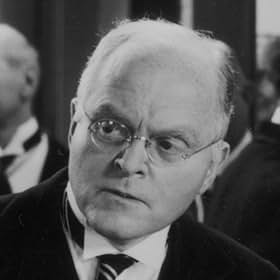


Dorothy Adams
- Payne's Secretary
- (uncredited)

- Director
- Writers
- All cast & crew
- Production, box office & more at IMDbPro
Featured reviews
When John Ford filmed "Tobacco Road" in 1941 the play was still running on Broadway. It opened in 1933 and even today only "Life with Father" has had a longer run for a non-musical production. It was based on Erskine Caldwell's risque novel about dirt-poor Southern farmers and after his success with "The Grapes of Wrath" Ford might have seemed like a fairly obvious choice for the film version but Caldwell was not Steinbeck and this was no "Grapes of Wrath".
It's tolerable enough but Charley Grapewin's old codger Jeeter, a supporting character now given centre screen, gets on your nerves very quickly. In fact, everyone in this picture gets on your nerves very quickly, (they are all portrayed as greedy imbeciles). William Tracy is terrible as the son and a youthful Gene Tierney, (it was only her second film), is totally miscast as sex-pot Ellie May. If Marjorie Rambeau is a little less grating as Sister Bessie it's perhaps because she, at least, is trying to underplay her part and only the great Elizabeth Patterson comes out of this with any dignity. In other words, it's certainly nobody's finest hour, (except perhaps cinematographer Arthur Miller), and Ford's least of all. The only real surprise about it is how it was ever a hit in the first place.
It's tolerable enough but Charley Grapewin's old codger Jeeter, a supporting character now given centre screen, gets on your nerves very quickly. In fact, everyone in this picture gets on your nerves very quickly, (they are all portrayed as greedy imbeciles). William Tracy is terrible as the son and a youthful Gene Tierney, (it was only her second film), is totally miscast as sex-pot Ellie May. If Marjorie Rambeau is a little less grating as Sister Bessie it's perhaps because she, at least, is trying to underplay her part and only the great Elizabeth Patterson comes out of this with any dignity. In other words, it's certainly nobody's finest hour, (except perhaps cinematographer Arthur Miller), and Ford's least of all. The only real surprise about it is how it was ever a hit in the first place.
After a bank purchases the land, a family of hillbillies faces eviction if it can't come up with the rent. Based on a Caldwell novel that in turn became a stage play, this is very broad comedy that rarely rises above the level of The Three Stooges. Grapewin plays a lazy farmer who has so many children that he and his wife can't keep track of them. Tracy is horribly over-the-top as one of the grown children living at home. Tierney is third billed as Tracy's useless sister but barely has a line of dialog. Rambeau does OK as a neighbor. Andrews plays the only character who has some dignity. Every once in a while Ford came up with a real clunker, and this is one of them.
Tobacco Road as was written by Erskine Caldwell and dramatized on Broadway for 8 years was brought to the screen by 20th Century Fox in a considerably altered state. It was thought of probably by Darryl Zanuck as a great property for John Ford seeing what he did with The Grapes Of Wrath.
The Grapes Of Wrath by John Steinbeck is a great piece of social commentary, an immortal work whether in print or on the big or small screen. Ford kept the spirit of Steinbeck's work completely intact and got a well deserved Best Director Oscar. In this one because Caldwell's Jeeters are not quite as noble as the Joads of The Grapes Of Wrath, they're not prototype rural proletarians. The changes took a lot of the drama and commentary and left the film not too far above the Weaver Family films and Ma and Pa Kettle.
Charley Grapewin and Bessie Patterson are Mr.&Mrs. Jeeter Lester and Jeeter is a guy determined to get by doing as little as possible. The whole family has his spirit. He's married most of his children off. One of the daughters in serious trouble of being an old maid at 23 and that was Gene Tierney if you can believe that. Her character in the book and play has a cleft palate and you can understand why she's not married off. Here she's just gorgeous Gene Tierney and a crucial element is missing.
There's another daughter Pearl whom we never see, but who's married to the loutish Ward Bond. She keeps running off and Bond just doesn't get it. Here he's just rustic lout, I suspect that the 13 year old Pearl figures she can do a whole lot better. That one I'm sure the Code was breathing hot and heavy over 20th Century Fox.
There's another physically deformed character and that's Marjorie Rambeau who has in the book a nose like a pig's snout. Grapewin palms off his 16 year old son as a new husband for Rambeau to get his hands on the insurance money her old husband left her. William Tracy as the kid who's no prize figures she's experienced and eager even if she's a psalm singer which she is.
The rough house comedy that typifies many a Ford film is funny, but hardly in the spirit of what Caldwell was writing. In the end I have to say that the film is not good John Ford, though he's done worse.
The Grapes Of Wrath by John Steinbeck is a great piece of social commentary, an immortal work whether in print or on the big or small screen. Ford kept the spirit of Steinbeck's work completely intact and got a well deserved Best Director Oscar. In this one because Caldwell's Jeeters are not quite as noble as the Joads of The Grapes Of Wrath, they're not prototype rural proletarians. The changes took a lot of the drama and commentary and left the film not too far above the Weaver Family films and Ma and Pa Kettle.
Charley Grapewin and Bessie Patterson are Mr.&Mrs. Jeeter Lester and Jeeter is a guy determined to get by doing as little as possible. The whole family has his spirit. He's married most of his children off. One of the daughters in serious trouble of being an old maid at 23 and that was Gene Tierney if you can believe that. Her character in the book and play has a cleft palate and you can understand why she's not married off. Here she's just gorgeous Gene Tierney and a crucial element is missing.
There's another daughter Pearl whom we never see, but who's married to the loutish Ward Bond. She keeps running off and Bond just doesn't get it. Here he's just rustic lout, I suspect that the 13 year old Pearl figures she can do a whole lot better. That one I'm sure the Code was breathing hot and heavy over 20th Century Fox.
There's another physically deformed character and that's Marjorie Rambeau who has in the book a nose like a pig's snout. Grapewin palms off his 16 year old son as a new husband for Rambeau to get his hands on the insurance money her old husband left her. William Tracy as the kid who's no prize figures she's experienced and eager even if she's a psalm singer which she is.
The rough house comedy that typifies many a Ford film is funny, but hardly in the spirit of what Caldwell was writing. In the end I have to say that the film is not good John Ford, though he's done worse.
It's hard to even understand why TOBACCO ROAD was such a long-running success on the Broadway stage. Fox has taken the play, cut all of the more sizzling elements that made it intriguing, and reduced it to a tale of dirt poor farm folk too shiftless to make a living off the land with the accent on comedy rather than focusing on a few of the more poignant moments.
It's certainly a disappointment to find Dana Andrews and Gene Tierney totally wasted in small roles early in their careers at Fox. Tierney, especially, has little to do but say a few lines and look as unscrubbed as possible. It's really an embarrassment to watch her in this role.
Overacting is in abundance, particularly from William Tracy as the imbecilic son, Dude, who is crazy from start to finish (with Ward Bond delivering him a well-deserved punch at the finale). Marjorie Rambeau as a gospel-singing fanatic overacts too and even Ward Bond is irritating at times.
But in the central role of the shiftless farmer who spends the whole story trying to devise ways to save his land with a $100 down payment, Charlie Grapewin gives a fine, nuanced performance, slipping easily from comedy to drama without a strain. Elizabeth Patterson tries to give some dignity to the role of his equally downtrodden wife.
John Ford's uninspired direction is largely responsible for the lackluster overall impact of the film, based on the play taken from an earthy Erskine Caldwell novel. Whatever elements made the play so enormously successful have been eliminated in Nunnally Johnson's screenplay.
Summing up: A huge disappointment on many levels although it contains some striking B&W photography.
It's certainly a disappointment to find Dana Andrews and Gene Tierney totally wasted in small roles early in their careers at Fox. Tierney, especially, has little to do but say a few lines and look as unscrubbed as possible. It's really an embarrassment to watch her in this role.
Overacting is in abundance, particularly from William Tracy as the imbecilic son, Dude, who is crazy from start to finish (with Ward Bond delivering him a well-deserved punch at the finale). Marjorie Rambeau as a gospel-singing fanatic overacts too and even Ward Bond is irritating at times.
But in the central role of the shiftless farmer who spends the whole story trying to devise ways to save his land with a $100 down payment, Charlie Grapewin gives a fine, nuanced performance, slipping easily from comedy to drama without a strain. Elizabeth Patterson tries to give some dignity to the role of his equally downtrodden wife.
John Ford's uninspired direction is largely responsible for the lackluster overall impact of the film, based on the play taken from an earthy Erskine Caldwell novel. Whatever elements made the play so enormously successful have been eliminated in Nunnally Johnson's screenplay.
Summing up: A huge disappointment on many levels although it contains some striking B&W photography.
The movie's essentially, a one-man showcase: Charlie Grapewin as the amiable n'er-do-well Jeeter Lester. He's a hoot and a half in his ragged overalls and bewhiskered face. Too bad the old coot just can't seem to get anything done, despite his uncomplaining, loyal wife (Patterson). Rarely did old Hollywood uglify settings as thoroughly as here. Lesters' shack looks like a wood pile, while others along the Road share that skid-row appearance. Trouble is that when you think about it, there's nothing funny about these miserable background conditions. Fortunately for the movie, Jeeter's comical antics distract from that troubling aspect. For example, I love the way the loose porch board keeps getting even with Jeeter's uncaring neglect in fixing it.
Yup, the Depression Era makes things especially tough for these Southern farmers, and the question the Lesters confront is whether they can get a loan before getting herded into the poor farm. Note too, how the sleek Captain Tim (Andrews) appears to represent a landlord class, while Jeeter is among his tenant farmers dependent on the upper class for support. At this point in the movie, however, all have fallen on hard times, though the Captain still looks spiffy and well-upholstered, unlike his tenants.
Nonetheless, the results are played for laughs, though I suspect many folks find the rural Southern caricatures more offensive than funny. For example, did they have to make young Dude Lester so dislikable-- that slug an angry Loy (Bond) puts on him was long overdue. Also, remind me not to loan my car to the Destruction Derby kid anytime, ever. Anyway, the movie is a sing-along for frog throats like me what with all those great old time gospel songs, even if choirmaster Sister Bessie (Rambeau) is caricatured. But please, get me a ticket to that old Road where I can maybe meet up with the luscious Ellie May (Tierney). I guess my biggest gripe is that Tierney doesn't get more screentime-- maybe all of it. On the other hand, I've definitely reached a new appreciation of the lowly turnip, of all things.
All in all, I suspect the TCF production does not wear well for many. Still and all, Grapewin delivers a rollicking performance, so give the 84-minutes a try if you haven't already.
Yup, the Depression Era makes things especially tough for these Southern farmers, and the question the Lesters confront is whether they can get a loan before getting herded into the poor farm. Note too, how the sleek Captain Tim (Andrews) appears to represent a landlord class, while Jeeter is among his tenant farmers dependent on the upper class for support. At this point in the movie, however, all have fallen on hard times, though the Captain still looks spiffy and well-upholstered, unlike his tenants.
Nonetheless, the results are played for laughs, though I suspect many folks find the rural Southern caricatures more offensive than funny. For example, did they have to make young Dude Lester so dislikable-- that slug an angry Loy (Bond) puts on him was long overdue. Also, remind me not to loan my car to the Destruction Derby kid anytime, ever. Anyway, the movie is a sing-along for frog throats like me what with all those great old time gospel songs, even if choirmaster Sister Bessie (Rambeau) is caricatured. But please, get me a ticket to that old Road where I can maybe meet up with the luscious Ellie May (Tierney). I guess my biggest gripe is that Tierney doesn't get more screentime-- maybe all of it. On the other hand, I've definitely reached a new appreciation of the lowly turnip, of all things.
All in all, I suspect the TCF production does not wear well for many. Still and all, Grapewin delivers a rollicking performance, so give the 84-minutes a try if you haven't already.


Did you know
- TriviaGene Tierney and Dana Andrews get barely five minutes of screen time each, with Tierney getting just half a dozen lines to speak.
- GoofsWhen the new car is tipped over, after being driven on dirt roads and through mud, the underside is spotless.
- Crazy creditsOpening and some of the closing credits are presented written in real sand.
- ConnectionsReferenced in Madame veut un bébé (1942)
- SoundtracksDixie's Land
(uncredited)
Written by Daniel Decatur Emmett
[Variations often played as background music]
- How long is Tobacco Road?Powered by Alexa
Details
- Release date
- Country of origin
- Language
- Also known as
- Tobacco Road
- Filming locations
- Encino, Los Angeles, California, USA(poor farm sequence)
- Production company
- See more company credits at IMDbPro
Box office
- Gross worldwide
- $534
- Runtime
- 1h 24m(84 min)
- Color
- Aspect ratio
- 1.37 : 1
Contribute to this page
Suggest an edit or add missing content