Frankenstein
- 1931
- Tous publics
- 1h 10m
IMDb RATING
7.7/10
87K
YOUR RATING


Dr Henry Frankenstein is obsessed with assembling a living being from parts of several exhumed corpses.Dr Henry Frankenstein is obsessed with assembling a living being from parts of several exhumed corpses.Dr Henry Frankenstein is obsessed with assembling a living being from parts of several exhumed corpses.
- Awards
- 7 wins & 3 nominations total


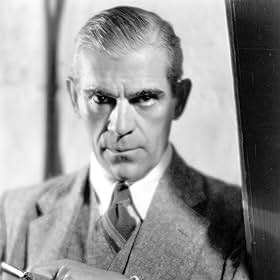


Ted Billings
- Villager
- (uncredited)
Mae Bruce
- Screaming Maid
- (uncredited)

Jack Curtis
- Villager
- (uncredited)

Arletta Duncan
- Bridesmaid
- (uncredited)
William Dyer
- Gravedigger
- (uncredited)

Francis Ford
- Hans
- (uncredited)

Soledad Jiménez
- Mourner
- (uncredited)

Carmencita Johnson
- Little Girl
- (uncredited)
Seessel Anne Johnson
- Little Girl
- (uncredited)
Featured reviews
This movie comes off as silly at times and brilliant at others, but it is probably considered to be one of the greatest monster movies of all time. The greatest thing to come out of this movie was the performance of Boris Karloff as the monster, it is just incredible how much emotion and feeling he was able to convey while under all that makeup. The direction of James Whale is spot on with a great use of sets and outdoor locations, in fact, the only real flaw in the film lies in the script, which has a few situations that make very little sense and because of which interrupts the films flow. But other than that, Frankenstein is a classic and very important movie, and it launched Karloff on to a great career, plus the sequel Bride Of Frankenstein is even better. 4 Beards Out Of 5 Check out my video review @ https://www.youtube.com/watch?v=GomHi6vIds4
A brilliant young scientist creates life from the dead but lives to regret it when his creation goes on the rampage.
Though inevitably dated and primitive by modern standards, Frankenstein remains a tremendously impressive film and a tribute to its still somewhat under-rated director, the eccentric Englishman James Whale.
Where so many early talkies were static and wordy, Frankenstein skips unnecessary dialogue and exposition and drives through its plot at a speed that seems almost indecent nowadays. Compared to overblown remakes like Kenneth Branagh's 1994 version, Whale's work now seems like a masterpiece of brevity and minimalism. His constantly moving camera, incisive editing and dramatic use of close-ups are a mile ahead of anything far more prestigious directors were doing at the time. Expressionist photography and eccentric set designs lend atmosphere, menace and help augment some rather ripe performances; a foretaste of the paths Whale would tread in the sequel Bride of Frankenstein four years later.
And then of course there's Karloff. With comparatively few scenes and no dialogue he nonetheless manages to create a complex, intimidating, yet sympathetic creature - one of the great mimes in talking cinema and thanks in no small degree to the freedom given to him under Jack Pierce's iconic make-up.
A historic piece of cinema, and one that still stands the test of time as both art and entertainment.
Though inevitably dated and primitive by modern standards, Frankenstein remains a tremendously impressive film and a tribute to its still somewhat under-rated director, the eccentric Englishman James Whale.
Where so many early talkies were static and wordy, Frankenstein skips unnecessary dialogue and exposition and drives through its plot at a speed that seems almost indecent nowadays. Compared to overblown remakes like Kenneth Branagh's 1994 version, Whale's work now seems like a masterpiece of brevity and minimalism. His constantly moving camera, incisive editing and dramatic use of close-ups are a mile ahead of anything far more prestigious directors were doing at the time. Expressionist photography and eccentric set designs lend atmosphere, menace and help augment some rather ripe performances; a foretaste of the paths Whale would tread in the sequel Bride of Frankenstein four years later.
And then of course there's Karloff. With comparatively few scenes and no dialogue he nonetheless manages to create a complex, intimidating, yet sympathetic creature - one of the great mimes in talking cinema and thanks in no small degree to the freedom given to him under Jack Pierce's iconic make-up.
A historic piece of cinema, and one that still stands the test of time as both art and entertainment.
MORD39 RATING: **** out of ****
Dark, cloudy nights. Thunder and lightning. Colin Clive's Frankenstein shouts: "It's Alive!", and Boris Karloff lurches forth in Jack Pierce's greatest monster makeup of all time....What more can be said about this classic?
It's one of the first (and greatest) horror movies of all time and required viewing. Karloff's sympathetic monster can evoke fear as well as break our hearts. This film made him a huge star after years of working as an unknown in tons of features.
James Whale is a masterful director, though there are less "light moments" in FRANKENSTEIN than some of his later horror films. Interestingly enough, the lack of a music score in this movie actually works in its favor.
Tight, brisk, and oozing with the stuff nightmares are made of, this grandaddy of all monster films needs no further selling.
Dark, cloudy nights. Thunder and lightning. Colin Clive's Frankenstein shouts: "It's Alive!", and Boris Karloff lurches forth in Jack Pierce's greatest monster makeup of all time....What more can be said about this classic?
It's one of the first (and greatest) horror movies of all time and required viewing. Karloff's sympathetic monster can evoke fear as well as break our hearts. This film made him a huge star after years of working as an unknown in tons of features.
James Whale is a masterful director, though there are less "light moments" in FRANKENSTEIN than some of his later horror films. Interestingly enough, the lack of a music score in this movie actually works in its favor.
Tight, brisk, and oozing with the stuff nightmares are made of, this grandaddy of all monster films needs no further selling.
Count me as one member of the "Star Wars" generation who as a teenager loved this movie at first sight and has watched it with renewed pleasure a dozen times since. A small but loyal number of movie fans my age and younger feel the same way about "Frankenstein" (and other Universal Horror pictures); but for those struggling to appreciate it I offer a few suggestions.
Cast your mind back to 1931 and imagine that you—like the audiences at the time—are seeing the now overfamiliar monster makeup for the first time. You probably haven't read the Mary Shelley novel on which the film is based; and you've never seen one of the stage productions based on the novel. This is a fresh experience for you. You don't know what the monster is going to look like and you don't know what it's going to do.
Don't take the film for granted. We live in pedantic times when sci-fi fanboys complain that it's unrealistic for Spider-Man to spin webs from his own physiognomy rather than from metal contraptions as in the comic books; that the actress playing Storm in "X-Men" is the wrong shade of black. In this age of irrelevant concerns, "Frankenstein" can't hope to survive our dull-witted scrutiny; so don't be like the mob. The film's many defects are minor, easily ignored, and sometimes part of the fun. In some ways it is technically crude, but director James Whale and his crew have a sense of artistry and a knack for storytelling that surpass that of most modern filmmakers. Props and hand gestures frequently change between shots, giving the film the weird beauty and stitched-together quality of the monster himself. John Boles and Mae Clarke (as Henry Frankenstein's friend and fiancée respectively) are dull and stiff. Some plot details are implausible: Why doesn't Dr. Frankenstein notice that he's using an inferior brain? Why does the script insist that the brain is a criminal one at all when it's clear that the monster means no one any harm—at least before people attack him? The final scene is irritating. It's an attempt to end on a light-hearted note for those too easily frightened and upset by unpleasantness.
Use your imagination. Modern movies have dulled our ability to know a profoundly disturbing tale when we see one, unless buckets of blood and gore are hurled at us. Remember this is the story of a scientist who brings to life a dead body created from pieces of human corpses; it's the story of a creator who betrays his own creature, condemning him to a short life of being hated and reviled. If this story inspires no fear or pity in you, you've lost your ability to feel.
Boris Karloff as the Monster is worth a thousand CGI monsters; his pitiful reaction to seeing light for the first time would be unforgettable in a movie one-tenth this good. Colin Clive (as Henry Frankenstein) has a rich, musical voice and an intense concentration that makes his performance as alive as Frankenstein's creation. Weird and wonderful support is provided by Dwight Frye as the hunchbacked assistant and Edward Van Sloan as Frankenstein's former professor.
If you believe this film is inferior to more modern movies, I would only half-agree with you: "Bride of Frankenstein," released four years later, is even better than the original.
Cast your mind back to 1931 and imagine that you—like the audiences at the time—are seeing the now overfamiliar monster makeup for the first time. You probably haven't read the Mary Shelley novel on which the film is based; and you've never seen one of the stage productions based on the novel. This is a fresh experience for you. You don't know what the monster is going to look like and you don't know what it's going to do.
Don't take the film for granted. We live in pedantic times when sci-fi fanboys complain that it's unrealistic for Spider-Man to spin webs from his own physiognomy rather than from metal contraptions as in the comic books; that the actress playing Storm in "X-Men" is the wrong shade of black. In this age of irrelevant concerns, "Frankenstein" can't hope to survive our dull-witted scrutiny; so don't be like the mob. The film's many defects are minor, easily ignored, and sometimes part of the fun. In some ways it is technically crude, but director James Whale and his crew have a sense of artistry and a knack for storytelling that surpass that of most modern filmmakers. Props and hand gestures frequently change between shots, giving the film the weird beauty and stitched-together quality of the monster himself. John Boles and Mae Clarke (as Henry Frankenstein's friend and fiancée respectively) are dull and stiff. Some plot details are implausible: Why doesn't Dr. Frankenstein notice that he's using an inferior brain? Why does the script insist that the brain is a criminal one at all when it's clear that the monster means no one any harm—at least before people attack him? The final scene is irritating. It's an attempt to end on a light-hearted note for those too easily frightened and upset by unpleasantness.
Use your imagination. Modern movies have dulled our ability to know a profoundly disturbing tale when we see one, unless buckets of blood and gore are hurled at us. Remember this is the story of a scientist who brings to life a dead body created from pieces of human corpses; it's the story of a creator who betrays his own creature, condemning him to a short life of being hated and reviled. If this story inspires no fear or pity in you, you've lost your ability to feel.
Boris Karloff as the Monster is worth a thousand CGI monsters; his pitiful reaction to seeing light for the first time would be unforgettable in a movie one-tenth this good. Colin Clive (as Henry Frankenstein) has a rich, musical voice and an intense concentration that makes his performance as alive as Frankenstein's creation. Weird and wonderful support is provided by Dwight Frye as the hunchbacked assistant and Edward Van Sloan as Frankenstein's former professor.
If you believe this film is inferior to more modern movies, I would only half-agree with you: "Bride of Frankenstein," released four years later, is even better than the original.
Revisiting Frankenstein is always a wonderful experience. I watch it today with the same enthusiasm and awe I did nearly 35 years ago. Everything about the film is so perfect. Acting, direction, cinematography, set design, plot, dialogue, special effects, etc. are top notch. And although each of these areas deserves to be discussed in detail (and have in the volumes that have been written on Frankenstein), I'll focus on two areas that really standout to me - Boris Karloff as the monster and James Whales direction.
Is there a more iconic image in horror than Boris Karloff as the Frankenstein monster? I sincerely doubt it. Even those who wouldn't be caught dead watching a horror film are familiar with that image. Beyond Jack Pierce's make-up, Karloff is amazing in the role. Even with the make-up, Karloff gives the monster life. We are able to see and feel the emotions the monster goes through. There is no better example than the scene with the monster and the little girl. As the monster stumbles out of the woods, there is a cautious look about him as his experiences with humans have thus far been less than satisfactory. But when the little girl accepts him and wants to play with him, the look of caution is transformed into a look of utter happiness. He smiles, he laughs, and he plays. But that emotion is replaced by one of confusion mixed with anger when he accidentally kills the girl. It's all there on Karloff wonderful face. It's this life that Karloff imbibes in the monster that makes Frankenstein a real classic.
I've always thought that James Whale's direction was ahead of its time. In an era when directors were using what I call the "plant and shoot" method of filming, Whale made his camera a fluid part of the action. Whale takes the viewer beyond just watching moving images. He uses the camera to take the viewer into the scene. A small example is the way Whale filmed characters moving from one room to the next. The camera moves with the characters. Another example is the tracking shot Whale uses as the father carries his dead child into the town. As I said earlier, it has a fluidity in the way Whale filmed these scenes that makes it seem more natural. Finally, the way Whale introduces the monster is a highlight of the film. The monster backs into the room. As he turns, Whale shows the monster with three quick, ever tighter shots, ending with a close-up of the monster's face. Every Hollywood star of that era could have only wished for an introduction like that.
While I have done nothing but praise Frankenstein, I'm not such a fan that I can't spot flaws in the film. The major issue with me has always been the way the scenes of action, horror, and violence are inter-cut with scenes of tranquility and bliss. I realize that was the way things were done in the 30s so people wouldn't, in essence, overload on horror, but it can make the film seem a little disjointed. But it's difficult to hold Whale overly responsible for this custom of the period.
Is there a more iconic image in horror than Boris Karloff as the Frankenstein monster? I sincerely doubt it. Even those who wouldn't be caught dead watching a horror film are familiar with that image. Beyond Jack Pierce's make-up, Karloff is amazing in the role. Even with the make-up, Karloff gives the monster life. We are able to see and feel the emotions the monster goes through. There is no better example than the scene with the monster and the little girl. As the monster stumbles out of the woods, there is a cautious look about him as his experiences with humans have thus far been less than satisfactory. But when the little girl accepts him and wants to play with him, the look of caution is transformed into a look of utter happiness. He smiles, he laughs, and he plays. But that emotion is replaced by one of confusion mixed with anger when he accidentally kills the girl. It's all there on Karloff wonderful face. It's this life that Karloff imbibes in the monster that makes Frankenstein a real classic.
I've always thought that James Whale's direction was ahead of its time. In an era when directors were using what I call the "plant and shoot" method of filming, Whale made his camera a fluid part of the action. Whale takes the viewer beyond just watching moving images. He uses the camera to take the viewer into the scene. A small example is the way Whale filmed characters moving from one room to the next. The camera moves with the characters. Another example is the tracking shot Whale uses as the father carries his dead child into the town. As I said earlier, it has a fluidity in the way Whale filmed these scenes that makes it seem more natural. Finally, the way Whale introduces the monster is a highlight of the film. The monster backs into the room. As he turns, Whale shows the monster with three quick, ever tighter shots, ending with a close-up of the monster's face. Every Hollywood star of that era could have only wished for an introduction like that.
While I have done nothing but praise Frankenstein, I'm not such a fan that I can't spot flaws in the film. The major issue with me has always been the way the scenes of action, horror, and violence are inter-cut with scenes of tranquility and bliss. I realize that was the way things were done in the 30s so people wouldn't, in essence, overload on horror, but it can make the film seem a little disjointed. But it's difficult to hold Whale overly responsible for this custom of the period.
Frankenstein Through the Years
Frankenstein Through the Years
Take a closer look at some of the iconic potrayals of this misunderstood monster, from Boris Karloff to Jacob Elordi.




Did you know
- TriviaThe Monster's make-up design by Jack P. Pierce is under copyright to Universal Pictures until January 1, 2026, and licensed by Universal Studios Licensing.
- GoofsAccording to DVD commentary for this film, director James Whale intended this film to take place in an "alternate universe" and therefore freely mixed 19th Century and 1930s technology, hair fashions, etc.
- Quotes
Henry Frankenstein: Look! It's moving. It's alive. It's alive... It's alive, it's moving, it's alive, it's alive, it's alive, it's alive, IT'S ALIVE!
Victor Moritz: Henry - In the name of God!
Henry Frankenstein: Oh, in the name of God! Now I know what it feels like to be God!
- Crazy creditsIn the opening credits: The Monster - ?
- Alternate versionsSPOILERS: The picture was scripted and filmed with Dr. Frankenstein seeming to die in the mill with his creation, but was instead released with a hastily re-shot happy ending, wherein Henry survives to marry Elizabeth (see "Trivia"). However, the sequel, La Fiancée de Frankenstein (1935) literally followed the first scenario, and consequently just before "Bride" opened this film was reissued with the original finale restored. This movie was seen this way in all subsequent theatrical releases of the old Hollywood era, but when the entire package of classic Universal horror films was made available to television in the 1950s, the prints of the original movie carried the happy ending, and the incompatibility with the opening scene of "Bride..." confused new viewers.
- ConnectionsEdited into Boo (1932)
Details
- Release date
- Country of origin
- Official site
- Languages
- Also known as
- Frankenstein : L'homme qui créa un monstre
- Filming locations
- Malibou Lake, Agoura Hills, California, USA(creature and young girl by the lake scene)
- Production company
- See more company credits at IMDbPro
Box office
- Budget
- $291,000 (estimated)
- Gross worldwide
- $10,996
- Runtime
- 1h 10m(70 min)
- Color
- Sound mix
- Aspect ratio
- 1.37 : 1
Contribute to this page
Suggest an edit or add missing content