Frankenstein
- 1931
- Tous publics
- 1h 10m
IMDb RATING
7.7/10
87K
YOUR RATING


Dr Henry Frankenstein is obsessed with assembling a living being from parts of several exhumed corpses.Dr Henry Frankenstein is obsessed with assembling a living being from parts of several exhumed corpses.Dr Henry Frankenstein is obsessed with assembling a living being from parts of several exhumed corpses.
- Awards
- 7 wins & 3 nominations total


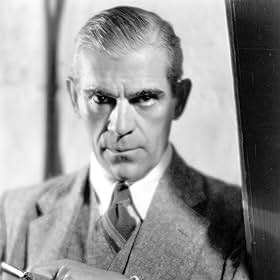


Ted Billings
- Villager
- (uncredited)
Mae Bruce
- Screaming Maid
- (uncredited)

Jack Curtis
- Villager
- (uncredited)

Arletta Duncan
- Bridesmaid
- (uncredited)
William Dyer
- Gravedigger
- (uncredited)

Francis Ford
- Hans
- (uncredited)

Soledad Jiménez
- Mourner
- (uncredited)

Carmencita Johnson
- Little Girl
- (uncredited)
Seessel Anne Johnson
- Little Girl
- (uncredited)
Featured reviews
MORD39 RATING: **** out of ****
Dark, cloudy nights. Thunder and lightning. Colin Clive's Frankenstein shouts: "It's Alive!", and Boris Karloff lurches forth in Jack Pierce's greatest monster makeup of all time....What more can be said about this classic?
It's one of the first (and greatest) horror movies of all time and required viewing. Karloff's sympathetic monster can evoke fear as well as break our hearts. This film made him a huge star after years of working as an unknown in tons of features.
James Whale is a masterful director, though there are less "light moments" in FRANKENSTEIN than some of his later horror films. Interestingly enough, the lack of a music score in this movie actually works in its favor.
Tight, brisk, and oozing with the stuff nightmares are made of, this grandaddy of all monster films needs no further selling.
Dark, cloudy nights. Thunder and lightning. Colin Clive's Frankenstein shouts: "It's Alive!", and Boris Karloff lurches forth in Jack Pierce's greatest monster makeup of all time....What more can be said about this classic?
It's one of the first (and greatest) horror movies of all time and required viewing. Karloff's sympathetic monster can evoke fear as well as break our hearts. This film made him a huge star after years of working as an unknown in tons of features.
James Whale is a masterful director, though there are less "light moments" in FRANKENSTEIN than some of his later horror films. Interestingly enough, the lack of a music score in this movie actually works in its favor.
Tight, brisk, and oozing with the stuff nightmares are made of, this grandaddy of all monster films needs no further selling.
This movie comes off as silly at times and brilliant at others, but it is probably considered to be one of the greatest monster movies of all time. The greatest thing to come out of this movie was the performance of Boris Karloff as the monster, it is just incredible how much emotion and feeling he was able to convey while under all that makeup. The direction of James Whale is spot on with a great use of sets and outdoor locations, in fact, the only real flaw in the film lies in the script, which has a few situations that make very little sense and because of which interrupts the films flow. But other than that, Frankenstein is a classic and very important movie, and it launched Karloff on to a great career, plus the sequel Bride Of Frankenstein is even better. 4 Beards Out Of 5 Check out my video review @ https://www.youtube.com/watch?v=GomHi6vIds4
After buying the 'Legacy' DVDs for the classic Universal Big Three (Wolf Man, Dracula, Frankenstein monster) I've had a good time going back & revisiting all the old favorites of my childhood. I started with the monster & have to admit I found this first interpretation of Whale's monster story to be a bit lacking. Not bad, but not as great as it's hyped to be, unlike its sequel.
The opening setting for the film is certainly impressive, with the tearful mourners and the 'mad' doctor and henchman lurking in the background, waiting to take the freshly buried corpse (He's just resting, waiting for a new life to come). Colin Clive sets the tone for the movie as he tosses a big shovel full of dirt in the face of the statue of Death that's positioned behind him. Clive is really the star in this one & it's his performance that kept me into this one for the most part, particularly the unforgettable sequence as he gives life to the monster in front of the stunned eyes of his soon to be wife Elizabeth, Victor, and his old mentor Dr. Waldman.
Any review of FRANKENSTEIN wouldn't be complete without a mention of "Karloff". He gives a good deal of humanity to the monster & I certainly empathized with his plight of being thrust into an alien world, where everyone, including his maker, is all too ready to shun him because of how different he is from the "normal" folks. But Karloff's screen time feels awfully small compared to how much we get of him in the "Bride". There's a feeling that there could've been a lot more for Whale to explore with the monster in the movie, but couldn't due to the limited runtime.
To conclude, I'll say 'Frankenstein' is just a "good" movie that certainly is a sufficient starting point for the greatness that would come 4 years later.
7/10
The opening setting for the film is certainly impressive, with the tearful mourners and the 'mad' doctor and henchman lurking in the background, waiting to take the freshly buried corpse (He's just resting, waiting for a new life to come). Colin Clive sets the tone for the movie as he tosses a big shovel full of dirt in the face of the statue of Death that's positioned behind him. Clive is really the star in this one & it's his performance that kept me into this one for the most part, particularly the unforgettable sequence as he gives life to the monster in front of the stunned eyes of his soon to be wife Elizabeth, Victor, and his old mentor Dr. Waldman.
Any review of FRANKENSTEIN wouldn't be complete without a mention of "Karloff". He gives a good deal of humanity to the monster & I certainly empathized with his plight of being thrust into an alien world, where everyone, including his maker, is all too ready to shun him because of how different he is from the "normal" folks. But Karloff's screen time feels awfully small compared to how much we get of him in the "Bride". There's a feeling that there could've been a lot more for Whale to explore with the monster in the movie, but couldn't due to the limited runtime.
To conclude, I'll say 'Frankenstein' is just a "good" movie that certainly is a sufficient starting point for the greatness that would come 4 years later.
7/10
Revisiting Frankenstein is always a wonderful experience. I watch it today with the same enthusiasm and awe I did nearly 35 years ago. Everything about the film is so perfect. Acting, direction, cinematography, set design, plot, dialogue, special effects, etc. are top notch. And although each of these areas deserves to be discussed in detail (and have in the volumes that have been written on Frankenstein), I'll focus on two areas that really standout to me - Boris Karloff as the monster and James Whales direction.
Is there a more iconic image in horror than Boris Karloff as the Frankenstein monster? I sincerely doubt it. Even those who wouldn't be caught dead watching a horror film are familiar with that image. Beyond Jack Pierce's make-up, Karloff is amazing in the role. Even with the make-up, Karloff gives the monster life. We are able to see and feel the emotions the monster goes through. There is no better example than the scene with the monster and the little girl. As the monster stumbles out of the woods, there is a cautious look about him as his experiences with humans have thus far been less than satisfactory. But when the little girl accepts him and wants to play with him, the look of caution is transformed into a look of utter happiness. He smiles, he laughs, and he plays. But that emotion is replaced by one of confusion mixed with anger when he accidentally kills the girl. It's all there on Karloff wonderful face. It's this life that Karloff imbibes in the monster that makes Frankenstein a real classic.
I've always thought that James Whale's direction was ahead of its time. In an era when directors were using what I call the "plant and shoot" method of filming, Whale made his camera a fluid part of the action. Whale takes the viewer beyond just watching moving images. He uses the camera to take the viewer into the scene. A small example is the way Whale filmed characters moving from one room to the next. The camera moves with the characters. Another example is the tracking shot Whale uses as the father carries his dead child into the town. As I said earlier, it has a fluidity in the way Whale filmed these scenes that makes it seem more natural. Finally, the way Whale introduces the monster is a highlight of the film. The monster backs into the room. As he turns, Whale shows the monster with three quick, ever tighter shots, ending with a close-up of the monster's face. Every Hollywood star of that era could have only wished for an introduction like that.
While I have done nothing but praise Frankenstein, I'm not such a fan that I can't spot flaws in the film. The major issue with me has always been the way the scenes of action, horror, and violence are inter-cut with scenes of tranquility and bliss. I realize that was the way things were done in the 30s so people wouldn't, in essence, overload on horror, but it can make the film seem a little disjointed. But it's difficult to hold Whale overly responsible for this custom of the period.
Is there a more iconic image in horror than Boris Karloff as the Frankenstein monster? I sincerely doubt it. Even those who wouldn't be caught dead watching a horror film are familiar with that image. Beyond Jack Pierce's make-up, Karloff is amazing in the role. Even with the make-up, Karloff gives the monster life. We are able to see and feel the emotions the monster goes through. There is no better example than the scene with the monster and the little girl. As the monster stumbles out of the woods, there is a cautious look about him as his experiences with humans have thus far been less than satisfactory. But when the little girl accepts him and wants to play with him, the look of caution is transformed into a look of utter happiness. He smiles, he laughs, and he plays. But that emotion is replaced by one of confusion mixed with anger when he accidentally kills the girl. It's all there on Karloff wonderful face. It's this life that Karloff imbibes in the monster that makes Frankenstein a real classic.
I've always thought that James Whale's direction was ahead of its time. In an era when directors were using what I call the "plant and shoot" method of filming, Whale made his camera a fluid part of the action. Whale takes the viewer beyond just watching moving images. He uses the camera to take the viewer into the scene. A small example is the way Whale filmed characters moving from one room to the next. The camera moves with the characters. Another example is the tracking shot Whale uses as the father carries his dead child into the town. As I said earlier, it has a fluidity in the way Whale filmed these scenes that makes it seem more natural. Finally, the way Whale introduces the monster is a highlight of the film. The monster backs into the room. As he turns, Whale shows the monster with three quick, ever tighter shots, ending with a close-up of the monster's face. Every Hollywood star of that era could have only wished for an introduction like that.
While I have done nothing but praise Frankenstein, I'm not such a fan that I can't spot flaws in the film. The major issue with me has always been the way the scenes of action, horror, and violence are inter-cut with scenes of tranquility and bliss. I realize that was the way things were done in the 30s so people wouldn't, in essence, overload on horror, but it can make the film seem a little disjointed. But it's difficult to hold Whale overly responsible for this custom of the period.
To clear the air on certain misconceptions that may arise from what I say here, I've read the book. I've liked the book. I realize that the movie truly has nothing in common with it aside from the fact that an artificial man is brought to life in both. But none of the above took away from my enjoyment of James Whale's rightly considered classic film. The tacked on introduction scene and the obligatory happy ending are indeed laughable when one thinks of what is horrific in this day and age, but I was hooked from the surreal credit sequence on. To me, the real ending of this film will always be at the burning windmill, an ending of an all-too-believable tragedy.
Colin Clive is a little bit overblown as Herr Frankenstein, but he does a capable enough job with the title role (something that is usually tacked onto the monster instead). Edward Van Sloan, a favorite of mine from the Universal stock company, does quite well himself as Frankenstein's old teacher, Dr. Waldmann. As for Karloff...*exhale in admiration* what can I say? I first knew him as the narrator and voice of the Grinch in Dr Seus' "How the Grinch Stole Christmas" (I didn't find this out until years later, but find out I did). "Frankenstein" marked the first time that I'd ever seen him on the screen for real. From the stiff walk to the eternally mournful face, he made the misunderstood monster his for the ages (it is also telling that, in spite of this, Karloff went on to a long, illustrious, if underappreciated, career).
Two other facts that stick in my mind about this movie: the creation sequence and the naming of two of it's characters. The heavy-industrial machinery used to create the monster was inspired by the silent Fritz Lang classic, "Metropolis" (indeed, many films, from the original "The Mummy" and "Bride of Frankenstein" to "Dark City" and "The Matrix" owe a debt to this excellent science fantasy), specifically the grafting of Maria's image onto the android. This machinery, I am told, would later go on to a return engagement in Mel Brooks' "Young Frankenstein". Fact #2: anyone who has read the novel will know that the first name of Frankenstein is Victor and his best friend's Henry. Apparently the play (or perhaps the screenplay writers; I've no way of knowing) switched these two around to where we know have HENRY Frankenstein and VICTOR his best friend.
The only thing that has "sucked" about "Frankenstein" is its imitators vainly trying to make lightning strike twice (pun intended). But don't bet the house on any ever coming close. A hundred years from now, this brilliant alternate work will still stand as truly classic as the book that helped to inspire it.
Colin Clive is a little bit overblown as Herr Frankenstein, but he does a capable enough job with the title role (something that is usually tacked onto the monster instead). Edward Van Sloan, a favorite of mine from the Universal stock company, does quite well himself as Frankenstein's old teacher, Dr. Waldmann. As for Karloff...*exhale in admiration* what can I say? I first knew him as the narrator and voice of the Grinch in Dr Seus' "How the Grinch Stole Christmas" (I didn't find this out until years later, but find out I did). "Frankenstein" marked the first time that I'd ever seen him on the screen for real. From the stiff walk to the eternally mournful face, he made the misunderstood monster his for the ages (it is also telling that, in spite of this, Karloff went on to a long, illustrious, if underappreciated, career).
Two other facts that stick in my mind about this movie: the creation sequence and the naming of two of it's characters. The heavy-industrial machinery used to create the monster was inspired by the silent Fritz Lang classic, "Metropolis" (indeed, many films, from the original "The Mummy" and "Bride of Frankenstein" to "Dark City" and "The Matrix" owe a debt to this excellent science fantasy), specifically the grafting of Maria's image onto the android. This machinery, I am told, would later go on to a return engagement in Mel Brooks' "Young Frankenstein". Fact #2: anyone who has read the novel will know that the first name of Frankenstein is Victor and his best friend's Henry. Apparently the play (or perhaps the screenplay writers; I've no way of knowing) switched these two around to where we know have HENRY Frankenstein and VICTOR his best friend.
The only thing that has "sucked" about "Frankenstein" is its imitators vainly trying to make lightning strike twice (pun intended). But don't bet the house on any ever coming close. A hundred years from now, this brilliant alternate work will still stand as truly classic as the book that helped to inspire it.
Frankenstein Through the Years
Frankenstein Through the Years
Take a closer look at some of the iconic potrayals of this misunderstood monster, from Boris Karloff to Jacob Elordi.




Did you know
- TriviaThe Monster's make-up design by Jack P. Pierce is under copyright to Universal Pictures until January 1, 2026, and licensed by Universal Studios Licensing.
- GoofsAccording to DVD commentary for this film, director James Whale intended this film to take place in an "alternate universe" and therefore freely mixed 19th Century and 1930s technology, hair fashions, etc.
- Quotes
Henry Frankenstein: Look! It's moving. It's alive. It's alive... It's alive, it's moving, it's alive, it's alive, it's alive, it's alive, IT'S ALIVE!
Victor Moritz: Henry - In the name of God!
Henry Frankenstein: Oh, in the name of God! Now I know what it feels like to be God!
- Crazy creditsIn the opening credits: The Monster - ?
- Alternate versionsSPOILERS: The picture was scripted and filmed with Dr. Frankenstein seeming to die in the mill with his creation, but was instead released with a hastily re-shot happy ending, wherein Henry survives to marry Elizabeth (see "Trivia"). However, the sequel, La Fiancée de Frankenstein (1935) literally followed the first scenario, and consequently just before "Bride" opened this film was reissued with the original finale restored. This movie was seen this way in all subsequent theatrical releases of the old Hollywood era, but when the entire package of classic Universal horror films was made available to television in the 1950s, the prints of the original movie carried the happy ending, and the incompatibility with the opening scene of "Bride..." confused new viewers.
- ConnectionsEdited into Boo (1932)
Details
- Release date
- Country of origin
- Official site
- Languages
- Also known as
- Frankenstein : L'homme qui créa un monstre
- Filming locations
- Malibou Lake, Agoura Hills, California, USA(creature and young girl by the lake scene)
- Production company
- See more company credits at IMDbPro
Box office
- Budget
- $291,000 (estimated)
- Gross worldwide
- $10,996
- Runtime
- 1h 10m(70 min)
- Color
- Sound mix
- Aspect ratio
- 1.37 : 1
Contribute to this page
Suggest an edit or add missing content