AVALIAÇÃO DA IMDb
6,3/10
289
SUA AVALIAÇÃO
Adicionar um enredo no seu idiomaA young Russian girl is forced into a life of prostitution in Czarist Russia, and she and a British journalist find their lives endangered when she reveals to him information regarding the s... Ler tudoA young Russian girl is forced into a life of prostitution in Czarist Russia, and she and a British journalist find their lives endangered when she reveals to him information regarding the social crimes rampant in her country.A young Russian girl is forced into a life of prostitution in Czarist Russia, and she and a British journalist find their lives endangered when she reveals to him information regarding the social crimes rampant in her country.
- Direção
- Roteiristas
- Artistas
- Prêmios
- 1 indicação no total
Oscar Apfel
- British Embassy Butler
- (não creditado)
Frederick Burt
- Minor Role
- (não creditado)
Emile Chautard
- Headwaiter
- (não creditado)
Gilbert Emery
- Sir Hubert, British Ambassador
- (não creditado)
Ruth Feldman
- Woman at Passportcheck
- (não creditado)
Esther Howard
- Prisoner
- (não creditado)
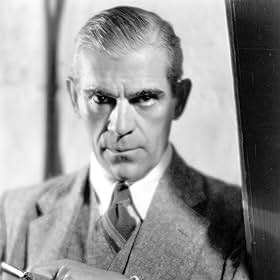
Boris Karloff
- Drunken Orderly
- (não creditado)
Henry Kolker
- Passport Clerk
- (não creditado)
Anne Kunde
- Prison Matron
- (não creditado)
Ivan Linow
- Wrestler
- (não creditado)
- Direção
- Roteiristas
- Elenco e equipe completos
- Produção, bilheteria e muito mais no IMDbPro
Avaliações em destaque
This must have seemed old fashioned even when it was made. The story had to be a holdover from the silent days.
Poor, virtuous peasant Elissa Landi is persecuted by leering aristocrat Lionel Barrymore in pre-revolutionary Russia. Laurence Olivier, in his only his second U.S. movie, is the Western journalist who offers Landi his love and a chance at escape. Boris Karloff plays a drunken orderly.
Whereas Olivier attempts to bring a light touch to his thankless role, neither Landi nor Barrymore seem to know the meaning of the word 'restraint.'. This has an interesting consequence. Whereas Landi is insufferably hysterical, Barrymore provides the best reason to watch; a portrait of sheer, camp villainy that just keeps getting better and better as the film goes on.
Hard to take seriously. Watch it for Barrymore alone.
Poor, virtuous peasant Elissa Landi is persecuted by leering aristocrat Lionel Barrymore in pre-revolutionary Russia. Laurence Olivier, in his only his second U.S. movie, is the Western journalist who offers Landi his love and a chance at escape. Boris Karloff plays a drunken orderly.
Whereas Olivier attempts to bring a light touch to his thankless role, neither Landi nor Barrymore seem to know the meaning of the word 'restraint.'. This has an interesting consequence. Whereas Landi is insufferably hysterical, Barrymore provides the best reason to watch; a portrait of sheer, camp villainy that just keeps getting better and better as the film goes on.
Hard to take seriously. Watch it for Barrymore alone.
The fact that this was made in 1931 is irrelevant because this is as virtually good as any adventure romance you'd get made now. Set amongst one of the many sorry episodes in Russian history it has a particular resonance today.
This might very well be the best film that beautiful Austrian actress Elissa Landi ever made. Allegedly the granddaughter of the famous celebrity Empress Sissi of Austria, she projects an almost regal purity and restrained emotion which is perfect for the innocent yet cynical role of Marya. One wonders how she felt when the script mentioned that her grandmother's husband, Franz Josef of Austria had just signed that memo to 'start' the First World War?
If there are any Lionel Barrymore fans left - which there should be - this picture is for them. Not sure whether his portrayal of the sinister head of Nikolai II's secret police is that accurate but who cares - he's a fantastic Hollywood villain. Although manically over the top, his less than subtle performance is simply explosive. Like all the best Hollywood villains, he creates the perfect character to instantly hate.
And there's also young Larry! In early thirties movies you often see soon to be 'great' actors struggling to learn the ropes but not with young Mr Olivier. It's not quite his first film and he's not the lead but somehow this guy already seems to be at the top of his game.
This isn't one of those old films which you think could have been better if it was made today - everyone and everything in this is as good as you can imagine. When they put their minds to it, Fox Films really could make something superb. Atmospheric set design and innovative cinematography (James Wong Howe again) make this a proper work of art. But not a stuffy, cold piece you'd find in a museum - this is dynamic, buzzing with life. Raoul Walsh's direction never lets the tension falter, he gives this a break-neck sense of intensity to ensure your interest doesn't wane.
And I didn't even mention the naked ladies!
This might very well be the best film that beautiful Austrian actress Elissa Landi ever made. Allegedly the granddaughter of the famous celebrity Empress Sissi of Austria, she projects an almost regal purity and restrained emotion which is perfect for the innocent yet cynical role of Marya. One wonders how she felt when the script mentioned that her grandmother's husband, Franz Josef of Austria had just signed that memo to 'start' the First World War?
If there are any Lionel Barrymore fans left - which there should be - this picture is for them. Not sure whether his portrayal of the sinister head of Nikolai II's secret police is that accurate but who cares - he's a fantastic Hollywood villain. Although manically over the top, his less than subtle performance is simply explosive. Like all the best Hollywood villains, he creates the perfect character to instantly hate.
And there's also young Larry! In early thirties movies you often see soon to be 'great' actors struggling to learn the ropes but not with young Mr Olivier. It's not quite his first film and he's not the lead but somehow this guy already seems to be at the top of his game.
This isn't one of those old films which you think could have been better if it was made today - everyone and everything in this is as good as you can imagine. When they put their minds to it, Fox Films really could make something superb. Atmospheric set design and innovative cinematography (James Wong Howe again) make this a proper work of art. But not a stuffy, cold piece you'd find in a museum - this is dynamic, buzzing with life. Raoul Walsh's direction never lets the tension falter, he gives this a break-neck sense of intensity to ensure your interest doesn't wane.
And I didn't even mention the naked ladies!
Admittedly, my world history knowledge is lacking, so I was at a bit of a disadvantage watching "The Yellow Ticket." It took place in 1913 Russia and Jews were being persecuted by the Russian government. They were not allowed passports to travel unless you were a woman entertaining men.
Marya Kalish (Elissa Landi) had to get what was called a "yellow ticket" in order to travel to see her father in prison. The yellow ticket indicated that she was a prostitute even though she got her ticket by paying for it, not by becoming a prostitute. It was one more method of demeaning Russian Jews.
She was harassed and harangued throughout her movements throughout Russia. She caught the attention of Baron Igor Andreeff (Lionel Barrymore) the architect behind the yellow tickets. He wanted from her exactly what every other man she came across wanted.
She caught a break when she met a British reporter named Julian Rolfe (Laurence Olivier). He gave her a job as a secretary and kept her from having to be in the Russian streets. He only had positive things to write about Russia until Marya told him of the seedier, corrupt, and oppressive side of Russia.
"The Yellow Ticket" was eye opening and somewhat educational. If I had one complaint, it would be the romantic relationship between Marya and Julian.
I don't have a problem with two people falling in love, but I do think it detracted from the heavier message of the movie--that of Russian oppression of Jews. Marya went from a distressed, marginalized, and mistreated woman to a normal girl in love in short order. She was gaily spending her time with Julian helping him write his articles as though she hadn't a care in the world. It was as if the Jewish oppression ceased to exist, or simply wasn't as important. She was so happy in love I didn't even think she was still on Russian soil! I thought for sure that as merrily as she was working that the threat of her being locked up for helping Julian write disparaging articles didn't exist. When I saw that she was still in Russia I couldn't help but think, "How dumb or suicidal are you?" I figured she and Julian were smart enough to throw stones from a safe distance--like England.
TYT certainly had a good premise even if they veered from it with a love story. I guess in the 30's a man couldn't help a woman out of a jam unless he was in love with her.
Free on YouTube.
Marya Kalish (Elissa Landi) had to get what was called a "yellow ticket" in order to travel to see her father in prison. The yellow ticket indicated that she was a prostitute even though she got her ticket by paying for it, not by becoming a prostitute. It was one more method of demeaning Russian Jews.
She was harassed and harangued throughout her movements throughout Russia. She caught the attention of Baron Igor Andreeff (Lionel Barrymore) the architect behind the yellow tickets. He wanted from her exactly what every other man she came across wanted.
She caught a break when she met a British reporter named Julian Rolfe (Laurence Olivier). He gave her a job as a secretary and kept her from having to be in the Russian streets. He only had positive things to write about Russia until Marya told him of the seedier, corrupt, and oppressive side of Russia.
"The Yellow Ticket" was eye opening and somewhat educational. If I had one complaint, it would be the romantic relationship between Marya and Julian.
I don't have a problem with two people falling in love, but I do think it detracted from the heavier message of the movie--that of Russian oppression of Jews. Marya went from a distressed, marginalized, and mistreated woman to a normal girl in love in short order. She was gaily spending her time with Julian helping him write his articles as though she hadn't a care in the world. It was as if the Jewish oppression ceased to exist, or simply wasn't as important. She was so happy in love I didn't even think she was still on Russian soil! I thought for sure that as merrily as she was working that the threat of her being locked up for helping Julian write disparaging articles didn't exist. When I saw that she was still in Russia I couldn't help but think, "How dumb or suicidal are you?" I figured she and Julian were smart enough to throw stones from a safe distance--like England.
TYT certainly had a good premise even if they veered from it with a love story. I guess in the 30's a man couldn't help a woman out of a jam unless he was in love with her.
Free on YouTube.
This was the third film in which Lionel Barrymore and Karloff met. This was a big step for Karloff to be appearing with Barrymore, who was a super star in those days along with Laurence Olivier. This film takes place in Russia, in the year 1913, Mary Kalish(Elissa Landi) is a Jewish girl, and finds out that her father is dying in a St. Petersburg prison. During this period, Jews were not able to travel without passports and she has to get a "yellow ticket", which is given to prostitutes. Having arrived at the prison, she learns her father has already passed away. She meets and falls in love with Julian Rolfe (Laurence Olivier), a British newspaperman. Karloff played the role of an alcholic orderly for Lionel Barrymore who attempts to molest Landi in a park. This film story line resembles the Opera "Tosca". This was a good start for Karloff's great career in films.
Raoul Walksh was never a favourite of mine, I often found his pictures revolting in character and almost inhuman, and this is a particularly disturbing story but the more important for its ruthless realism. It deals with prostitution in tzarist Russia the year before the first world war, it exposes an abyss of social problems and abuse, as the main character Marya Kalish (Elissa Landi) and her family are Jewish and exposed to the tzar's pogroms. Her father ends up in jail and is placed in a dungeon in St. Petersburg, where he gets ill, and the only way for his only daughter to visit him is to acquire a "yellow ticket", a passport for prostitutes, which allows them to go around everywhere, while they have to regularly report to the police. She only avails herself of the ticket to visit her father and never works as a prostitute, although she is troubled enough especially by militaries and Lionel Barrymore as the abominable chief of police. In a critical moment Laurence Olivier as nothing less than a downright Englishman appears as a newspaper man to save her from even worse troubles to come. The finale is tremendous in its chaotic scenes of the outbreak of the war, but it is a good story efficiently told and extremely interesting for its exposure of the conditions of prostitutes in the Russia before the wars, - that only made everything even worse in Russia.
Você sabia?
- CuriosidadesThe film takes place from 1913 to August 4, 1914.
- Erros de gravaçãoThe monoplane which spirits Marya and Rolfe out of Russia is of a much later date than 1914.
- ConexõesEdited from A Dança Rubra (1928)
Principais escolhas
Faça login para avaliar e ver a lista de recomendações personalizadas
Detalhes
- Tempo de duração
- 1 h 28 min(88 min)
- Cor
Contribua para esta página
Sugerir uma alteração ou adicionar conteúdo ausente