Rebecca
- 1940
- Tous publics
- 2h 10min


Un jeune Lord anglais emmène sa jeune épouse dans son manoir où plane le souvenir de sa première femme, Rebecca...Un jeune Lord anglais emmène sa jeune épouse dans son manoir où plane le souvenir de sa première femme, Rebecca...Un jeune Lord anglais emmène sa jeune épouse dans son manoir où plane le souvenir de sa première femme, Rebecca...
- Réalisation
- Scénaristes
- Stars
- Récompensé par 2 Oscars
- 10 victoires et 10 nominations au total


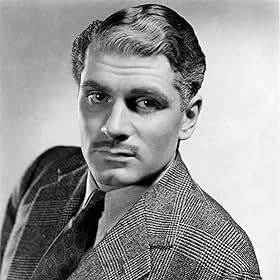
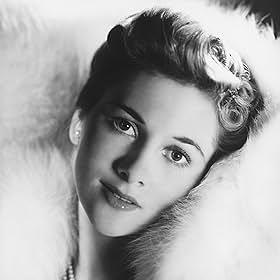


Bunny Beatty
- Maid
- (non crédité)

Billy Bevan
- Policeman
- (non crédité)
Résumé
Reviewers say 'Rebecca' is acclaimed for its atmospheric storytelling and psychological tension, showcasing Alfred Hitchcock's masterful direction. The film's haunting ambiance, complex characters, and enigmatic Rebecca are highlighted. Key themes include identity, memory, and the struggle of the second Mrs. de Winter. Performances by Joan Fontaine, Laurence Olivier, and Judith Anderson are praised. Cinematography and set design enhance the gothic suspense. Some find the plot uneven and the ending less satisfying, but it remains a significant work in Hitchcock's career.
Avis à la une
This fine classic combines a great director, a great story, and a great cast. Any one of those would have made for a good movie, but all three make it an excellent one. Hitchcock's style and eye for detail combine very well with a story (from a novel that is extremely good in its own right) filled with psychological fear and settings that are interesting and suggestive.
Most of the time the story itself moves fairly slowly, allowing the focus to be on the characters, but there are also a couple of very good plot twists, which can be very surprising if you've not seen the movie or read the novel. So if you happen not to know the story, it's a good idea to see the film before reading a lot of comments about it. Laurence Olivier, Joan Fontaine, Judith Anderson, and George Sanders are all perfectly cast and do a wonderful job bringing their characters to life, and making you feel a part of the story.
"Rebecca" should be satisfying not only to any Hitchcock fan, but to anyone who likes classic movies. Whether you like romance, suspense, or drama, they're all here, and put together by a director and cast that are masters of their art.
Most of the time the story itself moves fairly slowly, allowing the focus to be on the characters, but there are also a couple of very good plot twists, which can be very surprising if you've not seen the movie or read the novel. So if you happen not to know the story, it's a good idea to see the film before reading a lot of comments about it. Laurence Olivier, Joan Fontaine, Judith Anderson, and George Sanders are all perfectly cast and do a wonderful job bringing their characters to life, and making you feel a part of the story.
"Rebecca" should be satisfying not only to any Hitchcock fan, but to anyone who likes classic movies. Whether you like romance, suspense, or drama, they're all here, and put together by a director and cast that are masters of their art.
Hitchcock felt 'Rebecca', his first Hollywood film, was a compromise, but as a viewer I just can't fault it. It's a masterpiece in my opinion, full of suspense, mystery and brooding atmosphere. It's also one of the most romantic movies I've ever seen. I've watched it several times over the years, and even now that I know all the plot twists and turns (quite shocking on your first viewing), it never fails to hook me in. One of the reasons it really works is the flawless casting. I'm not much of an Olivier fan but he's superb as de Winter, with just the right mixture of charm and coldness. And Joan Fontaine is just perfect as de Winter's new bride. I can't spot an unconvincing moment in her performance and can't imagine any other actress in the role. Hitchcock subsequently used her in 'Suspicion' with Cary Grant. She was also excellent in that but 'Rebecca' is a much stronger movie. The supporting cast also includes some brilliant performances, especially Judith Anderson ('Laura') as the extremely creepy Mrs. Danvers, George Sanders who plays Rebecca's slimy cousin, and Nigel Bruce in a typical role as de Winter's bumbling brother-in-law Major Lacy. Sanders subsequently worked again with Hitchcock in 'Foreign Correspondent', and Bruce played Cary Grant's lovable pal "Beaky" in 'Suspicion'. I sometimes think that Hitchcock's 1940s movies are overlooked by many because they are regarded as being too "old fashioned", but for me movies like 'Suspicion', 'Saboteur', 'Lifeboat' and 'Spellbound' are some of the most entertaining movies Hitchcock ever made, and 'Rebecca' is the best of the lot. If you want to be totally enthralled for two hours just watch 'Rebecca'!
I spent the majority of this film thinking about how lucky M. Olivier really was. To be able to wrap his arms around Joan Fontaine and kiss her. Oh my. She's one of the most beautiful women I've ever seen (almost, but not quite as beautiful as Veronica Lake). She's also absolutely perfect in the role of the second Mrs. DeWinter, taking a character that could have become a cloying bore in less capable hands and transforming her into a sympathetic and interesting figure.
The movie, on the whole, is similarly amazing, capturing the spirit and the tone of those great Gothic romances. Watching Rebecca, I was reminded (pleasantly) of Wuthering Heights; I do not mean to suggest that in some way this film re-tells the tale of Cathy and Heathcliff, but rather that Rebecca has the feel of Bronte's novel (I am most certainly not talking about the William Wyler adaptation a few years before the release of Rebecca. That's a terrible film that somehow manages to mis-interpret the novel).
I must assume that the guiding hand of Hitchcock played no small role in recreating the feel of a Gothic romance. There are very few that would be able to take a love story, infuse it with such gloom, with such a sense of foreboding, and still manage to create something that ends happily without it feeling like a cop-out. I'd also like to draw everyone's attention to the incredibly moving section of the film that occurs between the arrival of the second Mrs. DeWinter at Mandalay and the masqued ball. The emotional strain on the Joan Fontaine character is so palpable, so absolutely taxing, that it actually pains me to watch. I hurt along with her. Few other movies affect me so emotionally - one of them is Vertigo.
All in all, this is a fantastic piece of film-making from Hollywood's golden age. Laurence Olivier is in top-form, as he plays the quiet, sad Maxim and George Sanders is positively hateful.
10/10 - a visceral masterpiece
The movie, on the whole, is similarly amazing, capturing the spirit and the tone of those great Gothic romances. Watching Rebecca, I was reminded (pleasantly) of Wuthering Heights; I do not mean to suggest that in some way this film re-tells the tale of Cathy and Heathcliff, but rather that Rebecca has the feel of Bronte's novel (I am most certainly not talking about the William Wyler adaptation a few years before the release of Rebecca. That's a terrible film that somehow manages to mis-interpret the novel).
I must assume that the guiding hand of Hitchcock played no small role in recreating the feel of a Gothic romance. There are very few that would be able to take a love story, infuse it with such gloom, with such a sense of foreboding, and still manage to create something that ends happily without it feeling like a cop-out. I'd also like to draw everyone's attention to the incredibly moving section of the film that occurs between the arrival of the second Mrs. DeWinter at Mandalay and the masqued ball. The emotional strain on the Joan Fontaine character is so palpable, so absolutely taxing, that it actually pains me to watch. I hurt along with her. Few other movies affect me so emotionally - one of them is Vertigo.
All in all, this is a fantastic piece of film-making from Hollywood's golden age. Laurence Olivier is in top-form, as he plays the quiet, sad Maxim and George Sanders is positively hateful.
10/10 - a visceral masterpiece
The only Alfred Hitchcock (Oscar-nominated for directing) film to win the Best Picture Oscar, "Rebecca" is one of those typical films from the amazing director that chills, entertains and puts you on the edge of your seat each time you watch it. Joan Fontaine (Oscar-nominated) has just married the very wealthy Laurence Olivier (also Oscar-nominated), but she is haunted by his mysterious housekeeper (a show-stopping Oscar-nominated performance by Judith Anderson) and the memory of the film's titled character (Olivier's late wife). Hitchcock, noted for his subtle sexual under-tones in films spares none of that here as Anderson's character and the late titled character's relationship seemed to go much further than employee-employer. Anderson slowly tries to drive Fontaine to insanity and the end she may accomplish her devious goal. Hitchcock's first real major U.S. debut stunned the Academy and audiences alike and would lead to the coveted Best Picture Oscar. It is not the best film the legendary director ever worked on, but it is still an amazingly good production that works on many cinematic levels. 4.5 out of 5 stars.
Director Alfred Hitchcock is renowned for his visual acuity, creating some of the most memorable shots in movie history; he also had a keen eye for beauty, casting some of Hollywood's most stunning actresses in iconic roles: Grace Kelly in Rear Window, Maureen O'Hara in Jamaica Inn, Tippi Hedren in The Birds, Ingrid Bergman in Spellbound, and Janet Leigh in Psycho, to name but a few. Perhaps his most enchanting leading lady was Joan Fontaine, who won an Oscar for her role in Suspicion (1941), but who was never more appealing than in her first film for Hitch, Rebecca, based on a novel by Daphne Du Maurier.
The gorgeous Fontaine plays a meek young woman (we never discover her name, but she's not the 'Rebecca' of the title) who falls for rich aristocrat 'Maxim' de Winter (Laurence Olivier) while working in the South of France. Equally besotted, Maxim proposes to the self-effacing beauty, and takes her back to his ancestral home, Manderley, which he once shared with his first wife Rebecca, before she drowned in a boating accident. The new Mrs. de Winter does her best to adapt to her new lifestyle, but is constantly under the shadow of her predecessor, with stern housekeeper Mrs. Danvers (Judith Anderson) being particularly disapproving of Maxim's new bride, deliberately driving a wedge between the married couple and even going so far as to try and talk Mrs. de Winter Mk. II into killing herself.
Thus far, the film is pure melodrama and sappy romance, and avid Hitchcock fans might be wondering where the murder and mystery is; worry, not, for this comes in the second half of the film and provides plenty of intrigue and suspense as Maxim reveals what really happened to his first wife and is subsequently suspected of her murder. Both his wife and the viewer are aware of his innocence, but with Rebecca's lover Jack Favell (George Sanders) accusing Mr. de Winter of murder, and plenty of damning evidence, things are looking pretty bad for the poor fellow. It all wraps up nicely in the end, of course, but there are plenty of tense moments along the way, all handled in the director's typically assured manner, with bags of atmosphere and sumptuous cinematography.
But as great as the direction and story are, it is the performances that really make Rebecca a winner: Olivier is perfect as the troubled toff, Anderson is wonderfully wicked as scheming housekeeper Danvers, nobody does 'bumbling oaf' quite as well as Nigel Bruce (playing Major Giles Lacy, who puts his foot in his mouth whenever he speaks), Sanders is suitably slimy as adulterous blackmailer Favell, and Fontaine... well, she is completely captivating, every smile, every tilt of her head, and every nervous glance guaranteed to win over the viewer (she was nominated for Best Actress in a Leading Role at the Oscars, but lost to Ginger Rogers). Hell, even the dog that played Maxim's mutt Jasper was excellent (so cute!).
The gorgeous Fontaine plays a meek young woman (we never discover her name, but she's not the 'Rebecca' of the title) who falls for rich aristocrat 'Maxim' de Winter (Laurence Olivier) while working in the South of France. Equally besotted, Maxim proposes to the self-effacing beauty, and takes her back to his ancestral home, Manderley, which he once shared with his first wife Rebecca, before she drowned in a boating accident. The new Mrs. de Winter does her best to adapt to her new lifestyle, but is constantly under the shadow of her predecessor, with stern housekeeper Mrs. Danvers (Judith Anderson) being particularly disapproving of Maxim's new bride, deliberately driving a wedge between the married couple and even going so far as to try and talk Mrs. de Winter Mk. II into killing herself.
Thus far, the film is pure melodrama and sappy romance, and avid Hitchcock fans might be wondering where the murder and mystery is; worry, not, for this comes in the second half of the film and provides plenty of intrigue and suspense as Maxim reveals what really happened to his first wife and is subsequently suspected of her murder. Both his wife and the viewer are aware of his innocence, but with Rebecca's lover Jack Favell (George Sanders) accusing Mr. de Winter of murder, and plenty of damning evidence, things are looking pretty bad for the poor fellow. It all wraps up nicely in the end, of course, but there are plenty of tense moments along the way, all handled in the director's typically assured manner, with bags of atmosphere and sumptuous cinematography.
But as great as the direction and story are, it is the performances that really make Rebecca a winner: Olivier is perfect as the troubled toff, Anderson is wonderfully wicked as scheming housekeeper Danvers, nobody does 'bumbling oaf' quite as well as Nigel Bruce (playing Major Giles Lacy, who puts his foot in his mouth whenever he speaks), Sanders is suitably slimy as adulterous blackmailer Favell, and Fontaine... well, she is completely captivating, every smile, every tilt of her head, and every nervous glance guaranteed to win over the viewer (she was nominated for Best Actress in a Leading Role at the Oscars, but lost to Ginger Rogers). Hell, even the dog that played Maxim's mutt Jasper was excellent (so cute!).
Oscars Best Picture Winners, Ranked
Oscars Best Picture Winners, Ranked
See the complete list of Oscars Best Picture winners, ranked by IMDb ratings.




Le saviez-vous
- AnecdotesOver 20 actresses were screen-tested for the role of Mrs. de Winter, which eventually went to newcomer Joan Fontaine. One of them was Vivien Leigh, for whom Sir Laurence Olivier was pressing, as they were a couple at the time.
- GaffesThe large map on the courtroom wall is a map of the Americas. It is grossly implausible that such a map would be on the wall of an English courtroom.
- Citations
[the new Mrs. de Winter wants to dispose of Rebecca's letters]
The Second Mrs. de Winter: I want you to get rid of all these things.
Mrs. Danvers: But these are Mrs. de Winter's things.
The Second Mrs. de Winter: *I* am Mrs. de Winter now!
- Crédits fousThe original 1940 credits read "Selznick International presents its picturization of Daphne Du Maurier's 'Rebecca'". The credits on the re-issue version read "The Selznick Studio presents its production of Daphne Du Maurier's 'Rebecca'".
- Versions alternativesThe opening credits were re-done (with different font) for the 1950's re-release of the movie. It is these credits that have turned up on all telecasts of the film (even as recently as 2013) and all previous video releases. The Criterion release (which is now only available through outlet stores) restores all of the credits to their original form.
- ConnexionsEdited into The Last Tycoon: Pilot (2016)
- Bandes originalesLove's Old Sweet Song (Just a Song at Twilight)
(1884) (uncredited)
Music by J.L. Molloy
Hummed by Joan Fontaine
Meilleurs choix
Connectez-vous pour évaluer et suivre la liste de favoris afin de recevoir des recommandations personnalisées
Détails
Box-office
- Budget
- 1 288 000 $US (estimé)
- Montant brut mondial
- 114 106 $US
- Durée
- 2h 10min(130 min)
- Couleur
- Rapport de forme
- 1.37 : 1
Contribuer à cette page
Suggérer une modification ou ajouter du contenu manquant