NOTE IMDb
7,3/10
45 k
MA NOTE

![Regarder Trailer[OV]](https://m.media-amazon.com/images/M/MV5BNGY2ZmE1ZWUtMGVlMS00ZTJhLTkyNjgtMDM1NDRlMmFkZTI0XkEyXkFqcGdeQXRyYW5zY29kZS13b3JrZmxvdw@@._V1_QL75_UX1000_CR0,87,1000,563_.jpg)
Une jeune héritière timide épouse un charmant gentleman et commence bientôt à soupçonner qu'il a l'intention de l'assassiner.Une jeune héritière timide épouse un charmant gentleman et commence bientôt à soupçonner qu'il a l'intention de l'assassiner.Une jeune héritière timide épouse un charmant gentleman et commence bientôt à soupçonner qu'il a l'intention de l'assassiner.
- Réalisation
- Scénario
- Casting principal
- Récompensé par 1 Oscar
- 7 victoires et 2 nominations au total


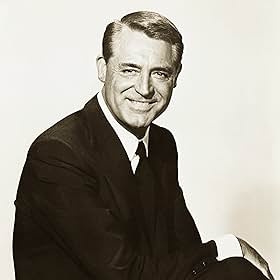
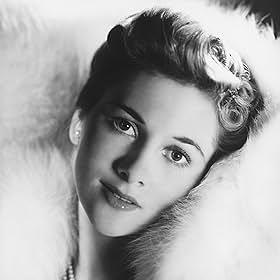

Cedric Hardwicke
- General McLaidlaw
- (as Sir Cedric Hardwicke)


May Whitty
- Mrs. McLaidlaw
- (as Dame May Whitty)


Billy Bevan
- Ticket Taker
- (non crédité)

Faith Brook
- Alice Barham
- (non crédité)
Violet Campbell
- Mrs. Barham
- (non crédité)

Leonard Carey
- Burton
- (non crédité)

David Clyde
- Trunk Man
- (non crédité)

Clyde Cook
- Photographer
- (non crédité)

Alec Craig
- Hogarth Club Desk Clerk
- (non crédité)

Carol Curtis-Brown
- Jessie Barham
- (non crédité)
Avis à la une
While in many respects one of Hitchcock's lesser films, "Suspicion" has some good performances and a degree of suspense that is as sustained as in any of his films. The movie gets quite a lot out of a relatively simple plot.
Joan Fontaine gives an excellent performance as Lina, a quiet young woman who finds herself swept away by, and suddenly married to, the charming but irresponsible Johnnie, played by Cary Grant. Not long afterwards, she begins to question his behavior and his intentions, and soon she is terribly afraid, both of what he might have done and of what he might do. Whenever she manages to overcome one of her fears, no sooner does she do so than her husband gives her a new reason for suspicion. There really isn't much more to it than that, but Hitchcock gets a lot out of this basic premise. The tension keeps building, and Fontaine's performance allows the viewer to feel all of her fear and anxiety. Not everyone likes the way that it all ends, but it is worth seeing and deciding for yourself what you think about it.
The rest of the cast have mostly limited roles, but give good performances that add to the portrayal of the main characters. Especially good is Nigel Bruce, who provides a few lighter moments as one of Johnnie's old cronies.
While lacking the complexity and excitement of Hitchcock's best pictures, "Suspicion" is still a good example of his ability to keep the audience in lasting suspense. Most Hitchcock fans will want to see it.
Joan Fontaine gives an excellent performance as Lina, a quiet young woman who finds herself swept away by, and suddenly married to, the charming but irresponsible Johnnie, played by Cary Grant. Not long afterwards, she begins to question his behavior and his intentions, and soon she is terribly afraid, both of what he might have done and of what he might do. Whenever she manages to overcome one of her fears, no sooner does she do so than her husband gives her a new reason for suspicion. There really isn't much more to it than that, but Hitchcock gets a lot out of this basic premise. The tension keeps building, and Fontaine's performance allows the viewer to feel all of her fear and anxiety. Not everyone likes the way that it all ends, but it is worth seeing and deciding for yourself what you think about it.
The rest of the cast have mostly limited roles, but give good performances that add to the portrayal of the main characters. Especially good is Nigel Bruce, who provides a few lighter moments as one of Johnnie's old cronies.
While lacking the complexity and excitement of Hitchcock's best pictures, "Suspicion" is still a good example of his ability to keep the audience in lasting suspense. Most Hitchcock fans will want to see it.
I'm surprised so many people are disappointed with this movie. It doesn't seem to me more unreal than any other Hitchcock film. As always, the highlights are those moments when we get a glimpse of someone doubting what someone else is saying. This movie specializes in such moments and, inasmuch as doubt is Hitchcock's stock in trade, I can't find anything wrong with SUSPICION. It's playful, scary and, yes, escapist. Hitchcock never made a realistic movie, and I thank him for it.
The strangest of coincidences haunt newly-wed Joan Fontaine (Oscar-winning) in this sleight of hand from Alfred Hitchcock. She starts to believe that husband Cary Grant may be too good to be true. It appears that he may be a heartless murderer who may be targeting her as his next victim. Hitchcock, the undisputed master of suspense, does not let the audience off easy here. The film's twists and turns will keep you glued until the stunning final act. Not without flaws, but still another winner from Hitchcock. 4.5 out of 5 stars.
I watched this film last night, not knowing what to expect. Hitchcock is my favourite director, yet Suspicion is not treated among his best work. My conclusion from watching the film is that it is very good, but it is not perfect, and not Hitchcock's best. What let it down? Well, a lot of reviews have said so already, but the ending. For me it was abrupt and felt tacked on and somewhat implausible. Then again, StageFright and the Birds both had somewhat abrupt endings. And I know it isn't the fastest paced of his movies, but Torn Curtain's pacing was disappointingly pedestrian. However, Suspicion has a lot to recommend it. The acting is uniformly excellent, with Cary Grant charming and sometimes chilling as the man suspected of trying to murder his wife, and Joan Fontaine, looking gorgeous as ever even better as Lina giving a performance of edge and vulnerability. Out of the supporting performances, Nigel Bruce is simply terrific as Beaky, Leo G Caroll while in a brief role is memorable as the Captain and Cedric Hardwicke who played Frollo in the 1939 film The Hunchback of Notre Dame so memorably is great as the General. The direction is superb, tense when it needs to be and gentle in others and also filled with the fashionable touches that make his very best films great. The film is shot in a very sumptuous visual style, with beautiful black and white cinematography and lovely costumes and sets. The score from Franz Waxman is simply marvellous; the scoring in the scene when Lina writes the letter is enough to give you goosebumps. All in all, not Hitchock's best, but very good all the same. 9/10 Bethany Cox
That could have been Cary Grant's most chilling line in his long career.
*SPOILERS*
Except RKO didn't have the courage of its convictions. Having bought the rights to Francis Iles' novel, and despite Hitchcock's insistence on sticking with the original ending, neither preview audiences nor the studio were ready to accept Cary Grant as a murderer. So its present ending was hastily written and shot. It completely subverts all the fine work that's gone before.
Joan Fontaine was a brilliant actress and valiantly, passionately, breathlessly tries to make the shockingly amateurish dialogue in the final scene work -- "Oh, Johnny! You were going to kill yourself instead of me, like the audience and I have thought for the last 90 minutes! Oh, Johnny! It's as much my fault as it is yours! Oh, Johnny! I was only thinking of myself . . . ," etc.
Cary Grant does his best with this final abomination of a climax. "Lina! Lina! How much can one man bear! When you and the audience thought I was in Paris murdering Beaky I was really in Liverpool!" Etc.
Huh?
In other words, this beautifully produced, directed, acted and written psychological suspense thriller turns out to be about a charming lazy n'er-do-well who's sponged and embezzled his way through life, who marries a beautiful but neurotic aristocrat who, from day one, increasingly assumes the worst about her husband -- convincing herself (and us) that he's killed before and now is about to kill her?
"Just kidding," the tacked-on final scene says. "It was all innocent. You eating popcorn out there in the dark, and Lina, should be ashamed for even THINKING such things! Go home now."
It helps, out of self defense, to watch "Suspicion" with the original ending in mind. Yes, the milk is poisoned. Yes Johnny killed Beaky in Paris. Yes, he's a psychopath who lies, cheats, steals and kills. Yes, Lina believed him and loved him deeply -- the only man she's ever loved. Yes, her life is no longer worth living, now that she knows the truth about Johnny. Yes, she rightly suspects that milk is poisoned. So she writes a letter to her mother, telling the truth about Johnny's exploits, and that he is poisoning her as she writes -- and that she intends to die. She seals the letter and gives it to Johnny to mail. She drinks the milk. Johnny leaves and unknowingly drops Lina's letter into a mailbox, thus sealing his fate.
THAT'S a rewarding ending.
It also makes everything that's gone before (including writing, directing, performances and cinematography) plausible. It gives "Suspicion" a reason to exist.
But that's the novel's ending.
The film's "Lina and the audience are just paranoid" ending makes fools out of all the talent on display here. And of us.
Hold mentally to the original ending and you'll love it.
*SPOILERS*
Except RKO didn't have the courage of its convictions. Having bought the rights to Francis Iles' novel, and despite Hitchcock's insistence on sticking with the original ending, neither preview audiences nor the studio were ready to accept Cary Grant as a murderer. So its present ending was hastily written and shot. It completely subverts all the fine work that's gone before.
Joan Fontaine was a brilliant actress and valiantly, passionately, breathlessly tries to make the shockingly amateurish dialogue in the final scene work -- "Oh, Johnny! You were going to kill yourself instead of me, like the audience and I have thought for the last 90 minutes! Oh, Johnny! It's as much my fault as it is yours! Oh, Johnny! I was only thinking of myself . . . ," etc.
Cary Grant does his best with this final abomination of a climax. "Lina! Lina! How much can one man bear! When you and the audience thought I was in Paris murdering Beaky I was really in Liverpool!" Etc.
Huh?
In other words, this beautifully produced, directed, acted and written psychological suspense thriller turns out to be about a charming lazy n'er-do-well who's sponged and embezzled his way through life, who marries a beautiful but neurotic aristocrat who, from day one, increasingly assumes the worst about her husband -- convincing herself (and us) that he's killed before and now is about to kill her?
"Just kidding," the tacked-on final scene says. "It was all innocent. You eating popcorn out there in the dark, and Lina, should be ashamed for even THINKING such things! Go home now."
It helps, out of self defense, to watch "Suspicion" with the original ending in mind. Yes, the milk is poisoned. Yes Johnny killed Beaky in Paris. Yes, he's a psychopath who lies, cheats, steals and kills. Yes, Lina believed him and loved him deeply -- the only man she's ever loved. Yes, her life is no longer worth living, now that she knows the truth about Johnny. Yes, she rightly suspects that milk is poisoned. So she writes a letter to her mother, telling the truth about Johnny's exploits, and that he is poisoning her as she writes -- and that she intends to die. She seals the letter and gives it to Johnny to mail. She drinks the milk. Johnny leaves and unknowingly drops Lina's letter into a mailbox, thus sealing his fate.
THAT'S a rewarding ending.
It also makes everything that's gone before (including writing, directing, performances and cinematography) plausible. It gives "Suspicion" a reason to exist.
But that's the novel's ending.
The film's "Lina and the audience are just paranoid" ending makes fools out of all the talent on display here. And of us.
Hold mentally to the original ending and you'll love it.


Le saviez-vous
- AnecdotesIn interviews, Sir Alfred Hitchcock said that an RKO executive ordered that all scenes in which Cary Grant appeared menacing be excised from the movie. When the cutting was completed, the movie ran only fifty-five minutes. The scenes were later restored, Hitchcock said, because he shot each piece of film so that there was only one way to edit them together properly. This is a technique called 'in-camera editing', a trick Hitchcock had already employed a year before during filming of Rebecca (1940), to prevent producer David O. Selznick from interfering with the final cut of the movie.
- GaffesAlthough Johnnie admits to Lina, after taking an extremely expensive house, that he is broke, they continue to live there, employ servants, and run a very expensive car. No explanation is made of how they can afford this. The job Johnnie later gets, in an estate manager's office, would pay only a small part of these running costs.
- Versions alternativesA colorized version of the film was produced. It has been available on VHS (Turner Home Entertainment) in NTSC format for a while. A dual black & white/colorized Region-2 DVD version has been released in 2003 by Universal in PAL format.
- ConnexionsEdited into Les cadavres ne portent pas de costard (1982)
- Bandes originalesWiener Blut, op. 354 (Viennese Blood)
(1871) (uncredited)
Written by Johann Strauss
Arranged by Roy Webb
Meilleurs choix
Connectez-vous pour évaluer et suivre la liste de favoris afin de recevoir des recommandations personnalisées
Détails
- Date de sortie
- Pays d’origine
- Langue
- Aussi connu sous le nom de
- La sospecha
- Lieux de tournage
- Big Sur, Californie, États-Unis("Tangmere-by-the-sea" coast sea-cliff scenes)
- Société de production
- Voir plus de crédits d'entreprise sur IMDbPro
Box-office
- Budget
- 1 103 000 $US (estimé)
- Montant brut mondial
- 19 $US
- Durée
- 1h 39min(99 min)
- Couleur
- Rapport de forme
- 1.37 : 1
Contribuer à cette page
Suggérer une modification ou ajouter du contenu manquant