NOTE IMDb
6,5/10
1,8 k
MA NOTE

Ajouter une intrigue dans votre langueA wife neglected by her husband, a medical researcher in China, falls in love with a dashing diplomatic attaché.A wife neglected by her husband, a medical researcher in China, falls in love with a dashing diplomatic attaché.A wife neglected by her husband, a medical researcher in China, falls in love with a dashing diplomatic attaché.
- Réalisation
- Scénario
- Casting principal
- Récompenses
- 2 victoires au total


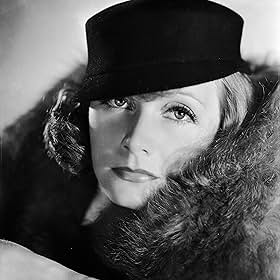


Robert Adair
- Polo Player
- (scènes coupées)
Mariska Aldrich
- German Teacher
- (scènes coupées)
Maidena Armstrong
- German
- (scènes coupées)

Billy Bevan
- Bridegroom
- (scènes coupées)

Beulah Bondi
- Frau Koerber
- (scènes coupées)

W.H. Davis
- German
- (scènes coupées)

Vernon Dent
- Chief of Police
- (scènes coupées)
Avis à la une
This film has some rather fantastic elements about it, mainly that Greta Garbo would be playing a spinster, and that having several suitors - as her mother claims that she has - she would hastily accept a marriage proposal from someone for whom she has absolutely no passion. In this case it is Herbert Marshall playing both an unloved husband and a devoted medical researcher into the cause and prevention of cholera. The other fantastic element is trying to believe that there is any chemistry between Garbo and "the other man, George Brent. Brent - who was so wonderful with Kay Francis, Bette Davis, and Ruth Chatterton - is here no more attractive than the husband he is trying to supplant. He has all the chemistry of a cardboard box.
The best part of the film is once Marshall realizes he has been cuckolded and makes an ultimatum to his faithless wife. He has just learned of a raging cholera epidemic in inland China and must go there and try to get it under control. His wife can stay behind if Brent's character agrees to get a divorce, in which case she can also have one. If he does not agree to this, then Garbo must come along with him on his expedition and thus be exposed to the most extreme danger.
This was one of Garbo's first films after the production code came into effect earlier in 1934. There were so many limits put on what could be said and shown and even insinuated that it really put a damper on what was supposed to be a pretty torrid love triangle. Trying to perform in a moral straight jacket is probably what really cost this film its potential edge. I'd recommend this for Garbo completists only.
The best part of the film is once Marshall realizes he has been cuckolded and makes an ultimatum to his faithless wife. He has just learned of a raging cholera epidemic in inland China and must go there and try to get it under control. His wife can stay behind if Brent's character agrees to get a divorce, in which case she can also have one. If he does not agree to this, then Garbo must come along with him on his expedition and thus be exposed to the most extreme danger.
This was one of Garbo's first films after the production code came into effect earlier in 1934. There were so many limits put on what could be said and shown and even insinuated that it really put a damper on what was supposed to be a pretty torrid love triangle. Trying to perform in a moral straight jacket is probably what really cost this film its potential edge. I'd recommend this for Garbo completists only.
The future looked a little uncertain for Greta Garbo in 1934. Under pressure from the rampant, crackpot Catholic League of Decency whose members were boycotting movie theatres and declaring 'purify or destroy Hollywood', the usually malleable Joseph Breen was obliged to make even stricter the Production Code. 'Mata Hari' was cut and 'Queen Christina' taken out of circulation whilst this adaptation of Somerset Maugham's 'The Painted Veil' needed to tone down its so-called sexual content and instead reflect moral values.
These factors alone cannot entirely explain why this film disappoints. Garbo's scenes with Herbert Marshall are excellent and there is a chemistry between her and George Brent owing to their relationship at the time being more than just professional. It just lacks that 'alchemy' by which everything comes together and falls below director Richard Boleslawski's usual high standards.
Garbo need not have worried as David 0. Selznick was soon to come to her aid. Whatever its flaws and despite being the least faithful to Maugham's original it remains, for this viewer at any rate, the most entertaining of the three versions. 'The Seventh Sin' of Ronald Neame and an uncredited Vincente Minnelli is rather lacklustre whilst it is probably kinder to draw a discreet veil over the most recent version directed by someone named John Curran.
These factors alone cannot entirely explain why this film disappoints. Garbo's scenes with Herbert Marshall are excellent and there is a chemistry between her and George Brent owing to their relationship at the time being more than just professional. It just lacks that 'alchemy' by which everything comes together and falls below director Richard Boleslawski's usual high standards.
Garbo need not have worried as David 0. Selznick was soon to come to her aid. Whatever its flaws and despite being the least faithful to Maugham's original it remains, for this viewer at any rate, the most entertaining of the three versions. 'The Seventh Sin' of Ronald Neame and an uncredited Vincente Minnelli is rather lacklustre whilst it is probably kinder to draw a discreet veil over the most recent version directed by someone named John Curran.
This movie is imperfect, but I love it anyway.
Its imperfections:
The soundstage China of 1933's "Bitter Tea of General Yen" leaves the soundstage China of 1934's "Painted Veil" in the dust. "Yen's" China draws you in and intoxicates you. "Painted Veil's" China is fun, but it's a bit silly and superficial. A San Francisco Chinatown Chinese New Year's parade would be more profound.
George Brent is at his worst here. I've never seen him do anything quite like what he does here -- a fly-by-night and exploitative romancer who toys with women's hearts.
Brent wasn't great looking, but he was very good at playing the grounded, reliable foil to electric characters like Bette Davis' Judith Traherne in "Dark Victory."
Here, as Townsend, while speaking serious words, Brent adopts a silly smile, and -- literally -- renounces everything he says in the very next sentence. Maybe a much better looking, or more conventionally handsome, actor could have made this character charming in a snake-like, dangerous way (Erroll Flynn?) but Brent didn't really have the equipment to make Townsend as charming to the audience as he might have been to a neglected wife in China.
Garbo plays a near spinster who watches her younger sister marry, and, on the rebound, marries a man she doesn't love out of desperation.
How on earth could anyone make sense of *Garbo* as a desperate spinster? The movie doesn't even try to make sense of that. It just asks us to believe it. The viewer has to try to make up reasons for her spinster status. (Her parents kept her locked in a closet the first thirty or so years of her life? She had a horrible facial deformaty that suddenly fell off?)
BUT!
I still love this movie.
I love it for the moment when Herbert Marshall says, with the kind of real passion you expect of a contemporary production of a Eugene O'Neill play, that he despises himself for loving Garbo, after she has cuckolded him.
It's great to see Marshall, who so often played helpless men ill used by women ("The Letter," "Duel in the Sun," "The Little Foxes"), here finally able to effectively express his bitterness at being so ill used, and take some action in response, even if that action is intended to be fatal.
I love it for the complications that arise in the final portion. Hearts are changed. Suffering and human sacrifice changes them. Love is born of the kind of big events that sometimes do change people, and life stories, in real life.
This ending, though not in compliance with Maughm's novel, didn't strike me as a "Hollywood" "happy" ending at all. It struck me as a profound ending. It reminded me of a more recent film, Bertolucci's "Besieged," that also talks about the role of altruism in love and eroticism.
For those features, I deeply value this movie, in spite of its superficial imperfections.
Its imperfections:
The soundstage China of 1933's "Bitter Tea of General Yen" leaves the soundstage China of 1934's "Painted Veil" in the dust. "Yen's" China draws you in and intoxicates you. "Painted Veil's" China is fun, but it's a bit silly and superficial. A San Francisco Chinatown Chinese New Year's parade would be more profound.
George Brent is at his worst here. I've never seen him do anything quite like what he does here -- a fly-by-night and exploitative romancer who toys with women's hearts.
Brent wasn't great looking, but he was very good at playing the grounded, reliable foil to electric characters like Bette Davis' Judith Traherne in "Dark Victory."
Here, as Townsend, while speaking serious words, Brent adopts a silly smile, and -- literally -- renounces everything he says in the very next sentence. Maybe a much better looking, or more conventionally handsome, actor could have made this character charming in a snake-like, dangerous way (Erroll Flynn?) but Brent didn't really have the equipment to make Townsend as charming to the audience as he might have been to a neglected wife in China.
Garbo plays a near spinster who watches her younger sister marry, and, on the rebound, marries a man she doesn't love out of desperation.
How on earth could anyone make sense of *Garbo* as a desperate spinster? The movie doesn't even try to make sense of that. It just asks us to believe it. The viewer has to try to make up reasons for her spinster status. (Her parents kept her locked in a closet the first thirty or so years of her life? She had a horrible facial deformaty that suddenly fell off?)
BUT!
I still love this movie.
I love it for the moment when Herbert Marshall says, with the kind of real passion you expect of a contemporary production of a Eugene O'Neill play, that he despises himself for loving Garbo, after she has cuckolded him.
It's great to see Marshall, who so often played helpless men ill used by women ("The Letter," "Duel in the Sun," "The Little Foxes"), here finally able to effectively express his bitterness at being so ill used, and take some action in response, even if that action is intended to be fatal.
I love it for the complications that arise in the final portion. Hearts are changed. Suffering and human sacrifice changes them. Love is born of the kind of big events that sometimes do change people, and life stories, in real life.
This ending, though not in compliance with Maughm's novel, didn't strike me as a "Hollywood" "happy" ending at all. It struck me as a profound ending. It reminded me of a more recent film, Bertolucci's "Besieged," that also talks about the role of altruism in love and eroticism.
For those features, I deeply value this movie, in spite of its superficial imperfections.
When I watched THE PAINTED VEIL, I thought that a remake should be made. Because the story has so much potential which couldn't have been explored sans restrictions in a movie made in the 1930s. Oddly enough, when I watched this film (early spring of 2006), it was announced that a remake of THE PAINTED VEIL was in the works and it's starring Naomi Watts in the role of Katrin. Well, after hearing this bit of news, I guess a good remake has yet to be made because casting Watts in the role played by Garbo is, well, ludicrous.
The best thing about the Garbo version of THE PAINTED VEIL is Garbo herself. She outshines the whole movie. Remove her from the film and, frankly, there's no reason to watch it. Garbo plays a very difficult role and pulls it off successfully. She beautifully underplays her role, which could have easily been fodder for scenery chewing if played by other actresses of that era. Watts has big shoes to fill.
The worst part of this version are two male co-stars, who aside from being almost indistinguishable from each other, are dull. It's hard to believe any woman would be interested in either of them, character or look-wise. And the production values, though good, aren't the most effective. Even though the budget was supposedly high for that time, there's a cheap, rushed feel to it (it was shot in two months!). No location film-making in China here. Another problem is the script which is obviously a truncated version of the W. Somerset Maugham novel. Something tells me big parts of the book were left out and the story in the film looks half complete. But the basis of this odd romance is still there and I find it fascinating. It's sorta like an anti-romance romantic story, or a reversed romantic story, which I've rarely seen before and having Garbo in this was perfect casting, because of she was such an unconventional star.
I rate the movie a 5 but because of Garbo, I give it a 7.
(P.S.: I finally read the book and did not like it at all. The Garbo film is an actual improvement)
The best thing about the Garbo version of THE PAINTED VEIL is Garbo herself. She outshines the whole movie. Remove her from the film and, frankly, there's no reason to watch it. Garbo plays a very difficult role and pulls it off successfully. She beautifully underplays her role, which could have easily been fodder for scenery chewing if played by other actresses of that era. Watts has big shoes to fill.
The worst part of this version are two male co-stars, who aside from being almost indistinguishable from each other, are dull. It's hard to believe any woman would be interested in either of them, character or look-wise. And the production values, though good, aren't the most effective. Even though the budget was supposedly high for that time, there's a cheap, rushed feel to it (it was shot in two months!). No location film-making in China here. Another problem is the script which is obviously a truncated version of the W. Somerset Maugham novel. Something tells me big parts of the book were left out and the story in the film looks half complete. But the basis of this odd romance is still there and I find it fascinating. It's sorta like an anti-romance romantic story, or a reversed romantic story, which I've rarely seen before and having Garbo in this was perfect casting, because of she was such an unconventional star.
I rate the movie a 5 but because of Garbo, I give it a 7.
(P.S.: I finally read the book and did not like it at all. The Garbo film is an actual improvement)
Greta Garbo stars with Herbert Marshall, George Brent, Warner Oland, and Jean Hersholt in "The Painted Veil," from 1934, based on the novel by Somerset Maugham. Garbo plays an Austrian woman, Katrin, who grabs at the chance to marry her father's research assistant, Walter Fane (Marshall) after her sister marries and leaves home. At first, they are happy, as Katrin gets to see parts of the world she hasn't seen. Soon, however, she becomes lonely, as Walter is busy fighting a cholera epidemic.
Katrin falls for Jack Townsend (George Brent) from the British embassy, and the two enter into a passionate affair. Walter finds out; then Katrin is humiliated when she realizes that Jack cares more for his reputation than her and does not seem willing to get a divorce. Walter insists that she travel with him as he goes deeper into China to fight the epidemic; she realizes he just wants her to get sick and die.
Garbo is incredible in this film - warm, sweet, and flirtatious in the beginning, and rising to the dramatic challenges later, she gives a beautifully layered, sympathetic, and powerful performance. Marshall is very good, as is the rest of the cast - but Garbo just walks away with the whole thing. A very unusual presence and talent, very passionate and committed. It's such a shame that she didn't pursue opportunities for films in Europe after the war.
Also, the Chinese atmosphere (totally MGM backlot) feels very authentic.
This film ends differently from the 2006 version. Though I liked the 2006 version, it lacks the magic of this one. Magic, spelled G-a-r-b-o.
Katrin falls for Jack Townsend (George Brent) from the British embassy, and the two enter into a passionate affair. Walter finds out; then Katrin is humiliated when she realizes that Jack cares more for his reputation than her and does not seem willing to get a divorce. Walter insists that she travel with him as he goes deeper into China to fight the epidemic; she realizes he just wants her to get sick and die.
Garbo is incredible in this film - warm, sweet, and flirtatious in the beginning, and rising to the dramatic challenges later, she gives a beautifully layered, sympathetic, and powerful performance. Marshall is very good, as is the rest of the cast - but Garbo just walks away with the whole thing. A very unusual presence and talent, very passionate and committed. It's such a shame that she didn't pursue opportunities for films in Europe after the war.
Also, the Chinese atmosphere (totally MGM backlot) feels very authentic.
This film ends differently from the 2006 version. Though I liked the 2006 version, it lacks the magic of this one. Magic, spelled G-a-r-b-o.


Le saviez-vous
- AnecdotesLa reine Christine (1933) and Le Voile des illusions (1934) were both huge hits in Europe (making twice their budget in the UK alone), but were underwhelming US successes.
- GaffesA box is marked "Scotch Whiskey", which is the American spelling of whiskey. In the United Kingdom, however, it is spelled with no 'e' and is simply "whisky". Therefore, had the whisk(e)y been imported directly from Scotland, it should have had the 'whisky' spelling.
- Citations
Katrin Koerber Fane: [after Townsend impulsively kisses Katrin] How could you?
Jack Townsend: I could.
- Crédits fousGreta Garbo's name in the opening credits uses a font that forms the same Gothic arch in the letters as is used in W. Somerset Maugham's symbol. The other credits also use this to a lesser extent.
- ConnexionsFeatured in La terre chinoise (1937)
- Bandes originalesBridal Chorus (Here Comes the Bride)
(1850) (uncredited)
from "Lohengrin"
Written by Richard Wagner
Played as background music in the wedding scene
Meilleurs choix
Connectez-vous pour évaluer et suivre la liste de favoris afin de recevoir des recommandations personnalisées
- How long is The Painted Veil?Alimenté par Alexa
Détails
- Date de sortie
- Pays d’origine
- Langues
- Aussi connu sous le nom de
- The Painted Veil
- Lieux de tournage
- Chine(background shots)
- Société de production
- Voir plus de crédits d'entreprise sur IMDbPro
Box-office
- Budget
- 947 000 $US (estimé)
- Durée
- 1h 25min(85 min)
- Couleur
- Rapport de forme
- 1.37 : 1
Contribuer à cette page
Suggérer une modification ou ajouter du contenu manquant