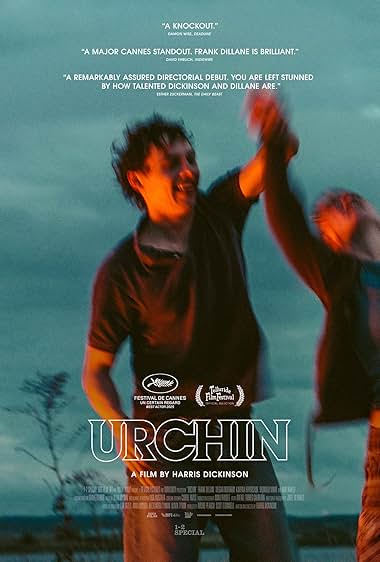

Ein junger Süchtiger, der auf Londons Straßen lebt, bekommt eine Chance zur Erlösung, doch sein Weg zur Genesung verwandelt sich schnell in eine seltsame Odyssee, aus der er möglicherweise n... Alles lesenEin junger Süchtiger, der auf Londons Straßen lebt, bekommt eine Chance zur Erlösung, doch sein Weg zur Genesung verwandelt sich schnell in eine seltsame Odyssee, aus der er möglicherweise nie entkommt.Ein junger Süchtiger, der auf Londons Straßen lebt, bekommt eine Chance zur Erlösung, doch sein Weg zur Genesung verwandelt sich schnell in eine seltsame Odyssee, aus der er möglicherweise nie entkommt.
- Regisseur/-in
- Autor/-in
- Stars
- Auszeichnungen
- 5 Gewinne & 24 Nominierungen insgesamt


Buckso Dhillon-Woolley
- Nadia
- (as Buckso Dhillon)


Empfohlene Bewertungen
It is difficult to care about Mike, the main character, since he screws over people who are kind and good to him. Whether he is mentally ill, just plain evil, or just a narcissist without a moral compass, he doesn't learn from his mistakes. And so there isn't an arc.
However, it is a realistic portrayal of a person lost and maybe not worth finding. Maybe everyone can't be saved in this lifetime. That is an important verity that most people would not like to face. They don't want to know that there are people who keep screwing up their lives. They want to have hope that everyone can be a viable human who is not a parasite, but pays the price.
In the old days, harmful non-contributors to the good of the tribe would have been cast off and have to make their way alone in the wilderness. They wouldn't last long. But Mike is turned out into the streets, where he remains a pitiful menace.
However, it is a realistic portrayal of a person lost and maybe not worth finding. Maybe everyone can't be saved in this lifetime. That is an important verity that most people would not like to face. They don't want to know that there are people who keep screwing up their lives. They want to have hope that everyone can be a viable human who is not a parasite, but pays the price.
In the old days, harmful non-contributors to the good of the tribe would have been cast off and have to make their way alone in the wilderness. They wouldn't last long. But Mike is turned out into the streets, where he remains a pitiful menace.
While Urchin doesn't have the most wonderful and unique writing on the subject about homelessness and addiction, Harris Dickinson's debut direction and approach to the atmosphere was promising, and reflecting a good solid light and coherence to filmmaking.
Dickinson offers some good concepts and moments about the characters journey going through the troubles and struggles. Including with some good colorful presentation, production, and tone. The themes about society, drug use, and the social class issues are explored solidly throughout. Which made some of the emotional and hitting moments successful. Frank Dillane's performance as the main lead is powerful and strong, as you feel Dillane's personality and his character being the most interesting aspect about this movie. Alongside with the other performances being good.
However, on the writing, the writing does have it's fault. It's clear with what themes and concepts Dickinson is exploring which does work, but at certain moments, it doesn't feel powerful as Dickinson hoped for. As there are moments the concepts and themes feel thin, predictable, and at times, messy. Despite an interesting main lead, unfortunately, the other characters didn't have a strong sense of realism, and at times, some of the side character felt unrealistic, and plot devices used to keep the film going forward. Which made certain dialogue choices and pacing moments feel off.
The usage of music is good, the camerawork is solid, and there are some decent sound designs. Overall, it is clear Dickinson has a good start to a directing debut. However, personally, a tighter approach and script could make this movie more powerful.
Dickinson offers some good concepts and moments about the characters journey going through the troubles and struggles. Including with some good colorful presentation, production, and tone. The themes about society, drug use, and the social class issues are explored solidly throughout. Which made some of the emotional and hitting moments successful. Frank Dillane's performance as the main lead is powerful and strong, as you feel Dillane's personality and his character being the most interesting aspect about this movie. Alongside with the other performances being good.
However, on the writing, the writing does have it's fault. It's clear with what themes and concepts Dickinson is exploring which does work, but at certain moments, it doesn't feel powerful as Dickinson hoped for. As there are moments the concepts and themes feel thin, predictable, and at times, messy. Despite an interesting main lead, unfortunately, the other characters didn't have a strong sense of realism, and at times, some of the side character felt unrealistic, and plot devices used to keep the film going forward. Which made certain dialogue choices and pacing moments feel off.
The usage of music is good, the camerawork is solid, and there are some decent sound designs. Overall, it is clear Dickinson has a good start to a directing debut. However, personally, a tighter approach and script could make this movie more powerful.
Urchin, which appears to be the directorial debut of Harris Dickinson, is an independent drama that delivers a surprisingly grounded and touching story despite its low-budget presentation. The film follows Mike, a young man struggling with drug addiction and homelessness, as he navigates the harsh realities of life on the streets. While the premise may sound familiar, Dickinson handles the narrative with sensitivity, presenting Mike's struggles without resorting to over-the-top dramatization or sensationalism. Instead, the story focuses on the character's internal journey and the people he encounters along the way, keeping viewers engaged and invested throughout.
One of the strongest aspects of Urchin is its realism. The film portrays homelessness and addiction in a way that feels authentic, capturing the day-to-day challenges, dangers, and emotional weight without turning the story into a bleak spectacle. Mike's experiences are raw and human, from his moments of despair to the small victories that keep him going. This makes the film emotionally resonant and allows the audience to empathize deeply with his struggles. The cinematography and direction support this intimacy, often staying close to the character to ensure viewers feel his isolation and vulnerability.
The performances are equally noteworthy. The actor portraying Mike delivers a nuanced and committed performance, making the character's journey believable and heartfelt. Harris Dickinson also appears in a cameo, which adds a subtle layer of personal involvement to the project. The supporting cast provides solid contributions, though the film remains centered on Mike's story, which is wise given the narrative's focus on character study rather than plot-driven action.
It's important to note that the film contains significant nudity, particularly of the main character, which may catch some viewers off guard. Scenes depicting nudity, including brief masturbation, are presented in a matter-of-fact and artistic manner rather than for shock value. This choice may feel unusual for a mainstream audience, but it aligns with the film's commitment to realism, portraying Mike's vulnerability and humanity in an unfiltered way.
The pacing of Urchin is deliberate, allowing moments to breathe and giving the audience time to understand the depth of the protagonist's situation. While this approach can feel slow at times, it is a purposeful choice that emphasizes reflection over sensationalism. The narrative gradually builds toward moments of hope and connection, keeping viewers invested in Mike's journey without relying on typical dramatic shortcuts.
Overall, Urchin is a compelling, low-budget independent drama that excels in character work and realism. Harris Dickinson's direction shows promise, effectively capturing the struggles of homelessness and addiction while maintaining a humanistic lens. Despite its slow pacing and explicit content, the film is watchable, engaging, and emotionally resonant. It is a solid debut that demonstrates Dickinson's potential as both a director and storyteller, providing a raw and intimate look into a life that is rarely portrayed on screen with such honesty.
One of the strongest aspects of Urchin is its realism. The film portrays homelessness and addiction in a way that feels authentic, capturing the day-to-day challenges, dangers, and emotional weight without turning the story into a bleak spectacle. Mike's experiences are raw and human, from his moments of despair to the small victories that keep him going. This makes the film emotionally resonant and allows the audience to empathize deeply with his struggles. The cinematography and direction support this intimacy, often staying close to the character to ensure viewers feel his isolation and vulnerability.
The performances are equally noteworthy. The actor portraying Mike delivers a nuanced and committed performance, making the character's journey believable and heartfelt. Harris Dickinson also appears in a cameo, which adds a subtle layer of personal involvement to the project. The supporting cast provides solid contributions, though the film remains centered on Mike's story, which is wise given the narrative's focus on character study rather than plot-driven action.
It's important to note that the film contains significant nudity, particularly of the main character, which may catch some viewers off guard. Scenes depicting nudity, including brief masturbation, are presented in a matter-of-fact and artistic manner rather than for shock value. This choice may feel unusual for a mainstream audience, but it aligns with the film's commitment to realism, portraying Mike's vulnerability and humanity in an unfiltered way.
The pacing of Urchin is deliberate, allowing moments to breathe and giving the audience time to understand the depth of the protagonist's situation. While this approach can feel slow at times, it is a purposeful choice that emphasizes reflection over sensationalism. The narrative gradually builds toward moments of hope and connection, keeping viewers invested in Mike's journey without relying on typical dramatic shortcuts.
Overall, Urchin is a compelling, low-budget independent drama that excels in character work and realism. Harris Dickinson's direction shows promise, effectively capturing the struggles of homelessness and addiction while maintaining a humanistic lens. Despite its slow pacing and explicit content, the film is watchable, engaging, and emotionally resonant. It is a solid debut that demonstrates Dickinson's potential as both a director and storyteller, providing a raw and intimate look into a life that is rarely portrayed on screen with such honesty.
Frank Dillane's raw performance gives this film a punch of realness, as if you're truly watching someone's life unfold before you. Mike's reactions towards his own ups and downs make you simultaneously sympathetic and frustrated towards him.
On that note, the same thing can be said for Harris Dickinson's direction. Perhaps this being his debut film as a director, he was overjoyed to incorporate a lot of elements into this; yet personally, when the ending credits rolled, I didn't feel the coherence as there's always some kind of duality in the presentation of this film. Is this a surrealist or a slice-of-life? Did Dickinson want his film to be a social commentary on how the government fails society, particularly the vulnerable group, by not giving them the full protection and support system that is essential to the rehabilitation process, or did he want to say that a piece of trash will always be a piece of trash?
The overall tone is just uneven for me. Nevertheless, I'll surely tune in to whatever Harris Dickinson cooks in the future.
On that note, the same thing can be said for Harris Dickinson's direction. Perhaps this being his debut film as a director, he was overjoyed to incorporate a lot of elements into this; yet personally, when the ending credits rolled, I didn't feel the coherence as there's always some kind of duality in the presentation of this film. Is this a surrealist or a slice-of-life? Did Dickinson want his film to be a social commentary on how the government fails society, particularly the vulnerable group, by not giving them the full protection and support system that is essential to the rehabilitation process, or did he want to say that a piece of trash will always be a piece of trash?
The overall tone is just uneven for me. Nevertheless, I'll surely tune in to whatever Harris Dickinson cooks in the future.
This is the first film that I'd been in and heard about four people exclaim "F**k" when the first of the credits appeared on the black screen.
The mix of the effects of addiction and being stuck in a loop were somewhat depressing.
But, the story of Mike's life probably echoes real life for many people living with the same experiences.
The most moving scene for me was the restorative justice meeting when the whole of Mike's life appears on his face for a couple of seconds and you almost feel everything that he's been through.
Some of the metaphorical scenes seem a little out there so Im looking forward to hearing some suggestions from Messrs Kermode and Mayo.
A film that documents the current times but not an uplifting watch.
The mix of the effects of addiction and being stuck in a loop were somewhat depressing.
But, the story of Mike's life probably echoes real life for many people living with the same experiences.
The most moving scene for me was the restorative justice meeting when the whole of Mike's life appears on his face for a couple of seconds and you almost feel everything that he's been through.
Some of the metaphorical scenes seem a little out there so Im looking forward to hearing some suggestions from Messrs Kermode and Mayo.
A film that documents the current times but not an uplifting watch.
Wusstest du schon
- WissenswertesHarris Dickinson's role in the film was an unplanned, late addition when the originally cast actor dropped out, leading him to step in at the last minute at Frank Dillane's suggestion.
- SoundtracksWhole Again
Written by Bill Padley, Stuart Kershaw, Andy McCluskey and Jem Godfrey
Performed by Atomic Kitten
Top-Auswahl
Melde dich zum Bewerten an und greife auf die Watchlist für personalisierte Empfehlungen zu.
Details
Box Office
- Bruttoertrag in den USA und Kanada
- 204.534 $
- Eröffnungswochenende in den USA und in Kanada
- 43.425 $
- 12. Okt. 2025
- Weltweiter Bruttoertrag
- 692.895 $
- Laufzeit
- 1 Std. 40 Min.(100 min)
- Farbe
Zu dieser Seite beitragen
Bearbeitung vorschlagen oder fehlenden Inhalt hinzufügen