

Ein Jahr im Leben einer Familie während der Trennung der Eltern. Durch intime Einblicke und seltsame Ereignisse zeigt der Film die Komplexität von Familie, Liebe und gemeinsamen Erinnerungen... Alles lesenEin Jahr im Leben einer Familie während der Trennung der Eltern. Durch intime Einblicke und seltsame Ereignisse zeigt der Film die Komplexität von Familie, Liebe und gemeinsamen Erinnerungen.Ein Jahr im Leben einer Familie während der Trennung der Eltern. Durch intime Einblicke und seltsame Ereignisse zeigt der Film die Komplexität von Familie, Liebe und gemeinsamen Erinnerungen.
- Regisseur/-in
- Autor/-in
- Stars
- Auszeichnungen
- 6 Gewinne & 5 Nominierungen insgesamt


Empfohlene Bewertungen
Divorce can have a very strange effect on a family, both for the separating partners and for anyone in their household, especially children. The rules of engagement are in flux, with some events feeling uncannily familiar and others being radically different. There may also be instances of unintended but undeniable backsliding, making circumstances messy, uncomfortable and confusing. Navigating the shifting sands of these conditions can thus be challenging, baffling and upsetting for everyone and in myriad ways. So, given these fluctuating parameters, how is everyone supposed to cope with these unfamiliar scenarios? That's the turf that writer-director Hlynur Pálmason seeks to explore in his fourth - and perhaps most unusual -- feature offering, a series of diverse vignettes that unfold over the course of a year after parents Anna (Saga Garðarsdóttir) and Magnús (Sverrir Gudnason) divorce and seek to build new lives for themselves and their three children. But are they as ready for this kind of change as they think they are? How will it impact their work lives (Anna as a would-be but long-unsuccessful artist and Magnús as an often-absent deep sea fisherman), their relationships with the kids and their interactions with one another, both emotionally and with regard to lingering and obviously conflicted physical temptations? However, in telling their story, the filmmaker frequently seems almost as perplexed as his characters, as evidenced by an uneven, meandering narrative that seldom results in resolution of the various scenarios that arise. This becomes especially apparent in a number of bizarre surreal sequences that seem almost always out of place and do more to bewilder the audience than provide any sort of meaningful clarity. In the meantime, the director struggles to cover these shortcomings by routinely falling back on the inclusion of an array of admittedly gorgeous but largely inexplicable nature photography segments that look like they've been culled from a "Visit Iceland" travelogue, along with numerous shots from Magnús's working life that appear as though they've been excerpted from Chamber of Commerce industrial films. Whatever the filmmaker was going for here, though, it feels like he's often reaching for something that he never quite grasps, making for a visually appealing but ultimately muddled watch for viewers. Pálmason is a genuinely gifted auteur, but, regrettably, this is not one of his better efforts. Invest your time in works like "A White, White Day" ("Hvítur, hvítur dagur") (2019) or "Godland" ("Vanskabte Land"/"Volada Land") (2022) instead.
Love That Remains tries so hard to be "high cinema" that it completely forgets about the audience. Almost the entire film is children talking about sexuality, mixed with endless imagery of eggs and cryptic metaphors. But why? Why does cinema have to make everything so difficult, so coded, as if we need a guidebook just to follow along?
For me, cinema should speak to everyone, not just a tiny circle of people who enjoy deciphering symbols. The obsession with turning simple ideas into abstract puzzles strips away any emotional connection. Instead of storytelling, what we get here is pretension - a film that mistakes confusion for depth.
Watching it after Godland made the contrast unbearable. Godland was layered yet clear, poetic yet human. Love That Remains, on the other hand, felt like the director was showing off, pushing "art" for its own sake. The result is alienating, not engaging.
Cinema should not be an exercise in frustration. It should move, challenge, and inspire - without forcing the audience to leave the theater shaking their heads.
For me, cinema should speak to everyone, not just a tiny circle of people who enjoy deciphering symbols. The obsession with turning simple ideas into abstract puzzles strips away any emotional connection. Instead of storytelling, what we get here is pretension - a film that mistakes confusion for depth.
Watching it after Godland made the contrast unbearable. Godland was layered yet clear, poetic yet human. Love That Remains, on the other hand, felt like the director was showing off, pushing "art" for its own sake. The result is alienating, not engaging.
Cinema should not be an exercise in frustration. It should move, challenge, and inspire - without forcing the audience to leave the theater shaking their heads.
For the first 20 minutes or so, this film seems set to a thorouhly likeable but rather ordinary film about a nice couple (with nice kids) trying stay friends after a divorce. But then the strange things starts. I really don't want to tell you what they are, you really need to experience it yourself. Suffice to say that this film becomes magical, funny, scary, wise, sad, strange, funny again, and still it's the whole time about this ordinary couple and their wonderful kids, not to mention their dog and an assortment of other animals. A wonderful film, just go see it.
Saw this at the Ghent 2025 filmfestival. In the first half I wondered where all this was heading. I went along with the flow of family and work life. Family life was not annoyingly happy nor were we forced to witness hefty scenes that are bound to happen anytime while a divorce runs it uneasy course. Everyone was nice. The kids were likable too, as the mother admitted, even when noisy.
Instead of the usual cozy and less cozy human interactions, we saw strange and inexplicable things clouding the proceedings, up to a point where I really started wondering what it was all about. Digging a hole in the ground, erecting a pole and attaching all sorts of objects to it?? Shooting arrows at it, eventually hitting one of the kids?? Had all this a point?? Maybe illustrative, but the mother was really on edge in the hospital, calling for and in fact loudly demanding a real doctor. Was it an explosion after keeping up appearances that there was nothing out of the ordinary going on??
Divorces have been filmed before, many times even. I can imagine that it is difficult to find a novel approach to the topic. But it should not go that far that it alienates the audience. Having read several reviews, I am about to start asking myself what I missed. But I don't continue that path, only to conclude that I want to forget all about this movie and don't look back.
All in all, a misfire. Finally, a single positive point: The role of the dog Panda is indeed remarkable. It is sad to conclude that this (the dog) is the only memorable aspect of this movie. Some reviewers point to the shots of the island and nature on it, but for that purpose we have other movies and here it is only a by-product.
Instead of the usual cozy and less cozy human interactions, we saw strange and inexplicable things clouding the proceedings, up to a point where I really started wondering what it was all about. Digging a hole in the ground, erecting a pole and attaching all sorts of objects to it?? Shooting arrows at it, eventually hitting one of the kids?? Had all this a point?? Maybe illustrative, but the mother was really on edge in the hospital, calling for and in fact loudly demanding a real doctor. Was it an explosion after keeping up appearances that there was nothing out of the ordinary going on??
Divorces have been filmed before, many times even. I can imagine that it is difficult to find a novel approach to the topic. But it should not go that far that it alienates the audience. Having read several reviews, I am about to start asking myself what I missed. But I don't continue that path, only to conclude that I want to forget all about this movie and don't look back.
All in all, a misfire. Finally, a single positive point: The role of the dog Panda is indeed remarkable. It is sad to conclude that this (the dog) is the only memorable aspect of this movie. Some reviewers point to the shots of the island and nature on it, but for that purpose we have other movies and here it is only a by-product.
In some of my recent reviews of Norwegian films I mentioned the boom of Norwegian cinema we are experiencing at the moment. The same can be said about Icelandic cinema. In the 2010's an Icelandic film was still a white raven, but in the 2020's I have seen an Icelandic film almost every year.
Director Hlynur Palmason has made some noteworthy movies in the past, such as "A white, white day" (2019) and "Godland" (2022). "The love that remains" is however an entirely different movie. It feels like a collage of home made videos and reading an interview with him after seeing the movie this turns out to be not far from the truth.
The director is also cinematographer.
The children in the film are his own children.
Last but not least some shots are taken during the years and are fit into the script only later.
"The love that remains" is a film about a divorce, but it is very different from for example "Kramer vs. Kramer" (1979, Robert Benton), the film that comes first to my mind with respect to the "divorce" subject.
The divorce in "Kramer vs. Kramer" is a contested divorce. In "The love that remains" the ex spouses are still on speaking terms (as the title already indicates).
It becomes clear that the initiative of the divorce lies with the woman. She felt that the marriage had become a rut and that she and her husband had grown apart. The man has still not given up the hope on a reunification.
After seeing the movie you realise that there is some system in the "home made videos" inserted into the movie. A couple of them portray processes of erosion, symbolizing the rut that has krept into the marriage.
In "Kramer vs Kramer" the child is just an object whose custody the parents are fighting over. In "The love that remains" the children are subjects with different opinions about the relationship of their parents. The biggest disagreement is whether it would be a good thing if their parents not only continued talking to each other but also still had sex.
Director Hlynur Palmason has made some noteworthy movies in the past, such as "A white, white day" (2019) and "Godland" (2022). "The love that remains" is however an entirely different movie. It feels like a collage of home made videos and reading an interview with him after seeing the movie this turns out to be not far from the truth.
The director is also cinematographer.
The children in the film are his own children.
Last but not least some shots are taken during the years and are fit into the script only later.
"The love that remains" is a film about a divorce, but it is very different from for example "Kramer vs. Kramer" (1979, Robert Benton), the film that comes first to my mind with respect to the "divorce" subject.
The divorce in "Kramer vs. Kramer" is a contested divorce. In "The love that remains" the ex spouses are still on speaking terms (as the title already indicates).
It becomes clear that the initiative of the divorce lies with the woman. She felt that the marriage had become a rut and that she and her husband had grown apart. The man has still not given up the hope on a reunification.
After seeing the movie you realise that there is some system in the "home made videos" inserted into the movie. A couple of them portray processes of erosion, symbolizing the rut that has krept into the marriage.
In "Kramer vs Kramer" the child is just an object whose custody the parents are fighting over. In "The love that remains" the children are subjects with different opinions about the relationship of their parents. The biggest disagreement is whether it would be a good thing if their parents not only continued talking to each other but also still had sex.



Wusstest du schon
- WissenswertesOfficial submission of Iceland for the 'Best International Feature Film' category of the 98th Academy Awards in 2026.
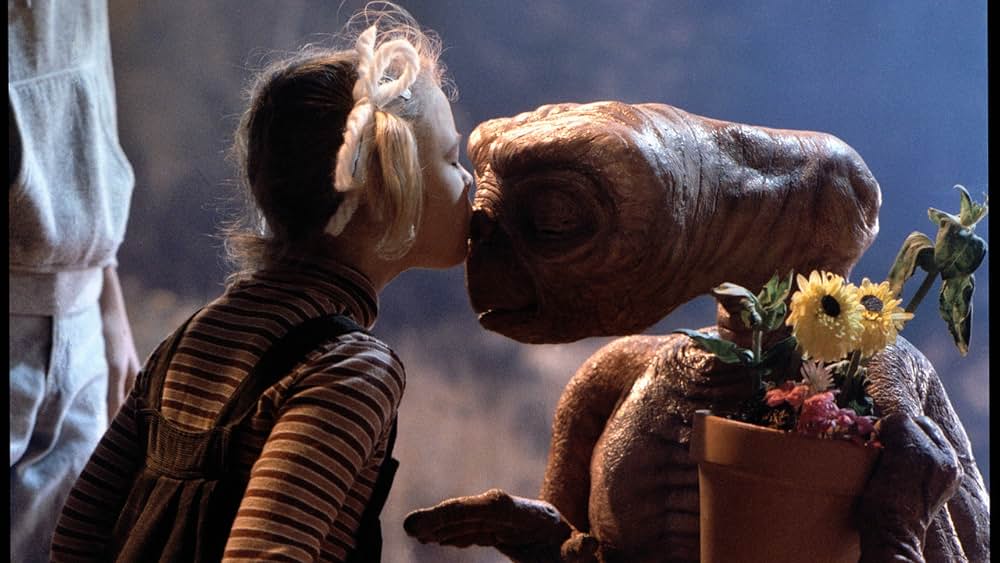
- VerbindungenFeatures Der Schrecken vom Amazonas (1954)
Top-Auswahl
Melde dich zum Bewerten an und greife auf die Watchlist für personalisierte Empfehlungen zu.
The Year in Posters
The Year in Posters
From Hurry Up Tomorrow to Highest 2 Lowest, take a look back at some of our favorite posters of 2025.

Details
Box Office
- Weltweiter Bruttoertrag
- 193.070 $
- Laufzeit
- 1 Std. 49 Min.(109 min)
- Farbe
Zu dieser Seite beitragen
Bearbeitung vorschlagen oder fehlenden Inhalt hinzufügen