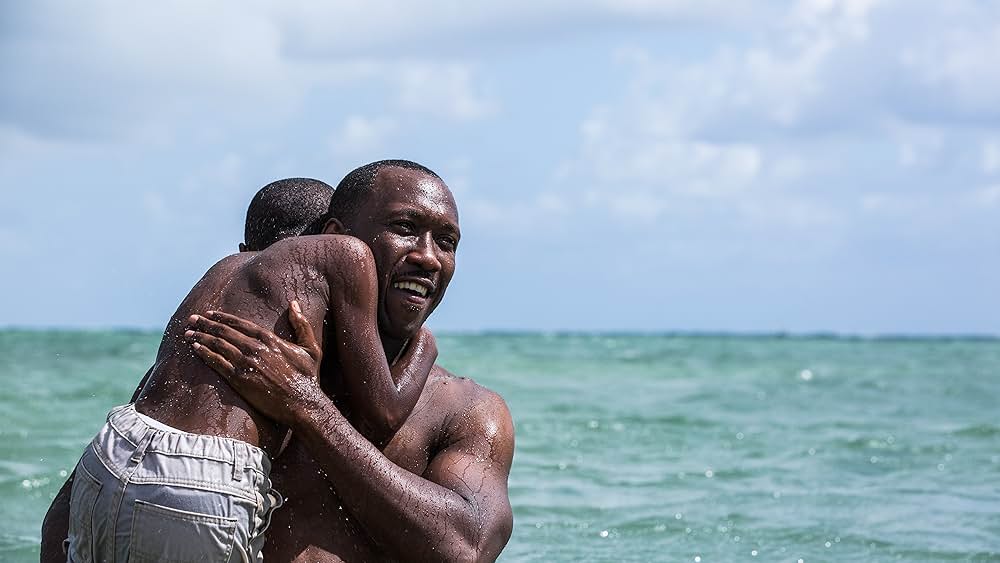
Ein abgelegener Hof bewahrt hundertjährige Geschichten von vier Frauen über Jahrzehnte hinweg. Alma, Erika, Angelika und Nelly verbringen ihre Jugend dort und decken verborgene Ängste, Traum... Alles lesenEin abgelegener Hof bewahrt hundertjährige Geschichten von vier Frauen über Jahrzehnte hinweg. Alma, Erika, Angelika und Nelly verbringen ihre Jugend dort und decken verborgene Ängste, Traumata und Geheimnisse auf.Ein abgelegener Hof bewahrt hundertjährige Geschichten von vier Frauen über Jahrzehnte hinweg. Alma, Erika, Angelika und Nelly verbringen ihre Jugend dort und decken verborgene Ängste, Traumata und Geheimnisse auf.
- Regisseur/-in
- Autoren
- Stars
- Auszeichnungen
- 6 Gewinne & 26 Nominierungen insgesamt
Hanna Heckt
- Alma
- (as Hanna Heck)
Empfohlene Bewertungen
I saw the movie in Cannes. Very unusual and interesting images. Meditative. I fell asleep twice. So it's really good for relaxing.
I missed the last hour though. I left. It was juat. So endlessly repetitive.
I didn't understand what it was all about. But maybe it's more of a movie for women. By women for women. The men are crippled or dead or sex monsters or lying there sick. Pigs grunt. The men grunt like pigs. Most have mustaches.
The women are all suffering somehow but you don't really understand why. Nobody laughs except the kids. A colorless world. Very enigmatic. Like a modern painting but unfortunately without impact.
There is hardly any conflict either. To say something, to have a point of view: how old-fashioned. Nothing more than a few catalog slogans.
It was edited very cryptically, so that it passes for art. I had no idea which era was being shown and who was who and from whom. Really, I had no clue. I think it would be great for a 30-minute video installation.
But as a 2.5 hour movie? Hard to bear.
I missed the last hour though. I left. It was juat. So endlessly repetitive.
I didn't understand what it was all about. But maybe it's more of a movie for women. By women for women. The men are crippled or dead or sex monsters or lying there sick. Pigs grunt. The men grunt like pigs. Most have mustaches.
The women are all suffering somehow but you don't really understand why. Nobody laughs except the kids. A colorless world. Very enigmatic. Like a modern painting but unfortunately without impact.
There is hardly any conflict either. To say something, to have a point of view: how old-fashioned. Nothing more than a few catalog slogans.
It was edited very cryptically, so that it passes for art. I had no idea which era was being shown and who was who and from whom. Really, I had no clue. I think it would be great for a 30-minute video installation.
But as a 2.5 hour movie? Hard to bear.
10wip_lala
In die Sonne schauen is one of the most powerful German films in years. Mascha Schilinski weaves together four decades of women's lives in a nonlinear, dreamlike mosaic where memories, bodies, and experiences merge into something that transcends generations. With breathtaking visuals and extraordinary performances, the film is dark, poetic, and deeply moving. It lingers long after the credits roll.
For some time now, German-language cinema has seen films that could be called "Magical Heimatfilms," in reference to the "Magical Realism" of Latin American literature (with Nobel Prize winners Gabriel Garcia Marquez and Mario Vargas Llosa as its most important representatives). The Heimatfilm (and certainly the mountain film) was once a genuinely German-language genre and extremely popular with cinema audiences, for example, in the 1950s. However, the old Heimatfilms, such as Schwarzwaldmädel (Black Forest Girl) (1950) and Grün ist die Heide (1951), were also considered kitschy and deceitful and have been almost completely forgotten in the decades that followed. Today's "magical Heimatfilms" are characterized by magical elements of the inexplicable, but also by a realism that relentlessly exposes the cruelties and darkness of life in the homeland. Examples of this reorientation of the HEIMATFILM genre include "Some day we will tell each other everything" (BERLINALE 2023: nominated for the Golden Bear) and THE THEORY OF EVERYTHING (VENICE 2023: nominated for the Golden Lion), as well as more accessible works such as MITTAGSSTUNDE (2022) and WAS MAN VON HIER AUS SEHEN KANNN (2022). The recently released film AMRUM (2025) by GOLDEN GLOBE winner Fatih AKIN also fits well into this series.
With SOUND OF FALLING / IN DIE SONNE SCHAUEN by Mascha SCHILINSKI, such a magical Heimatfilm has now also become an award-worthy (Jury Prize) genre entry at the Cannes Film Festival. This alone can be considered a sensational development. But does the film even deserve this honor?
Set on a farm somewhere in the Brandenburg countryside, four stories from four different eras (from the 1910s to the present) are artfully interwoven. The focus is primarily on female characters, whose relationship to one another is unclear. An atmosphere of oppression and sensuality is conjured up through evocative imagery. The audience learns much about the difficult living conditions on the farm and the often cruel entanglements between people. In the 1910s, Low German (Plattdeutsch) was still spoken, and people were cruelly and thoughtlessly mutilated or even posed as dead for family photos. An archaic world, however, that continued even during the Nazi and GDR eras. People suffered horrific accidents or voluntarily took their lives. Interspersed throughout are images of the nearby river and the eels swimming in it, which must have often fed on the watery corpses of history. A cruel world, one that is, however, repeatedly challenged by moments of lust for life and love.
Mascha Schilinski has succeeded in creating a truly remarkable and award-worthy film, one that doesn't aim to tell the audience a coherent story, but rather goes all out to give us, the viewers, a sense of the circumstances from which we have emerged. From Cannes, this film has embarked on a worldwide triumph that will surely bring a few surprises. It's also remarkable, however, that this isn't actually a feature film, but rather a television film from the ZDF editorial team DAS KLEINE FERNSEHSPIEL (THE LITTLE TV PLAY). It was the Cannes Film Festival organizers who first recognized the cinematic potential of this story and brought it to the grand stage on the French Mediterranean. That, too, is remarkable!
With SOUND OF FALLING / IN DIE SONNE SCHAUEN by Mascha SCHILINSKI, such a magical Heimatfilm has now also become an award-worthy (Jury Prize) genre entry at the Cannes Film Festival. This alone can be considered a sensational development. But does the film even deserve this honor?
Set on a farm somewhere in the Brandenburg countryside, four stories from four different eras (from the 1910s to the present) are artfully interwoven. The focus is primarily on female characters, whose relationship to one another is unclear. An atmosphere of oppression and sensuality is conjured up through evocative imagery. The audience learns much about the difficult living conditions on the farm and the often cruel entanglements between people. In the 1910s, Low German (Plattdeutsch) was still spoken, and people were cruelly and thoughtlessly mutilated or even posed as dead for family photos. An archaic world, however, that continued even during the Nazi and GDR eras. People suffered horrific accidents or voluntarily took their lives. Interspersed throughout are images of the nearby river and the eels swimming in it, which must have often fed on the watery corpses of history. A cruel world, one that is, however, repeatedly challenged by moments of lust for life and love.
Mascha Schilinski has succeeded in creating a truly remarkable and award-worthy film, one that doesn't aim to tell the audience a coherent story, but rather goes all out to give us, the viewers, a sense of the circumstances from which we have emerged. From Cannes, this film has embarked on a worldwide triumph that will surely bring a few surprises. It's also remarkable, however, that this isn't actually a feature film, but rather a television film from the ZDF editorial team DAS KLEINE FERNSEHSPIEL (THE LITTLE TV PLAY). It was the Cannes Film Festival organizers who first recognized the cinematic potential of this story and brought it to the grand stage on the French Mediterranean. That, too, is remarkable!
10alexrk2
.. it's not fully understandable, it's not a Heimatfilm and even not a german historical movie at all. It's about the tragedies of female comming of age stories over one century, broken in little pieces, arranged into a huge Hieronymus Bosch-like kaleidoskop picture. The only constant is the narrow space of a four-side yard whereas the same subjects shown from different temporal angles.
That's what only film can do. No other medium.
I had been genuinely looking forward to this film, as the core concept seemed so promising-and a Palme d'Or from Cannes has never let me down over the decades. Until now. This film, however, is unbearably pretentious and painfully slow, packed with hollow assertions that pile up in what feel like endless repetitions. At first, I switched to double speed, hoping for a shift in tone, rhythm, or substance. The next day, I tried starting over. No luck: not a single compelling human interaction in two and a half hours, just intrusive morbidity in every scene.
Then there are those self-important camera movements, paired with ominous soundscapes or abrupt silences, only to dissolve into aimless editing-cuts that seem to lack any forethought about where they're supposed to lead. It might impress some, but to me, it felt amateurish, and repetition only made it worse.
Otherwise, the film fixates obsessively on the body, suicide, mutilation, rural stupor, brickwork, Trabants, men and pigs-all strung together as if they were somehow equivalent. A dash of Tin Drum navel-gazing erotica and a sprinkle of fin-de-siècle Freudian hysteria-is this supposed to be a "female perspective" on things I'm failing to grasp? I sincerely hope not. Thankfully, there were recent films like Toni Erdmann, The Substance, Anatomy of a Fall, ...
It remains a complete mystery to me why this film is so celebrated and showered with awards-though, on closer inspection, the praise seems to hinge on a single phrase repeated ad nauseam: "the intergenerational perpetuation of trauma." Well, I had to write this review just to process the trauma of watching it. :)
Then there are those self-important camera movements, paired with ominous soundscapes or abrupt silences, only to dissolve into aimless editing-cuts that seem to lack any forethought about where they're supposed to lead. It might impress some, but to me, it felt amateurish, and repetition only made it worse.
Otherwise, the film fixates obsessively on the body, suicide, mutilation, rural stupor, brickwork, Trabants, men and pigs-all strung together as if they were somehow equivalent. A dash of Tin Drum navel-gazing erotica and a sprinkle of fin-de-siècle Freudian hysteria-is this supposed to be a "female perspective" on things I'm failing to grasp? I sincerely hope not. Thankfully, there were recent films like Toni Erdmann, The Substance, Anatomy of a Fall, ...
It remains a complete mystery to me why this film is so celebrated and showered with awards-though, on closer inspection, the praise seems to hinge on a single phrase repeated ad nauseam: "the intergenerational perpetuation of trauma." Well, I had to write this review just to process the trauma of watching it. :)
Wusstest du schon
- WissenswertesOfficial submission of Germany for the 'Best International Feature Film' category of the 98th Academy Awards in 2026.
- SoundtracksStranger
Written and performed by Anna Von Hausswolff
Top-Auswahl
Melde dich zum Bewerten an und greife auf die Watchlist für personalisierte Empfehlungen zu.
2025 TIFF Festival Guide
See the current lineup for the 50th Toronto International Film Festival this September.
Details
Box Office
- Weltweiter Bruttoertrag
- 4.140.840 $
- Laufzeit
- 2 Std. 35 Min.(155 min)
- Farbe
- Seitenverhältnis
- 1.37 : 1
Zu dieser Seite beitragen
Bearbeitung vorschlagen oder fehlenden Inhalt hinzufügen