

Ein abscheuliches Verbrechen und seine Folgen werden aus unterschiedlichen Perspektiven erinnert.Ein abscheuliches Verbrechen und seine Folgen werden aus unterschiedlichen Perspektiven erinnert.Ein abscheuliches Verbrechen und seine Folgen werden aus unterschiedlichen Perspektiven erinnert.
- Regisseur/-in
- Autoren
- Stars
- Für 1 Oscar nominiert
- 9 Gewinne & 5 Nominierungen insgesamt


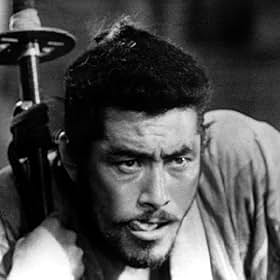


Zusammenfassung
Reviewers say 'Rashomon' delves into the nature of truth and reality through multiple conflicting perspectives of a crime. Characters like the bandit, wife, samurai, and woodcutter offer varied accounts, showcasing subjective truth and human perception's unreliability. The film challenges viewers to question truth and personal biases' impact on storytelling. Its innovative narrative and cinematography highlight human nature's complexity and the struggle to find objective truth, receiving both acclaim and critique for its profound themes and structure.
Empfohlene Bewertungen
It's hard to tell just how striking "Rashômon" might have seemed to those who watched it in 1950, rather than seeing it after so many subsequent movies and other works have made use of its techniques and ideas. But it's clear that it is a technical and creative success. The story itself is not particularly satisfying, which was most likely by design, and the movie is carried by its structure and by the concept of the markedly different perspectives on the same series of events. The cast also deserve their share of credit for how well it works, and the photography is excellent, as it is in almost all of Kurosawa's films.
Kurosawa's expertise makes the interwoven sequences of past and present - essentially telling two different stories - not only work flawlessly, but fit together thematically. It's even more commendable when compared to some of the subsequent films that have tried to use similar ideas, only to come off as pretentious rather than creative or innovative. Kurosawa was also working with much less in terms of possible precedents.
In one sense, the choice of specific story material could seem a little odd.
The downbeat, rather sordid scenario makes the movie somewhat less enjoyable than several of Kurosawa's other pictures (which is, admittedly, a pretty high standard), and as a result "Rashômon" is more a film to respect and admire than one to enjoy and take pleasure from. Still, it does have significantly more substance to it than do most of the more recent pictures that have been deliberately downbeat or negative in their portrayals of humanity. Such stories are more trendy at present, and they often receive undue praise simply for so being.
At the same time, the lack of sympathetic characters and the paucity of hopeful developments bring out all the more its success in developing its ideas about narrative and about reality, ideas that are more fundamental and, in their way, perhaps at least as important as any specific story or events.
Kurosawa's expertise makes the interwoven sequences of past and present - essentially telling two different stories - not only work flawlessly, but fit together thematically. It's even more commendable when compared to some of the subsequent films that have tried to use similar ideas, only to come off as pretentious rather than creative or innovative. Kurosawa was also working with much less in terms of possible precedents.
In one sense, the choice of specific story material could seem a little odd.
The downbeat, rather sordid scenario makes the movie somewhat less enjoyable than several of Kurosawa's other pictures (which is, admittedly, a pretty high standard), and as a result "Rashômon" is more a film to respect and admire than one to enjoy and take pleasure from. Still, it does have significantly more substance to it than do most of the more recent pictures that have been deliberately downbeat or negative in their portrayals of humanity. Such stories are more trendy at present, and they often receive undue praise simply for so being.
At the same time, the lack of sympathetic characters and the paucity of hopeful developments bring out all the more its success in developing its ideas about narrative and about reality, ideas that are more fundamental and, in their way, perhaps at least as important as any specific story or events.
I cannot believe how incredibly stupid most people are. Most people seem to think that Rashomon was designed to show the difference in people's perceptions of an event. WRONG! This was obviously not even intended. The point of Rashomon is to show how people CANNOT ADMIT THEIR MISTAKES. We will do anything to deny the truth from themselves because the truth is too painful for most to bear. Rashomon's genius is in presenting this theme; sadly, most people are unable to grasp it (or maybe they don't want to...)
Kurosawa's magic film is a composite of 2 Japanese short stories by Ryunosuke Akutagawa: One, "Rashomon," the title tells of a confrontation of a young man at Rashomon, the large, fortified gate at one entrance to Kyoto where people would abandon children and corpses; the other, yabu no naka ni, "In a Grove," tells of the confrontation between the bandit, the samurai and his wife, told from the point of view of the woodcutter. In 1950, Kurosawa weaves this tale of human vanity and duplicity with the young Toshiro Mifune, as the bandit, Machiko Kyo as the lady and Masayuki Mori as the samurai. The tale unfolds through the flashbacks in the narration of the great Takashi Shimura as the woodcutter, supported by character actors Minoru Chiaki as the monk and Kichijiro Ueda as the bum. Basically, with a cast of six and the stark settings of a woods and a dilapidated castle gate in pouring rain, Kurosawa the magician gives us four views of human vanity, excessive pride and cultural conflict. The foibles of human needs are exposed but redeemed in the final scene where the basic act of kindness brings closure to the bizarre display of greed, lust and mendacity that has gone before. For a Kurosawa film, this one is short, to the point with an economy of emoting-- for which Mifune was never accused of under doing and the viewer is left somewhat exhausted by all the twists and turns, confused by the mix of contradictions and seeming paradox, but satisfied with a feeling of hope.
'People forget the unpleasant things. They only remember what they want to remember.'
In Rashomon the editing tells ½ of the story. It may feel experimental or unconventional, but Kurosawa perfects the concept second by second, directing and editing. This film didn't need a big budget to come perfectly to the point. It's a simple tale, but not a superficial tale. Different points of view and selective memories ('It's true! I saw it!') don't only make the woods unsafe, but are one of the most universal topics of humanity. 'We humans are weak creatures. That's why we lie, even to ourselves' says it all actually: it's about what people want to hear and when they start being interested at all, apart from wishful thinking. Selfish excuses vs trust in other people.
Rashomon gets masterful when in one instant there is literally a different point of view: the camera takes another position to shoot the same sequence, thereby forcing the audience to reconsider what they just saw. That is the sort of storytelling that the supposed masters of cinema in our time yet have to equal, or try to copy when they fail. Admitted 'Memento' (2000, Nolan) is a truly great one. Still not THAT universal. 'Pulp Fiction' (1994) didn't come close, 'La Commare Secca' (1962) also didn't. 'Ghost dog: the way of the samurai' (1999) touched another border of the concept, or does it?
The use of (non-original) music in my opinion reveals a certain interest for western influence, not only in Rashomon, but also in Kurosawa's forthcoming films, and is probably why his films were so influential on western filmmakers too.
The cinematography is dynamic and changes scene by scene to emphasize exactly what is going on. The shadows of leaves and branches, captured by cinematographer Kazuo Miyagawa, make you really feel 'in the woods', while the actors (Toshirô Mifune, Takashi Shimura) convince the remaining part of the audience (which adds up to 100% breathless viewers). It may be after days that you first realize you saw an important film. After weeks you realize that you must see it again to comprehend (despite it's only 85 min), and ironically that is just one of the crucial points that Kurosawa made. 10/10
In Rashomon the editing tells ½ of the story. It may feel experimental or unconventional, but Kurosawa perfects the concept second by second, directing and editing. This film didn't need a big budget to come perfectly to the point. It's a simple tale, but not a superficial tale. Different points of view and selective memories ('It's true! I saw it!') don't only make the woods unsafe, but are one of the most universal topics of humanity. 'We humans are weak creatures. That's why we lie, even to ourselves' says it all actually: it's about what people want to hear and when they start being interested at all, apart from wishful thinking. Selfish excuses vs trust in other people.
Rashomon gets masterful when in one instant there is literally a different point of view: the camera takes another position to shoot the same sequence, thereby forcing the audience to reconsider what they just saw. That is the sort of storytelling that the supposed masters of cinema in our time yet have to equal, or try to copy when they fail. Admitted 'Memento' (2000, Nolan) is a truly great one. Still not THAT universal. 'Pulp Fiction' (1994) didn't come close, 'La Commare Secca' (1962) also didn't. 'Ghost dog: the way of the samurai' (1999) touched another border of the concept, or does it?
The use of (non-original) music in my opinion reveals a certain interest for western influence, not only in Rashomon, but also in Kurosawa's forthcoming films, and is probably why his films were so influential on western filmmakers too.
The cinematography is dynamic and changes scene by scene to emphasize exactly what is going on. The shadows of leaves and branches, captured by cinematographer Kazuo Miyagawa, make you really feel 'in the woods', while the actors (Toshirô Mifune, Takashi Shimura) convince the remaining part of the audience (which adds up to 100% breathless viewers). It may be after days that you first realize you saw an important film. After weeks you realize that you must see it again to comprehend (despite it's only 85 min), and ironically that is just one of the crucial points that Kurosawa made. 10/10
Kurosawa tells a story four times through different characters. The characters tell the story different four times. In flash-backs, all as the characters tell them, we see the stories. Are they lying, are they all telling their own truth or is there someone who tells THE truth? The way this is handled by Kurosawa is absolutely masterful.
Of course, his direction is great. Together with cinematographer Kazuo Miyagawa they do a tremendous job with the atmosphere in the woods. With perfect light angles it looks beautiful.
A real Japanese classic.
Of course, his direction is great. Together with cinematographer Kazuo Miyagawa they do a tremendous job with the atmosphere in the woods. With perfect light angles it looks beautiful.
A real Japanese classic.





Wusstest du schon
- WissenswertesDuring shooting, the cast approached Akira Kurosawa en masse with the script and asked him, "What does it mean?" The answer he gave at that time and also in his autobiography is that the movie is a reflection of life, and life does not always have clear meanings.
- PatzerAt the beginning when the woodcutter finds the dead body, the arms and hands are stiff and raised. However, both arms can be seen slightly moving. Apparently, a real person was used, and the actor was unable to keep the arms perfectly still.
- Alternative VersionenCriterion Collection releases of this film feature an English Dubbed Version in addition to the traditional, original Japanese version. This is unusual in that Criterion are usually film purists that do not put English language dubs on their discs that contain a foreign language film.
- VerbindungenEdited into Papillon d'amour (2004)
- SoundtracksWoman's Tale Theme (Bolero)
Written by Fumio Hayasaka inspired by Maurice Ravel's "Bolero", using the same background rhythm, and similar orchestration and build-up, but different melodic lines.
Top-Auswahl
Melde dich zum Bewerten an und greife auf die Watchlist für personalisierte Empfehlungen zu.
Details
Box Office
- Budget
- 250.000 $ (geschätzt)
- Bruttoertrag in den USA und Kanada
- 46.808 $
- Eröffnungswochenende in den USA und in Kanada
- 15.942 $
- 28. Juli 2002
- Weltweiter Bruttoertrag
- 141.888 $
- Laufzeit
- 1 Std. 28 Min.(88 min)
- Farbe
- Seitenverhältnis
- 1.37 : 1
Zu dieser Seite beitragen
Bearbeitung vorschlagen oder fehlenden Inhalt hinzufügen