IMDb RATING
7.8/10
5.6K
YOUR RATING


Various MGM stars from yesteryear present their favorite musical moments from the studio's 50-year history.Various MGM stars from yesteryear present their favorite musical moments from the studio's 50-year history.Various MGM stars from yesteryear present their favorite musical moments from the studio's 50-year history.
- Awards
- 2 wins & 1 nomination total






June Allyson
- Self - June Allyson
- (archive footage)
Kay Armen
- Self - Clip from 'Hit the Deck'
- (archive footage)

Ray Bolger
- Self - 'Hunk'
- (archive footage)
- …

Virginia Bruce
- Self - Clip from 'The Great Ziegfeld'
- (archive footage)

Jack Buchanan
- Self - Clip from 'The Band Wagon'
- (archive footage)

Leslie Caron
- Self - Lise Bouvier
- (archive footage)
- …

Carleton Carpenter
- Self - Clip from 'Two Weeks with Love'
- (archive footage)
- Director
- Writer
- All cast & crew
- Production, box office & more at IMDbPro
Featured reviews
Musicals--that most surrealistic of motion picture genres--have fallen out of fashion over the past few decades... but at one time they dominated motion picture screens. MGM, a studio which boasted it had "More Stars Than There Are In The Heavens," was renowned for the musical talents it had under contract. And this clever compilation, with its various segments introduced by the likes of Frank Sinatra, Elizabeth Taylor, Debbie Reynolds, Bing Crosby, and Mickey Rooney, offers an extraordinary collection of musical moments from the 1930s, 1940s, and 1950s--the golden age of the genre.
The compilation is very, very broad and includes performances by both the still-famous and once-famous, and gives us the opportunity to see some magical moments without having to wade through the entire genre or assess whether or not you actually want to sit through an obscure film in order to see one five minute musical moment. While it includes performances by the delicious Lena Horne (performing "Honeysuckle Rose" before a sophisticated set of drapery and mirrors), the brilliant Elenor Powell (with several offerings, the most memorable being "Begin the Begine" with Fred Astaire), and a host of others, most of the collection revolves around four MGM superstars: Gene Kelly, Esther Williams, Fred Astaire, and Judy Garland. The tribute to Esther Williams is particularly welcome, a marvelous array of some of the most beautiful and beautifully surreal scenes ever put to film; the tribute to Judy Garland, touchingly introduced and narrated by daughter Liza Minnelli, is also particularly well done.
But the real feast here is of musical oddities and rarities. In its search for musical talent, MGM put almost every star under contract through their musical paces--and the result is often truly bizarre. Among the most memorable of these is Joan Crawford, who believe it or not was considered a jazz dancer of some note during the 1920s, and here she (introduced by an emcee as "the personification of youth, beauty, joy, and happiness) sings and then athletically stops through "Got A Feeling For You." Robert Montgomery looks awkward trying his hand at light opera; Jimmy Stewart sings pleasantly but unspectacularly; Jean Harlow belts out "Reckless;" and Clark Gable gives a remarkably charming throw-away performance of "Puttin' On The Ritz." It is all tremendous fun.
Of further interest is the fact that most of the narrators have filmed their scenes on the MGM backlot--which was on the verge of demolition when this compilation was made in 1974. It's fading glory is touching, nostalgic, and offers a final glimpse of what was the world's greatest film studio before it entered its final decline. A drawback to the compilation is that at the time it was made few if any of these films had been restored; some of the oldest film clips are in rather poor condition and the brilliance of Technicolor is somewhat reduced in certain scenes. But even with this problem, THAT'S ENTERTAINMENT is a feast of brilliant colors, costumes, spectacular dance numbers, and beautiful sounds, enough to delight any long-time musical fan and convert newcomers to the genre.
Gary F. Taylor, aka GFT, Amazon Reviewer
The compilation is very, very broad and includes performances by both the still-famous and once-famous, and gives us the opportunity to see some magical moments without having to wade through the entire genre or assess whether or not you actually want to sit through an obscure film in order to see one five minute musical moment. While it includes performances by the delicious Lena Horne (performing "Honeysuckle Rose" before a sophisticated set of drapery and mirrors), the brilliant Elenor Powell (with several offerings, the most memorable being "Begin the Begine" with Fred Astaire), and a host of others, most of the collection revolves around four MGM superstars: Gene Kelly, Esther Williams, Fred Astaire, and Judy Garland. The tribute to Esther Williams is particularly welcome, a marvelous array of some of the most beautiful and beautifully surreal scenes ever put to film; the tribute to Judy Garland, touchingly introduced and narrated by daughter Liza Minnelli, is also particularly well done.
But the real feast here is of musical oddities and rarities. In its search for musical talent, MGM put almost every star under contract through their musical paces--and the result is often truly bizarre. Among the most memorable of these is Joan Crawford, who believe it or not was considered a jazz dancer of some note during the 1920s, and here she (introduced by an emcee as "the personification of youth, beauty, joy, and happiness) sings and then athletically stops through "Got A Feeling For You." Robert Montgomery looks awkward trying his hand at light opera; Jimmy Stewart sings pleasantly but unspectacularly; Jean Harlow belts out "Reckless;" and Clark Gable gives a remarkably charming throw-away performance of "Puttin' On The Ritz." It is all tremendous fun.
Of further interest is the fact that most of the narrators have filmed their scenes on the MGM backlot--which was on the verge of demolition when this compilation was made in 1974. It's fading glory is touching, nostalgic, and offers a final glimpse of what was the world's greatest film studio before it entered its final decline. A drawback to the compilation is that at the time it was made few if any of these films had been restored; some of the oldest film clips are in rather poor condition and the brilliance of Technicolor is somewhat reduced in certain scenes. But even with this problem, THAT'S ENTERTAINMENT is a feast of brilliant colors, costumes, spectacular dance numbers, and beautiful sounds, enough to delight any long-time musical fan and convert newcomers to the genre.
Gary F. Taylor, aka GFT, Amazon Reviewer
In the mid-seventies, when MGM as a producing force in studio history was pretty much dead, a couple of researchers started to put together a compilation of the greatest moments from the birth of the talkie to Gigi's glut of Academy Awards at the end of the 1950s. The idea of this first 'That's Entertainment!' was to showcase the cream of the musicals, using a number of MGM's former contact stars (Frank Sinatra, Gene Kelly, Fred Astaire, Elizabeth Taylor, Mickey Rooney et al) to link segments together.
The result was so breathtaking and brilliant that two further sequels followed; one almost immediately, and the third after a gap of twenty years, in time for MGM's seventieth birthday. This first compilation shows us sequences from 'An American In Paris', 'Singin' In The Rain', 'The Harvey Girls', 'Hollywood Revue', and on, and on. It has special segments devoted to Astaire, Kelly, Garland, Garland with Rooney, and, er, Esther Williams. It should give any viewer the appetite to seek out full movies they haven't seen, and to reflect with affection on those they have.
The result was so breathtaking and brilliant that two further sequels followed; one almost immediately, and the third after a gap of twenty years, in time for MGM's seventieth birthday. This first compilation shows us sequences from 'An American In Paris', 'Singin' In The Rain', 'The Harvey Girls', 'Hollywood Revue', and on, and on. It has special segments devoted to Astaire, Kelly, Garland, Garland with Rooney, and, er, Esther Williams. It should give any viewer the appetite to seek out full movies they haven't seen, and to reflect with affection on those they have.
I saw this movie occasionally on PBS when I was a kid and I bought the collector's edition of the entire series in '98 and each time I watch it I feel more and more nostalgic about the old Hollywood musicals-a genre of which we'll never see an equal. Gene Kelly, Judy Garland, Fred Astaire, Cyd Charisse, Leslie Caron, Eleanor Powell and Ann Miller are the stars who really show off their great talents in this production of selected clips which include highlights of "Broadway Melody of 1938", "The Wizard of Oz", "Meet Me in St. Louis", "An American in Paris", "Singin' in the Rain", "Seven Brides for Seven Brothers" and "High Society" among others. There's also a whole roster of legendary guest stars: Frank Sinatra, Elizabeth Taylor, Peter Lawford, James Stewart, Mickey Rooney, Donald O'Connor, Debbie Reynolds, Gene Kelly, Fred Astaire, Bing Crosby and even Liza Minelli just at the start of her career. They introduce some of the greatest moments in the history of the MGM Musical genre. It's great fun for anyone who loves the musicals of a gone-forever age.
This is a sentimental and enjoyable look back at the time when M-G-M was the premiere studio in Hollywood and had more stars than there are in the heaven. Famous musical numbers are presented by some of those legends including Fred Astaire, Elizabeth Taylor and Frank Sinatra. I just don't like the way they brag and flatter each other. Is it really necessary to tell the viewer how good they were? The audience should be able to judge for themselves. And the numbers are great, no doubt about it. Fred Astaire's tap dance with Eleanor Powell is awesome, Donald O'Connor's "Make'em laugh" is funny, Gene Kelly sings in the rain and Judy Garland sings over the rainbow. It's also fun to see dramatic actors like James Stewart, Clark Gable and Cary Grant sing and dance. That's entertainment! Rating: 4/5
... instead it's a celebration of MGM's golden age of the musical with introductions by the big stars of that golden age, roughly 1930-1960. Frank Sinatra, Mickey Rooney, James Stewart (seriously, his earliest film roles included warbling in a MGM musical), Elizabeth Taylor, Gene Kelly, Donald O'Connor, and many others share a few of their memories and introduce various famous musical numbers from MGM musicals. One of the biggest stars of MGM's 30s and 40s musicals, Judy Garland, had died in 1969, but Mickey Rooney had a great deal to say about her contributions and about their friendship.
If you've seen "Singin In the Rain" then the primitive nature of the very oldest musical numbers from "Broadway Melody" and "Hollywood Revue" in 1929 might be shocking in contrast to the production values of the ones from the 1940s.
What does this film not do? It doesn't go into detail as to why the movie musical went out of vogue by 1960 and why they specifically stopped being made at MGM. Tougher labor laws and the end of the studio system made large casts of extras and large stables of contract talent impossible to continue by 1960 due to expense. That MGM struggled with understanding post war movie tastes was the reason that studio had trouble specifically. In fact the studio was still struggling in 1974 when this was made and was a big hit that year for MGM.
So if you love the old musicals from Hollywood's golden age, I'd really recommend this one. If you actually want to watch a documentary on the MGM musicals, might I suggest an Episode of Great Performances entitled "Musicals Great Musicals: The Arthur Freed Unit at MGM", made in 1996.
If you've seen "Singin In the Rain" then the primitive nature of the very oldest musical numbers from "Broadway Melody" and "Hollywood Revue" in 1929 might be shocking in contrast to the production values of the ones from the 1940s.
What does this film not do? It doesn't go into detail as to why the movie musical went out of vogue by 1960 and why they specifically stopped being made at MGM. Tougher labor laws and the end of the studio system made large casts of extras and large stables of contract talent impossible to continue by 1960 due to expense. That MGM struggled with understanding post war movie tastes was the reason that studio had trouble specifically. In fact the studio was still struggling in 1974 when this was made and was a big hit that year for MGM.
So if you love the old musicals from Hollywood's golden age, I'd really recommend this one. If you actually want to watch a documentary on the MGM musicals, might I suggest an Episode of Great Performances entitled "Musicals Great Musicals: The Arthur Freed Unit at MGM", made in 1996.



Did you know
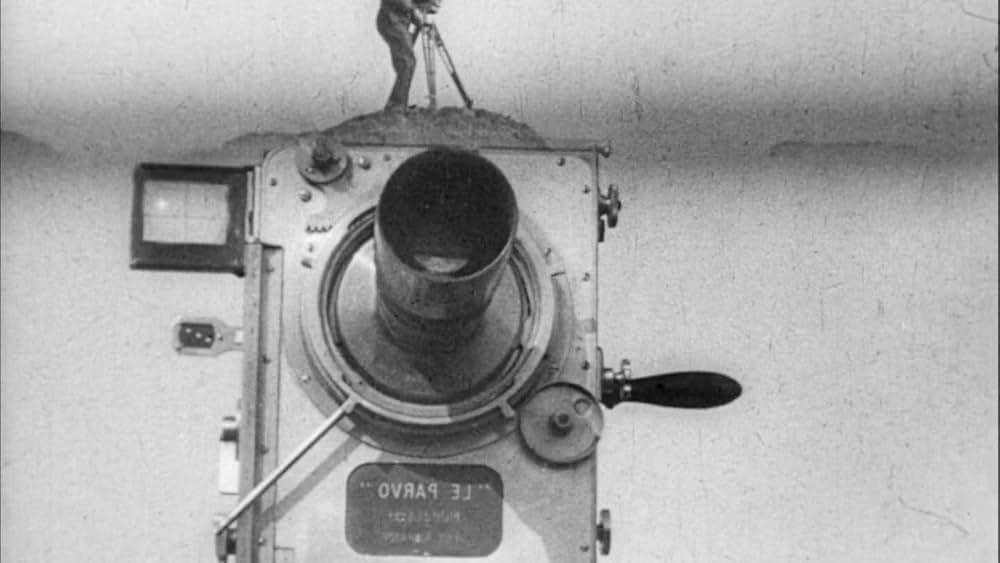
- TriviaThe film was a revelation at the time of its release. The majority of the pre-1936 MGM film library had rarely been released to television, so clips from films such as Le metteur en scène (1930) and Hollywood chante et danse (1929) were shown for the first time since their original theatrical releases. For years, films such as Le chant du Missouri (1944) and Un Américain à Paris (1951) had only been shown via worn, badly spliced prints late at night on independent TV stations. For this film, the vintage footage was meticulously restored and remastered for 70mm projection, making it look better than they did upon their original releases.
- GoofsAt the beginning of the film, Frank Sinatra says Hollywood chante et danse (1929) is the "first all-talking, all-singing, all-dancing movie ever made". In fact, it wasn't; the first was The Broadway Melody (1929), which was released in February, nine months before "The Hollywood Revue" was released. Indeed, by the time of That's Entertainment! III (1994), narrator Gene Kelly was now calling The Hollywood Revue of 1929, "one of the first all-talking, all-singing, all-dancing movies."
- Quotes
Liza Minnelli: Thank God for film. It can capture a performance and hold it right there forever. And if anyone says to you, "Who was he?" or, "Who was she?" or, "What made them so good?" I think a piece of film answers that question better than any words I know of.
- Crazy creditsProducer Jack Haley Jr.'s credit appears over a still image of his father, Jack Haley, as the Tin Man in the Wizard of Oz.
- Alternate versionsSome TV prints extend Bing Crosby's segment by adding the musical number "True Love" from "High Society" (1956).
- ConnectionsEdited into American Masters: Gene Kelly: Anatomy of a Dancer (2002)
- SoundtracksThat's Entertainment
(1953) (uncredited)
Music by Arthur Schwartz
Lyrics by Howard Dietz
Performed by the M-G-M Studio Orchestra Conducted by Henry Mancini
- How long is That's Entertainment!?Powered by Alexa
Details
- Release date
- Country of origin
- Language
- Also known as
- Érase una vez en Hollywood
- Filming locations
- Production company
- See more company credits at IMDbPro
Box office
- Budget
- $3,200,000 (estimated)
- Gross US & Canada
- $26,890,200
- Gross worldwide
- $26,890,729
- Runtime
- 2h 15m(135 min)
- Color
Contribute to this page
Suggest an edit or add missing content