[go: up one dir, main page]

Showing posts with label reviews. Show all posts

Wednesday, 7 January 2026

Short Stories by Alex Spencer


Alex Spencer is one of the many talented writers who comes along to my writing classes. She recently set up a story subscription at the Pale Grey Press, where you can sign up to receive one of her stories in booklet form every month. I love this idea, it's really nice to see a printed paper subscription in these times of online everything. The wee books are simply designed and beautifully produced and Alex's stories are always excellent and often quite dark. 

In Feed, Rea finds she can't escape from the strange bakery she has inherited, held there against her will by some supernatural power, destined to forever make bread. 

In Beneath, a moving poem about grief, a young woman loses herself at her lover's grave.

"Where he lay, a few wildflowers have been trampled during the funeral, diaises and cornflowers mostly. She knelt to gather them, the sight of them trodden into the ground too much to bear., but her frozen fingers refused to close around the broken stalks". 

In the atmospheric story Father Callum (which you can read here), a priest faces his greatest fear.  

A subscription will bring you an excellent, memorable story every month. 

You can subscribe to Alex's monthly story at the Pale Grey Press here. There are two levels of subscription - £7.00 a month gives you a story every month with occasional extras; £15.00 a month brings you a story every month with a gift of something from the Oak and Ember Gallery, co-owned by Alex Spencer and Danii Watson. 

You can visit Oak and Ember Gallery here

Wednesday, 15 October 2025

The Fly Trap by Fredrick Sjoberg

The Fly Trap, Sjoberg, Fredrik, Used; Very Good Book - Picture 1 of 1

As many readers of this blog will know, I have a particular interest in hoverflies, many of which mimic bees or wasps. So I was particularly interested in this book when I saw it mentioned in this post in Whilst Out Walking, one of the Substacks I read. I buy many of my books second hand, but I doubted I would be able to find this one in a charity shop so I went to a local book shop and luckily there was a copy on the shelves. 

The author lives on an island in Sweden and devotes himself to collecting and identifying the hoverflies on that island. He amusingly describes collectors of hoverflies as: "quiet contemplative people [whose] behaviour in the field is relatively aristocratic".He himself first got specifically interested in hoverflies, when accidentally catching one that was an expert mimic of a large bee, which turned out to be very rare in Sweden. 

He discusses whether to use an insect trap or not, though doesn't address the ethics of whether collecting and killing insects is ethical in the current drastic decline in insect numbers. (He actually at a couple of points makes comments that seem oddly dismissive of wider issues of ecology). The discussion about traps leads into a focus on Rene Malaise, the Swedish inventor of the eponymous insect trap, his travels in Kamchatka and his interest in art collecting. 

This book is really a meandering exploration of being a collector, the hoverflies being just the starting point. Luckily (for those of us who already love hoverflies) there are interesting insights into these insects, such as the fact that the Narcissus Fly (Merodon equestris) can be identified by the distinctive sound of its buzzing, I'll definitely need to listen more carefully next time I find one of those! I was also fascinated by the fact that it is: "possible to map the movements of the most peripatetic hoverflies by examining the grains of pollen in their coats and determining where these originated".

Along the way, the book brings in observations on topics from the value of disturbed ground for hoverflies; forensic entomology ("more than 500 species (of insects) may be involved in the decomposition of a large cadaver"), a mention of hoverflies in the Bible and how to tell whether an entomologist loved their partner or whether it was a marriage of convenience ("Check and see if he named any hymenoptera after her. In that case it was true love").

The book also includes a challenge, one that as a poet and hoverfly fan I feel bound to attempt: "what poet writes verses in honour of the narcissus fly? Or of any hoverfly at all?"

Originally published in Swedish in around 2005, the book was translated into English by Thomas Teal and published in hardback in 2014 and in paperback in 2015.

The Fly Trap by Fredrick Sjoberg, translated from the Swedish by Thomas Teal published (2015) by Penguin

**

If you're in the British Isles and want to learn to identify hoverflies, I'd recommend Hoverflies of Britain and Ireland, a Field Guide by Stuart Ball and Roger Morris.


**

My Substack post this week focusses on migratory birds and insects. Some hoverflies migrate! You can read the article here.  


Wednesday, 18 June 2025

Three Nature related Art Exhibitions


I found the time today to visit the Scottish Gallery in Edinburgh's Dundas Street. The main exhibition featured the beautiful landscapes and floral paintings of Swiss born Pascale Rentsch, now based in East Lothian. You can see the paintings from the exhibition on the gallery's website, but as with most art, they really gain from being viewed in a gallery. She has a wonderful way of capturing light and a slightly abstract approach that conveys the moody Scottish weather and landscapes very well. The exhibition also includes a small display of Rentsch's art tools and materials and a short video of her talking about her practice. There's another slightly longer video on the homepage of her website

Downstairs in the Gallery is an exhibition celebrating 20 Years of the St Judes design studio and publisher This features various works from artists associated with St Judes. I particularly liked this collaged bunny and other collages and fabrics from Mark Hearld and the linoprints of Angie Lewin. Alongside this exhibition are other works from artists and crafters not associated with St Judes, including willow sculptures from Lizzie Farey, and ceramics from Katie B Morgan, Terry Shone and Jill Fanshaw Kato

The gallery also has a lovely garden at the back, though the photo above is from my last visit to the gallery. You can see more photos of the gallery garden in this post

I also popped into Stockbridge Library to see the Painting with Plants exhibition by Julie Galante. This lovely little exhibition is probably not best served by being tucked away at the back of the library with chairs and other library furniture being arranged in front of it, making it difficult to get a really good view of the art. The paintings are lovely, featuring inks made from over 100 species of plants, including foraged plants and food leftovers (such as onion skins). 

All these exhibitions are on until 28 June.  

**

Meanwhile, over on Substack, I've posted the third of the series of posts about The Wildlife Trusts' 30 Days Wild campaign. You can read it here.  

Monday, 19 May 2025

Say Goodbye to the Cuckoo by Michael McCarthy

 This a beautiful, but sobering book about the UK's Spring migrants, which make up about a quarter of all our bird species. 

"If we could see it as a whole, if they all arrived in a single flood, say, and they came in the day instead of the night, we would be truly amazed." From this opening onwards, this is a celebration of the wonders of the birds who visit our shores to breed and who then leave again to escape our winters. It's also a call for us all (not just birdwatchers) to notice these birds again and to conserve them before they disappear from our skies. 

The book looks at not only the natural history of several of our migrant songbirds, but also considers their cultural impact, from the immortalisation of Nightingales in poetry and song, to our contradictory feelings about Cuckoos being both the harbingers of Spring (due to their song) and their being symbols of deception (for laying their eggs in other birds' nests).

The author travels throughout England and visits Gibraltar (a crossing point for many species migrating from Africa to Europe), in search of migrant songbirds, meeting scientists, conservation workers and gardeners. He also outlines some of the biology involved in migration and some of the history of how scientists learned about migration from Aristotle's early observations, to Gilbert White, the first person to really record detailed notes about the arrivals of local birds in his Natural History of Selbourne, published in 1789 and coming up to date with a brief history of bird ringing (banding in the US) and how that has helped work out migration routes. 

The largest part of the book focuses in detail on selected species of the UK Spring migrants, including Swallow, Wood Warbler and Turtle Dove. His writing is full of enthusiasm and wonder, the joy of listening to the songs of these migrants, because their songs are such a part of our experience of the natural world in Spring. I love the description of listening to the Sedge Warbler as he mimics a variety of other species of birds, so well that at one point McCarthy looks around for the passing Greenshank and has to be reminded that the sound is coming from the Sedge Warbler. 

There are stories of conservation efforts throughout the book, including Edward Mayer, who spends most of his time campaigning to conserve Swifts, including installing swift nest boxes on buildings across London; and the villagers in Worcestershire who got together to record and conserve the Spotted Flycatchers in their area. 

The final two chapters look in more detail at the threats facing out Spring migrants, from loss of nesting sites here, through the lack of insects and other food sources to the degradation of the habitat in the birds' wintering grounds and the effect of climate change on the timing of natural events (many caterpillars no appear earlier than they used to, but the migrants aren't able to alter their journey times to keep up with the peak supply of their food sources). Bird surveying is highlighted as being vital if we are to understand what is happening to bird populations. 

"Over thosands of years [these birds] have inspired us to poetry and prompted us to proverbs, they have been the source of a vast treasury of European folklore, legends and literature, and they have been so woven into the fabric of our culture as to become part of the continent's idea of itself. A Europe without its Spring-bringers is almost as unthinkable as a Europe without its cathedrals."

Yet, with the numbers of so many of these migrant birds plummeting as they are, are we actually approaching a time when we will find ourselves saying goodbye to the cuckoo? 

Say Goodbye to the Cuckoo by Michael McCarthy published (2009) by John Murray Press.  

Friday, 4 April 2025

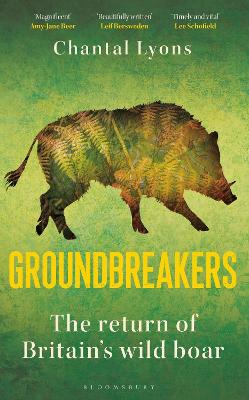
Groundbreakers by Chantal Lyons


Groundbreakers was inspired by the author's dissertation into living with wild boar in the Forest of Dean, which lead to an ongoing interest in this native species of the UK, which became extinct in mediaeval times but that has been farmed here since the 1980s and since then has been escaping into the wild. The boar is increasing in population in this country and is thriving across Europe.

This book explores the history of human - boar relationships in the UK, focussing on the Forest of Dean, which is where most of our boars live these days. Historically people hunted boar for food but also respected them as fellow inhabitants of the land. These days the people who live in the areas with Wild Boar populations are having to relearn how to live alongside such a large, now unfamiliar animal. 

The author describes her first encounter with a Wild Boar: "She was smaller and darker than I had expected. Her ears were fluffy and pointed, like those of an elven teddy bear. Her face was grey as if she had plunged it into a long-cold fire. Below ridges so like human eyebrows, her eyes met mine." 

She meets several people who have experience of living alongside boar in this country, some of whom love the boars and some of whom hate them. We're given a decent understanding of both points of view. She also meets people who live alongside boars in other European countries, where they have always been part of the landscape.

The author shows how boar can alter their immediate environment, often to the benefit of other species, for example, when a boar has been digging, insects and earthworms will come to the surface for birds to eat. On the other hand they've been shown to have a detrimental effect on for example adders in Belgium and Hazel Dormice in the UK. 

The book also discusses the need for management of boar, through hunting and potentially reintroducing predators such as lynx. 

This is an excellent book for anyone interested in the status of Wild Boar in the UK.


Groundbreakers by Chantal Lyons, published (2024) by Bloomsbury

Wednesday, 26 March 2025

Turning the Boat for Home by Richard Mabey


Subtitled A life writing about nature, this is a collection of essays, originally published in a variety of  newspapers, books and magazines, from one of the UK's best nature writers.There's always the risk with this type of collection of essays that some of them, having been specifically written in response to something in the news or a newly published book, will date quite quickly. That luckily only applies to a couple of these essays. 

I always enjoy Mabey's writing, you can read my reviews of some of his earlier books by following the links below:

Nature Cure by Richard Mabey

Fencing Paradise by Richard Mabey

Weeds by Richard Mabey

Beechcombings - The Narratives of Trees by Richard Mabey.

The essays in Turning the Boat for Home cover a wide range of ecological topics, from the tenacity and adaptability of urban nature through the importance of preserving blanket bogs to foraging, the joys of birwatching (and listening!) and thoughts about tree planting. The quote below is taken from an article marking the tercentenary of the birth of the landscape designer Lancelot 'Capability' Brown, who popularised the planting of trees for ornamental and landscape effect;

"Planting amenity trees seems so self evidently a force for good that it's hard for us to understand what a novel practice it was before the eighteenth century. Why bother when trees appeared so magnanimously of their own accord? Now, addicted to the practice as a ritual of atonement, we've become blinkered to the fact that it's yet another expression of human power over nature. That trees have perfectly adequate, fine tuned reproduction systems of their own seems to have vanished from popular understanding."

Other items include an article on the unexpected nature trail alongside one of the UK's major motorways, an appreciation of the life of 18th century British naturalist Gilbert White, and an introduction he wrote to the book The Snow Leopard by Peter Matthiessen, which I reviewed (very briefly) back in 2008, here

Mabey shares his wide ranging knowledge generously and in beautiful prose. His writing is always worth reading and this is a good collection to pick up and enjoy. 

Turning the Boat for Home by Richard Mabey, published (2021) by Vintage.

Tuesday, 18 February 2025

He Used to Do Dangerous Things by Gaia Holmes

He Used To Do Dangerous Things

He Used to Do Dangerous Things is the debut short story collection from poet Gaia Holmes. These stories deal with a range of issues including family relations, grief, loneliness, depression and environmental protest. One of the things I enjoyed was how certain motifs occur in several of the stories (eg power cuts and batteries) creating connections between the stories.

The title story He Used to Do Dangerous Things focuses on Mick, who used to do dangerous things to raise money for charity, after being diagnosed with depression. Mick sees his depression as a black dog: 

 "He said he couldn’t walk through depression or away from it, but he could walk with it. He said that sometimes when he was out, it was as if the dog had seen a rabbit and it would race away from him through the gorse. It was a beautiful and powerful thing to watch, such a big, heavy beast running so quickly and weightlessly.”

Unloved Flowers follows Connor, a security guard in a garden centre with a strong feeling for nature. I can totally relate to this description of a train journey: 

“The sun’s just coming up, wheat fields a dull gold in the light, eagle on a telegraph pole, swallows swooping, deer. The woman sitting beside him is researching off-grid techno-detox holidays. She scrolls through Instagram photos of barefoot people and yurts and campfires... package holidays, ‘be free with the trees’, ‘Wild women’. The man across the aisle is in some angular virtual world shooting killer robot rabbits and outside there are trees, the smell of rain and foxes, a kestrel, a field humming with the blue of cornflowers, a heron, a huge lolloping hare. Look up! Look out, he wants to shout into the crowded carriage but he doesn’t.”

Connor gets to know a group of homeless people living in a greenspace that becomes threatened with development, becomes part of the community and joins in their fight to save their home, culminating in a beautifully surreal ending. 

Environmental protest also features in 198 Methods of NVDA (NVDA is Non-Violent Direct Action)  which takes the form of a diary of a participant at the protest against the Newbury bypass. The story gradually reveals the diary writer's motivations for protest. 

In Poached, the narrator gives us three inter-related stories. She and her partner are regularly enjoying the eggs from their adopted rescue chickens while watching the nesting birds in their garden and worrying about their own inability to conceive a child. A story that starts off sweet but ends up in a much darker place.

In Ratguts and Lola, a long distance lorry driver picks up two hitch-hikers and introduces them to his goldfish, Lola, who is losing her shine. The journey seems to have a transformational effect on the goldfish. 

Two stories explicitly deal with COVID. Defrosting, in which a woman who lost her husband to COVID ponders death as she wonders what to do with the left over Christmas turkey and her husband's favourite robin who has just died in their garden. Surge shows us how one lonely old man tries to cope with lockdown in his block of flats where the neighbours barely acknowledge each other in the stairs. He finds a unique way of dealing with things and is then suprised by an act of generosity by a neighbour. 

The other story I want to mention individually is Taste the Raisin, in which a visit from the plumber takes an unexpected turn, with very positive effects for the narrator.

This is an excellent collection of varied stories that show people finding ways of coping and helping each other through difficult situations. Often surreal, sometimes amusing and occasionally dark, these are stories that you will want to read again. 

He Used to Do Dangerous Things by Gaia Holmes, published (2024) by Comma Press

Disclaimer: I was sent a free pdf of this book to consider reviewing.

Tuesday, 11 February 2025

Life on the Edge by Jim Al-Khalili and Johnjoe McFadden


This is an excellent book, investigating the ways that quantum mechanics are implicated in how biology works.The biological parts are written by molecular geneticist Johnjoe MacFadden, while  Jim Al-Khalili, physicist and broadcaster explains the quantum side of things in language and concepts that most of the time probably will make sense to people who don't have much science background, making it an accessible read. This is important as quantum mechanics is a notoriously difficult field to get your head round if you're not a scientist (or even if you are!).

I found the whole book fascinating, from its exploration of how birds navigate when migrating; to the quantum aspects of genetics and evolution. Unfortunately I didn't actually make notes as I read and because I finished it a few weeks ago, I can't really give a more detailed review, but it's well worth reading if you're interested in this intersection of physics and biology.

Life on the Edge by Jim Al-Khalili and Johnjoe McFadden published (2014) by Penguin

Monday, 12 August 2024

An African Love Story by Daphne Sheldrick


Subtitled Love, Life and Elephants, this is Sheldrick's 2012 memoir about her life in Kenya. She was born in the country when it was still a British colony and lived through the painful period culminating in independence and later managed Tsavo Nature Reserve with her husband David Sheldrick. When David died at 57, Daphne went on to found the Sheldrick Wildlife Trust, which continues to look after orphan animals, particularly elephants and rhinos. 

The best parts of the book are those where she talks about her relationships with the animals she has looked after, she shares touching, moving stories about orphan elephants rescued from perilous situations. She documents well the curse of poaching that has afflicted Kenya (and many other parts of Africa and beyond) on and off for many years. 

However, her views on Kenyan independence are so colonialist, they make for difficult reading. I find it saddening that she should see the Mau Mau rebellion as unjustifiable aggression against benign white settlers, when there were so many good reasons behind the rebellion (though in her circumstances, it was probably difficult to look beyond what must have been a real sense of personal danger being perpetrated on her by local black Kenyans, particularly as her grandparents were victims of a direct violent attack and their neighbours had been brutally murdered). 

So, in short, read the book for the heartwarming animal stories and if you're looking for insights into Kenyan history, you'll need to look elsewhere. 

Daphne Sheldrick died in 2018.

An African Love Story by Daphne Sheldrick, published (2012) by Viking

** 

Today is World Elephant Day

**

I've been adding new items to the handmade section of my Crafty Green Magpie Etsy Shop.

Wednesday, 7 February 2024

Birdsong in a Time of Silence by Steven Lovatt


This book was written in response to the first COVID-19 lockdown in the UK. when restrictions meant that our streets were much quieter and people became more aware of nature, particularly the sound of birdsong. In this book, the author uses his own lockdown observations of birds in his local area as a way into considering the function of birdsong in helping birds to defend a territory and find a mate and also the value that we gain from birdsong - as well as there being a basic enjoyment of birdsong, clinical studies have shown listening to birdsong has positive impact on people's mental health and wellbeing.

There is also an interesting discussion on whether birdsong can be, strictly, considered as music, centring on the observations that 'some species can improvise as well as any jazz musician.' and that some birds sing just as beautifully even after the breeding season is over, demonstrating that the song is more than purely functional.

 Bird vocalisations are divided into calls - short, purposeful vocalisations with specific intent such as contact calls and alarm calls - and song - the more extended, expressive vocalisation used to mark territory and attract a mate. Some birds never seem to sing, the corvids (crows) for example. But the author makes an excellent argument for jackdaw vocalisations to be considered song due to the wide range of sounds they use to converse in.

While lockdown opened a lot of people's ears to birdsong, the numbers of many of the UK's birds have been declining significantly for many years. "Many of the species that would have defined the start of summer even a generation ago are either absent altogether or so depleted for it to be a case of 'out of sound, out of mind'. And these losses are not just an ecological tragedy but also affect humans and our sense of our place in the world. The author notes that "on some level I'm already steeling myself for a time when I may no longer hear [swifts] at all" a sentiment I share, as I'm aware that year on year, fewer swifts are to be seen flying around our Edinburgh neighbourhood.

The text is illustrated with beautiful line drawings by Katie Marland. 

This is a beautiful book for anyone who loves listening to the birds and wants to know more about their musical abilities.

Birdsong in a Time of Silence by Steven Lovatt, illustrated by Katie Marland, published (2021) by Penguin.


Monday, 27 November 2023

Heaven's Coast by Mark Doty

HEAVEN'S COAST 
 
In 1989 Mark Doty is a successful poet and college professor and he is deeply in love with his long term partner, Wally Roberts. Their harmonious existence, however, is shattered when Wally tests positive for HIV. 
 
This memoir is an unflinching look at the process of grief and how to come to terms with it.Doty writes movingly about grief, religious attitudes to death and bereavement, and how he comes to terms with losing his partner so early in life. 

Roberts and Doty find solace in their pets (two dogs and two cats) and in nature. Roberts spends much of his last few months in bed surrounded by the pets, looking happily out of the window, seeming most of the time to be peacefully accepting of his impending death. 
 
Doty particularly likes seals as they somehow remind him of Roberts 'something about playfulness and a freedom of spirit'. There is a lovely scene, after Roberts' ashes have been scattered to become one with the life of the marsh, in which Doty's dog Beau plays with a group of seals 'swimming for half an hour with a tribe he recognises, though it tumbles in an alien medium.'

The book ends with a meeting between Doty and his dogs and a coyote that stops in front of them briefly, prompting Doty to meditate on the meaning of seeming random events and the possibility that the coyote is in some way a message from Roberts. 

This is a beautifully written, moving book which meditates on loss and grief, while shining a light on the things that make it well worth living in the world after the death of a loved one. 

Heaven's Coast by Mark Doty, published (1997) by Vintage
 
**
At around the same time as writing this memoir, Doty wrote the beautiful  poetry collection My Alexandria, which I reviewed here


Friday, 17 November 2023

The Elephant Whisperer by Lawrence Anthony


 South African conservationist Lawrence Anthony was asked to accept a herd of 'rogue' elephants for his Thula Thula game reserve in Kwa-Zulu Natal. This moving book is the story of what happened, when, against what he thought was his better judgement, he said yes. 

When Anthony and his wife Francoise took over the game reserve, they banned hunting and worked with the local communities to create an eco-friendly lodge set within a reserve dedicated to conserving the beautiful wildlife of the area. They had to overcome problems with poaching, much of it small scale, but at times large scale poaching threatened the larger animals such as rhinos and elephants.

When the elephants first arrived at the reserve, they were destructive and unpredictable. Anthony decided that he would live with the herd for a while to let them get used to him, so they would learn to trust humans. Eventually, the herd did learn to trust him - the females would even bring their newborn calves to be introduced to him. One particularly elephant, Mnumzane, a young male, became particularly friendly with Anthony and his story is a particularly moving one and poses the question of what do you do with an elephant with extreme toothache?

The book highlights the amazing intelligence of elephants including an occasion when one of the older females opened the gate to a compound where a herd of antelope were being gathered, prior to being sold to another game reserve. All the antelopes escaped. 

Anthony always geared his planning to the needs of the wildlife and included local people in his project, employing many of them as rangers or within the eco-lodge. I particularly noted this insight: 

"Every wild thing is in tune with its surroundings.... and in absolute harmony with the planet. Their attention is focussed totally outwards. Humans, on the other hand, tend to focus introspectively on their own lives too often, brooding and magnifying problems that the animal kingdom would not waste a millisecond of energy upon. To most people, the magnificent order of the natural world where life and death actually mean something has become unrecognizable."

Anthony made friends with the original herd so that they could become used to humans, as they had been mistreated in the past. However, he was determined that future members of the herd would be truly wild and interacted less and less with each following generation of elephants. 

**

This book was published in 2009. Anthony died in 2012 and the elephants travelled many miles to gather round his body, without there having been any way that they could have known he had died. Francoise has continued to run Thula Thula.

The Elephant Whisperer by Lawrence Anthony published (2009) by Pan Macmillan.

Friday, 18 August 2023

A Natural History of the Hedgerow by John Wright

 A Natural History of the Hedgerow by John Wright

This is a book that explores the history and natural history not just of hedgerows, but of other field boundaries including ditches, dykes and dry stone walls. 

Much of the United Kingdom's agricultural landscape has been traditionally broken up by hedgerows, living field boundaries that consist of a variety of shrubs and occasional trees and that offer home to many species of bird, mammal and insect. Hedgerows have declined with changes in agricultural practice, but they are rightly valued as being vital for wildlife. 

A Natural History of the Hedgerow opens with several excellent chapters outlining the history of field boundaries, starting in prehistoric Britain and moving through changing agricultural fashions up to the current time. It is interesting how hedges have at certain times been disliked as symbols of the removal of the common rights to land for grazing and, as now, loved as valuable homes for wildlife. 

Following on from the history of hedges, the book looks at the politics of hedge protection, outlining government schemes and the associated issues and controversies, including the need to focus funding on the right methods of preserving hedges. The author notes the importance of conserving the original hedge itself, rather than removing it and replacing it with new seedlings: 

"It is simply impossible to replace a hedge by planting half a dozen suitable woody species in a row. Yes, it will, if looked after, form a hedge, but not the hedge that was there before, which may have been the product of many centuries and will contain an array of species that cannot be replaced in a few days' planting"

The hedge needs to be seen as more than just the woody plants that form the main part of this type of field boundary to take in the surrounding areas of field or road verge and ditch or embankment. Many species use all parts of this ecosystem, for example the Yellowhammer "feeds in the verge, nests in the hedge bottom, hides from predators in the shrubs and uses the trees to perch and sing."

The third part of the book is made up of a field guide to species found in hedges.  Given that thousands of species (of plants, animals and fungi) can be found in one hedge, this guide is necessarily concise. Although the section outlining the most important shrub and tree species (especially Hawthorn) is very interesting, the rest of the wildlife is dealt with in an unsatisfying way, birds being dismissed as "nasty, feathery things that fly away before you can identify them." which seems an unnecessarily negative comment, given that hedges are vital habitats for many species of birds that are declining. 

The last section of the book gives a brief overview of how to lay a hedge and maintain field boundaries. 

This is an interesting book for anyone interested in the history and importance of hedgerows, but don't expect a useful field guide.

 A Natural History of the Hedgerow by John Wright, published (2016) by Profile Books.

**

Related Links: 

England's vital hedges under threat  on The Guardian website.

The UK Government is currently consulting the public on hedge management, you can find out more and (if you're a UK resident) take part here

**

Meanwhile I'm delighted to have a haiku included in the bird themed issue of Haiku Girl Summer.


Thursday, 10 August 2023

Why Birds Sing by David Rothenberg

 Why Birds Sing

 Birdsong is one of the great delights of any naturalist's life, and this book explores the fascinating question of why birds sing. The author is a philosopher and musician and, after playing his clarinet to a laughing thrush, became interested in the similarities between birdsong and human music. 

Birdsong has always been important to people. The author shares stories of how Aboriginal Australians beleive that the lyrebird (which mimics the songs of other species) gave the other birds their voices, and the Hopi people of North America believe something similar about the mocking bird. 

The book outlines the development of scientific studies of birdsong from recordings and annotation of songs in the field to the surely ethically dubious dissection of bird brains to find out how song works. The author discusses the ethics of these experiments and is clearly not entirely comfortable with them:

 "... scientists ought to spend a little time...trying to justify the practice, rather than simply accepting its validity. Not even one songbird should be slaughtered without some pang of guilt"

He goes on to argue for the need for open discussion about the ethics of killing birds for science, but seems, finally, to accept that given the birds are well looked after before being 'sacrificed' (as the scientists like to say) that the experiments are worth it. I'm not sure, birdsong is a wonder in itself, I don't feel the need to kill the singer to find out where the song comes from.   

The best part of the book are the anecdotes, such as the experience of Marianne Engel with her pet starlings:

"Another bird would imitate the soft sound of the fluorescent light above his cage, especially one time when the power was out, as if yearning for the light to come back. A third copied a teapot's whistle and when Engle got a new, non-whistling kettle, the bird would still whistle whenever the pot was placed on the stove"

Birdsong is becoming rarer as many species are declining, and the author ends a book with a plea to preserve nature so that future generations can continue to enjoy the beauty of birdsong.

The book is very technical in places, including lots of sonograms (graphs of sounds) and extracts of musical notation. This makes it slightly less accessible if you're not comfortable and familiar with these two methods of representing sound. 

Why Birds Sing by David Rothenberg published by Basic Books (2005)


Wednesday, 21 June 2023

Jewels by Victoria Finlay


 In this book, Victoria Finlay sets out to explore the history and culture of a variety of jewels, examining, in order of hardness: amber, jet, pearl, opal, peridot, emerald, sapphire, ruby and diamond. 

It's a fascinating, well written book, full of amazing facts, my favourite of which is the dinosaur skeleton that was found in Australia, whose bones had all become opals!

I was disappointed in how little it dealt with the environmental impact of mining for gems, gashes in the landscape are mentioned a couple of times, a polluted river is referred to on one occasion. The author isn't that much more detailed on the negative social impacts of mining. Though these few sentences very succinctly sum up a lot of the injustices around mining: 

"It was typical of a colonial government that they should sell the rights in an industry they had never seen to a company that had no experience, without anyone even knowing how the traditional ownership of the land worked."

The chapter on pearls is the only one to go into any detail on the ecological issues. Freshwater pearls (which come from mussels, not oysters) were once found in every river in the Scottish Highlands, but there are now as few as five colonies in the whole of Scotland, due to over fishing through the centuries and the habit of careless fishers in cutting open every freshwater mussel in their search for pearls, whereas an experienced fisher can tell which mussels are likely to contain pearls without opening them up. In addition, this chapter details the cruelty of the making of cultured pearls (a piece of polished shell is forced into the oysters' gonads so that they are forced to produce pearls as a response to the injury). 

That aside, it is worth reading and of course not every reader is looking specifically for a discussion of the environmental impact of gem mining. However, this is a major issue of concern, and it seems odd that so little is said about it in this book. For an introduction to the environmental issues around gem mining, it is worth checking out the Gemstones and Sustainable Development Knowledge Hub, though as this seems to be funded by the diamond industry it may not be as hard hitting as it could be.

 Jewels by Victoria Finlay published (2005) by Hodder. 

**

Meanwhile, I've been adding vintage watches to my Crafty Green Magpie shop on Etsy. Mostly, these are watches that would need to be repaired or could be taken apart and used in craft projects. You can see them here.


Wednesday, 7 June 2023

An Apple from a Tree by Margaret Elphinstone

 This 1991 collection of short stories from Scottish based writer Margaret Elphinstone is a lovely mixture of realism, magical realism and science fiction. The author uses this blend of genres to explore the human relationship with nature as well as our relationships with each other. 

The title story sees Alison visit the Botanic Gardens in Edinburgh, where she meets a mysterious naked woman with whom she has a strange connection. Two of the other stories feature Oddney, the guardian of a well and the work she does to help nature stay in balance. 

The writing is beautiful, particularly the descriptions of nature, such as this, from the opening to The Cold Well: 

"She sat under the waterfall, letting the burn wash over her. The falls were white and full, churning the pool into a froth of air bubbles and brown water. Little waves lapped against the rocks, which were scoured into a smooth curve at the pool's edge, following the circling water. The water itself was soft with peat, bitter with acid, flowing over her with a touch like a northern breeze on a spring day..."

This is an engaging and thought-provoking collection of short stories from the author of The Sea Road (which I reviewed here). 

An Apple from a Tree by Margaret Elphinstone published (1991) by The Women's Press. 


Friday, 26 May 2023

A Siege of Bitterns by Steve Burrows

Inspector Domenic Jejeune is a Canadian detective living in Norfolk, one of England's prime birdwatching areas. As a keen birder himself he'd rather be out there with his binoculars than chasing after murderers. 

This novel, by Steve Burrows (a Brit living in Canada) investigates the murder of a prominent environmentalist and digs into the issues around the decline in certain wading birds in the area. The narrative is embedded in the world of serious birders, particularly the competitive race to reach 400 bird species seen in Norfolk. It's an engaging read, which delves into ecological and other issues. However, the main character doesn't seem developed enough to carry the seven books in the Birder Murder series (this is the first). Although I did like the way that Jejeune used the observation skills developed through birding to help him solve the crimes.

It's a good read for anyone who likes birdwatching and enjoys a good mystery. 

A Siege of Bitterns by Steve Burrows published by Dundurn.

Thursday, 18 May 2023

Notes from Walnut Tree Farm by Roger Deakin


For the last six years of his life, the nature writer Roger Deakin kept notebooks in which he wrote his thoughts, observations and feelings about and around his home, Walnut Tree Farm in Suffolk. This book has collected together the best of these writings, giving insights into his lifestyle and his thinking. Close observations of nature lie side by side with literary criticism, highlights of conversations with friends and details of his tasks around the house and farm. Plus notes for Wildwood, the book he was writing at the time, which wasn't published until after his death.

One critic has described 'Notes from Walnut Farm' as Deakin's 'best book', which seems unfair, as he hadn't intended it as a book (and in fact part of me feels uncomfortable on Deakin's behalf, reading these writings, as they had never been intended for publication.). Having said that, the book does include a lot of very fine writing, which may well be among Deakin's 'best writings':

"I'm standing in the home meadow in the long grass, listening to the vetch pods cracking open in the sunlight and warmth after a rainy night. The rain has softened them then the sun has blackened and hardened them and the stresses in the cells have caused the pods to snap open like little springs and fling out the seeds as they twist into a spiral"
 
Being made up of journal entries, makes the book feel quite disjointed, but at the same time makes it an ideal book to have sitting around to dip into whenever you feel like it.
 
Notes from Walnut Tree Farm by Roger Deakin, published (2008) by Hamish Hamilton  
 
**
The Swimmer by Patrick Barkham is a new biography of Roger Deakin.

Thursday, 4 May 2023

The Creeping Garden by Jasper Sharp and Tim Grabham

 Creeping Garden, The (Book)

 Subtitled 'Irrational Encounters with Plasmodial Slime Moulds' this lavishly illustrated book is an accompaniment to the documentary film of the same name.

I had hoped for a book that was more focused on slime moulds themselves, as I am fascinated by this group of organisms that are neither plant, animal nor fungi. However, the book takes a different approach, concentrating on the making of the film, and exploring various topics including the use of slime moulds in computing and the role of Japan's Emperor Hirohito in slime mould research. 

A couple of chapters are devoted to slime moulds and fungi in nature, but even these focus on meditations about how to find a theme worthy of a film. 

So although this book is an interesting read, it wasn't what I hoped for, and I would be very interested in finding a book that actually does focus on the biology of slime moulds! So if you have any recommendations, let me know in the comments section! 

The Creeping Garden by Jasper Sharp and Tim Grabham, published (2015) by Alchimia Publishing.


Tuesday, 14 March 2023

The Little Book of Gaiku by Alistair Young


I recently started learning Scottish Gaelic (you can read more about that here). I was delighted to find this wee book of photos of the Scottish landscape with accompanying Gaelic haiku and English translations.

Alistair Young is based on the Isle of Skye, and his wonderful photos capture the wild beauty of this island and other parts of Scotland.

This is a beautifully designed and produced small book. Each page contains a landscape photo accompanied by a haiku in Gaelic with the English translation. 

The haiku celebrate the beauty of the landscape and the wildlife to be found there. The haiku below comments on the windfarms increasingly to be found in Scotland's wild places: 

nì crònag-dealain
an-fhloran as ainnimh
eadar-lìon rudan


the hum of electric voices
plundering power from wilderness
the internet of things


I particularly like this haiku about the Snow Bunting, a small bird of the wild high places: 

teachdair an t-àm
fiadhaich furachadh
gealag an t-sneachda 


harbinger of the
wild colding season
little snowflake

There is also an introductory essay in English. I would have liked to see the introduction also in Gaelic to give equal status to the two languages. Other than that, this is a lovely book for anyone who loves the Scottish landscape or haiku. 

You can browse Alistair's photos on his website

The Little Book of Gaiku by Alistair Young, published 2017.