[go: up one dir, main page]


2026 BYD Seal review - new DiSus-C suspension any good?


Latest Carro Malaysia Cars For Sale

Search oto.my Car Classifieds

Latest Stories

  • Volvo to add Google Gemini to 2.5mil cars globally in “world’s biggest” OTA update, MY2020 and up eligible

    Volvo to add Google Gemini to 2.5mil cars globally in “world’s biggest” OTA update, MY2020 and up eligible

    Capping off a smorgasbord of Volvo news today, the Swedish carmaker has announced it will roll out Google’s Gemini generative AI to a massive 2.5 million cars in what it has dubbed “one of the biggest over-the-air updates in the history of the world” – just hours after revealing the EX60 with the feature.

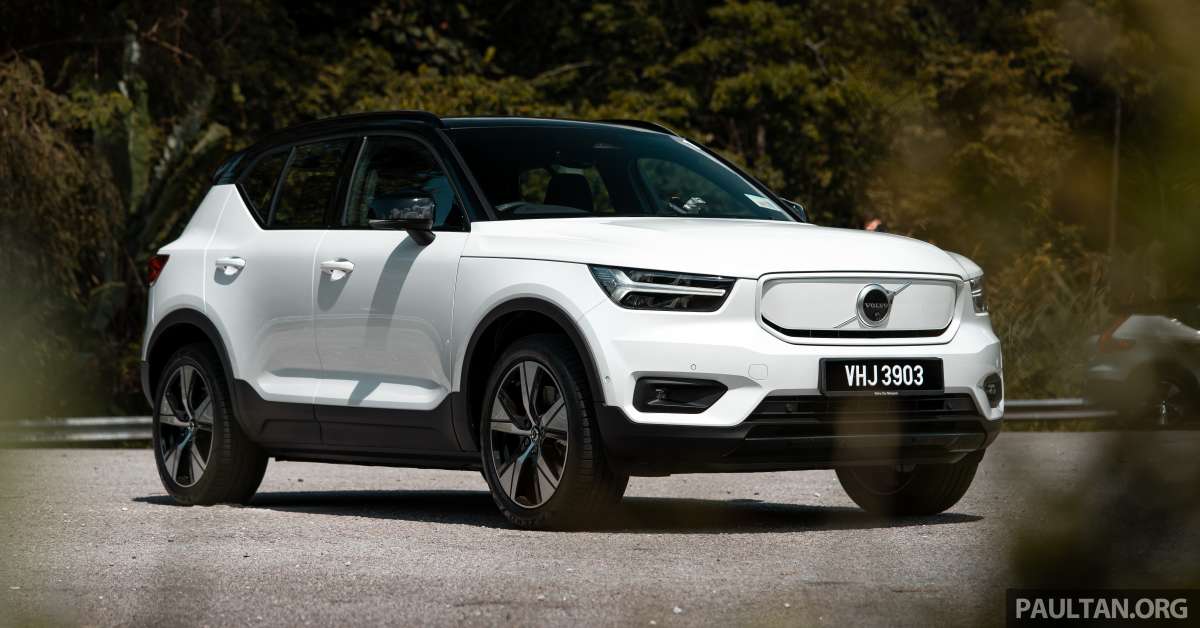
    According to Autocar, the virtual assistant – which will replace the old Google Assistant – will be rolled out to every single Volvo running on the company’s Android Automotive-based operating system, first introduced on the XC40 Recharge EV (now called the EX40) back in 2020. This comes as part of an interface update that will bring even the oldest cars in line with the EX30, the EX90 and the just-launched ES90.

    Those with a good memory may remember that this update was originally slated for last year, but it was delayed to allow for further development. Now, however, chief technology officer Anders Bell says the update is “in the final stages of testing validation” and will be pushed out in the coming months.

    Volvo to add Google Gemini to 2.5mil cars globally in “world’s biggest” OTA update, MY2020 and up eligible

    Models as old as the XC40 Recharge EV will receive Google Gemini

    With regards to the big claim of this being one of the world’s biggest OTA updates, Bell adds that while companies like Tesla also regularly push out massive fleet-wide updates, Volvo operates in far more countries, making this one of the most significant yet. The move will give the older cars essentially the same infotainment interface as the newer ones, with slight differences to account for the slower processors and smaller screens.

    “We’re going to deploy that back to those cars to give them a necessary, very nice upgrade of the owner’s interaction experience with the car,” he said, adding that once the system has been updated, “it’s a pretty easy update to replace the current Google Assistant with Gemini.”

    Gemini’s large language model (LLM) enables more natural and personalised conversations without having to remember specific commands. Users can ask questions about various topics – including about the car’s functions and details on their navigation destination – as well as crafting or translating messages.

     
  • 2026 Aveta Nova 250 scooter in new colours for Malaysia, recommended retail price of RM14,388

    2026 Aveta Nova 250 scooter in new colours for Malaysia,  recommended retail price of RM14,388

    A colour update for the 2026 Aveta Nova 250 scooter, with pricing unchanged at RM14,388. Pricing does not include road tax, insurance or registration, and a two-year or 20,000 km warranty is provided against manufacturing defects.

    The new colour options are Titan Red and Nordic Blue, available in all Aveta Malaysia authorised dealer showrooms from January 2026. For the Nordic Blue variant of the Nova 250, it is available in Malaysia as a limited edition, with a production run of only 688 units.

    Additionally, a grand hangover even will be held by Aveta for the first 388 owners of the Nova 250 Nordic Blue. Otherwise, there are no changes in specifications for the Nova 250 scooter.

    2026 Aveta Nova 250 scooter in new colours for Malaysia,  recommended retail price of RM14,388

    The Nova 250 gets 25.5 hp at 8,250 rpm with 23 Nm of torque at 6,500 rpm, from a liquid-cooled, single-cylinder engine with SOHC, displacing 244 cc. Power goes to the rear wheel via CVT transmission and belt drive, with the engine fed by Bosch EFI.

    Wheel sizing is 14-inches in front and 13-inches at the back, fitted with 120/70 front and 130/70 rear tyres. Conventional telescopic forks hold up the front end, and twin preload-adjustable shock absorbers prop up the back.

    2026 Aveta Nova 250 scooter in new colours for Malaysia,  recommended retail price of RM14,388

    Braking is done with single hydraulic discs front and rear, with a four-piston calliper on the front wheel and a two-piston calliper at the rear, including two-channel ABS as standard equipment. Adding to riding safety on the Nova 250 is traction control.

    Riding conveniences include a smart key system, tyre pressure monitoring, USB-C charging socket and front video recording. A digital TFT-LCD meter displays riding information while LED lighting is used throughout, and 12-litres of fuel is carried in the Nova 250’s tank, with weight listed at 165 kg ad seat height set at 774 mm.

     
  • No need to show proof of overseas travel to obtain physical driving licence card (LMM) starting Jan 23

    No need to show proof of overseas travel to obtain physical driving licence card (LMM) starting Jan 23

    Malaysians will no longer need to show proof of overseas travel in order to apply for a physical driving licence (LMM) card starting tomorrow (January 23, 2026). Applications can be made at all road transport department (JPJ) and Urban Transformation Centre (UTC) counters nationwide, with the fee being RM20 for Malaysians and RM100 for non-citizens. Senior citizens aged 60 and above, holders of Class A1 and A licences as well as registered persons with disabilities can obtain a physical LMM card at no cost.

    “Members of the public have the option to apply for a physical LMM card at all road transport department and UTC counters nationwide, with applications no longer limited to specified categories,” the ministry of transport said in a statement.

    It added that feedback from the public indicated that many Malaysians who intended to travel or drive overseas requested for a physical LMM card. As such, in order to reduce bureaucratic procedures, the decision was made to remove the need to provide proof of overseas travel.

    For those who are doing just fine with their digital driving license (e-LMM), they can continue to access it via the MyJPJ app, which also enables convenient renewal without having to visit a counter. The e-LMM is part of the government’s digitalisation plan that also saw the introduction of digital vehicle road tax (e-LKM) in February 2023.

    Following the issuing of both digital documents at the time, those who wanted their driving licence in physical form could only apply for a LMM renewal slip that costs RM20, but it is not the plastic card that we’re familiar with and isn’t valid in foreign countries. Instead, those who wanted the plastic card had to show proof of international travel, such as flight tickets, prior to today’s revision announcement.

     
  • Volvo EX30 Malaysia recall – under 200 units affected in preventative measure, owners already notified

    Volvo EX30 Malaysia recall – under 200 units affected in preventative measure, owners already notified

    Last week, Volvo Car Malaysia (VCM) announced that local units of the EX30 were involved in a global recall for a potential battery fire risk, and during the launch of the ES90 earlier today, the company shared a few more details about the issue.

    Replying to our question regarding the recall, managing director Chris Wailes told us that it only involves a certain batch of less than 200 units made between 2024 and 2025, and that it is simply a preventative measure. The reason for this is that VCM does not currently know exactly how many cars in this batch are defective, but is recalling the entire batch anyway out of an abundance of caution.

    “To be safe, because we’re Selamat, that’s what we’re doing,” Wailes said. “We can’t say “Volvo is known for safety” and then sit back and do nothing, if we believe there is a small potential – a very small potential – of a problem. It’s better to act and be transparent about it, which is what we’ve done.”

    Volvo EX30 Malaysia recall – under 200 units affected in preventative measure, owners already notified

    While there’s still no timeline provided for a definitive fix, Wailes said that “as we speak, there is a team of people in R&D in Gothenburg actively, 24/7, working on the fix,” and that that VCM will provide more information as it gets it. He added that the company has already notified owners of the batch about the recall, stressing that only those who have received the letter are affected. “Everybody else, the new cars that you see today, they have a different battery and they are not affected.”

    To recap, the recall concerns a defect in the cells of the EX30’s largest-available 69 kWh nickel manganese cobalt (NMC) battery, which comes as standard in Malaysia. In rare cases, this fault will allow the battery to overheat when charged to a high level, and in a worst-case scenario, this could lead to a fire starting in the battery. Volvo insists that the number of reported incidents is very small – representing 0.02% of the identified affected units globally – and that no reports of personal injuries have been reported.

    While a fix is being prepared, owners are advised to avoid charging their cars beyond 70%. A charge limit can be set under the Charging settings menu in the infotainment touchscreen. For now, it’s unclear if the smart #1 and #3 and Zeekr X, all of which share much of the EX30’s mechanicals and use a similarly-sized NMC battery, are affected by the same issue.

    GALLERY: Volvo EX30 Twin Motor Performance in Malaysia

     
  • TQ Wuling Bingo CKD officially starts in Segambut

    TQ Wuling Bingo CKD officially starts in Segambut

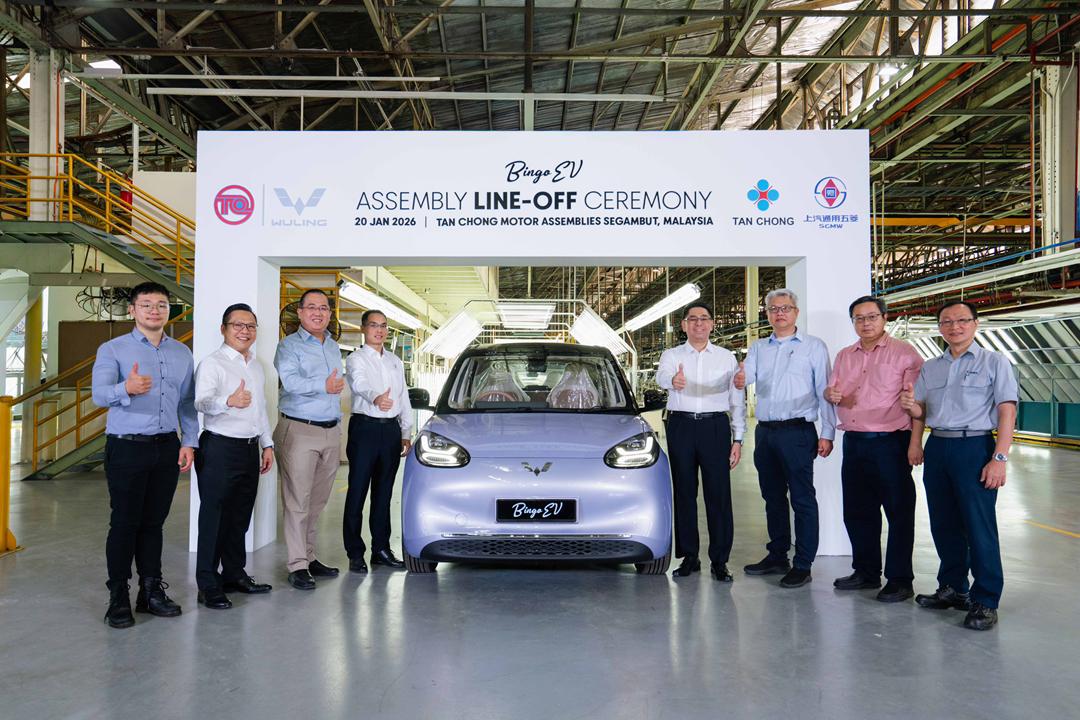
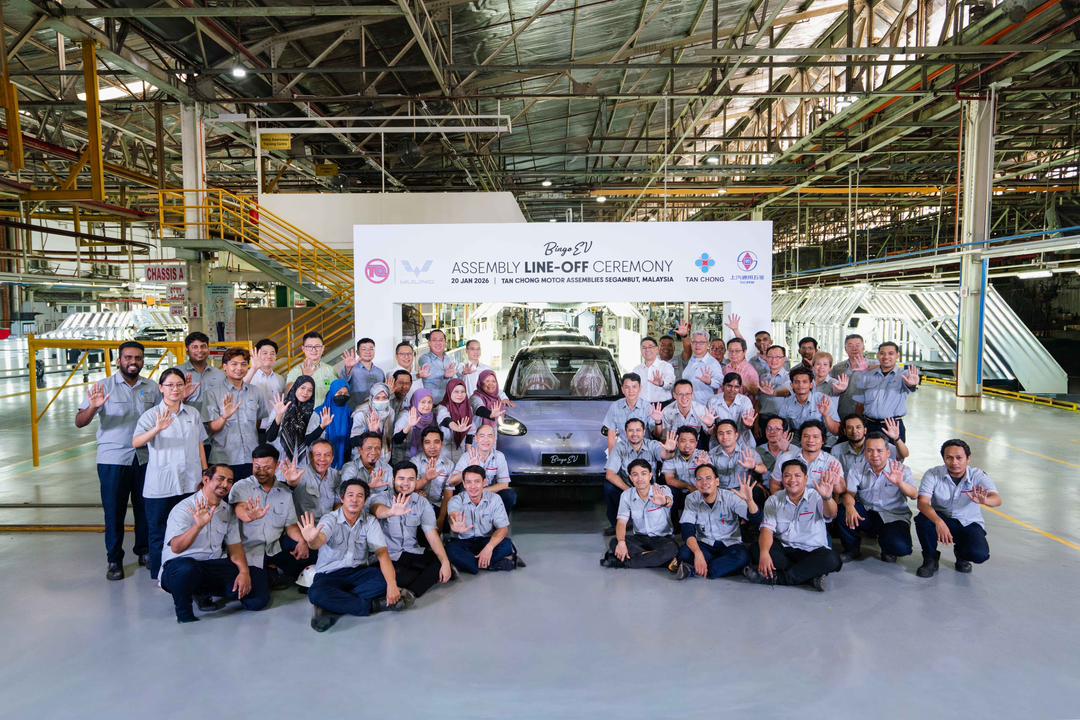
    OK, now it’s official. A month after launching the little Bingo EV in Malaysia, TQ Wuling has announced that local assembly (CKD) has officially begun at Tan Chong Motor Assemblies (TCMA) Segambut – the first EV to be CKD by Tan Chong. Just to be clear – there was no fully-imported (CBU) model on sale before this; the Bingo was launched as a CKD model.

    “As part of the initial ramp-up phase, TQ Wuling is adopting a phased production approach, with the flexibility to scale up output in line with market demand and the continued growth of Malaysia’s EV segment,” says the press release. Read into that however you will, but it sounds like TC is taking baby steps first instead of flying those Bingos out of the gates – what’s demand like, we wonder?

    “The commencement of local assembly of the TQ Wuling Bingo EV represents far more than the launch of a single model. It reflects our long-term investment and confidence in Malaysia as a key market and production base,” said TQ Manufacturing head of business Wan Wei Sun.

    TQ Wuling Bingo CKD officially starts in Segambut

    “By combining SAIC-GM-Wuling’s global EV capabilities with Tan Chong’s decades of strong manufacturing heritage, we are building trust through quality, strengthening the local ecosystem, and laying the foundation for sustainable growth in the years ahead,” he added.

    You can have the Pro for RM67,800 or the Max for RM72,800 – as a CKD EV, the Bingo’s tax-free until end-2027. The first 500 buyers get a RM5,000 rebate (making the prices RM62,800 and RM67,800 respectively), an eight-year/120,000 km EV battery warranty, an eight-year/160,000 km drive motor warranty, monthly instalments as low as RM625, a 7 kW home charger, a three-pin charger, solar tint and 17 insurance benefits plus EV coverage, which TQ Wuling says is altogether worth over RM12,000.

    Compared to the RM57k-70k Proton eMas 5, the Bingo’s claimed ranges are slightly better and it does have a powered driver’s seat and power-folding wing mirrors, which no eMas 5 variant has. But the Proton fights back with ADAS, a powered tailgate, a 360 camera (these three things are only on the Premium variant), more power, a frunk, faster DC charging (30-80% in 21 minutes regardless of variant) and five seats (yup). Learn more about the six-airbagged four-seater here.

    TQ Wuling Bingo launched in Malaysia

    TQ Wuling Bingo Malaysia official photos

     
  • Volvo EX60, EX60 Cross Country debut – 400 kW DC charging, up to 810 km WLTP; coming to Malaysia

    Volvo EX60, EX60 Cross Country debut – 400 kW DC charging, up to 810 km WLTP; coming to Malaysia

    The Volvo EX60 has made its debut, shortly after its uncovered form was leaked ahead of its official premiere. As shown previously, styling of the EX60 is evolved from its stablemates, chiefly the EX90, and the five-seater EX60 slots in between the three-row model and the smaller EX30.

    For exterior dimensions, the EX60 measures 4,803 mm long, 1,899 mm wide (2,067 mm including mirrors) and 1,635 mm tall with a 2,970 mm wheelbase, with track widths of 1,655 mm and 1,640 mm front and rear, respectively; kerb weight for the EX60 is 2,190 kg, while that of the EX60 Cross Country is 2,370 kg. Luggage capacity in the EX60 is 634 litres with the rear seats in place, and up to 1,647 litres with the rear seats folded; the frunk holds up to 85 litres.

    Starting with the P6 Electric, this is a single-motor, rear-wheel-drive variant that outputs 374 PS and 480 Nm, propelling it from 0-100 km/h in 5.9 seconds, with a WLTP-rated range of 620 km from its 83 kWh (80 kWh usable) battery.

    Next up is the P10 Electric with a dual-motor AWD powertrain with 510 PS and 710 Nm, enabling 0-100 km/h in 4.6 seconds, and a WLTP-rated range of 660 km from a 95 kWh battery (90 usable). The top P12 Electric outputs 680 PS and 790 Nm from its dual-motor AWD powertrain, yielding a 0-100 km/h time of 3.9 seconds and the aforementioned range of 810 km (WLTP) from a 117 kWh battery (112 kWh usable).

    Built on the manufacturer’s SPA3 electric vehicle architecture, this enables the EX60 to take fast charging at up to 400 kW DC, which adds up to 340 km of range in just 10 minutes. Charging the EX60 from 10-80% will take 19 minutes, while a full charge give the EX60 up to 810 km of battery range in the range-topping P12 Electric variant; also in the line-up are the P6 Electric and P10 Electric variants.

    All variants of the EX60 from debut are capable of bi-directional charging at up to 22 kW AC. According to Volvo, each powertrain variant will be offered in Plus or Ultra trim specifications, while a base Core trim level “will be introduced later on.”

    Suspension for the EX60 is by double wishbones in front and a five-link configuration at the rear, with coil springs for both front and rear axles. Active suspension specification brings semi-active dampers for the front and rear axles, while standard suspension employs hydraulic dampers.

    Braking is by 323 mm ventilated discs in front and 325 mm solid discs at the rear on the single motor RWD versions, and 345 mm ventilated discs in front and 325 mm ventilated discs at the rear on dual-motor AWD versions. Wheels on the EX60 range measure up to 22 inches in diameter.

    Volvo EX60, EX60 Cross Country debut – 400 kW DC charging, up to 810 km WLTP; coming to Malaysia

    As par for the current Volvo course, the cabin of the EX60 features a central infotainment touchscreen, which Volvo claims is no-lag, and the “most responsive user experience in any Volvo car to date.”

    Voice-commanded assistants now better understand passengers, while the user interface offers quicker access to key functions, says Volvo. As on other Volvo models, the driver of the EX60 gets a slim instrument display ahead of the steering wheel.

    The EX60 is the first Volvo to launch with Google’s AI assistant, Gemini, as the latest development in the partnership between Volvo and Google, enabling the car’s occupants to have “natural and personalised conversations” with the AI assistant without needing to remember specific commands, according to the carmaker.

    Audio output is handled by a 28-speaker Bowers & Wilkins sound system, which now includes headrest speakers for the four main seats. The EX60 is also the first Volvo to be pre-installed with Apple Music and Dolby Atmos.

    The EX60 introduces Navi Pilot Assist, which enables the driver to let the system steer the vehicle and assist with lane changes on highways at speeds of up to 130 km/h. This system can be operated hands-free “while staying fully engaged,” according to Volvo.

    Volvo EX60 Cross Country

    Joining the line-up is the EX60 Cross Country that is offered in P10 Electric guise, which is rated for up to 640 km of range on the WLTP testing standard. Continuing a long-running line of taller-riding Volvo derivatives, the EX60 Cross Country has a 20 mm-taller ride height compared to the EX60, while air suspension can raise the vehicle a further 20 mm when more ground clearance is required.

    There will be two variants of the EX60 Cross Country, starting with the P10 AWD Electric that offers up to 640 km of range (WLTP), and this will be joined later by a P12 AWD Electric variant, with longer battery range.

    Although the Volvo EX60 range has just been officially unveiled, Volvo Car Malaysia has given a localised perspective on the five-seater EV earlier this month, confirming that it will arrive in this market, stating that “whether you plan to drive from Johor to Perlis, make a trip from Kuala Lumpur to Penang, or travel from Sabah to Sarawak, the new, all-electric Volvo EX60 SUV has your back”.

    GALLERY: 2026 Volvo EX60

    GALLERY: 2026 Volvo EX60 Cross Country

     
  • BMW iX3 Long Wheelbase to debut in China in April – 900 km CLTC; stretched NA5 coming to Malaysia

    BMW iX3 Long Wheelbase to debut in China in April – 900 km CLTC; stretched NA5 coming to Malaysia

    The Neue Klasse-based (NA5) BMW iX3 will gain a long wheelbase version that is set to make its debut at this year’s Auto Beijing near the end of April. Officially called the iX3 Long Wheelbase as stated in the German automaker’s release, the stretched version of the electric SUV is said to be developed specifically for China and is scheduled to go on sale there in the second half of 2026.

    While BMW says the iX3 Long Wheelbase embodies its ‘In China, for China and with China’ guiding principle, the model will not be limited to that market. Following its world premiere, the SUV is planned to be made available in selected markets, namely Malaysia, Thailand, Indonesia and India.

    Malaysia has gotten its fair share of long-wheelbase BMWs that many assumed were “China-only,” including the G28 3 Series that is currently available in a facelifted 330Li M Sport guise. More recently, we welcomed the iX1 L that comes fully imported (CBU) from China.

    BMW iX3 Long Wheelbase to debut in China in April – 900 km CLTC; stretched NA5 coming to Malaysia

    In the case of the iX3 Long Wheelbase, that distance between the wheels has been extended by 108 mm to 3,005 mm. This undoubtedly results in a longer overall length, with the benefits being better rear-seat comfort and overall spaciousness, which are things customers in the premium segment appreciate in China.

    As with the standard-wheelbase iX3, the long-wheelbase version is built on an 800-volt architecture and incorporates BMW’s sixth-generation eDrive technology. The company is claiming a CLTC-rated range of over 900 km and that a 10-80% state of charge will take around 21 minutes. The latter is due to support for 400-kW DC fast charging, with 400 km added in approximately ten minutes.

    BMW iX3 Long Wheelbase to debut in China in April – 900 km CLTC; stretched NA5 coming to Malaysia

    Vehicle-to-load (V2L) functionality will also be part of the iX3 Long Wheelbase’s feature set along with many other technologies found in the regular iX3 such as the Heart of Joy, Dynamic Performance Control, Panoramic iDrive (combines Panoramic Vision, a 3D head-up display and central display) and Operating System X.

    For the Chinese market, BMW is integration Huawei technologies, including Digital Key, HiCar, and the My BMW App based on HarmonyOS NEXT. A China-specific ADAS software stack developed in collaboration with Momenta will also be implemented in the iX3 Long Wheelbase sold there.

     
  • Volvo launches ‘new car brand’ called Selamat – ES90 teasers part of year-long campaign focusing on safety

    Volvo launches ‘new car brand’ called Selamat – ES90 teasers part of year-long campaign focusing on safety

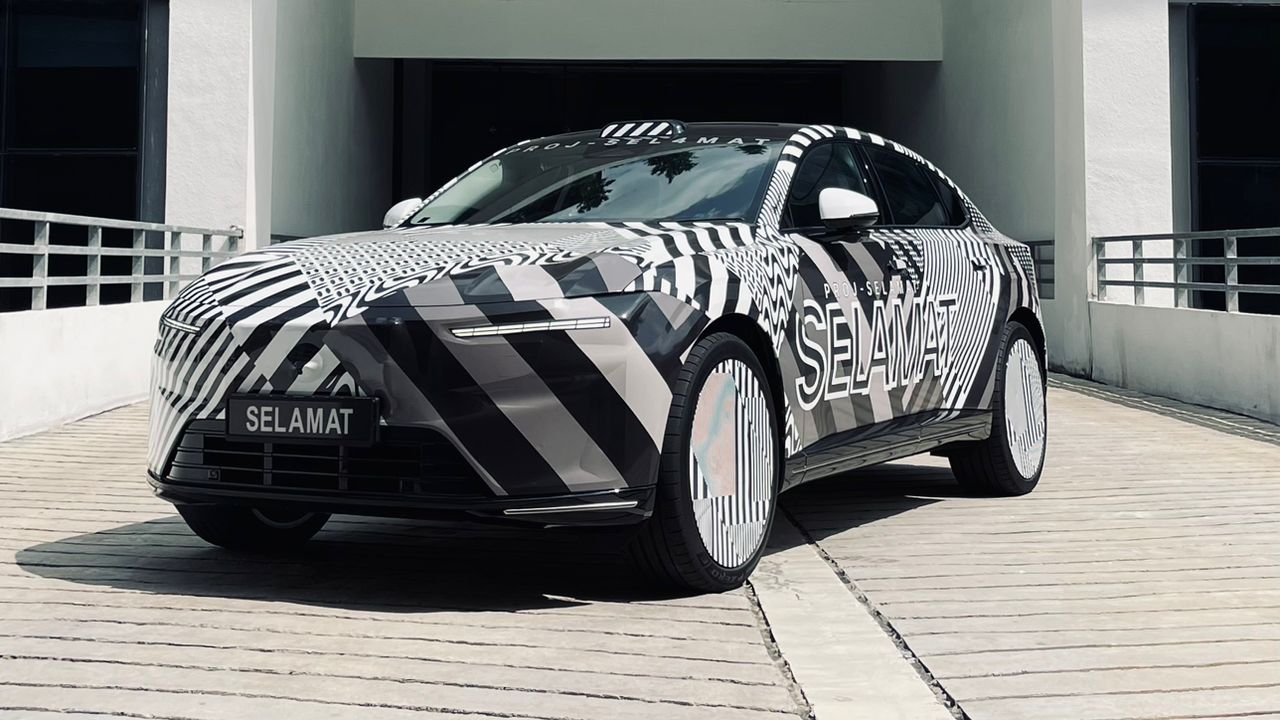
    Today’s launch of the Volvo ES90 also served as the reveal of ‘Selamat’. Volvo Car Malaysia’s teaser campaign for the all-new electric sedan centred on a ‘new car brand’ called Selamat. We saw that word displayed on a camouflaged mule running around KL last week, and Selamat was also seen on cryptic outdoor ads and an online campaign.

    VCM explains that in Malaysia, Selamat has a double meaning. Spoken every day, most often used to wish each other well (as in selamat pagi or selamat jalan), the word also means safety. And Volvo is safety. We know that, you know that, and everyone who’s not a car person also knows that – doubling down on their USP, that’s what the inventor of the three-point safety belt is doing here.

    “The EV landscape in Malaysia is growing fast. New brands are entering the market, many of which assert their own claim towards advanced technology and safety. In a world where everyone says they are safe, safety risks becoming just another feature, something spoken about, but rarely felt,” explains Patricia Yaw, VCM’s sales and marketing director.

    Cryptic outdoor ads, online campaign teasing a ‘new car brand’ called Selamat, which turns out to be Volvo

    “For Volvo, safety has never been a claim. Selamat reflects our belief that true progress lies in giving drivers confidence, foresight, and peace of mind on every journey. As mobility continues to evolve, Selamat ensures that human life remains at the centre of everything we do,” she added.

    VCM says that Selamat is thematic campaign running throughout 2026, designed to transform road safety from a regulatory mandate into a shared culture. Expect to see a series of on-ground activations and educational initiatives to reassert the importance of safety in cars. It will all build towards the Selamat Drive event – slated for Q2 2026, the ‘flagship driving event’ will allow Malaysians to experience the synergy between safe driving habits and Volvo’s safety technologies in a real-world environment.

    According to data from the Department of Statistics Malaysia (DOSM), 4,428 transport-related fatalities were recorded in Malaysia in 2024. Let’s go for the safest cars we can afford (don’t forget good tyres and car maintenance), but perhaps more importantly, Malaysians need to drive better and be more calm behind the wheel. Selamat jalan.

    More on the new Volvo ES90 with 651 km WLTP range here – the CKD EV goes for RM340k.

     
  • Negeri Sembilan JPJ auctioning 100 vehicles on January 28, bidding starting from as low as RM50

    Negeri Sembilan JPJ auctioning 100 vehicles on January 28, bidding starting from as low as RM50

    The Negeri Sembilan road transport department (N9 JPJ) will be auctioning 100 vehicles of various types, including rigid lorries and Yamaha RX-Z bikes, on Wednesday, January 28, reports Harian Metro. Bidding will start from as low as RM50.

    “Auction documents will be sold on January 26 and 27 from 9am to 4pm at counter 39, Block Omega, JPJ Negeri Sembilan, Seremban. Interested bidders can purchase a book containing vehicle information for RM100, payment for which must be made in cash.

    “Bidders who have purchased the auction documents are allowed to conduct public inspections of motor vehicles at two seizure depots – at JPJ Negeri Sembilan and JPJ Pedas Enforcement Station, Rembau,” state JPJ director Hanif Yusabra Yusuf said yesterday in a statement.

    This auction, N9 JPJ’s first for the year, could perform better than preceding series, as there are several vehicles expected to be the focus of bidders, Hanif said, adding that the second series of 2025 yielded RM120,800 in total.

     
  • Hyundai Elexio to go on sale in Australia at RM165k – 350 kW charging, 546 km WLTP; coming to Malaysia?

    Hyundai Elexio to go on sale in Australia at RM165k – 350 kW charging, 546 km WLTP; coming to Malaysia?

    The Hyundai Elexio will go on sale in Australia priced from AUD59,990 (RM164,793), in a sole Elite variant. This will get a single motor with 160 kW (218 PS) and 310 Nm driving the front wheels, drawing from an 88.1 kWh lithium iron phosphate (LFP) battery to offer a claimed 546 km of range on the WLTP testing standard.

    The Hyundai Elexio made its debut in July 2025, entering the C-segment SUV to rival EVs such as the BYD Atto 3 which was revealed to gain mechanical updates for this year. Measuring 4,615 mm long, 1,875 mm wide and 1,675 mm tall with a 2,750 mm wheelbase, the Elexio is claimed to be capable of receiving a 10-80% recharge in 38 minutes with a 350 kW charger, according to the Hyundai Australia website.

    Equipment-wise, the Elexio for the Australian market gets 20-inch alloy wheels, a powered tailgate, an NFC Digital Key 2, while inside it gets a 27-inch touchscreen infotainment display and a small driver’s instrument cluster, shift paddles for regenerative braking, and leather upholstery.

    Hyundai Elexio, China market

    Also on are a 14-way power-adjustable driver’s seat, four-way power-adjustable front passenger seat (both front seats with heating and ventilation), heated steering wheel, dual-front wireless charging pads, a six-speaker audio system, five USB-C charging ports, voice control with four-zone voice recognition, BlueLink connected car services and over-the-air (OTA) software updates.

    Built in China, the Hyundai Elexio would be imposed import tax at a favourable rate which should aid in being competitive in the Malaysian market, which is a possibility now that the model is set to go on sale in the right-hand-drive Australian market.

    At present, the comparable BYD Atto 3 in a sole Ultra variant is priced at RM123,800 in Malaysia. Should the Hyundai Elexio go on sale in Malaysia, how much should the made-in-China Hyundai EV be priced?

    GALLERY: Hyundai Elexio

     
  • Honda to discontinue production of fuel cell systems in the US, a JV with GM – goes solo with next-gen

    Honda to discontinue production of fuel cell systems in the US, a JV with GM – goes solo with next-gen

    Honda has announced its decision to discontinue production of the current model of fuel cell system now produced at Fuel Cell System Manufacturing (FCSM) in the US, before the end of 2026. FCSM is a joint venture between the Japanese carmaker and General Motors (GM).

    After the discontinuation, Honda will proceed with its self-developed next-generation fuel cell system, which is set to be mass produced in 2027.

    FCSM was established in January 2017 in Brownstown, Michigan as the first ever JV in the automotive industry that would produce a fuel cell system. The two carmakers combined their respective expertise in areas of development, production and procurement and realised various synergies, including the development of a “high-quality fuel cell system with excellent durability and low-temperature resistance, the introduction of cutting-edge production technologies, and cost reduction through commonising parts suppliers,” Honda says.

    Honda to discontinue production of fuel cell systems in the US, a JV with GM – goes solo with next-gen

    “As this collaboration yielded some positive results, the two companies held extensive discussions regarding the continuation of FCSM business and reached an agreement to discontinue production of fuel cell systems at FCSM,” it added. Post-breakup, Honda will go it alone in the fuel cell world and will seek to grow its hydrogen business as one of the new core businesses of Honda.

    Honda has been conducting R&D of hydrogen and fuel cell technologies for over 30 years, In 2002, the Honda FCX became the first FCEV in the world to receive certification from both the US Environmental Protection Agency (EPA) and the California Air Resources Board (CARB), and went on lease sales in Japan and the US. FCEV successors include the FCX Clarity in 2008 and the Clarity Fuel Cell in 2016.

    A fruit of this GM JV is the CR-V e:FCEV that debut in 2024. Based on the current sixth-generation CR-V, the e:FCEV is the first Japanese FCEV model with a plug-in charging function, which allows it to juice up from home or public EV chargers.

     
  • Volvo ES90 in Malaysia – CKD EV crossover sedan, 800V, RWD, 333 PS, 651 km WLTP range, RM340k

    Volvo ES90 in Malaysia – CKD EV crossover sedan, 800V, RWD, 333 PS, 651 km WLTP range, RM340k

    Volvo Car Malaysia has been teasing this car for a while now (I’m sure you’ve seen the spyshots and the ads for a new Selamat car), but it’s finally here. The Volvo ES90 has been officially launched, the distinctive electric crossover sedan arriving in CKD locally-assembled form from the get-go and thus still tax free.

    Available in the same Ultra Single Motor Extended Range variant as in Thailand, the ES90 is priced at RM339,888 on-the-road without insurance. This is significant, as it undercuts the BMW i5 eDrive40 – another CKD electric executive sedan – by nearly RM30,000.

    As part of the launch, the first 100 buyers who place a booking until March 31 will receive a 2% rebate (around RM6,800), with corporate buyers getting 8% in fleet assistance. This price is inclusive of a five-year, unlimited-mileage warranty and an eight-year/160,000 km battery warranty, plus five years of digital services (subscription required afterwards). Deliveries will begin in March.

    The ES90 designation might suggest that the car is a straightforward electric replacement for the S90, but Volvo posits that it also combines attributes of a fastback and an SUV. To that end, it features a hatchback and a short rear end, as well as a raised ride height of 181 mm in this spec.

    Volvo ES90 in Malaysia – CKD EV crossover sedan, 800V, RWD, 333 PS, 651 km WLTP range, RM340k

    The ES90 is built on the same second-generation Scalable Product Architecture (SPA2) as the EX90. Measuring exactly 5,000 mm long and 1,942 mm wide, it’s 60 mm shorter but 42 mm wider than the i5, and thanks to the increased ground clearance, its 1,547 mm height is 32 mm taller. It also has a 107 mm longer wheelbase at 3,102 mm.

    As per the i5 eDrive40, power comes from a single rear motor, here producing 333 PS (245 kW) and 480 Nm of torque. So equipped, the ES90 gets from zero to 100 km/h in 6.6 seconds on its way to an electronically-limited top speed of 180 km/h.

    Range is where the ES90 edges ahead of the BMW. Thanks to a more energy-dense 92 kWh nickel manganese cobalt (NMC) battery – versus 83.9 kWh in the i5 – the Volvo is able to travel up to 651 km on the WLTP cycle, which is slightly further than its rival’s 627 km.

    You’ll be able to charge much faster too, with the 800-volt electrical architecture – a Volvo first – enabling up to 300 kW of DC fast charging, topping up from 10 to 80% in just 22 minutes. Unfortunately, you only get 11 kW of AC charging support here, so a full charge takes a yawning ten hours.

    For a company whose handsome Scandinavian-cool design language is almost universally loved, the ES90’s styling is surprisingly polarising, with the pert rear end seemingly the bone of contention – this writer appears to be the only one in the office to like it. It is at least tightly designed, with sharp lines and taut surfacing making the straight-edged sedan look surprisingly athletic, no doubt helped by the massive 22-inch two-tone alloy wheels (the largest available globally) that fill the sizeable wheel wells.

    Volvo’s latest corporate look is clear to see at the front, with a flat, grille-less front end featuring the trademark diagonal chrome strip and Iron Mark, framed by the Thor’s Hammer LED daytime running lights. Unlike on the EX90, these are fixed and do not pop open to reveal the main projectors, which are instead arranged vertically on either side. High-Definition Pixel adaptive headlights come standard.

    Volvo ES90 in Malaysia – CKD EV crossover sedan, 800V, RWD, 333 PS, 651 km WLTP range, RM340k

    Along the side, the flush pop-out door handles and Polestar-style shrink-wrapped door mirrors help the ES90 deliver a decent-but-not-extraordinary drag coefficient of 0.25, while the long six-window glasshouse no doubt aids rear-seat roominess. At the rear, you’ll find EX90-style C-shaped taillights that frame the number plate recess, along with distinctive vertical lamps flanking the rear windscreen. Gloss black cladding on the lower half of the body helps reduce visual bulk.

    Step inside through the soft-closing doors and you’ll find a minimalist cabin even by usual Volvo standards, with almost every physical switchgear (including dedicated rear window switches) removed. Their space is taken up by a nine-inch instrument display and a 14.5-inch portrait infotainment touchscreen, and there’s also a head-up display fitted. A standard-fit panoramic glass roof helps lighten up the cabin and features an electrochromic frosting function.

    The displays run on Volvo’s (not quite latest, given that the EX60 has just been revealed) Android Automotive-based operating system, with the usual Google service built in and wireless Apple CarPlay and Android Auto. All this is powered by the Qualcomm Snapdragon Cockpit Platform, with a so-called Superstack tech set under the skin unifying the hardware and software modules and allowing for continuous over-the-air (OTA) updates throughout the life of the car.

    Music is piped in through a 25-speaker, 1,610-watt Bowers & Wilkins High Fidelity Audio System, which supports Dolby Atmos surround sound and features an Abbey Road Studios listening mode – a new spatial audio feature developed under license with the London music studio most associated with The Beatles.

    The hands-free powered tailgate opens to reveal a 424 litre boot, which is quite a bit less than the i5’s 490 litres, although the large opening should aid practicality. You can fold down the rear seats to increase luggage space to 733 litres, and there’s also a 22 litre front boot.

    Aside from the kit already mentioned, the range-topping Ultra trim brings with it active air suspension, four-zone auto air con, power-adjustable front seats with electric lumbar and side bolster adjustment, memory and ventilation, power-reclining rear seats with a “lounge” armrest, front and rear massage, acoustic glass side windows, park assist and a 360-degree camera. There’s no conventional key card as such, but you do get a key card and support for smartphone-based Digital Key Plus.

    Volvo’s pioneering range of safety features are now powered by dual Nvidia Drive AGX Orin core computers, enabling the latest Pilot Assist Level 2 semi-autonomous driving functionality. This incorporates the functions of adaptive cruise control with stop and go, lane centring assist and curve speed assist. Notable here is the lack of a roof-mounted lidar sensor on Malaysian-spec models, leading to a less taxi-like look.

    Other functions include autonomous emergency braking with oncoming car detection, evasive steering assist for pedestrians, cyclists and scooters, intersection AEB, run-off road mitigation, blind spot monitoring with collision avoidance, rear collision warning with collision mitigation, rear cross traffic alert with auto brake, a driver attention monitor, a door opening warning, a rear seat reminder and adaptive high beam. Nine airbags – including dual centre airbags – are fitted as standard.

    Available colours include Vapour Grey, Crystal White, Denim Blue and Onyx Black. Unlike in Thailand – where the ES90 is imported from China, at least until exports from Malaysia starts – there’s no Aurora Silver hero colour, and you also won’t be able to spec the gorgeous Mulberry Red. All are paired with a Charcoal (read: black) Nordico faux leather upholstery and blonde birch wood trim.

     
  • ‘Tonto’ threats won’t stop JPJ enforcement – Loke

    ‘Tonto’ threats won’t stop JPJ enforcement – Loke

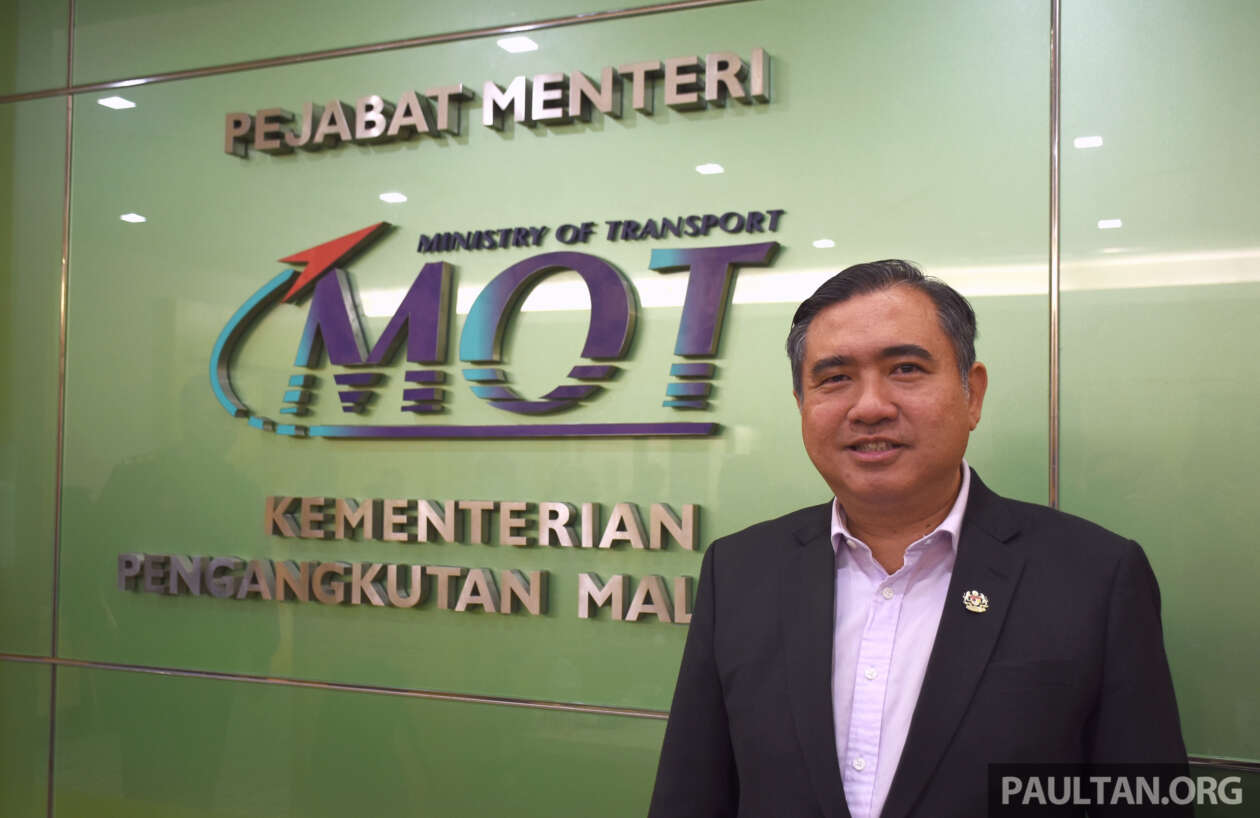
    Transport minister Anthony Loke has said again that the road transport department (JPJ) will not be deterred by threats from ‘tontos‘ (an abbreviation of tolong orang nak tipu orang, referring to those providing information about authorities to syndicates) in its nationwide crackdown on overloaded commercial vehicles, Bernama reports.

    “There are indeed challenges posed by these tontos, but we cannot give in to such threats when enforcing the law, as this concerns road safety and human lives,” Loke said in reply to Kulim Bandar Baharu MP Roslan Hashim, who asked about overloading enforcement challenges and if the Kejara demerit points system is still in use.

    The transport ministry has requested allocations from the finance ministry to equip enforcement officers with bodycams and firearms for their safety, and regarding Kejara, Loke said the system is still in place but will be reviewed to make it more effective and fair, especially for drivers who are pressured by operators to carry excess loads.

    ‘Tonto’ threats won’t stop JPJ enforcement – Loke

    “Drivers are not the only ones fined. Companies involved in overloading offences may face vehicle ownership suspension, and operating licences can be revoked if violations are repeated,” he said.

    The transport minister also revealed that based on preliminary police data, 163 fatal accidents involving heavy vehicles were recorded last year – 37% less than 2024’s 260 and 30% less than 2023’s 232.

    Also, between October 14 and December 31 last year, action was taken against 3,604 overloaded vehicles – 1,731 of them with 7.5 tonnes or less, 1,193 between 7.5 and 32 tonnes and 680 in excess of 32 tonnes.

     
  • Free Penang ferry for Thaipusam on Jan 31, Feb 1

    Free Penang ferry for Thaipusam on Jan 31, Feb 1

    There will be free Penang ferry rides on January 31 and February 1 for Thaipusam, the Penang Port Commission (SPPP) and Penang Port Sdn Bhd (PPSB) have announced.

    According to SPPP chairman Datuk Yeoh Soon Hin, the free rides are for both directions from Pangkalan Sultan Abdul Halim in Butterworth on the mainland to Pangkalan Raja Tun Uda on the island, with extended service till 3am on February 2.

    The Penang ferry will operate from midnight till 11.30 pm on January 31 and February 1, while on February 2, it will run from midnight till 3am. The public is urged to plan their journeys and refer to the latest ferry schedule online and on SPPP and PPSB’s social media pages.

    Yeoh said that the free ferry service not only aims to reduce congestion in Penang, but also encourages the use of public transport that’s more sustainable and efficient. Savings for ferry riders will be RM2 one way for those on foot and RM2.50 for two-wheelers.

    It has been well received. Last year’s free ferry rides for Thaipusam recorded 25,670 passengers and 7,993 passengers with two-wheelers over three days.

     
  • Lepas Malaysia targets 30 dealerships by end-2026 – Chery offshoot market launch takes place in 1H 2026

    Lepas Malaysia targets 30 dealerships by end-2026 – Chery offshoot market launch takes place in 1H 2026

    Lepas Malaysia (pronounced as ‘leap-pass’ and not ‘le-pas’) has plans to establish at least 20 sales and service outlets in key states across Peninsular and East Malaysia, with the bigger target being 30 outlets by the end of 2026.

    In an official release, the company also said it will introduce a ‘Lifestyle Experience Centre’ in the Klang Valley as an immersive space for the public to explore curated lifestyle zones and learn about Lepas’ technologies.

    “Designed for a generation that is confident, creative and connected, Lepas is built for individuals who seek balance in career, family and passion, and who expect their cars to reflect their personal aesthetic and lifestyle,” said Men Lin Bo, executive VP of Chery Corporate Malaysia.

    Lepas L8 (left), L6 (upper right), L4 (lower right)

    “As we prepare for our 2026 debut, our focus is to ensure every customer experiences the refined design and dependable technology that define Lepas. Our growing network marks the beginning of long-term commitment to the Malaysian market,” he added.

    An official market launch is set to take place in the first half of 2026, although the release didn’t explicitly state which Lepas model will be the first to go on sale here. At present, the Lepas line-up features three models – the L4, L6 and L8 – all built on Chery Group’s global NEV (new energy vehicle) platform designed to accommodate various vehicles sizes and multiple powertrain options.

    As reported previously, the L8, a rebadged version of the second-generation Chery Tiggo 8, is expected to lead the brand’s launch in Malaysia. Meanwhile, the L6 is a smaller C-segment SUV, while the L4 is the brand’s smallest offering targeting the A0 segment.

    GALLERY: Lepas L8 at the 2025 Gaikindo Indonesia International Auto Show

    GALLERY: Lepas L6 at the 2025 Gaikindo Indonesia International Auto Show

    GALLERY: Lepas L4 at the 2025 Gaikindo Indonesia International Auto Show


Latest Fuel Prices

PETROL
BUDI 95 RM1.99
RON 95 RM2.54 (-0.02)
RON 97 RM3.11 (-0.05)
RON 100 RM5.40
VPR RM6.36
DIESEL
EURO 5 B10 RM2.89 (-0.05)
EURO 5 B7 RM3.09 (-0.05)
Last Updated Jan 08, 2026

Latest Videos


Tools