3x latency reduction with Gemini models enhances the learning experience for 20M+ global students
350M monthly requests handled seamlessly through Google Cloud's worldwide infrastructure capacity
Smart model selection optimizes costs by using Gemini 2.0 Flash versus 2.5 Pro strategically
RAG implementation with BigQuery reduces AI hallucinations while personalizing educational content
Global expansion enabled across 17 countries through Google Cloud's local data center network
By combining student-generated content with Google Cloud's global infrastructure and Gemini's AI capabilities, Knowunity created something that didn't exist before: a truly scalable way to provide every student with their own tutor, available 24/7 in their pocket.
By combining student-generated content with Google Cloud's global infrastructure and Gemini's AI capabilities, Knowunity created something that didn't exist before: a truly scalable way to provide every student with their own tutor, available 24/7 in their pocket.
When one size fits none
School often doesn't make students happy, it's not inspiring, and it's not personalized. Every student is unique with their strengths and weaknesses, but in a classroom with 30 different students, teachers can't focus on individual needs.
Lucas Hild
CTO, Knowunity
When five students from southern Germany surveyed their classrooms in 2019, they discovered a problem that resonated far beyond their school walls. "School often doesn't make students happy, it's not inspiring, and it's not personalized," reflects Lucas Hild, CTO and co-founder of Knowunity. "Every student is unique with their strengths and weaknesses, but in a classroom with 30 different students, teachers can't focus on individual needs."
Today, Knowunity serves over 20 million students across 17 countries, processing more than 350 million AI requests monthly through Google Cloud's Gemini models. The journey from frustrated students to EdTech leaders required a fundamental rethinking of how AI could personalize education at scale.
Traditional education faces an age-old dilemma: how to provide individualized attention when resources are limited and classrooms are crowded. For Knowunity's founders, this wasn't just an academic endeavor. It was personal. "Many students fall behind because the system simply can't adapt to their individual learning needs," Hild explains.
The EdTech landscape offered few solutions. Existing platforms provided teacher-created content but lacked companion-style guidance. Meanwhile, students were turning to generic AI tools for homework help, but without quality control or age-appropriate safeguards in place.
Knowunity's vision was different: create a "daily learning companion" that could understand each student's unique strengths, weaknesses, and learning style. "We wanted to build something that would accompany students from the beginning so it wouldn't get to the point where parents would need traditional, expensive tutoring," Hild notes.
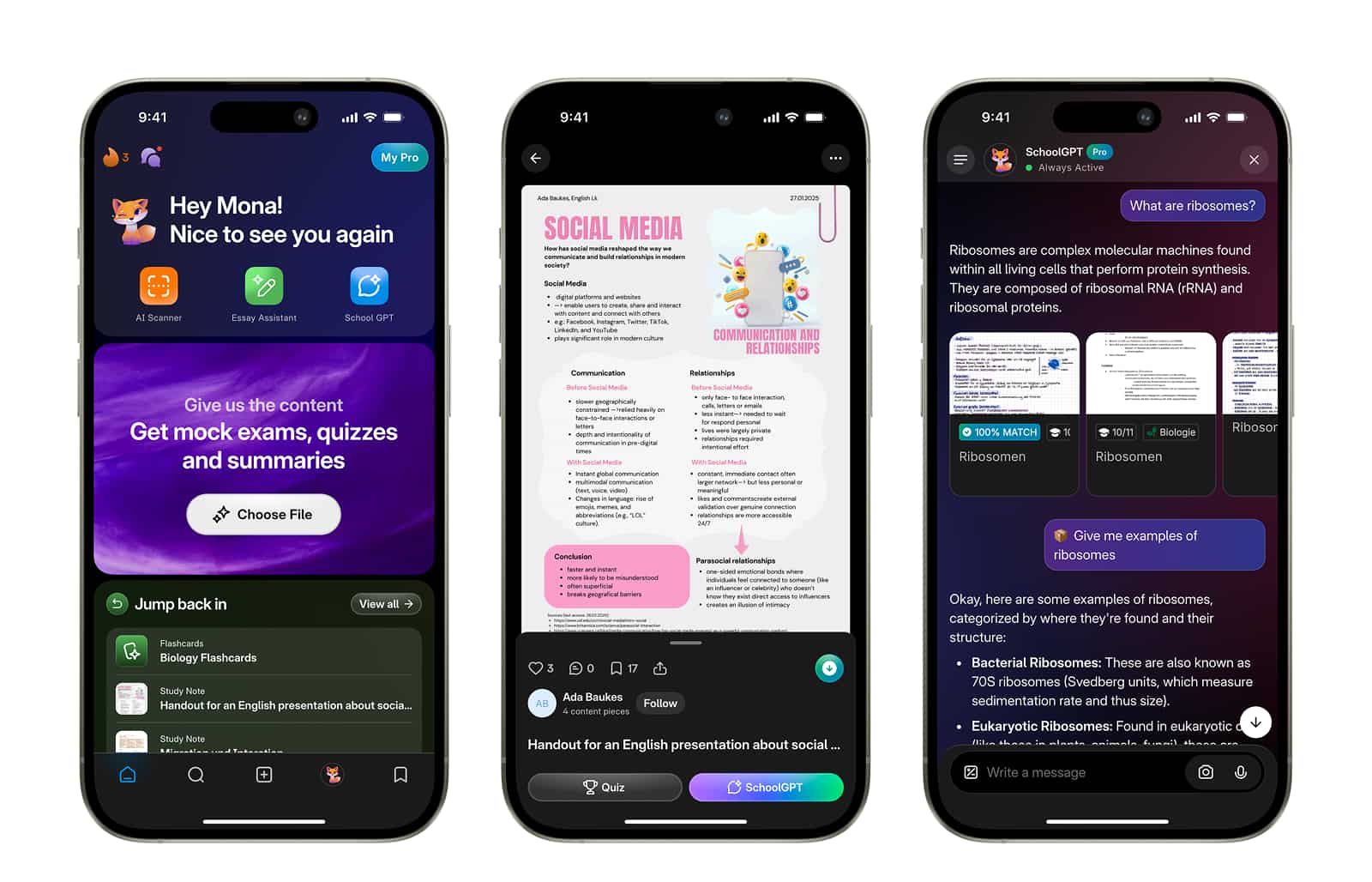
Building intelligence that learns how students learn
Knowunity's breakthrough came from a key insight: instead of having teachers create content for students, they would enable students to develop content for each other. "This gives us the huge advantage that the content is at eye level with students, making it much more understandable," Hild explains. "Plus, it allows us to expand much faster."
The real magic happened when Knowunity began leveraging this peer-generated content to enhance its AI capabilities. "We use these learning materials to improve the AI companion's responses through Retrieval Augmented Generation," Hild details. "We feed the learning content into the context of the language model, which improves answer quality and reduces hallucinations, while adapting the complexity to the student's level."
BigQuery became one of our most important Google services. We store all our data there – backend data, ML data, analysis data.
Lucas Hild
CTO, Knowunity
When a student asks a question, Knowunity's system analyzes the query through multiple lenses: intent, complexity level, and subject area. The system then retrieves relevant content from its database and selects the appropriate system prompt and model size.
"We have specific system prompts for each intent," Hild explains. "One that explains how we solve math problems, another for translations, another for essay help." For complex mathematical problems, they built a specialized "Math Code Execution Engine" that prevents calculation errors by converting problems into executable code before returning natural language explanations.
The platform's infrastructure evolved with its ambitions. Starting with a simple monolith and database, Knowunity quickly recognized data as its competitive advantage. "BigQuery became one of our most important Google services," Hild notes. "We store all our data there – backend data, ML data, analysis data."
The Gemini advantage: When performance meets global scale
One of the big problems many LLM providers have is hitting capacity limits. Gemini can automatically redirect traffic to another data center when capacity limits are reached. Since we handle more than 350 million LLM requests per month, it's very relevant that every request goes through.
Lucas Hild
CTO, Knowunity
Knowunity's migration to Google Cloud's Gemini models marked a pivotal moment. The demands of serving millions of students globally required a more robust solution. "The biggest point is that Google's models are currently at the top of all benchmarks," Hild explains.
But performance was just one factor. "In our internal benchmarks, we saw that Gemini models are significantly faster, especially for multimodal input. We could sometimes reduce latency by a factor of three, which allows us to offer a better user experience."
Global infrastructure capabilities proved equally crucial. "One of the big problems many LLM providers have is hitting capacity limits," Hild observes. "Gemini can automatically redirect traffic to another data center when capacity limits are reached. Since we handle more than 350 million LLM requests per month, it's very relevant that every request goes through."
Knowunity doesn't rely on a single model approach. Instead, they strategically deploy different Gemini variants based on specific use cases. "We use almost all Gemini models for different use cases," Hild explains. "If it's a difficult math problem, we use Gemini 2.5 Pro. If it's a straightforward question, Gemini 2.0 Flash is sufficient." This optimization balances quality, cost, and latency, crucial factors when serving millions of students who expect instant responses.
The platform conducts extensive A/B testing to optimize model selection. "We can always see what impact a model switch has for a specific intent on student retention and engagement, as well as on feedback we collect directly in the companion," Hild notes. "We've learned a lot over time about which model to use, which system prompts to use, which tool calls to include, and how to adapt the UI so students can learn as effectively as possible with the content."
Responsible AI in action
Working with millions of minors requires a sophisticated and responsible implementation of AI. Knowunity addresses the concern of students using AI to cheat through what Hild calls a "Socratic approach."
"Our approach is to provide answers as Socratically as possible and find the solution together with the student," he explains. "When we see that a student is interested in working together to solve the task, we switch to a very Socratic style."
This approach extends beyond preventing cheating to fostering curiosity and exploration. "A big advantage of AI is that you can unleash a lot of curiosity in students," Hild observes. "Often, students have strong inhibitions about asking questions in school when they don't understand something."
A big advantage of AI is that you can unleash a lot of curiosity in students. Often, students have strong inhibitions about asking questions in school when they don't understand something.
Lucas Hild
CTO, Knowunity
The platform implements multiple safeguards through a three-step content moderation process: machine learning models for initial filtering, manual team review for edge cases, and ongoing community feedback. "Content quality has never been a huge issue because we mainly operate at the school level with foundational knowledge, where accuracy standards are well-established and clear," Hild notes.
The results speak for themselves. Knowunity has grown to serve 20 million students across 17 countries, with concrete learning improvements. "Through surveys, we see that when a student has been with us for two weeks, their grades improve by 0.5 points on a scale of 1 to 6," Hild reports.
Google Cloud's global infrastructure has enabled this expansion. "The global infrastructure was a big plus point for us," Hild explains. "We can assume that Google has a data center locally in almost every country, so we're relatively close to our customers."
This proximity translates into improved user experience and higher retention. The peer-to-peer content model has created a virtuous cycle where students create content that helps others in their region. At the same time, Knowunity's AI systems learn to provide better personalized recommendations.
Schools have taken notice. "We regularly get inquiries from schools that would like to buy the app for their entire school," Hild reports. Rather than seeing Knowunity as a competitor, educators are increasingly viewing it as a valuable supplement to traditional instruction.
The platform has also created an unexpected revenue stream by connecting students with universities and apprenticeship programs. "Many students don't know what to do after school," Hild explains. "On the other hand, there are many universities desperately looking for students, and apprenticeship positions looking for trainees. By bringing these two parties together, we were able to build a second, quite substantial revenue stream."
Looking ahead: The future of personalized learning
In two to three years, I believe every student will have a completely personalized AI companion that knows even more about the individual student and better understands how they need to learn.
Lucas Hild
CTO, Knowunity
Knowunity's vision extends far beyond current success. "In two to three years, I believe every student will have a completely personalized AI companion that knows even more about the individual student and better understands how they need to learn," Hild predicts.
The next generation of features promises more engaging learning. Knowunity is prototyping with the Gemini Live API to create natural audio conversations, where students can ask questions verbally and receive explanations accompanied by dynamic visualizations on a virtual whiteboard. "This transitions into a teacher-like interaction, but is even more personalized because you can ask questions directly and it's adapted to the student," Hild explains.
The potential to transform education systems is enormous. "I think there's potential for education systems like Germany's to increasingly rely on such technologies to raise educational standards fairly for everyone," Hild observes. The vision of every student having a personal learning companion from fifth grade through graduation could fundamentally democratize access to personalized education.
Technical innovations continue to drive toward this future. "Dynamic visualizations are currently a huge internal topic for us, answering with visual content in addition to text," Hild explains. "We've made good progress, but especially when it comes to showing students dynamic visualizations, the current state of AI isn't quite at the level where we can work well with it yet."
The platform is also exploring expansion beyond traditional school education. "Education doesn't stop after the high school diploma," Hild notes. "Our goal is to accompany students for as long as possible, so naturally, university is the next logical step for us."
The bottom line: AI that teaches
Knowunity's success illustrates what becomes possible when cutting-edge AI technology meets a deep understanding of educational needs. By combining Google Cloud's Gemini models with innovative approaches to personalization and responsible AI implementation, they've created something new: a truly scalable way to provide individualized learning support.
"Gemini is fundamental to the AI companion," Hild reflects. "It essentially makes the companion possible in the first place." But the transformation isn't just technological – it's pedagogical. Knowunity has demonstrated that AI can understand how individual students learn, adapt to their needs, and guide them toward better outcomes.
As Lucas Hild puts it, the ultimate goal is to give every student "their personal learning advisor in their pocket." For 20 million students across 17 countries, that future has already arrived. With Google Cloud providing the foundation for continued innovation and scale, Knowunity is positioned to make personalized, AI-powered education accessible to students everywhere.
The classroom of the future won't replace human teachers, but it will ensure that every student has access to the personalized support they need to succeed, whenever and wherever they're ready to learn.
Gemini is fundamental to the AI companion. It essentially makes the companion possible in the first place.
Lucas Hild
CTO, Knowunity
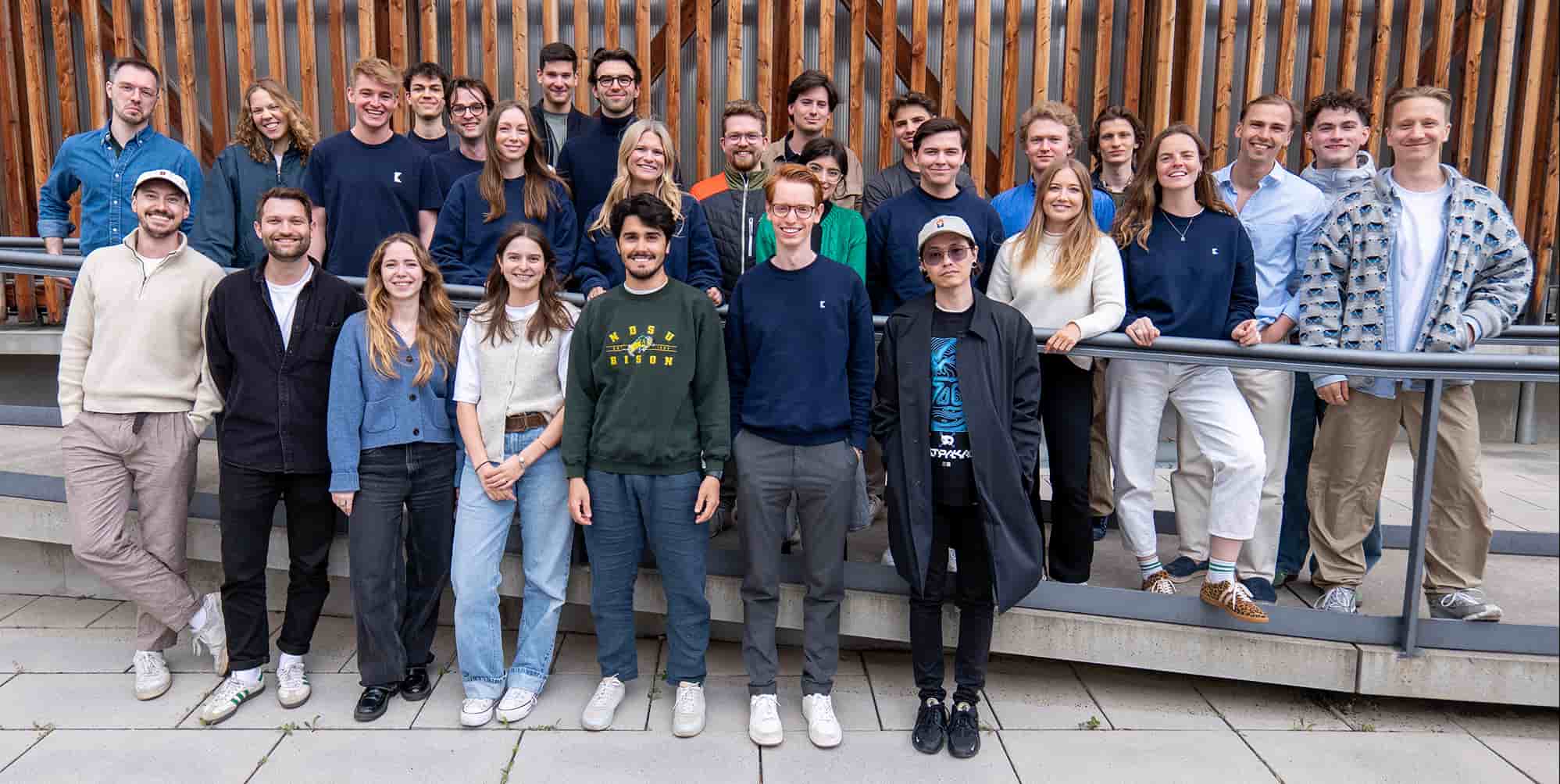
Knowunity's AI companion is built explicitly for the needs of students. Today, the platform serves over 20 million students across 17 countries, processing more than 350 million AI requests monthly through Google Cloud's Gemini models.
Industry: Digital Solutions
Location: Germany