The future looks bad on purpose – with brands increasingly turning worst-case futures into launch strategy and marketing fuel.
The New York City subway has become an exhibition space for dystopian futures. Late last year, “modern IVF” company Nucleus coated a SoHo station with ads encouraging commuters to “have your best baby”.
Billboards that would’ve worked perfectly in a Gattaca prequel shouted “IQ is 50% genetic” and “Height is 80% genetic” from train doors. A4 posters taped to nearby lampposts – complete with QR codes leading to pickyourbaby.com – boasted “these babies have great genes”, a clear reference to Sydney Sweeney’s grimace-inducing American Eagle campaign.
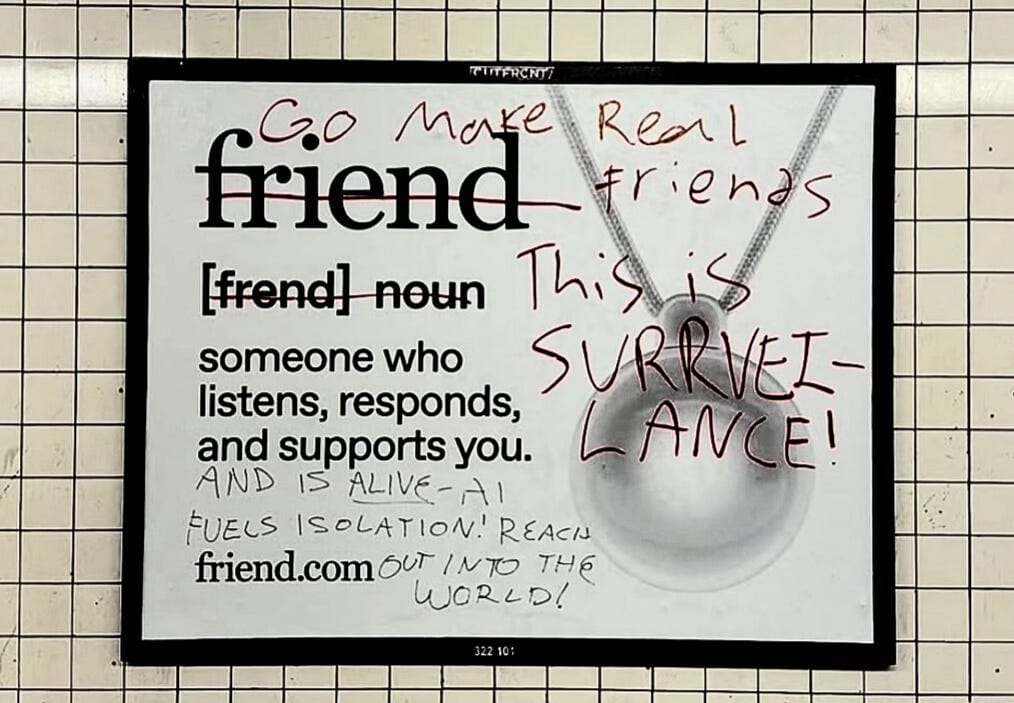
It harked back to the summer, when ads for AI wearable Friend plastered station walls and train interiors across five New York boroughs. The activation cost the startup at least $1m and was vandalised – both IRL and online, via Danger Testing’s VandalizeFriend.com.
Friend.com
“They’re meant to spark something,” Nucleus founder Kian Sadeghi later wrote in a public note, putting it lightly. These campaigns are concentrated and all-encompassing for a reason: their success hinges on a reaction. As Friend founder Avi Schiffmann tweeted: “The picture of the billboard is the billboard.”
Automated work startup Artisan grabbed hate – and headlines – for its own dystopian message, “Stop Hiring Humans”, which according to a recent blog post by founder Jasper Carmichael-Jack drove $2m in annual recurring revenue. Rather than opting for a New York subway takeover, Artisan’s first billboard went up in San Francisco during TechCrunch’s annual conference.
Want to go deeper?
Get a consultation session with a Protein AGENCY strategist who will help you to interpret what this SEED means for your brand or category: