Lordosis refers to the natural inward curve of the spine, most noticeable in the lower back (lumbar spine) and sometimes in the neck (cervical spine). Hyperlordosis is an exaggerated curve that may cause pain.
Everyone has a certain degree of natural inward curve in their lower back and neck. This curvature helps the spine absorb shock, maintain balance, and support the body’s weight during movement.
Excessive lordosis or hyperlordosis is when the curve becomes too pronounced. This can cause the stomach to stick out and the buttocks to appear more prominent.
It may lead to lower back pain, muscle tightness, or posture problems. Causes include poor posture, obesity, muscle imbalances, spinal conditions, or injury.
In short, lordosis is a normal spinal curve, but when it becomes exaggerated, it may require medical attention or physical therapy to correct symptoms or discomfort.
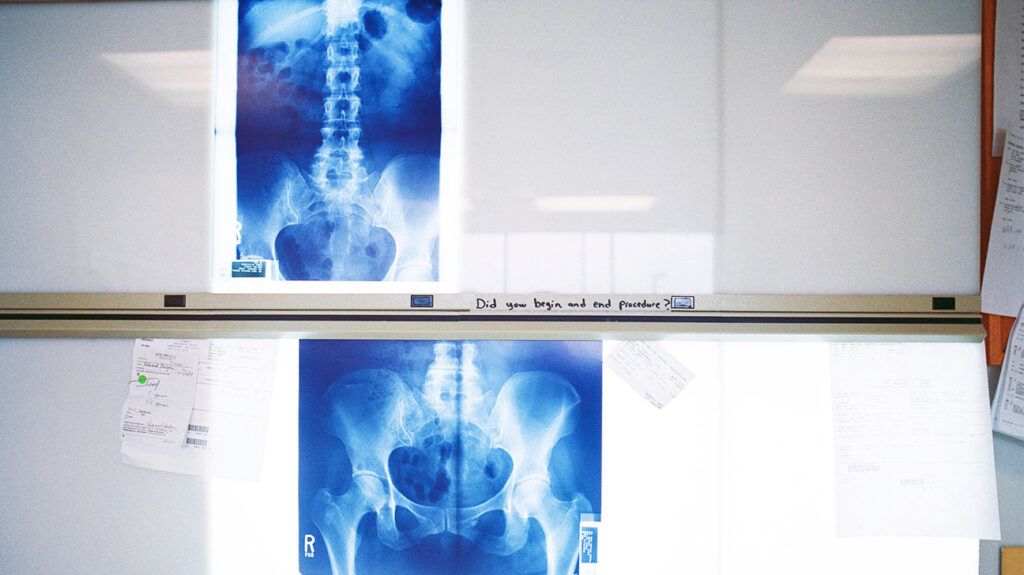
Hyperlordosis refers to an exaggerated inward curve of the spine. It most often occurs in the lower back, in which case health experts refer to it as exaggerated lumbar lordosis.
If it occurs in the neck, the medical name for it is exaggerated cervical lordosis.
The thoracic spine can also curve outward, in a hump shape, which is called kyphosis. The thoracic spine is the section between the neck and lower back.
Sometimes, having another type of spinal curve causes the body to develop hyperlordosis to compensate for the existing imbalance.
The defining characteristic of hyperlordosis is an exaggerated inward curve of the spine.
Depending on the location, hyperlordosis can cause the buttocks and the stomach area to stick out. Due to the curve in their back, a person with lordosis may find it difficult to lie flat on the floor.
In many cases, hyperlordosis alters a person’s appearance but causes no symptoms. However, severe hyperlordosis may cause:
- back or neck pain
- pain that radiates into the legs and feet, which medical experts call sciatica
- tingling or numbness
Rarely, hyperlordosis may cause an individual to lose control of their bladder or bowels or to experience sudden, severe leg pain or weakness. If this happens, they should seek medical attention immediately.
If the curve in the spine is mildly exaggerated, a person may not require treatment. Often, if there is no pain, and the curve does become more pronounced, a doctor does not need to intervene.
When hyperlordosis does require treatment, the right approach depends on the cause of the curvature. For example, postural hyperlordosis resulting from muscle weakness or overweight may improve with physical therapy and weight management.
If a child has hyperlordosis, a doctor may recommend a back brace to prevent the curve from progressing as the child grows.
If hyperlordosis causes pain, nonsteroidal anti-inflammatory drugs, such as ibuprofen (Advil), may help.
A healthcare professional can help identify exercises that are safe and effective for people with hyperlordosis. A doctor may recommend a physical therapist or trainer who specializes in these types of conditions.
The American Council on Exercise (ACE) identifies several exercises that can benefit people with abnormal spinal curvature. The ACE recommends the following exercises for people with hyperlordosis:
Hip flexor stretches
To perform a hip flexor stretch, start from a kneeling position on a soft surface, such as a yoga mat.
- Place the right foot in front of the body so that the knee bends at a 90-degree angle, with the right knee directly over the right foot.
- Pull the shoulders down and back, without arching the back, and keep the pelvis and spine stable and neutral.
- Lean forward into the right hip while keeping the left knee on the ground and with the pelvis facing forward.
- Hold the stretch for 30–45 seconds at a time and repeat 2–5 times for each hip.
If it feels comfortable, lean farther into the hip to deepen the stretch.
Cat-Cow Pose
To perform the Cat-Cow yoga pose, start on the hands and knees on the floor or a yoga mat.
- Place the knees hip-width apart and directly under the hips, with the toes tucked.
- Place the hands directly below the shoulders, facing forward, and shoulder-width apart.
- Use the abdominal muscles to move the spine into a neutral position.
- Exhale and slowly arch the spine toward the ceiling, allowing the head to drop down, and hold the position for 10–15 seconds.
- Inhale and relax the spine, drawing the shoulder blades down the back, and hold the position for 10–15 seconds.
- Return the spine to a neutral position.
Supine hollowing
According to ACE, to perform supine hollowing, a person should follow these steps:
- Lie on the back with the knees bent and the feet flat on the floor, about 1 inch (in) from the buttocks.
- Extend the arms to the sides at shoulder level.
- Breathe deeply and allow the shoulders to relax.
- Pull the shoulders down and back, without arching the back, and hold this position during the exercise.
- Perform a gentle Kegel exercise — contracting the pelvic floor as if trying to stop urination.
- Draw the belly button toward the lower back without flaring the hips or ribcage.
- Perform the Kegel while pulling the belly inward, and repeat this while breathing normally.
A person can add the following steps as they get better at this exercise:
- Lift one leg about 3–6 in off the ground without moving the torso.
- Lift the toes of one foot off the floor. Then slide the foot 3–6 in away from the buttocks without moving the torso.
If any exercise causes pain or worsens symptoms, stop immediately.
Doctors do not always know why hyperlordosis develops, but there are certain causes and risk factors.
These can help a doctor classify hyperlordosis as follows:
- Traumatic hyperlordosis: This is caused by an injury to the spine, such as a fracture. Osteoporosis, which weakens the bones, may increase the risk of these fractures.
- Congenital hyperlordosis: This can stem from an inherited condition, such as achondroplasia, which affects cartilage growth. It can occur due to a problem with the development of the spine during childhood.
- Postural hyperlordosis: This is caused by uneven posture. Having overweight or weakness in the abdominal muscles can increase the risk, as both factors strain the lower back.
- Neuromuscular hyperlordosis: Several neuromuscular conditions can cause hyperlordosis, including muscular dystrophy and cerebral palsy.
- Postsurgical hyperlordosis: This results from back surgery that makes the spine less stable, such as a laminectomy or selective dorsal rhizotomy.
- Secondary hyperlordosis: This results from having another condition — possibly another type of spinal curve, such as kyphosis or scoliosis, or a condition that affects the hip joints.
- Obesity: Carrying excess weight can cause the bones and muscles to “lean backward” to improve balance.
- Osteoporosis: Age and other factors can cause bones to weaken and become brittle, which may lead to curvature of the spine.
- Spondylolisthesis: This causes one vertebra to slip forward, over another, and it can cause lordosis, usually in the lower back.
A doctor can usually identify hyperlordosis with a physical examination. They may also use an X-ray, MRI, or CT scan to confirm the diagnosis. A scan can indicate the extent of the curve in the spine.
If the person has symptoms of an injury or a medical condition that can cause hyperlordosis, the doctor may perform additional tests to diagnose the underlying cause.
Lordosis is the normal curvature of the spine. Hyperlordosis is an exaggerated inward curve of the spine, often in the neck or lower back. There are several causes and risk factors, including congenital conditions, uneven posture, and injuries.
A doctor can often diagnose hyperlordosis with a physical examination, and imaging scans can help.
Usually, a person with mild hyperlordosis does not need treatment, but they may benefit from physical therapy or over-the-counter medication if the curve causes pain. Severe hyperlordosis may require surgery.