Gerstmann-Strässler-Scheinker syndrome (GSS) is a rare, inherited brain disorder. It can cause cognitive difficulties, involuntary muscle movements, and difficulty speaking.
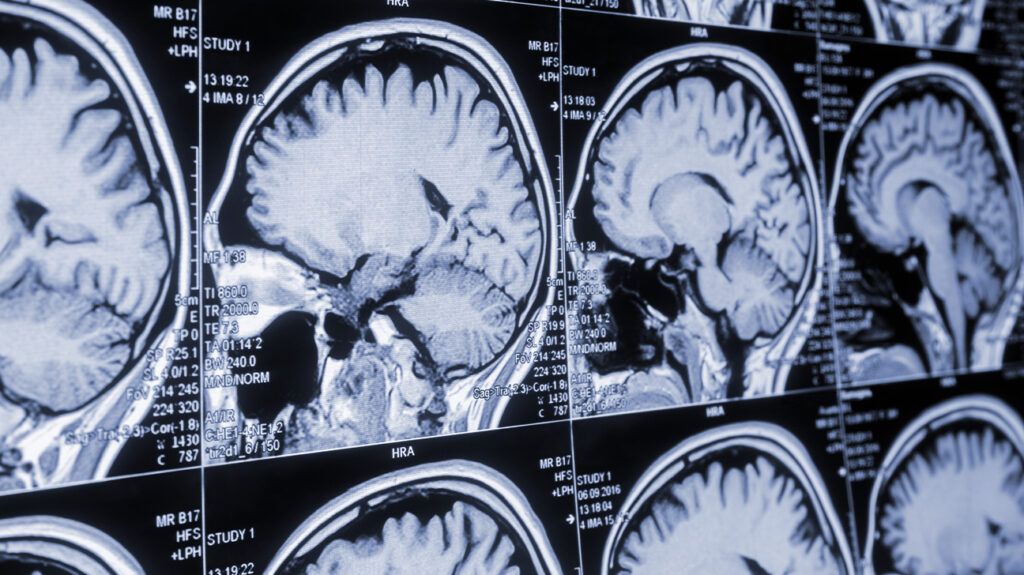
GSS is a rare prion disease. Prion diseases, also known as transmissible spongiform encephalopathies, are a type of brain disease. Prion diseases occur due to an atypical structural change, called misfolding, in a prion protein, which causes brain damage.
Prion diseases are ultimately fatal, so treatment for GSS is supportive, helping to manage symptoms and improve quality of life. Treatment may include occupational, speech, and physical therapies.
Receiving a GSS diagnosisReceiving a diagnosis of GSS can be challenging to deal with and understand. A person and their loved ones may wish to seek out mental health resources and speak with a mental health professional to help with the anxiety and stress that they might be feeling.
A person can find support and resources from the following organizations:
One of the first symptoms of GSS is usually cerebellar ataxia, which progresses slowly. Cerebellar ataxia is a lack of coordination and balance due to damage to the cerebellum, a part of the brain that helps control movement.
Around 2 to 4 years after the initial onset of GSS, cognitive impairment may develop. Cognitive impairment is a loss of thinking ability, which can include problems with memory, decision making, and judgment.
Symptoms of GSS may include:
- myoclonus, which is an involuntary jerking or twitching movement of the muscles
- athetosis, which refers to involuntary writhing movements, which may be slow and continuous
- dysarthria, which is difficulty speaking due to weakened speech muscles and may cause slurred or slow speech
- a change in a person’s typical walking pattern or gait
- nystagmus, which causes rapid, uncontrollable eye movements
Other common characteristics of GSS include:
- dementia
- deafness
- parkinsonism
- gaze palsies, which is an inability to move both eyes together in the same direction
- hyporeflexia, which is a reduction or loss of muscle reflexes
- extensor plantar response, which is an abnormal reflex of the toes
GSS is a rare conditionaffecting around 1 to 10 people per 100 million per year. It accounts for 10% to 15% of human prion diseases.
People inherit GSS. The disease occurs due to a genetic mutation in the PRNP gene, which gives instructions for making the prion protein.
A family history of GSS is a risk factor for the disease. GSS follows an autosomal dominant inheritance pattern, which means a person can inherit GSS through one copy of a gene carrying the mutation.
If one parent is a carrier of the genetic mutation that causes GSS, a child has a
To diagnose GSS, doctors may carry out the following:
- assess symptoms and take a detailed medical history, including family history
- an MRI scan of the brain
- cerebrospinal fluid (CSF) testing, to analyze the fluid around the brain and spinal cord for markers of nerve cell damage
- genetic testing to confirm a diagnosis
According to a
- neurologists
- psychiatrists
- physical therapists
- occupational therapists
- speech and language therapists
- social workers
Prion diseases can progress quickly, so people will require close monitoring to help manage and treat symptoms. A healthcare team may evaluate people every 14 days to assess symptoms.
A 2019 article notes that research is investigating potential treatments for GSS, which involve blocking the healthy prion protein from misfolding into the altered prion protein, which causes GSS.
Small-scale trials have shown some success with these treatment approaches, suggesting they may help increase survival times.
Animal studies also suggest that immunotherapies that target misfolded prion proteins may help delay GSS onset and prolong survival.
Although these treatments show promise, they require further large-scale human studies. Their success also depends on early diagnosis of GSS, before irreversible nerve cell damage occurs.
GSS is a progressive and fatal disease, and cognitive function, coordination, and movement symptoms may worsen over time. Typically, the signs and symptoms of GSS can progress quickly over the course of
According to a 2023 case report, the reported survival times for GSS range from 2 to 10 years. Typically, the duration of the disease may be
GSS is a rare neurogenerative disease. It is a type of prion disease that occurs when a person inherits a genetic mutation in the PRNP gene.
GSS is ultimately fatal, and life expectancy may range from 2 to 10 years. Treatment is supportive and can help manage symptoms and improve quality of life. This may include physical, occupational, and speech therapies.