Aging in place involves living at home as a person ages rather than moving into a residential care facility such as a nursing home. While aging in place, people might receive support from caregivers, family, and community services.
Aging in place can help an older adult maintain independence longer. However, to age in place safely, people may need to plan carefully and adjust their living space.
This may involve installing handrails on stairs, fixing uneven walkways, and arranging for necessary support, such as assistance with grocery shopping and certain household chores.
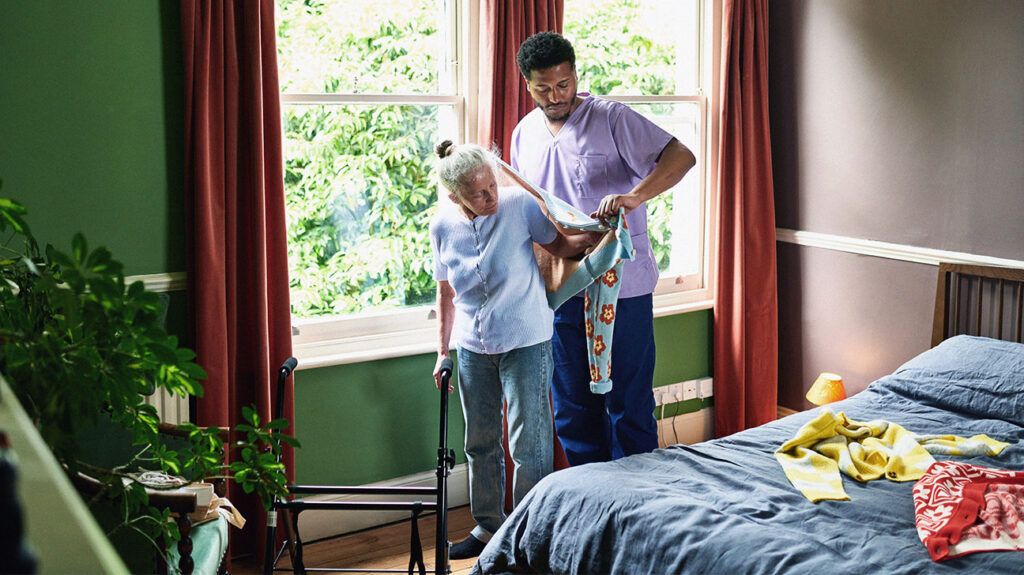
Aging in place is typically suitable for people who do not have extensive care needs that require constant, ongoing support. However, people who age in place may need home-based support from formal and informal caregivers.
Aging in place may look slightly different from person to person. Ultimately, the intention is for a person to remain in a community-based living situation rather than move into a nursing home or another residential care facility.
A person might stay in their current home, downsize to a smaller house, or move in with a friend or family member.
The
That way, they can make the relevant decisions while they’re still able to, such as deciding how much support they may want or need in the future and what this may look like.
Helen’s story: Choosing aging in place
“After my roommate died in 1988, I decided I would continue to live there. I wanted to stay close to my friends and wanted to live by myself.
“Sit down and think about what you can and can’t do, talk it over with your family, and make sure you have options for support nearby.”
People who age in place may experience the following benefits:
- continued autonomy and independence
- familiar surroundings and the ability to maintain their current routines
- social connection, if they live near friends or family
- a lower cost than a nursing home would require
- protection from some health concerns, such as infections that may spread in care facilities
Aging in place might also increase a person’s quality of life, life satisfaction, and self-esteem, as long as they have access to necessary support and services.
Helen’s story: The benefits of aging in place
“I am accustomed to my environment and am surrounded by good friends and neighbors. I get to enjoy the home I have lived in for many years. I get to be independent and don’t have anyone telling me what to do.
“Retirement homes offer easy access to everything, which I don’t have, but the trade-off for being independent is worth it to me.”
The most significant barrier to safely aging in place may be a person’s home. A 2020 population report found that only 10% of homes in the United States were “aging-ready,” with the following features:
- a step-free entrance
- a bedroom and bathroom on the first floor
- at least one accessibility feature in the bathroom
A home without these features may increase the risk of falls and injuries.
Home modifications are available, though they can be costly. The
- federal government financial aid programs
- community development groups
- a local social services department
- a state housing finance agency
Neighborhood suitability
Some neighborhoods might not have suitable services and accessibility for people who are aging in place.
If people do not feel safe in their neighborhood, they might limit their time exercising outdoors or using community services.
Similarly, if there is no accessible public transportation, older adults may have a higher risk of social isolation and loneliness, particularly if no one regularly visits them.
Research suggests that social isolation and loneliness may increase the risk of some health conditions, such as dementia and stroke, in older adults. Social interaction can help reduce these risks.
Accessibility is the responsibility of institutions, not just individuals. A lack of consideration for accessibility in newly constructed houses and public spaces can be an extension of ableism.
Accessibility features do more than prevent harm — they enable greater independence and improve the quality of life for people living in the community.
Addressing culture and background in aging in place
Aging in place will look different for each person. People from some cultural and socioeconomic backgrounds may experience unique challenges when aging in place.
For example, older adults who are part of LGBTQ+ communities may have smaller support networks and be more likely to experience financial and health-related challenges.
LGBTQ+ older adults living with HIV might need additional support and care when aging in place. Increased training and cultural awareness among healthcare professionals and caregivers could help reduce stigma and health disparities in these communities.
A person’s cultural background can also affect their diet, including when and what they eat. Caregivers or services that provide food to older adults, such as Meals on Wheels, may not consider or cater to these individual needs.
The authors of a 2023 study suggest that policymakers and care providers must increase their understanding of the variety of experiences in older adults to better plan for and address their care.
The following support strategies
- Advance planning: Early on, consider potential challenges, future support needs, and home modifications that may be necessary.
- Home modifications: If possible and necessary, make changes in the home, such as installing handrails and fixing uneven floors, to improve safety and reduce the risk of falls.
- Regular reassessment: Because a person’s care needs can change as they age, it is important to regularly reevaluate their situation.
- Home-based support: Arrange support from formal caregivers, such as nurses, or informal caregivers, including friends, family members, and neighbors.
- Community services: Getting involved in the local community may help reduce feelings of loneliness and isolation when aging in place.
- Emergency planning: Plan how to access urgent medical assistance in case of a health emergency, such as a severe fall or a medical situation related to an underlying health condition.
Helen’s story: Getting support
“I turn to my nephew, my neighbors, and my caregivers. My caregivers assist me with anything I might need, including bathing assistance, laundry, household chores, and transportation for errands such as doctor appointments, hair appointments, and groceries. We also like to go out for lunch occasionally.”
To ensure that their home is safe and accessible for aging in place, people may need to make home modifications such as:
- fixing uneven flooring or other tripping hazards
- adding stair handrails
- replacing broken lighting
- purchasing nonslip mats
- installing grab bars in the bathroom
- adding sturdy, textured ramps in entranceways
Each person who ages in place will have different needs, so family members should ask what they can do to help a person the most. Providing support may include helping with money management, visiting regularly, or assisting with household chores such as cleaning and cooking.
Aging in place typically costs less than living in a residential care facility. However, it will still entail costs. The NIA recommends the following methods to prepare:
- Consider personal funds, such as pensions or any savings.
- Check and use any available federal and state assistance programs, such as Medicare.
- Consider private financing, such as life insurance or long-term care insurance policies.
Aging in place involves staying in a traditional home environment rather than moving into a long-term care facility as a person gets older. A person might stay in their current home, move in with a friend or family member, or downsize to a smaller home.
Aging in place can allow a person to maintain more independence as they get older. It might also be more cost-effective than residential care. However, it does come with some possible downsides, such as safety hazards in the home and local neighborhood and a risk of social isolation and loneliness.
People can work with friends, family, and healthcare professionals to plan for safely aging in place. This process may involve home modifications, emergency planning, and drop-in care to help with various aspects of daily life.