

Na era da Segunda Guerra Mundial, uma jovem, é envolvida em um perigoso jogo de intriga emocional com uma poderosa figura política.Na era da Segunda Guerra Mundial, uma jovem, é envolvida em um perigoso jogo de intriga emocional com uma poderosa figura política.Na era da Segunda Guerra Mundial, uma jovem, é envolvida em um perigoso jogo de intriga emocional com uma poderosa figura política.
- Direção
- Roteiristas
- Estrelas
- Indicado para 2 prêmios BAFTA
- 28 vitórias e 56 indicações no total


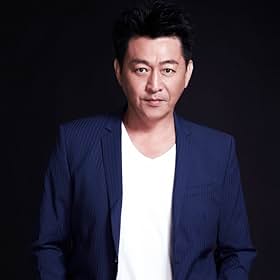
- Mr. Yee
- (as Tony Chiu Wai Leung)


- Old Wu
- (as Tsung-Hua Tuo)

- Lai Shu Jin
- (as Chih-ying Chu)


- Liang Jun Sheng
- (as Ko Yu-Luen)


- Tsao
- (as Kar Lok Chin)


- Direção
- Roteiristas
- Elenco e equipe completos
- Produção, bilheteria e muito mais no IMDbPro
Avaliações em destaque
I think this is a very personal film for Ang Lee - betraying his private thoughts on his homeland, on sexuality, on truth, on love.
Here in Asia, one shared event in our history binds us all - the Japanese occupation during WWII and all the horrors that came with it.
To retell the anguish of that time through a torrid affair between a collaborator (traitor) and a spy is a brave commentary on how we Asians respond to traumas both personal and collective.
Mr Lee raises unearths some complex emotions towards identity and truth, as revealed in only the most intimate moments between illicit lovers in times of extreme duress.
That Lee chose to make such a film after his phenomenal success in Hollywood, and during this period of phenomenal progress for modern China, gives Lust Caution a heightened sense of relevance and urgency, a film that can potentially invite questions on what it deeply means to be Chinese, to be Asian.
Lee is a master, Tony Leung is divine, Tang Wei is a slow-burning revelation. I highly recommend this film to Asians and non-Asians alike.
This is a spectacular piece of cinema, the colours, the flow, the story all ignite and leave a glow, the performances of the two leads is out of this world, especially from Tang Wei who goes from innocence incarnate to sensuous seducer via an awkward introduction and a brutal baptism of torture and torment, all under the direction of one of the greatest film makers of his day, leaving you under no illusion the depths people will go to in order to achieve their aims, legitimate or otherwise.
Just right before the task seems about going to end, Wang Jiazhi memorized, from an innocent college girl to a highly skilled actress and patriot, this extremely dangerous ambition kept circling around her mind and couldn't possibly go away may because of her ideal of doing something big and important, may because of proving that she's not only a puppet, or may because of a man that she can't get him out of her head.
A terrific ensemble cast. Tang Wei, who played the soul of the film, transformed herself into the leading character successfully through an unfamiliar face to audiences and has the acting of unattached perfection just like Zhang Ziyi. Though she got set up to get involved with this role by Lee, the result shows that her efforts worth every second.
The best performance of Tony Leung by far, every look and movement is very precise. Though it's also postmodern and the same kind of costumes, the effect is totally different from the images in Wong Kar Wai movies. Even he has been through several villain characters, the devotion and outcome that he put in this role is never been seen before.
As for the controversial sex scenes that gather all the spotlights, they all take important places in the film just as Lee said. Even there's no sign of sex in Chang's story. Except the power demonstration of the leading male role, Mr. Yee, Wang learned to use her sex power, the abreaction from the huge frustration of both their occupations and the struggle and joy they soaked in the functioning sex. They could very likely be the perfect match for each other that they can never find another one in this lifetime.
The second-time Mexican cinematographer for Lee, Rodrigo Prieto, French musician Alexandre Desplat, the senior Korean designer Lai Pan, and Lee's longtime partner editor Tim Squyres. The global combination achieved the great technical support besides the compelling story and the feast of performances.
The funny part is Lee chose short stories back to back for his film. The time line of the previous one goes across over 20 years. As for the latter one is just an afternoon. Sure it seems like a story in a decade, but after all they are the flashbacks of the leading female role.
This movie definitely goes beyond the achievement of "Brokeback Mountain," which is already very brilliant. While showing the conflict of sense and sensibility, it also pays tribute to a bunch of classics and the master creators which reflect the mind of the roles and are inherited such as "Casablanca," "The Godfather," "Suspicion," "Penny Serenade," "Last Tango in Paris" and "In the Realm of the Senses." This is not only the best screen adaptation of Chang to date but also a must-see of all time.
Ang Lee is a genius. He's so good at capturing the emotions of his characters and actors. It's like he unfolds them so that everything on the inside is laid bare. From The Ice Storm to Brokeback Mountain to Lust, Caution he shows you real people and how they love and damage and betray each other, and more specifically how it feels. That's true talent. Anyone can point a camera. This is something else entirely.
The film itself is the best espionage film I've ever seen, but that's not all it is. It's very much like a noir and a war film and romance is probably the genre that is represented least. I've read a few reviews mentioning love and falling in it. There is some of that but I think maybe those people might want to give this one another go. They might have missed the point.
Who should see this? Adults. But I'm not saying that because of the sex scenes. I'm 33. I don't know if I would have completely grasped the emotional complexity of this film 10 years ago. I think you need to have been kicked around a bit by life to fully appreciate what's happening here. Anyone who likes old movies, sad movies, good movies. Bogart fans, noir fans, costume design fans should all enjoy it. I sincerely hope it gets some recognition around Oscar time. It's my favorite this year so far.
Whatever misgivings there may be about it, this festival-winning film is a mesmerizing, rich experience. After 2 1/2 hours of being bombarded with a World War II love-and-hate story that's both exciting and dragging, chances are you will be still pinned to your seat, anxious to find out how it ends.
The "Crouching Tiger, Hidden Dragon" and "Brokeback Mountain" director has turned his attention to war-threatened Hong Kong in 1938 and Japanese-occupied Shanghai in 1942 (complete with a "safe Japanese zone"), seen through the eyes of a group of young Chinese resistance fighters.
Based on the late Chinese-American writer Eileen Chang's short story of the same name, the focus of "Se, jie" is the relationship between Mr. Yee, head of the ruthless Japanese-collaborator security forces (played by Tony Leung, leading man of some 80 films) and a young actress with the resistance, played by Wei Tang, in her very first film role.
They make a strange pair, both in the roles and as actors. Of the story - a cat-and-mouse game between the seductress/underground agent and the Japanese puppet/lord of life and death among the occupied - the less said the better in order to enjoy the movie. As actors, it's a veteran facing a new challenge and a novice who shows great skill and assurance.
Leung has always been a brooding, symphathetic, worn-but-handsome presence, especially in his collaborations with director Wong Kai War. Here, for the first time, he plays not just a heavy, an ugly character, but a scary, unhappy, murderous man, literally a dark figure, lurking in the shadows. It's a great performance, fully realizing both aspects of the character: the monster and the man.
Lee's love for the cinema classics is shown both in his use of excerpts from Hollywood greats (as the young actress frequents movie theaters) and in his creation of memorable images. This is a director with a painterly sensibility and the ability to transform objects into instantly memorable pictures. Never will you see mahjong again without recalling "Lust, Caution." Few of Lee's favorite classics can match the simple effectiveness of his final image here, of a sheet with slight depressions left by what rested on it shortly before: white on white, and yet meaningful and affecting.
Leung and Tang fairly monopolize the screen, but the rest of the large cast is outstanding, led by San Franciscan Joan Chang as Yee's wife, and the vivid individual characters in the resistance, including the American-born Chinese pop star Leehom Wang.




Você sabia?
- CuriosidadesDirector Ang Lee made Tony Leung Chiu-wai study the performances of Marlon Brando in Último Tango em Paris (1972), Humphrey Bogart in No Silêncio da Noite (1950) and Richard Burton in Equus (1977), to give him a sense of wounded masculinity, which Lee felt was right for the character of Mr. Yee.
- Erros de gravaçãoIn the café scene where Mak Tai Tai is calling her comrades the ringer heard through the phone both times is a modern ringer, which wasn't used until the 1970s/early 1980s.
- Citações
Old Wu: Don't tell me what to do! You listen to me! Yee murdered my wife and both my children. But I could still eat with him at the same table! That's what an agent must be able to do! I'd like nothing better than to kill him with my own hands. But if letting him live another few days is valuable, then we must! Keep him hooked, and keep me informed. Don't do anything without my order. Remember... For an agent there is only one thing... Loyalty. To the party, to our leader, to our country. Understand?
Wong Chia Chi: Don't worry. I'll do whatever you say.
Old Wu: Good. Very good. All you need to do is keep him trapped. If you need anything...
Wong Chia Chi: What trap are you talking about? My body? What do you take him for? He knows better than you how to put on an act. He not only gets inside me... he worms his way into my heart like a snake. Deeper. All the way in. I take him in like a slave. I play my part faithfully... so I, too, can get to his heart. Every time... he hurts me until I bleed... and scream. Then he is satisfied. Then he feels alive. In the dark... only he knows it's all real.
Old Wu: That's enough.
Wong Chia Chi: That's why... That's why I can torture him until he can't stand it any longer... and still I go on until we collapse from exhaustion.
Old Wu: Enough!
Wong Chia Chi: And when he finally comes inside me, I think maybe this is it. Maybe this is when you'll rush in and shoot him in the back of the head... and his blood and brains will cover me!
Old Wu: Shut up!
- Versões alternativasAn R-Rated version was made for the home video market for sale in places that doesn't carry NC-17 films (e.g. supermarkets). The run-time of the R-rated version is only ~30 seconds less but features ~70 seconds of alternative footage to soften the rating.
- Trilhas sonorasKlavierstücke Op. 118 No. 2 Intermezzo
Composed by Johannes Brahms
Performed by Alain Planès
(p) 2007 Decca Label Group
Principais escolhas
Detalhes
- Data de lançamento
- Países de origem
- Central de atendimento oficial
- Idiomas
- Também conhecido como
- Lujuria y traición
- Locações de filme
- Ipoh, Perak, Malásia(students on the tram: Jalan Chung On Siew)
- Empresas de produção
- Consulte mais créditos da empresa na IMDbPro
Bilheteria
- Orçamento
- US$ 15.000.000 (estimativa)
- Faturamento bruto nos EUA e Canadá
- US$ 4.604.982
- Fim de semana de estreia nos EUA e Canadá
- US$ 63.918
- 30 de set. de 2007
- Faturamento bruto mundial
- US$ 67.091.915
- Tempo de duração
- 2 h 37 min(157 min)
- Cor
- Mixagem de som
- Proporção
- 1.85 : 1