

Um modelo descobre que seu vizinho está interessado em invadir a privacidade das pessoas.Um modelo descobre que seu vizinho está interessado em invadir a privacidade das pessoas.Um modelo descobre que seu vizinho está interessado em invadir a privacidade das pessoas.
- Direção
- Roteiristas
- Estrelas
- Indicado a 3 Oscars
- 19 vitórias e 27 indicações no total


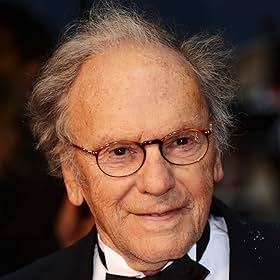
Frédérique Feder
- Karin
- (as Frederique Feder)


Samuel Le Bihan
- Le photographe (Photographer)
- (as Samuel Lebihan)


Avaliações em destaque
Having seen White before I realized it was a trilogy; now I've seen Red, and can't wait to see Blue. Red. . . . ah, what a gem!
Trintignant and Jacob. . . their meeting left me uncomfortable -the tension was thick. The director gently molded their relationship from one of fear and disgust to one of compassion and friendship. Hints along the way made me think this was going to have one of those non-linear endings, a circular conclusion that makes one wonder -what the????? Not so. You are going to love this film from beginning to end!
Trintignant and Jacob. . . their meeting left me uncomfortable -the tension was thick. The director gently molded their relationship from one of fear and disgust to one of compassion and friendship. Hints along the way made me think this was going to have one of those non-linear endings, a circular conclusion that makes one wonder -what the????? Not so. You are going to love this film from beginning to end!
This is the last film of Krzysztof Kieslowski - one of the greatest directors in the history of cinema. He intended to retire after this film, so in a way it is his artistic testament. He died a couple of years after making the film, and though it is said that he intended to return to directing, Destiny decided that this was indeed his last. And what a film!
'Rouge' the last film in the three colors French trilogy is actually a very Swiss film. Set in Geneva, one of the two main characters is a Swiss retired judge, and Durenmatt immediately comes to mind. But there is more Switzerland in the cool atmosphere, in the lack of communication of the characters, in the politeness that envelops cruelty of life. Several characters who start with little relationship will come together at the end in a moving and human final, which only a great artist could have staged.
Little else can be said that was not said and written hundred of times. Yes, the film starts slowly, and the fans of the American style of action movies or melodramas will get discouraged first and will get lost as viewers. They deserve it. The film gets quality as it advances, and one of the not so hidden messages is that real life and real humans are more interesting than the Hollywood cartoon and plastic action and characters. Cinema quality is very original, the image being a 'Study in Red', as the title shows. Acting is fabulous, with Irene Jacob and Jean-Louis Trintignant - the later in what will remain probable the best role of his old age.
A great film. Seeing it again probably adds, and I am happy to have it recorded on tape. 9/10 on my personal scale.
'Rouge' the last film in the three colors French trilogy is actually a very Swiss film. Set in Geneva, one of the two main characters is a Swiss retired judge, and Durenmatt immediately comes to mind. But there is more Switzerland in the cool atmosphere, in the lack of communication of the characters, in the politeness that envelops cruelty of life. Several characters who start with little relationship will come together at the end in a moving and human final, which only a great artist could have staged.
Little else can be said that was not said and written hundred of times. Yes, the film starts slowly, and the fans of the American style of action movies or melodramas will get discouraged first and will get lost as viewers. They deserve it. The film gets quality as it advances, and one of the not so hidden messages is that real life and real humans are more interesting than the Hollywood cartoon and plastic action and characters. Cinema quality is very original, the image being a 'Study in Red', as the title shows. Acting is fabulous, with Irene Jacob and Jean-Louis Trintignant - the later in what will remain probable the best role of his old age.
A great film. Seeing it again probably adds, and I am happy to have it recorded on tape. 9/10 on my personal scale.
One of my favorite films of all time. With beautiful cinematography and a story that ties the previous Kieslowski films ("Blue" and "White") together. The film introduces us to Valentine (played by the glowingly real Irene Jacob), a beautiful and innocent Swiss model and student, who at first glance seems to be happy until one night she accidentally runs over a dog. The dog belongs to a retired old Judge who finds fulfillment in listening to his neighbors telephone calls via wavelength radio. Valentine is at first disgusted and pities him in his own self-pity and despair. But as the Judge and Valentine get to know one another a strange, but fateful bond begins to form. As a subplot, a handsome young Judge named Auguste (who lives across the street from Valentine) has experiences that are exactly like those of the Old Judge! Experiences that will soon lead Auguste into Valentine and into a reunion with characters from the French flag colors trilogy.
I loved the love story withing a love story plot and the mystery that resolves the characters that eventually fate takes a hand and lead them to each other. Irene Jacob is absolutely lovely in the role of Valentine. Her large brown eyes seem to echo this innocence and curiosity that is both passionate and touching. It's a film that asks us to watch out for the signs that will soon lead us to our destinies. A very intriguing film and a movie lover's dream.
I loved the love story withing a love story plot and the mystery that resolves the characters that eventually fate takes a hand and lead them to each other. Irene Jacob is absolutely lovely in the role of Valentine. Her large brown eyes seem to echo this innocence and curiosity that is both passionate and touching. It's a film that asks us to watch out for the signs that will soon lead us to our destinies. A very intriguing film and a movie lover's dream.
You hurt a dog when out driving when distracted, you find the owner but he's totally refracted, an eavesdropper, retired judge, set in his ways and cannot budge, you are appalled at how his life is being enacted. Your encounter leads to more as you connect, get the chance to interact and to inspect, events unfold and the judge changes, adjusts the focus of his ranges, to each other there's a noticeable effect.
It's a wonderful performance from Irène Jacob in a multithreaded tale of friendship and connection. As with Blue, you can spin any number of interpretations from the symbolism and imagery, and will quite probably come to any number of conflicting conclusions. The whole trilogy wraps itself up at the close and might allow you to tie off a few loose ends, or may leave you with more.
It's a wonderful performance from Irène Jacob in a multithreaded tale of friendship and connection. As with Blue, you can spin any number of interpretations from the symbolism and imagery, and will quite probably come to any number of conflicting conclusions. The whole trilogy wraps itself up at the close and might allow you to tie off a few loose ends, or may leave you with more.
The last film in the Three Colors trilogy, RED, is deceptively simple, yet it rounds out everything that came before in an enlightening way. It slightly resembles THE DOUBLE LIFE OF VERONIQUE in its theme of fraternity, and in its casting of Irene Jacob, who manages to exude a sense of curious innocence and integrity. She interprets the role of Valentine, a young Swiss model and student living in Geneva and experiencing a kind of emotional limbo as she awaits her boyfriend's return from England. Through a seemingly trivial twist of fate, she encounters a cynical retired judge (Jean-Louis Trintignant) who leads a lonely, world weary existence and eavesdrops on his neighbors' telephone conversations. Initially she finds his detached indifference appalling, and wants to report him, but her compassionate nature enables her to comprehend the greater plight of the man, one of leading a fruitless, lovelorn life. They form a touching friendship, and this sets the stage for another turn of events. Auguste (Jean-Pierre Lorit) is young judge who is in many ways a mirror image of Trintignant's character. He lives near Valentine, but through possible lack of synchronicity, they never meet. Upheavals in his life are accordingly similar to the old judge's, but this time, due to the presence of the noble Valentine, an old adversity can be turned on its side, bringing fulfillment for everyone.
With Red, there is a real sense of culmination unlike any other. Wistful, melancholy, yet life-affirming, the film offers hope in world full of supposed mistaken paths. Tritignant remarked on Kieslowski's talents in augmenting the emotions of the actors through his technique: "I'm very pleased with my work on this film - and I don't think it had a lot to do with me. For example, at the end of the film when my character goes to the window, looks outside, and starts to cry - I couldn't do it, I couldn't summon the tears. I tried to make myself cry but couldn't manage it. Krzysztof called the make-up lady who shot menthol into my eyes. We shot the scene and Krzysztof said 'It's good, next shot.' Recently I saw the finished film. I waited anxiously for this scene. And I cried when I saw myself."
Tritignant's nuanced portrayal is augmented by equally good work from Jacob who bears insight into her role as well: "Something really great about RED are the 'non-encounters' between Auguste and Valentine. They pass each other without ever meeting. They might be great for each other but they never meet. It reminds me of THE DOUBLE LIFE OF VERONIQUE where the two identical Veroniques are face to face but don't see each other. In RED this idea is reflected by the way Valentine can't face up to her life, her love, her sorrows. How can Auguste see her, or she him? How can they both release themselves from this blindness?"
The uplifting aura of this film shines even brighter given the pettiness with which the Academy of Motion Picture Arts and Sciences brushed it off. Due to the fact that is a multinational co-production, with a Polish director, mixed Swiss and French cast and crew, Red was not allowed to compete for a Best Foreign Language Film Oscar as a film from Switzerland. Indeed, the trilogy itself is without a country as it transcends borders and even culture in its solemn inquiry into human nature and that is a prize in itself.
With Red, there is a real sense of culmination unlike any other. Wistful, melancholy, yet life-affirming, the film offers hope in world full of supposed mistaken paths. Tritignant remarked on Kieslowski's talents in augmenting the emotions of the actors through his technique: "I'm very pleased with my work on this film - and I don't think it had a lot to do with me. For example, at the end of the film when my character goes to the window, looks outside, and starts to cry - I couldn't do it, I couldn't summon the tears. I tried to make myself cry but couldn't manage it. Krzysztof called the make-up lady who shot menthol into my eyes. We shot the scene and Krzysztof said 'It's good, next shot.' Recently I saw the finished film. I waited anxiously for this scene. And I cried when I saw myself."
Tritignant's nuanced portrayal is augmented by equally good work from Jacob who bears insight into her role as well: "Something really great about RED are the 'non-encounters' between Auguste and Valentine. They pass each other without ever meeting. They might be great for each other but they never meet. It reminds me of THE DOUBLE LIFE OF VERONIQUE where the two identical Veroniques are face to face but don't see each other. In RED this idea is reflected by the way Valentine can't face up to her life, her love, her sorrows. How can Auguste see her, or she him? How can they both release themselves from this blindness?"
The uplifting aura of this film shines even brighter given the pettiness with which the Academy of Motion Picture Arts and Sciences brushed it off. Due to the fact that is a multinational co-production, with a Polish director, mixed Swiss and French cast and crew, Red was not allowed to compete for a Best Foreign Language Film Oscar as a film from Switzerland. Indeed, the trilogy itself is without a country as it transcends borders and even culture in its solemn inquiry into human nature and that is a prize in itself.




Você sabia?
- CuriosidadesPrior to filming, Krzysztof Kieslowski asked Irène Jacob if she ever wished for a different name when she was a child. Jacob told him that she had always wanted to be named Valentine, and the name was used for her character.
- Erros de gravaçãoEarly in the movie, Auguste Bruner returns to his apartment from walking his dog, and his Jeep which is parked out front is parked one way. He goes upstairs, uses the phone and quickly returns downstairs to the Jeep which is now parked in the opposite direction.
Principais escolhas
Faça login para avaliar e ver a lista de recomendações personalizadas
- How long is Three Colors: Red?Fornecido pela Alexa
Detalhes
- Data de lançamento
- Países de origem
- Idioma
- Também conhecido como
- Tres colores: Rojo
- Locações de filme
- Rue des Sources, Geneva, Canton de Genève, Suíça(Valentine's and Auguste's apartments and Café Joseph exterior set)
- Empresas de produção
- Consulte mais créditos da empresa na IMDbPro
Bilheteria
- Faturamento bruto nos EUA e Canadá
- US$ 3.581.969
- Faturamento bruto mundial
- US$ 3.642.756
- Tempo de duração
- 1 h 39 min(99 min)
- Cor
- Mixagem de som
- Proporção
- 1.85 : 1
Contribua para esta página
Sugerir uma alteração ou adicionar conteúdo ausente