
![Assistir a Trailer [OVS]](https://m.media-amazon.com/images/M/MV5BMDhkZmQ2YjYtZmVlOS00Njk3LWIzMjItM2M1ZWZjYmZmZjhmXkEyXkFqcGdeQXRyYW5zY29kZS13b3JrZmxvdw@@._V1_QL75_UY563_CR212,0,1000,563_.jpg)
Um executivo de uma empresa de calçados torna-se vítima de extorsão quando o filho de seu motorista é sequestrado e retido para resgate.Um executivo de uma empresa de calçados torna-se vítima de extorsão quando o filho de seu motorista é sequestrado e retido para resgate.Um executivo de uma empresa de calçados torna-se vítima de extorsão quando o filho de seu motorista é sequestrado e retido para resgate.
- Direção
- Roteiristas
- Estrelas
- Prêmios
- 3 vitórias e 3 indicações no total




Resumo
Reviewers say 'High and Low' is acclaimed for its moral dilemmas, class disparity, and human nature complexities. Kurosawa's direction, storytelling, and cinematography are praised. Mifune and Nakadai's performances are noted for depth and realism. The suspenseful narrative, blending moral dilemma and police procedural, is commended. Social commentary on Japan's economic changes and Western influence is relevant and insightful. However, some find the pacing slow and the ending ambiguous. Overall, it's a significant work in Kurosawa's versatile filmography.
Avaliações em destaque
Kingo Gondo is a wealthy executive at the National Shoes company in Yokohama. He aims to make affordable, sturdy footwear for the masses. His co-workers opt instead for those of the cheap, low-quality variety that will wear easily, meaning they will need to be replaced often. In secret, Gondo organizes a leveraged buyout of the company, mortgaging all he has to afford it. However, just before he makes the deal, the son of his chauffeur is kidnapped and held for ransom. It's clear the kidnappers intended to kidnap Gondo's child, and he feels just as responsible as if they had. Will the police- led by the capable Inspector Tokura- be able to find the child and solve the extortion plot before it's too late?
Loosely based on Ed McBain's novel 'King's Ransom,' Akira Kurosawa's 'High and Low' is a powerful police procedural that will keep viewers' attentions held rapt from start to finish. With a screenplay by Kurosawa, Hideo Oguni, Ryûzô Kikushima and Eijirô Hisaita, the film examines many themes in an eloquent manner, including those of honor and morality. It also paints a picture of then-contemporary Yokohama as a city built upon an endemic inequality between the classes, and shows how easily the disenfranchised and impecunious can fall into a life of crime.
'High and Low' is a tense thriller that feels most authentic. Kurosawa shows us with precision the minutia that the police engage in, how they build their case and begin scavenging the city for clues to the kidnapping. Slowly, but steadily, headway is made, and Kurosawa doesn't rush the procedural process of the investigation. This is not to say the film is in any way slow-moving or drawn out, because the opposite is the case: 'High and Low' rockets along at a brisk pace, feeling all too short at 143 minutes; if anything.
The film reunites Kurosawa with cinematographers Asakazu Nakai and Takao Saitô, whose camera-work and shot construction is mightily impressive. 'High and Low' has an assured visual style, and the utilization of shadows is most striking. There is one instance of color being used in the film, which is to great effect; while the remainder of the black and white cinematography is rich and textured. Though he made some beautiful looking pictures in his time, the naturalism and style with which 'High and Low' is captured makes it a standout in Kurosawa's filmography.
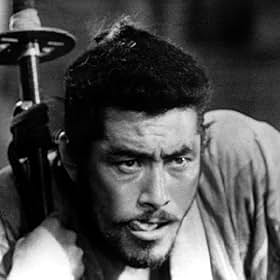
As do the terrific, power-house performances from his cast. His second-to-last collaboration with the incomparable Toshirô Mifune, here his original muse stars as Gondo, giving a masterful performance of much restraint. Mifune creates in Gondo an initially fastidious character, whose evolution over the course of the film feels both authentic and subtle. Often, when one thinks of Kurosawa and Mifune, the Samurai pictures spring first to mind; though their work together here is just as impactful and entertaining as any of those earlier films.
Co-starring as Inspector Tokura is Kurosawa's second muse, the great Tatsuya Nakadai. Always a commanding presence on screen, he plays Tokura as a charming, determined detective who will do anything to catch his man. Though he has less emotional volubility to exhibit in the role, Nakadai performs just as strongly as Mifune; and neither man overshadows the other. Additionally, in a small but pivotal role stars Tsutomu Yamazaki, who showcases much depth and range, leaving a lasting impression on the viewer.
Thrilling from beginning to end, Akira Kurosawa's 'High and Low' is a brilliant piece of film noir, featuring an interesting examination of class at its center. Boasting stunning cinematography, as well as strong performances from all in the cast, there is little fault one can find with it. If you haven't seen it before, and you're a fan of police procedurals, they look no further: for 'High and Low' is a masterpiece of the genre.
Loosely based on Ed McBain's novel 'King's Ransom,' Akira Kurosawa's 'High and Low' is a powerful police procedural that will keep viewers' attentions held rapt from start to finish. With a screenplay by Kurosawa, Hideo Oguni, Ryûzô Kikushima and Eijirô Hisaita, the film examines many themes in an eloquent manner, including those of honor and morality. It also paints a picture of then-contemporary Yokohama as a city built upon an endemic inequality between the classes, and shows how easily the disenfranchised and impecunious can fall into a life of crime.
'High and Low' is a tense thriller that feels most authentic. Kurosawa shows us with precision the minutia that the police engage in, how they build their case and begin scavenging the city for clues to the kidnapping. Slowly, but steadily, headway is made, and Kurosawa doesn't rush the procedural process of the investigation. This is not to say the film is in any way slow-moving or drawn out, because the opposite is the case: 'High and Low' rockets along at a brisk pace, feeling all too short at 143 minutes; if anything.
The film reunites Kurosawa with cinematographers Asakazu Nakai and Takao Saitô, whose camera-work and shot construction is mightily impressive. 'High and Low' has an assured visual style, and the utilization of shadows is most striking. There is one instance of color being used in the film, which is to great effect; while the remainder of the black and white cinematography is rich and textured. Though he made some beautiful looking pictures in his time, the naturalism and style with which 'High and Low' is captured makes it a standout in Kurosawa's filmography.
As do the terrific, power-house performances from his cast. His second-to-last collaboration with the incomparable Toshirô Mifune, here his original muse stars as Gondo, giving a masterful performance of much restraint. Mifune creates in Gondo an initially fastidious character, whose evolution over the course of the film feels both authentic and subtle. Often, when one thinks of Kurosawa and Mifune, the Samurai pictures spring first to mind; though their work together here is just as impactful and entertaining as any of those earlier films.
Co-starring as Inspector Tokura is Kurosawa's second muse, the great Tatsuya Nakadai. Always a commanding presence on screen, he plays Tokura as a charming, determined detective who will do anything to catch his man. Though he has less emotional volubility to exhibit in the role, Nakadai performs just as strongly as Mifune; and neither man overshadows the other. Additionally, in a small but pivotal role stars Tsutomu Yamazaki, who showcases much depth and range, leaving a lasting impression on the viewer.
Thrilling from beginning to end, Akira Kurosawa's 'High and Low' is a brilliant piece of film noir, featuring an interesting examination of class at its center. Boasting stunning cinematography, as well as strong performances from all in the cast, there is little fault one can find with it. If you haven't seen it before, and you're a fan of police procedurals, they look no further: for 'High and Low' is a masterpiece of the genre.
This movie was incredible!! They called it Film Noir but, my God, it's so much better than THAT-- This film out-Hitchcocks Hitchcock! And I'm a Hitchcock devotee. The issues Kurosawa wrestles with in this, and his other films; the ethic responsibility we have as humans, humanity vs. greed, crime and punishment are universally understood. Nothing he presents in black and white(except literally in the film stock)-- but every shade of grey is reflected on. The story unfolds slowly but contains many twists and turns as the viewer questions the motives of each character. It's not just the force of good against evil--but a question of what is morally right and morally wrong. The title itself clues the viewer in to the ambiguities of class, greed, and moral ethic.
While I've seen HIGH AND LOW referred to as a "film noir," a "detective drama," a "riveting game of cat-and-mouse," and so on into infinity, I think those terms tend to underestimate some very great films (such as this and Kubrick's THE KILLING) and attempts to place them within boundaries over which the expanse of a few powerful films such as these spill.
Indeed HIGH AND LOW is a story involving some familiar techniques from film noir; the detective story; and the hunter-and-hunted storyline, but it surpasses so many films that might be included in a list of fine films noires. It, in true Kurosawa style (one which Stanley Kubrick matched blow-for-blow, seeming to complement one another in their stunning gifts to the cinema), stands as a fable showing the differences and tensions which the coexistance of different classes creates.
Gondo, the rich on high, receives torment from those who live below him, being literally perched upon a hill, overlooking the city in a feudalistic way, in which the king's palace gazes down upon the serfs below. As the kidnapper says, "it's hot as hell down here. But you wouldn't know that, you have air conditioning." Thus we see the parallels pile upon each other: it is about class warfare but also shows the differences between heaven and hell; and Gondo makes both a descent and ascent simultaneously.
The plot is simple, but the truth is complicated, and I won't go into it here, but take my word as it stands: this is an amazing piece of film. See it now or regret it! Every Kurosawa film is sublime.
Indeed HIGH AND LOW is a story involving some familiar techniques from film noir; the detective story; and the hunter-and-hunted storyline, but it surpasses so many films that might be included in a list of fine films noires. It, in true Kurosawa style (one which Stanley Kubrick matched blow-for-blow, seeming to complement one another in their stunning gifts to the cinema), stands as a fable showing the differences and tensions which the coexistance of different classes creates.
Gondo, the rich on high, receives torment from those who live below him, being literally perched upon a hill, overlooking the city in a feudalistic way, in which the king's palace gazes down upon the serfs below. As the kidnapper says, "it's hot as hell down here. But you wouldn't know that, you have air conditioning." Thus we see the parallels pile upon each other: it is about class warfare but also shows the differences between heaven and hell; and Gondo makes both a descent and ascent simultaneously.
The plot is simple, but the truth is complicated, and I won't go into it here, but take my word as it stands: this is an amazing piece of film. See it now or regret it! Every Kurosawa film is sublime.
10theorbys
Toshiro Mifune is a businessman in a Japan that is on the brink of the Economic Miracle of the Sixties. He is an honest man who loves his job as a shoe factory exec and is in a battle for corporate control against a pack of hyenas. He has mortgaged and borrowed and scraped to raise the money for a surprise coup when his son is kidnapped. But there is a major plot twist: it is not HIS son that was taken but his son's playmate, the chauffeur's kid and the ransom demanded is astronomical. If he pays he will lose everything he has worked so hard for, but can he just sacrifice the chauffeur's child because it is not his? From here on High and Low (perhaps better translated as Heaven and Hell) is a police procedural based on an Ed McBain 87th precinct story.
Watching this film I had a rare, almost unique, experience. I saw it on a fairly screen tv, letterboxed, in a darkened room. All the preceding conditions helped contribute to put me into an objective/subjective middle ground where I had the feeling of looking through a special visor that allowed me to see the world by means of an almost perfect film as if through the eyes of a cinematic genius who is in total command of his artistic means and in total command of his subject matter. I think the key to this experience is that while High and Low is interesting as human drama, it is yet peculiarly uninvolving emotionally but very involving cinematically. These distances are important in Kurosawa's films (he is high on my list of top ten directors but after Welles). In IKIRU you probably could not be more deeply involved emotionally, while in RAN there is nothing but relentless distance.
I think a good companion film to watch with this would be Kurosawa's earlier, looser, but much more individually tense, police film STRAY DOG (this time Mifune is the cop)
Watching this film I had a rare, almost unique, experience. I saw it on a fairly screen tv, letterboxed, in a darkened room. All the preceding conditions helped contribute to put me into an objective/subjective middle ground where I had the feeling of looking through a special visor that allowed me to see the world by means of an almost perfect film as if through the eyes of a cinematic genius who is in total command of his artistic means and in total command of his subject matter. I think the key to this experience is that while High and Low is interesting as human drama, it is yet peculiarly uninvolving emotionally but very involving cinematically. These distances are important in Kurosawa's films (he is high on my list of top ten directors but after Welles). In IKIRU you probably could not be more deeply involved emotionally, while in RAN there is nothing but relentless distance.
I think a good companion film to watch with this would be Kurosawa's earlier, looser, but much more individually tense, police film STRAY DOG (this time Mifune is the cop)
A child of a chauffeur is mistakenly kidnapped in the place of a businessman's son. The businessman, involved in a high-stakes takeover of his company from his erring bosses, chooses to risk losing his shirt to pay the ransom for a child not his own. While the clock is ticking on both the businessman's fortune and the child's life, the police decide that they want a sure conviction rather than a quick arrest.
A suspenseful crime story based on a novel by Evan Hunter (aka Ed McBain) transported to 1960's Japan. The soon to be famous "Economic miracle" is in full swing as Japan rebuilds its war-ravaged landscape. The mix of optimism and despair of the people in the thick of this economic transformation is palpable beneath the multiple story lines of scrappy cops following their hunches, the inventive kidnapper and the businessman.
Toshiro Mifune shines as the businessman while Tatuya Nakadai makes a fine appearance as Inspector Tokura. Tsutomu Yamazaki as the kidnapper debuts into a glorious career. Many of the bit players who appear only briefly eventually became big stars notably Eijiro Tono as the worker in a shoe factory and Nekohachi Edoya as the charming engineer who identifies a train, gesturing with chopsticks, by merely listening to recorded sounds.
A suspenseful crime story based on a novel by Evan Hunter (aka Ed McBain) transported to 1960's Japan. The soon to be famous "Economic miracle" is in full swing as Japan rebuilds its war-ravaged landscape. The mix of optimism and despair of the people in the thick of this economic transformation is palpable beneath the multiple story lines of scrappy cops following their hunches, the inventive kidnapper and the businessman.
Toshiro Mifune shines as the businessman while Tatuya Nakadai makes a fine appearance as Inspector Tokura. Tsutomu Yamazaki as the kidnapper debuts into a glorious career. Many of the bit players who appear only briefly eventually became big stars notably Eijiro Tono as the worker in a shoe factory and Nekohachi Edoya as the charming engineer who identifies a train, gesturing with chopsticks, by merely listening to recorded sounds.




Você sabia?
- CuriosidadesAfter the film was released, kidnappings were on the rise in Japan. Akira Kurosawa himself had received threats for the kidnapping of his own daughter, Kazuko Kurosawa. She quoted him as once saying to her "With High and Low, I wanted to inspire tougher sentences on kidnappers. Instead, I was criticized for their increase."
- Erros de gravaçãoThe story occurs in midsummer. This implies that Mt. Fuji has no snow. Since the location filming was carried out in winter season, the top of Mt. Fuji is very white. Some film critics mention that this is almost the only mistake they can find in the film.
- Citações
Kingo Gondo: Why should you and I hate each other?
Ginjirô Takeuchi, medical intern: I don't know. I'm not interested in self-analysis. I do know my room was so cold in winter and so hot in summer I couldn't sleep. Your house looked like heaven, high up there. That's how I began to hate you.
Principais escolhas
Faça login para avaliar e ver a lista de recomendações personalizadas
- How long is High and Low?Fornecido pela Alexa
Detalhes
Bilheteria
- Orçamento
- JP¥ 230.000.000 (estimativa)
- Faturamento bruto nos EUA e Canadá
- US$ 46.808
- Fim de semana de estreia nos EUA e Canadá
- US$ 15.942
- 28 de jul. de 2002
- Faturamento bruto mundial
- US$ 64.503
- Tempo de duração
- 2 h 23 min(143 min)
- Cor
- Proporção
- 2.35 : 1
Contribua para esta página
Sugerir uma alteração ou adicionar conteúdo ausente