

Uma aldeia pobre sob a ameaça de bandidos recruta sete samurais para ajudá-los a se defenderem.Uma aldeia pobre sob a ameaça de bandidos recruta sete samurais para ajudá-los a se defenderem.Uma aldeia pobre sob a ameaça de bandidos recruta sete samurais para ajudá-los a se defenderem.
- Direção
- Roteiristas
- Estrelas
- Indicado a 2 Oscars
- 5 vitórias e 9 indicações no total


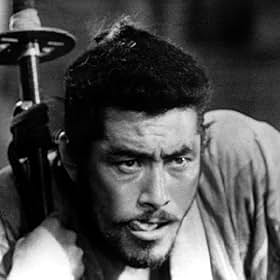
Toshirô Mifune
- Kikuchiyo
- (as Toshiro Mifune)


Yukiko Shimazaki
- Wife
- (as Yukio Shimazaki)


Isao Kimura
- Katsushiro
- (as Ko Kimura)


Kokuten Kôdô
- Old Man Gisaku
- (as Kuninori Todo)


- Direção
- Roteiristas
- Elenco e equipe completos
- Produção, bilheteria e muito mais no IMDbPro
Resumo
Reviewers say 'Seven Samurai' is highly rated for its groundbreaking influence, Kurosawa's direction, and epic storytelling. It explores themes of honor, sacrifice, and social class, with praise for its cinematography and battle scenes. Critics note its historical and cultural significance and impact on future films. However, some find it overly long with pacing issues and outdated acting styles. Despite these criticisms, its classic reputation and place in cinematic history maintain high ratings.
Avaliações em destaque
Having seen Kurosawa's Seven Samurai at least 10 times, I still see something new every time I watch it. I don't see how anyone, especially a non-Japanese, could possibly absorb this movie in less than 2 or 3 viewings. I've always been surprised at how each of the 7 samurai can make such an individual impression on you even if you can't understand Japanese. Although Toshiro Mifune is often considered the star, for me its Takashi Shimura who is firmly fixed at the center of the movie. He is the guiding moral force from the moment of his appearance in the film and can capture the viewer's attention in a way similar to Alec Guinness. Mifune's character can be annoying at first in his loutish behavior, but he gains stature throughout the film and eventually becomes a unifying force second only to Shimura. Minoru Chiaki as the woodcutting samurai provides a subtle humor and the others look to him to boost their morale. Daisuke Kato is another very familiar face to Japanese movie fans and provides an excellent foil to Shimura as his second in command. Yoshio Inaba is very good as the samurai who is recruited by Shimura and quickly builds a strong rapport with him. Seiji Miyaguchi as the "expert" warrior, dedicated to honing his skill as a swordsman is a very low key yet likeable character. Ko Kimura as the young hero-worshipping samurai, as well as the love interest of the peasant girl, wishes to be a great samurai, but is easily distracted by a field of flowers or a pretty face. The peasants in the village being defended by the samurai each have their own defining characteristics as well.
In addition to the wealth of interesting characters, we have a terrific action plot--the defending of the village from 40 marauding bandits by the small troop of samurai--, and a more subtle secondary plot involving the distrust of the samurai by the villagers due to the historical interaction of these two classes in feudal Japan. All of these plot and character elements are woven together into an unforgettable epic, but, at least in my opinion, its not one that can be absorbed in a single sitting. While it's similar in this sense to another of my favorite epics, Leone's Once Upon a Time in the West, it is more complex given the number of characters.
I can only say that your patience with this film will probably be well rewarded if you take the time to give it multiple viewings. You will also have the pleasure of seeing many of the samurai and villagers pop up in other Kurosawa films and films of other Japanese directors. If you like Mifune and Shimura in this one, catch them in Stray Dog and Drunken Angel in very different settings and parts.
This one is 10 out of 10 without a doubt.
In addition to the wealth of interesting characters, we have a terrific action plot--the defending of the village from 40 marauding bandits by the small troop of samurai--, and a more subtle secondary plot involving the distrust of the samurai by the villagers due to the historical interaction of these two classes in feudal Japan. All of these plot and character elements are woven together into an unforgettable epic, but, at least in my opinion, its not one that can be absorbed in a single sitting. While it's similar in this sense to another of my favorite epics, Leone's Once Upon a Time in the West, it is more complex given the number of characters.
I can only say that your patience with this film will probably be well rewarded if you take the time to give it multiple viewings. You will also have the pleasure of seeing many of the samurai and villagers pop up in other Kurosawa films and films of other Japanese directors. If you like Mifune and Shimura in this one, catch them in Stray Dog and Drunken Angel in very different settings and parts.
This one is 10 out of 10 without a doubt.
Akira Kurosawa was and is considered the master of east-western film-making (in that he made his Japanese films accessible for fans of American westerns while still making the movies his country found popular), and out of the few Kurosawa movies I've had the pleasure of viewing (Hidden Fortress, Rashomon, and this) I'd have to say that while Rashomon is still my favorite, I nevertheless had a blast during this one. The story has become quite influential to filmmakers from the likes of John Sturges (The Magnificent Seven) to John Lasseter (A Bug's Life): a small village has been terrorized by bandits for far too long, amid times of civil war in the nation, and so on the advice of Grand-Dad, they decide to hire four - which soon becomes seven - samurai for the job. There's no money, just food and honor, even though the village isn't exactly pleased to have samurai back in their village. Each character is drawn and executed compellingly, though for my money Toshiro Mifune proves why he became one of Japan's most notorious film actors. His work as the brave, bold outcast of the seven is awe-inspiring practically all the way through, like the hero of a western that anyone can root for since he's a true rebel at heart within a group of men with a task at hand.
Kurosawa directs his tale and main and supporting players like a grand composer, orchestrating a vivid story and extracting from great actors like Takashi Shimura (the old, wise Samurai), Ko Kimura (the disciple Samurai), Daisuke Kato (Schichiroji), and Mifune (Kikuchiyo, which isn't his real name) just the right touches of humanity, humor, tragedy, romance, and intensity. The overall intensity, by the way, isn't over-estimated; its long length (almost 3 1/2 hours) isn't distracting in the slightest since Kurosawa's editing and photography (the later helmed by Asakazu Nakai) are extraordinary. Not to compare the two films, but one thing I saw in common with Seven Samurai and a Lord of the Rings film is that, if anything else, it definitely isn't a boring experience. Along with a score by Fumio Hayasaka that gives the film just a bit more of a pulse, and a showdown that is relentless with excitement, this is one of the must-see action films for film buffs, or anyone with an serious interest in having fun with an epic.
Kurosawa directs his tale and main and supporting players like a grand composer, orchestrating a vivid story and extracting from great actors like Takashi Shimura (the old, wise Samurai), Ko Kimura (the disciple Samurai), Daisuke Kato (Schichiroji), and Mifune (Kikuchiyo, which isn't his real name) just the right touches of humanity, humor, tragedy, romance, and intensity. The overall intensity, by the way, isn't over-estimated; its long length (almost 3 1/2 hours) isn't distracting in the slightest since Kurosawa's editing and photography (the later helmed by Asakazu Nakai) are extraordinary. Not to compare the two films, but one thing I saw in common with Seven Samurai and a Lord of the Rings film is that, if anything else, it definitely isn't a boring experience. Along with a score by Fumio Hayasaka that gives the film just a bit more of a pulse, and a showdown that is relentless with excitement, this is one of the must-see action films for film buffs, or anyone with an serious interest in having fun with an epic.
This is my favorite Kurosawa film, the man was a true master of the cinematic arts. If you have never seen a Kurosawa film definetly make this your first. Though extremely long at about 3 1/2 hours it is well worth the time spent.
To quickly summarize, a poor Japanese village hires 7 Samurai to protect it from being raided by bandits. Don't get me wrong there is way more to it than that, I just dont want to give anything away. This is an intense and emotional movie that hooks you from the first scene and keeps you on the line till it is all over. The battle scene at the end is in true Kurosawa form. The acting is outstanding by everyone involved from the main characters all the way down to the very last extra. Of course the best way to see any film, especially a Kurosawa film is on the big screen if you are able to. Beautifully filmed, in black and white, anyone familiar with Kurosawa's work has to wonder visually how much more gorgeous it could have been had Kurosawa had the option of color in 1954.
The camera use is brilliant and every scene is balanced visually. This film is also the first one to use "the wipe" as a way of changing from one scene to another. This technique was later used by George Lucas in his Star Wars movies. I would also recommend the DVD version that has the commentary option by the Japanese cinema expert if anyone is interested in a deeper understanding of the "hows" and "whys" of Kurosawa's film making. Any man, woman, boy or girl who just wants to see a really, really great movie, THIS IS THE ONE! An A+++ in my book.
To quickly summarize, a poor Japanese village hires 7 Samurai to protect it from being raided by bandits. Don't get me wrong there is way more to it than that, I just dont want to give anything away. This is an intense and emotional movie that hooks you from the first scene and keeps you on the line till it is all over. The battle scene at the end is in true Kurosawa form. The acting is outstanding by everyone involved from the main characters all the way down to the very last extra. Of course the best way to see any film, especially a Kurosawa film is on the big screen if you are able to. Beautifully filmed, in black and white, anyone familiar with Kurosawa's work has to wonder visually how much more gorgeous it could have been had Kurosawa had the option of color in 1954.
The camera use is brilliant and every scene is balanced visually. This film is also the first one to use "the wipe" as a way of changing from one scene to another. This technique was later used by George Lucas in his Star Wars movies. I would also recommend the DVD version that has the commentary option by the Japanese cinema expert if anyone is interested in a deeper understanding of the "hows" and "whys" of Kurosawa's film making. Any man, woman, boy or girl who just wants to see a really, really great movie, THIS IS THE ONE! An A+++ in my book.
Akira Kurosawa's masterpiece... The Japanese equivalent to Orson Welles' Citizen Kane.. I say it's just as good, if not even better. Not only Kurosawa's most well known film, but the most widely recognized Japanese film ever made. This movie will forever be known as a milestone in motion picture history.
The story revolves around a village that has become a group of bandits' common looting and pillaging ground. The villagers cannot take this any longer and go to town to hire warriors to defend the village from the bandits. A wandering ronin, Kambei (Takashi Shimura) agrees to help them and with his help, they recruit six others that agree to take the job. The seven samurai teach the villagers how to stand up to the bandits and defend themselves. Finally, when the time comes, they engage in a fierce battle with the attacking bandits.
About once in every 20 years or so we are gifted with a film that has the meaning, power, richness, and technique that The Seven Samurai has. I cannot urge anyone enough to see this film, the images are true cinematic poetry rich with so much emotion that I cannot even describe them in words. If you have never seen any of Kurosawa's works, then please see Seven Samurai... you will witness the true beauty, excellence and magic that the art form known as film is capable of.
The story revolves around a village that has become a group of bandits' common looting and pillaging ground. The villagers cannot take this any longer and go to town to hire warriors to defend the village from the bandits. A wandering ronin, Kambei (Takashi Shimura) agrees to help them and with his help, they recruit six others that agree to take the job. The seven samurai teach the villagers how to stand up to the bandits and defend themselves. Finally, when the time comes, they engage in a fierce battle with the attacking bandits.
About once in every 20 years or so we are gifted with a film that has the meaning, power, richness, and technique that The Seven Samurai has. I cannot urge anyone enough to see this film, the images are true cinematic poetry rich with so much emotion that I cannot even describe them in words. If you have never seen any of Kurosawa's works, then please see Seven Samurai... you will witness the true beauty, excellence and magic that the art form known as film is capable of.
In 1954, Kurosawa made foreign film history with Seven Samurai. Everything about this film is just absolutely terrific. The film lasts around 3 1/2 hours, and every minute of it is unbelievable filmmaking. Kurosawa's blend of stellar craft, captivating cinematography, ravishing art direction, and unforgettable characters makes this one of the most intelligent films ever made. The first hour is devoted to devoloping the many four-dimensional characters which inhabit the film throughout. When watching the film, the audiece cares for, trusts, mourns and ultimately believes every single attribute the characters have. Samurai set up the way that many action films are made today; films like Predator and Alien still work within it's boundaries. The battle scenes are terrific and the fast-paced editing is ground-breaking. If people have a problem with subtitles and long movies, then see this and your opinions will change. The sheer filmmaking of Kurosawa will not disappoint. Also see Yojimbo and High & Low.


Você sabia?
- CuriosidadesAkira Kurosawa's original idea for the film was to make it about a day in the life of a samurai, beginning with him rising from bed, eat breakfast, go to his master's castle and ending with him making some mistake that required him to go home and kill himself to save face. Despite a good deal of research, he did not feel he had enough solid factual information to make the movie. He then pitched the idea of a film that would cover a series of five samurai battles, based on the lives of famous Japanese swordsmen. Hashimoto went off to write that script, but Kurosawa ultimately scrapped that idea as well, worrying that a film that was just "a series of climaxes" wouldn't work. Then, producer Sôjirô Motoki found, through historical research, that samurai in the "Warring States" period of Japanese history would often volunteer to stand guard at peasant villages overnight in exchange for food and lodging. Kurosawa then came across an anecdote about a village hiring samurai to protect them and decided to use that idea. Kurosawa wrote a complete dossier for each character with a speaking role. In it were details about what they wore, their favourite foods, their past history, their speaking habits, their reaction to battle and every other detail he could think of about them. No other Japanese director had ever done this before.
- Erros de gravaçãoIn the closing moments of the final battle, the bandits fire two musket shots only seconds apart. It is clear from the plot that at that time they possess only one musket. The black powder muskets of the age required much more time to reload. This error was pointed out in the commentary of the deluxe DVD edition.
- Citações
Kambei Shimada: This is the nature of war: By protecting others, you save yourselves. If you only think of yourself, you'll only destroy yourself.
- Versões alternativasThe film's original Japanese release version runs 207 minutes, plus intermission, which includes four minutes of entr'acte music against a blank screen. This is the version that has been generally shown worldwide since the 1980s, though sometimes it is shown without the intermission and entr'acte, resulting in a listed running time of 203 minutes. The initial U.S.A. release was re-titled 'The Magnificent Seven' and released November 1956, with English subtitles, and ran 158 minutes. Some European releases were even further shortened to 141 minutes. Landmark Films re-released the film in the U.S. in December 1982, the first time outside Japan the film saw a major release with its running time intact (although the intermission and entr'acte were removed). Later U.S.A. releases by Avco-Embassy Pictures, Janus Films, and Films Incorporated, and by BFI in the UK, are also the full original version of the film.
- ConexõesFeatured in Objectif: 500 millions (1966)
Principais escolhas
Faça login para avaliar e ver a lista de recomendações personalizadas
Detalhes
Bilheteria
- Orçamento
- JP¥ 125.000.000 (estimativa)
- Faturamento bruto nos EUA e Canadá
- US$ 820.278
- Fim de semana de estreia nos EUA e Canadá
- US$ 15.942
- 28 de jul. de 2002
- Faturamento bruto mundial
- US$ 1.092.319
- Tempo de duração
- 3 h 27 min(207 min)
- Cor
- Mixagem de som
- Proporção
- 1.37 : 1
Contribua para esta página
Sugerir uma alteração ou adicionar conteúdo ausente