AVALIAÇÃO DA IMDb
6,2/10
876
SUA AVALIAÇÃO

Adicionar um enredo no seu idiomaA young minister in 1840s Scotland falls for a mysterious gypsy girl after she causes a riot. Their love faces obstacles from her hidden identity, village prejudice, and his loyalty to his m... Ler tudoA young minister in 1840s Scotland falls for a mysterious gypsy girl after she causes a riot. Their love faces obstacles from her hidden identity, village prejudice, and his loyalty to his mother's values.A young minister in 1840s Scotland falls for a mysterious gypsy girl after she causes a riot. Their love faces obstacles from her hidden identity, village prejudice, and his loyalty to his mother's values.
- Direção
- Roteiristas
- Artistas
- Prêmios
- 2 vitórias no total


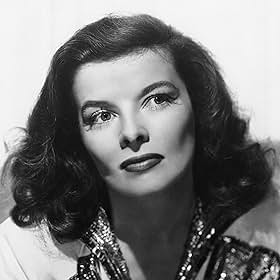


Marion Clayton Anderson
- Mrs. McClarity
- (não creditado)
Avaliações em destaque
I really enjoyed this sentimental antique. Hepburn and Beal are terrific. Movie music fans should not miss this early Max Steiner score. I had never heard of it. It's one of his earliest through-composed soundtracks. I loved the meticulous scoring and varied arrangements of the folklike love theme, which is fully stated in the opening credits (a one minute burst of romantic fervor) and is then interpolated and altered throughout the film, first returning when Hepburn says "I do believe you've liked me all the time" to which Beal replies with the question that sums up the film's theme "Can a man like a woman against his will?". There's a great sequence where Hepburn shines a lantern through the minister's living room window. Listen to how Steiner punctuates the flashes of light. As with all good symphonic scores the love theme returns finally to tie everything together, but not before we've heard it played on everything from solo violin to bagpipes.
A mysterious & headstrong gypsy girl falls in love with THE LITTLE MINISTER called to pastor in a small Scots village. Soon her influence has him behaving in a most unclerical manner, with repercussions for the entire community.
Although sadly neglected & overlooked, this fine, sentimental film, based on a 1891 novel by Sir James M. Barrie, features excellent performances and superior production values. RKO lavished care & money to get the details just right; it is a fine example of how Hollywood films of the period could evocatively portray other times, other places.
Katharine Hepburn has one of her most fetching roles in the exuberant Babbie. Full of boundless energy & good humor, yet fiercely protective of those weaker & less fortunate than she, Hepburn turns in a beguiling, always entertaining, performance. While there is really no mystery as to the true identity of her character, this in no way hinders Hepburn from continually delighting her expectant audience.
In the title role, John Beal (born James Alexander Bliedung in 1909) had doubtless the best role of his career in this, his second, film. By underplaying his scenes, he holds his own with the vivacious Hepburn. Exhibiting real star quality, it is unfortunate that the good movie roles failed to materialize. Beal did quite a bit of work through the years on the stage and had a triumph in television's THE ADAMS CHRONICLES in 1976. John Beal died in 1997 at the age of 87.
A very fine supporting cast lends depth to the smaller roles: Andy Clyde as the lonely village policeman; Donald Crisp as the local doctor; Reginald Denny as a pompous army captain; Mary Gordon as an elderly indigent; Alan Hale as the community's repentant drunk; Lumsden Hare as a strict & powerful church deacon; Eily Malyon as a member of the aristocracy; Beryl Mercer as Beal's devout mother; and Dorothy Stickney as a fluttery maid.
Mention should be made of Max Steiner's lovely score, which incorporates old & familiar tunes.
A couple of historical notes: the Auld Licht (Scottish for 'Old Light') is mentioned many times in the film. This was the very conservative Church of Scotland, or Presbyterian Church in America, which had the allegiance of a majority of the Scots people. Barrie's original novel was of the Kailyard (Scottish for a small cabbage patch near a cottage) School of writing which had great favor in Scotland in the late 19th Century. This style featured highly idealized & sentimental representations of Scottish village life. Thrums in THE LITTLE MINISTER would certainly be a prime example.
Although sadly neglected & overlooked, this fine, sentimental film, based on a 1891 novel by Sir James M. Barrie, features excellent performances and superior production values. RKO lavished care & money to get the details just right; it is a fine example of how Hollywood films of the period could evocatively portray other times, other places.
Katharine Hepburn has one of her most fetching roles in the exuberant Babbie. Full of boundless energy & good humor, yet fiercely protective of those weaker & less fortunate than she, Hepburn turns in a beguiling, always entertaining, performance. While there is really no mystery as to the true identity of her character, this in no way hinders Hepburn from continually delighting her expectant audience.
In the title role, John Beal (born James Alexander Bliedung in 1909) had doubtless the best role of his career in this, his second, film. By underplaying his scenes, he holds his own with the vivacious Hepburn. Exhibiting real star quality, it is unfortunate that the good movie roles failed to materialize. Beal did quite a bit of work through the years on the stage and had a triumph in television's THE ADAMS CHRONICLES in 1976. John Beal died in 1997 at the age of 87.
A very fine supporting cast lends depth to the smaller roles: Andy Clyde as the lonely village policeman; Donald Crisp as the local doctor; Reginald Denny as a pompous army captain; Mary Gordon as an elderly indigent; Alan Hale as the community's repentant drunk; Lumsden Hare as a strict & powerful church deacon; Eily Malyon as a member of the aristocracy; Beryl Mercer as Beal's devout mother; and Dorothy Stickney as a fluttery maid.
Mention should be made of Max Steiner's lovely score, which incorporates old & familiar tunes.
A couple of historical notes: the Auld Licht (Scottish for 'Old Light') is mentioned many times in the film. This was the very conservative Church of Scotland, or Presbyterian Church in America, which had the allegiance of a majority of the Scots people. Barrie's original novel was of the Kailyard (Scottish for a small cabbage patch near a cottage) School of writing which had great favor in Scotland in the late 19th Century. This style featured highly idealized & sentimental representations of Scottish village life. Thrums in THE LITTLE MINISTER would certainly be a prime example.
This was the last film version made of this delightful story based on James Matthew Barrie's first major successful novel and play, and it is long overdue for a modern remake, done with similar charm, beauty, and simplicity, please.
Here we find a timeless tale of a fresh-faced, youthful pastor boy, direct out of seminary, who loves his mother and has affection for his congregation, but who finds himself flaunting convention by falling in love against his will with a wild, beautiful gypsy girl. You could no more imagine this girl sitting quietly in a church praying than you could imagine Ted Kennedy becoming a Republican.
Gavin the minister, though he is "little" in physical size, is not small in courage or intellectual honesty. He knows he is falling in love with this girl, but can't seem to help himself. He fights his feelings, but still he is attracted, like a moth to a flame. She tricks him and teases him in their first encounters, yet he still comes back for more. There's just something different about this Babbie that he cannot resist (and one senses the gypsy girl feels the same way about Gavin). We see their relationship growing, the congregation begins to suspect something is distracting their beloved new minister from his duties, and an inevitable confrontation is in the works.
I won't give away any more, but go rent the video sometime or catch it on AMC or TCM, especially if you wish to see Katherine Hepburn in one of her most poignant, humorous and delightful performances (she even sings, too!). Kudos also to the late John Beal, who was perfectly cast as Gavin Dishart, the little minister. And an A-plus goes to Max Steiner for his lovely background musical score. Also, read the book by JMB when you get a chance; one can't put it down.
Here we find a timeless tale of a fresh-faced, youthful pastor boy, direct out of seminary, who loves his mother and has affection for his congregation, but who finds himself flaunting convention by falling in love against his will with a wild, beautiful gypsy girl. You could no more imagine this girl sitting quietly in a church praying than you could imagine Ted Kennedy becoming a Republican.
Gavin the minister, though he is "little" in physical size, is not small in courage or intellectual honesty. He knows he is falling in love with this girl, but can't seem to help himself. He fights his feelings, but still he is attracted, like a moth to a flame. She tricks him and teases him in their first encounters, yet he still comes back for more. There's just something different about this Babbie that he cannot resist (and one senses the gypsy girl feels the same way about Gavin). We see their relationship growing, the congregation begins to suspect something is distracting their beloved new minister from his duties, and an inevitable confrontation is in the works.
I won't give away any more, but go rent the video sometime or catch it on AMC or TCM, especially if you wish to see Katherine Hepburn in one of her most poignant, humorous and delightful performances (she even sings, too!). Kudos also to the late John Beal, who was perfectly cast as Gavin Dishart, the little minister. And an A-plus goes to Max Steiner for his lovely background musical score. Also, read the book by JMB when you get a chance; one can't put it down.
John Beal is the new minister at a small church in Scotland. He comes across Katharine Hepburn, who seems to be a wild gypsy girl and falls in love. He does not know she is the ward of the local laird, and affianced.
Miss Hepburn was riding high at RKO at this point, having come off an Oscar for MORNING GLORY and the huge financial successful of LITTLE WOMEN. Within a few years her career would take a tumble and she would be labeled box office poison. For the moment it's a solid film version of J. M. Barrie's popular play, with a supporting cast that includes Alan Hale, Beryl Mercer, Donald Crisp, and Andy Clyde. Director Richard Wallace had his cast speak in stage-Scottish accents that I occasionally found baffling. However, the choice of properties seems to have been right in the then-current sweet spot of Miss Hepburn's star persona.
Co-star John Beal had made his screen debut only the previous year, and this was his third movie performance. He would appear in more than a hundred movies and television shows over the following sixty years before dying in 1997 at the age of 87.
Miss Hepburn was riding high at RKO at this point, having come off an Oscar for MORNING GLORY and the huge financial successful of LITTLE WOMEN. Within a few years her career would take a tumble and she would be labeled box office poison. For the moment it's a solid film version of J. M. Barrie's popular play, with a supporting cast that includes Alan Hale, Beryl Mercer, Donald Crisp, and Andy Clyde. Director Richard Wallace had his cast speak in stage-Scottish accents that I occasionally found baffling. However, the choice of properties seems to have been right in the then-current sweet spot of Miss Hepburn's star persona.
Co-star John Beal had made his screen debut only the previous year, and this was his third movie performance. He would appear in more than a hundred movies and television shows over the following sixty years before dying in 1997 at the age of 87.
It's 1840 Thrums, Scotland. Gavin Dishart arrives with his mother to be the new Minister in the rural town. The town is impressed with his righteous talk. Babbie (Katharine Hepburn) is a cunning irreverent gypsy and there is a town ban on the gypsies. She pranks them by inciting a revolt against imaginary troops and then the real soldiers arrive. At every turn, Babbie is able to trick Gavin until finally, he is able to proclaim his love for the gypsy.
It's silly that Hepburn is playing a gypsy and she is dressed like the most stereotypical gypsy. It is saved by her shear playfulness and the eventual explanation of the truth. Initially, she's the cat and Gavin is little more than her play thing. That's kinda fun. She broadly play acts and he falls for it every time. It turns into a romantic melodrama and she makes it work.
It's silly that Hepburn is playing a gypsy and she is dressed like the most stereotypical gypsy. It is saved by her shear playfulness and the eventual explanation of the truth. Initially, she's the cat and Gavin is little more than her play thing. That's kinda fun. She broadly play acts and he falls for it every time. It turns into a romantic melodrama and she makes it work.


Você sabia?
- CuriosidadesJohn Beal nearly lost his sight when an extra accidentally stabbed him in his eye during the filming of the mob scene.
- ConexõesFeatured in Katharine Hepburn: All About Me (1993)
- Trilhas sonorasThe Bonnie Banks O' Loch Lomond
(ca 1745) (uncredited)
Traditional Scottish song
In the score during the opening credits
Principais escolhas
Faça login para avaliar e ver a lista de recomendações personalizadas
Detalhes
- Data de lançamento
- País de origem
- Idioma
- Também conhecido como
- The Little Minister
- Locações de filme
- Empresa de produção
- Consulte mais créditos da empresa na IMDbPro
Bilheteria
- Orçamento
- US$ 650.000 (estimativa)
- Tempo de duração
- 1 h 50 min(110 min)
- Cor
- Proporção
- 1.37 : 1
Contribua para esta página
Sugerir uma alteração ou adicionar conteúdo ausente