AVALIAÇÃO DA IMDb
7,2/10
1,5 mil
SUA AVALIAÇÃO

Adicionar um enredo no seu idiomaAn attractive Russian spy seduces an Austrian officer in order to get some important plans, but when she actually falls in love with him, both of them are placed in a dangerous situation.An attractive Russian spy seduces an Austrian officer in order to get some important plans, but when she actually falls in love with him, both of them are placed in a dangerous situation.An attractive Russian spy seduces an Austrian officer in order to get some important plans, but when she actually falls in love with him, both of them are placed in a dangerous situation.
- Direção
- Roteiristas
- Estrelas
- Prêmios
- 1 vitória no total




Symona Boniface
- Party Guest
- (não creditado)
Alfonso Corelli
- Violin Player
- (não creditado)

Geraldine Dvorak
- Party Guest
- (não creditado)
Sydney Jarvis
- Prison Guard
- (não creditado)
Nicholai Konovaloff
- Officer Standing at Tania's Table
- (não creditado)

William H. O'Brien
- Cafe Waiter Serving Wine
- (não creditado)

Russ Powell
- Carriage Driver
- (não creditado)

Youcca Troubetzkov
- Russian
- (não creditado)
Victor Young
- Scarpia in 'Tosca'
- (não creditado)
Avaliações em destaque
Greta Garbo's usual fine performance, along with a good supporting cast and an interesting (if somewhat familiar) story, make "The Mysterious Lady" a very good melodrama. It has a good mix of romance, intrigue, and suspense that gets the most out of the fairly simple premise, and along the way there are also some good touches by director Fred Niblo.
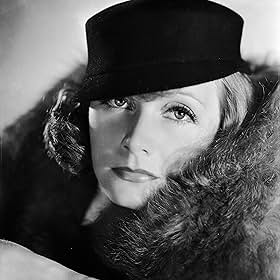
In a part similar to her role in the better-known "Mata Hari", Garbo here plays a glamorous Russian spy who targets an Austrian officer, aiming at first to steal important military secrets, but soon genuinely falling in love with him. The conflict between personal feelings and perceived patriotic duty sets up the rest of the drama, and it builds up to an interesting climactic scene, with an exuberant party taking place in Warsaw while, in a private room, a tense confrontation plays out.
Besides keeping a good pace and atmosphere, there are a few places where Niblo's direction also highlights key props in a fashion that would have pleased Hitchcock. And while Garbo as usual dominates the screen, the supporting cast features solid performances. Conrad Nagel plays the Austrian, with Gustav Von Seyffertitz as a Russian spy-master. Perhaps the best performance in the supporting cast is by Edward Connelly, in a smaller role as Nagel's uncle. It's a good combination that makes for a very good movie.
In a part similar to her role in the better-known "Mata Hari", Garbo here plays a glamorous Russian spy who targets an Austrian officer, aiming at first to steal important military secrets, but soon genuinely falling in love with him. The conflict between personal feelings and perceived patriotic duty sets up the rest of the drama, and it builds up to an interesting climactic scene, with an exuberant party taking place in Warsaw while, in a private room, a tense confrontation plays out.
Besides keeping a good pace and atmosphere, there are a few places where Niblo's direction also highlights key props in a fashion that would have pleased Hitchcock. And while Garbo as usual dominates the screen, the supporting cast features solid performances. Conrad Nagel plays the Austrian, with Gustav Von Seyffertitz as a Russian spy-master. Perhaps the best performance in the supporting cast is by Edward Connelly, in a smaller role as Nagel's uncle. It's a good combination that makes for a very good movie.
If you care for Garbo's sound movies go back and see what made her such a sensational international star. This one is a delight. She is most seductive with the grace and glide of an animal. One of my favorite of all of her films. You can easily see why people became Garbomanics. There was nothing like her on the screen...before or since.
Writing scores for silent movies requires a considerable talent, but for some pictures the music must practically write itself. This is not to play down the efforts of the many fine score composers, but simply to say that for someone with musical ability, a picture such as The Mysterious Lady is constantly suggestive of melody, tempo and timbre, in a way that translates naturally into a musical setting.
This musical effect is, it seems, largely down to the director Fred Niblo. Niblo, an ex-Vaudevillian who married into the Cohan family, came into motion pictures relatively late in life (he first sat in the director's chair at 42), but he soon proved himself to be one of the finest and most poetic craftsmen of the cinema. The Mysterious Lady was made at a time when the talkies were beginning to muscle in, but Niblo proudly blows a trumpet blast for the dying art form. Interestingly, The Mysterious Lady actually contains a lot of examples of images filling in for sound. Sometimes this is for narrative purposes, such as the superimposition of the opera scene when Nagel plays the piano, to inform the audience of what he is playing. Other times it is purely atmospheric, such as the shot of a row of violins in the orchestra, later grimly echoed by a similarly composed shot of the drums at Nagel's degradation.
Throughout, the picture sustains a lovely rhythmic flow. The love scene between Garbo and Nagel is delicately suggested through a series of interlocking images, unspoiled by intertitles. Niblo shows complete control over the pace at any one moment, the first few minutes being frenzied and choppy, then slowing to that glorious romantic feel when Garbo is introduced in a very memorable entrance. Only once does Niblo overdo it, when he throws in a superimposition of Nagel daydreaming about assaulting Garbo – the context and Nagel's uncomfortable expression are enough without this heavy-handed display.
So if Niblo was a kind of visual composer, who was his muse? Well, let's not extend a metaphor too far, but it certainly appears that Niblo was inspired to make beautiful images to complement the natural beauty of Greta Garbo. And to an admirer of fine dramatic performance Garbo is doubly beautiful because she is such an outstandingly good actress. At a period when too much screen acting was hammy and unsubtle, Garbo was refreshingly understated. To watch a Garbo picture, especially a silent one, is to witness dozens of little moments of performance genius. One example here is when her character hears the news that von Raden has been imprisoned because of her. She shows the tiniest glimmer of a reaction, enough for the audience to pick up on and understand, but not enough for her character to give herself away to those around her. Garbo captivated audiences with her mysterious allure and startling passion – the X-factor that made her a phenomenal star.
Like the silent picture, Niblo's days as a director were coming to an end. Whether his decision to retire a few a few years after this was down to the sound revolution or not I am unsure. I have not seen any of the handful of talkies he made, and I simply don't know whether he gave them the same grace and musicality that we see here. What I do know, what every film buff knows, is what Greta did next. Of all Hollywood stars, Garbo's transition from silence to sound was among the most successful. Such was her power, her naturalism and her overwhelming appeal, that in spite of the 1930s demand for more earthy performers, she remained one of our brightest stars.
This musical effect is, it seems, largely down to the director Fred Niblo. Niblo, an ex-Vaudevillian who married into the Cohan family, came into motion pictures relatively late in life (he first sat in the director's chair at 42), but he soon proved himself to be one of the finest and most poetic craftsmen of the cinema. The Mysterious Lady was made at a time when the talkies were beginning to muscle in, but Niblo proudly blows a trumpet blast for the dying art form. Interestingly, The Mysterious Lady actually contains a lot of examples of images filling in for sound. Sometimes this is for narrative purposes, such as the superimposition of the opera scene when Nagel plays the piano, to inform the audience of what he is playing. Other times it is purely atmospheric, such as the shot of a row of violins in the orchestra, later grimly echoed by a similarly composed shot of the drums at Nagel's degradation.
Throughout, the picture sustains a lovely rhythmic flow. The love scene between Garbo and Nagel is delicately suggested through a series of interlocking images, unspoiled by intertitles. Niblo shows complete control over the pace at any one moment, the first few minutes being frenzied and choppy, then slowing to that glorious romantic feel when Garbo is introduced in a very memorable entrance. Only once does Niblo overdo it, when he throws in a superimposition of Nagel daydreaming about assaulting Garbo – the context and Nagel's uncomfortable expression are enough without this heavy-handed display.
So if Niblo was a kind of visual composer, who was his muse? Well, let's not extend a metaphor too far, but it certainly appears that Niblo was inspired to make beautiful images to complement the natural beauty of Greta Garbo. And to an admirer of fine dramatic performance Garbo is doubly beautiful because she is such an outstandingly good actress. At a period when too much screen acting was hammy and unsubtle, Garbo was refreshingly understated. To watch a Garbo picture, especially a silent one, is to witness dozens of little moments of performance genius. One example here is when her character hears the news that von Raden has been imprisoned because of her. She shows the tiniest glimmer of a reaction, enough for the audience to pick up on and understand, but not enough for her character to give herself away to those around her. Garbo captivated audiences with her mysterious allure and startling passion – the X-factor that made her a phenomenal star.
Like the silent picture, Niblo's days as a director were coming to an end. Whether his decision to retire a few a few years after this was down to the sound revolution or not I am unsure. I have not seen any of the handful of talkies he made, and I simply don't know whether he gave them the same grace and musicality that we see here. What I do know, what every film buff knows, is what Greta did next. Of all Hollywood stars, Garbo's transition from silence to sound was among the most successful. Such was her power, her naturalism and her overwhelming appeal, that in spite of the 1930s demand for more earthy performers, she remained one of our brightest stars.
This is to my mind the most brilliant of all of Garbo's silent films, and I never fully understood the attitude of most critics who simply dismiss it on the account of the Divine Woman's own lack of care for this particular entry. True, she did not like just doing this film, and true, Mauritz Stiller was actually dying while she was shooting this, therefore, we can understand that she thought poorly of it; yet this was shot at the peak of silent film-making, in 1928, and never before had Fred Niblo been so good, never had his full command of the motion picture been so obvious. All through the film, the direction is superb, subdued and subtle, while the gorgeous settings, MGM's trademark, are lit and photographed at their best. Niblo makes the best of his composition skills, with or without Garbo in the shots, and the way he deals with the extras, putting the stars in the distance, swallowed by the crowd, is clearly an innovation for 1928; his use of a few, but decisive shots based on a moving camera proves that, like the European imports(Murnau, Leni, Fejos, Christensen) or like his fellow Americans (Ford, Borzage,Wellman), he was aware of the German experiments. Of course, the spy story is not the source of any intellect-expanding masterpiece, but, hey, this is a stylish and entertaining film that foreshadows some of Hitchcpock's best British films of the decade to come. And Niblo even handles suspense in a remarkable way in the last five minutes. The edition id remarkable, the print being a bit worn but still clear; and an emasculating restoration has been avoided, retaining thus the crystal-clear, crisp quality of William Daniel's photography. And to conclude, a question about Garbo: who else on earth could wear these dresses and get away with it?
Fred Niblo is undoubtedly one of the most under-rated film-makers ever. His visual stylisations, here helped by the incredible photography of William Daniels, can make a fairly routine spy yarn into a beautiful work of art. Of course it helps when Greta Garbo is on your canvas. This is an astonishing film that, had it been given a more believable ending (tragic rather than happy), may well be considered a masterpiece today.
Garbo's beauty and superb acting abilities make the material compulsive. And Conrad Nagel matches her perfectly. Their first love scene is intoxicating in its beauty, and heart-stopping in its passion. It is one of the great love scenes of all time. And in the nail-biting climax there is a moment so grotesquely powerful that you will never forget it. This is a film to savour and love - it represents silent film at its very best. Yes the plot is slight, but what is conveyed beyond that plot is more than profound. And the excellent music score on the MGM video enhances this profundity. This film is beauty itself.
Garbo's beauty and superb acting abilities make the material compulsive. And Conrad Nagel matches her perfectly. Their first love scene is intoxicating in its beauty, and heart-stopping in its passion. It is one of the great love scenes of all time. And in the nail-biting climax there is a moment so grotesquely powerful that you will never forget it. This is a film to savour and love - it represents silent film at its very best. Yes the plot is slight, but what is conveyed beyond that plot is more than profound. And the excellent music score on the MGM video enhances this profundity. This film is beauty itself.


Você sabia?
- CuriosidadesDebut of actress Geraldine Dvorak.
- Erros de gravaçãoIt was actually the German intelligence chief, Redl, who gave the Schlieffen plan to the Russians, not a female spy.
- Citações
Title Card: Vienna before the war - city of love and laughter - living gayly to the music of the waltz and the opera - !
- Versões alternativasIn the TCM version, the final scenes involves Tania and a male character named Lucien, with the dialog cards in Russian.
Principais escolhas
Faça login para avaliar e ver a lista de recomendações personalizadas
- How long is The Mysterious Lady?Fornecido pela Alexa
Detalhes
- Data de lançamento
- País de origem
- Idiomas
- Também conhecido como
- The Mysterious Lady
- Locações de filme
- Empresa de produção
- Consulte mais créditos da empresa na IMDbPro
Bilheteria
- Orçamento
- US$ 337.000 (estimativa)
- Tempo de duração
- 1 h 36 min(96 min)
- Cor
- Mixagem de som
- Proporção
- 1.33 : 1
Contribua para esta página
Sugerir uma alteração ou adicionar conteúdo ausente