
Aggiungi una trama nella tua linguaRecounts the events of world War II in color.Recounts the events of world War II in color.Recounts the events of world War II in color.
Sfoglia gli episodi


Recensioni in evidenza
This long TV series, narrated by Robert Powell, whose tone expresses earnest and dispassionate interest, deals with World War II both in the East and West. I will now present you with a detailed history of the war in its entirety, along with an extensive psychoanalytic analysis of every person involved. Not just the principals but my Uncle Flory who was a corporal in the infantry, Hockey who was an aviation ordnance man in the Navy, a German guy I met in a bar in Italy who had served in the Wehrmacht on the Russian front, and my father-in-law who was an air raid warden in Philadelphia. Well, I would if I could but I can't.
Let's summarize it this way, just for the kids: Germany, Italy, and Japan start World War II around 1939. On the other side, the chief allies are Britain, Russia, and the USA. It was a terrible conflict. We won. I'll make just a few observations.
Some of the footage is familiar from black and white documentaries, but the colorization process has advanced since the earlier, crude attempts by Ted Turner and others. The viewer hardly notices the effects after a while.
It's interesting to compare the TV documentaries about the war from the perspective of their public appearance. In early series, like "Victory at Sea" (1952), only seven years after the end of the war, the enemy is still faceless and brutal. The insults may be subtle but palpable. Listen to the narrator's pronunciation of "the Japanese", with it's built-in sneer bespeaking disgust. Later, "The World At War" (1973) regards the war itself as appalling, an emotional experience as much as anything else. Olivier's narration is mournful. By the time of this documentary (2009), the war is treated as an awesome and terrible historic event, but one that can be looked at almost as moves in a geopolitical chess game. We still see corpses, the suffering of civilians, and we hear of the atrocities, but not nearly so often as earlier, and the narrator, Robert Powell, describes the goings on as if reading from a technical manual. The barely masked loathing of "Victory at Sea" is absent, and so are Olivier's tones of tired resignation.
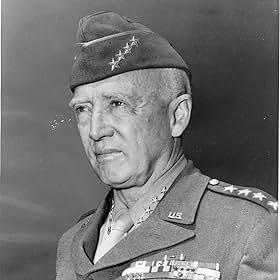
The historical introduction to the beginning of the war in both theaters is nicely sketched in. And the description of events is sort of smoothed over and audience friendly. None of the battles is described in much detail. Controversy is avoided. Not much in the way of personalities either, except for a handful at the very top who are concisely introduced. If the Americans landed at Salerno and were saved from defeat only by naval gunfire -- well, "the Americans landed at Salerno." Did we bomb the fifth-century Benedictine monastery atop Monte Cassino, even though it was not occupied by German troops? Yes. "Out of desperation, the Allies bombed the monastery Monte Cassino" -- period. Did George Patton and Bernard Montgomery loathe each other? This space deliberately left blank.
The lacunae mask no essential points, but some of them are interesting or amusing in themselves. And, facing facts, some of the information left out is as important as what's left in. The "battle of Britain" is hardly mentioned. In Rommel's back-and-forth battles with the British across North Africa, not nearly enough emphasis is placed on logistics, which favored the Allied forces. They could be supplied through Egypt. Rommel, however, was dependent for the importing of essential supplies on one port, Tripoli. His fuel, food, water, replacements, and matériel passed through Tripoli. The supplies were shipped from Italy, a thousand miles across the Mediterranean Sea. Then, during Rommel's advances, they had to be schlepped across another thousand or more miles on a single desert road open to air attack. On top of that, the Brits had cracked the Italian naval code and knew when the transports would leave their ports in Italy. The transports were routinely sunk by Allied air and submarines, so virtually nothing was reaching Rommel. By the end, he was draining the fuel from some of his few remaining tanks in order to keep a handful of others operational.
The deciphering of Italy's naval code was kept so secret that in one instance an air attack was launched on a transport. The airplanes were already in sight of the target when it was discovered that the ship was carrying Allied POWs. The attack was never canceled. If it had been, it would have given away the game. I find details like these interesting. Maybe the producers did too but there simply wasn't room enough for them.
Some of the material not mentioned, like the American fighting spirit at Kasserine Pass, might just as well be forgotten. Overall, and considering the weight of the subject, it's quite well done.
Let's summarize it this way, just for the kids: Germany, Italy, and Japan start World War II around 1939. On the other side, the chief allies are Britain, Russia, and the USA. It was a terrible conflict. We won. I'll make just a few observations.
Some of the footage is familiar from black and white documentaries, but the colorization process has advanced since the earlier, crude attempts by Ted Turner and others. The viewer hardly notices the effects after a while.
It's interesting to compare the TV documentaries about the war from the perspective of their public appearance. In early series, like "Victory at Sea" (1952), only seven years after the end of the war, the enemy is still faceless and brutal. The insults may be subtle but palpable. Listen to the narrator's pronunciation of "the Japanese", with it's built-in sneer bespeaking disgust. Later, "The World At War" (1973) regards the war itself as appalling, an emotional experience as much as anything else. Olivier's narration is mournful. By the time of this documentary (2009), the war is treated as an awesome and terrible historic event, but one that can be looked at almost as moves in a geopolitical chess game. We still see corpses, the suffering of civilians, and we hear of the atrocities, but not nearly so often as earlier, and the narrator, Robert Powell, describes the goings on as if reading from a technical manual. The barely masked loathing of "Victory at Sea" is absent, and so are Olivier's tones of tired resignation.
The historical introduction to the beginning of the war in both theaters is nicely sketched in. And the description of events is sort of smoothed over and audience friendly. None of the battles is described in much detail. Controversy is avoided. Not much in the way of personalities either, except for a handful at the very top who are concisely introduced. If the Americans landed at Salerno and were saved from defeat only by naval gunfire -- well, "the Americans landed at Salerno." Did we bomb the fifth-century Benedictine monastery atop Monte Cassino, even though it was not occupied by German troops? Yes. "Out of desperation, the Allies bombed the monastery Monte Cassino" -- period. Did George Patton and Bernard Montgomery loathe each other? This space deliberately left blank.
The lacunae mask no essential points, but some of them are interesting or amusing in themselves. And, facing facts, some of the information left out is as important as what's left in. The "battle of Britain" is hardly mentioned. In Rommel's back-and-forth battles with the British across North Africa, not nearly enough emphasis is placed on logistics, which favored the Allied forces. They could be supplied through Egypt. Rommel, however, was dependent for the importing of essential supplies on one port, Tripoli. His fuel, food, water, replacements, and matériel passed through Tripoli. The supplies were shipped from Italy, a thousand miles across the Mediterranean Sea. Then, during Rommel's advances, they had to be schlepped across another thousand or more miles on a single desert road open to air attack. On top of that, the Brits had cracked the Italian naval code and knew when the transports would leave their ports in Italy. The transports were routinely sunk by Allied air and submarines, so virtually nothing was reaching Rommel. By the end, he was draining the fuel from some of his few remaining tanks in order to keep a handful of others operational.
The deciphering of Italy's naval code was kept so secret that in one instance an air attack was launched on a transport. The airplanes were already in sight of the target when it was discovered that the ship was carrying Allied POWs. The attack was never canceled. If it had been, it would have given away the game. I find details like these interesting. Maybe the producers did too but there simply wasn't room enough for them.
Some of the material not mentioned, like the American fighting spirit at Kasserine Pass, might just as well be forgotten. Overall, and considering the weight of the subject, it's quite well done.
At 13 episodes of 51 minutes each, you can imagine you get a good overview of the major events of the war. For someone who is born towards the end of 20th Century, and only heard and read bits and pieces, this was a great way to connect the dots and get a total overview of those years which shaped the world even to this day. Does it feel a bit biased towards the allied forces? It does feel at times, but not too much to lose it's authenticity. I wished however to also describe how war was experienced by the civilians, what they had to go through, and especially, a dedicated episode to the atrocities against the Jewish population. It was overwhelming at times, on one hand because of the horrors shown on screen, and the other because of the continuous battle scenes, which in case of binge watching is sure to give one a headache. However, it is a must see for everyone, as it's very important to know our past, to avoid repeating the same mistakes.
The segment "The Island War" treats the liberation of the Phillipines as an unnecessary and overly costly (and therefore ill-advised) operation. However, that totally fails to recognize that in war, there are both military and political concerns and that grand strategy requires the consideration of both. War is, quite simply, foreign policy pursued by other means. Therefore, foreign policy has to be considered in the strategy of the war.
Because the USA had a commitment to the Phillipine people as a protectorate, it was politically necessary to return as soon as was humanly possible. MacArthur may have left, but Phillipine guerrillas had been fighting and dying against the Japanese with US supplies and coordination from the very beginning. To ignore a chance to liberate the Phillipines would have been no different than leaving Paris in German hands while liberating Holland and Belgium. It was politically imperative! Likewise, the episode maintained that the "Northern arm" of the Japanese pincer had "only pretended to retreat and under cover of darkness had reversed course..." both Japanese and American accounts, much closer to the event when interviews with actual participants were available, indicated that the Northern force actually intended to retreat and only reversed course following critical comments from the high command.
Halsey had every reason to have believed that the Northern force was less a threat than Ozawa's aircraft carrier force which had just been spotted. Every previous naval victory in WWII had come at the hands of the aircraft carriers, NOT the battleships. When confronted by two enemies... one with a knife and the other with a machine gun, only the fool deals with the knife first! There were American POWs held in the Phillipines. Many were saved during this operation. The civilian casualties were indeed great, but that was the choice of the Japanese occupiers and how many would've died, either of brutality or starvation had the islands been bypassed? The further we get from WWII, the less accurate do the "documentaries" become. You can tell a good story with the films, but unless you have spent years studying the contemporary histories, from both sides... false conclusions will run rampant. As the last of the participants pass from this life, there can be no more "factual" accounts. The eyewitnesses are silent now. Don't just watch, READ, READ, READ the books that were published before 1960.
Because the USA had a commitment to the Phillipine people as a protectorate, it was politically necessary to return as soon as was humanly possible. MacArthur may have left, but Phillipine guerrillas had been fighting and dying against the Japanese with US supplies and coordination from the very beginning. To ignore a chance to liberate the Phillipines would have been no different than leaving Paris in German hands while liberating Holland and Belgium. It was politically imperative! Likewise, the episode maintained that the "Northern arm" of the Japanese pincer had "only pretended to retreat and under cover of darkness had reversed course..." both Japanese and American accounts, much closer to the event when interviews with actual participants were available, indicated that the Northern force actually intended to retreat and only reversed course following critical comments from the high command.
Halsey had every reason to have believed that the Northern force was less a threat than Ozawa's aircraft carrier force which had just been spotted. Every previous naval victory in WWII had come at the hands of the aircraft carriers, NOT the battleships. When confronted by two enemies... one with a knife and the other with a machine gun, only the fool deals with the knife first! There were American POWs held in the Phillipines. Many were saved during this operation. The civilian casualties were indeed great, but that was the choice of the Japanese occupiers and how many would've died, either of brutality or starvation had the islands been bypassed? The further we get from WWII, the less accurate do the "documentaries" become. You can tell a good story with the films, but unless you have spent years studying the contemporary histories, from both sides... false conclusions will run rampant. As the last of the participants pass from this life, there can be no more "factual" accounts. The eyewitnesses are silent now. Don't just watch, READ, READ, READ the books that were published before 1960.
Recently I watched this documentary series about World War II in (HD) color on Netflix and really liked it. In 14 episodes you get to see a well documented overview of WW2, starting with the events leading up to WW2 in both Europe and Sout-East Asia, the beginning stages with the fast advances both Germany and Italy made in Europe, and Japan in Asia, the mistakes made by the aggressors, the fighting back by the allied forces on different theatres, and ultimately the victories over Germany , Italy and Japan.
The interesting part about this series is that the original black & white footage has been coloured by advanced colouring techniques. While you can occasionally spot the clearly artificial colouring, most of the times it is unobtrusive and hardly noticeable. Watching these scenes in colour definitely add an aspect of realism to them, compared to the same scenes in black & white.
There are many documentaries about World War II, and this documentary deserves a good place between them.
The interesting part about this series is that the original black & white footage has been coloured by advanced colouring techniques. While you can occasionally spot the clearly artificial colouring, most of the times it is unobtrusive and hardly noticeable. Watching these scenes in colour definitely add an aspect of realism to them, compared to the same scenes in black & white.
There are many documentaries about World War II, and this documentary deserves a good place between them.
Short and not overwhelming. Great for anyone that's interested in the second World War.
For the first time you can actually view footage from the war in color
Spectacular for anyone ages 13-100
some violent footage is in it so if you're sensitive you might have to reconsider.
Maps are really fascinating and well done.
Robert Powell also does a fantastic job. His accent makes everything simple to understand.
IS IT GOOD FOR EDUCATION?
Yes. It's amazing for education since the episodes cover everything from A-Z.
My favorite segment is the "battle of the islands" where they talk about America vs Japan. Probably my favorite segment because it has tons of footage in it.
For the first time you can actually view footage from the war in color
Spectacular for anyone ages 13-100
some violent footage is in it so if you're sensitive you might have to reconsider.
Maps are really fascinating and well done.
Robert Powell also does a fantastic job. His accent makes everything simple to understand.
IS IT GOOD FOR EDUCATION?
Yes. It's amazing for education since the episodes cover everything from A-Z.
My favorite segment is the "battle of the islands" where they talk about America vs Japan. Probably my favorite segment because it has tons of footage in it.


Lo sapevi?
- QuizThough not listed among crew, the show credits Blair Wallace as colourist for the series.
- ConnessioniFeatured in History Buffs: Saving Private Ryan (2016)
I più visti
Accedi per valutare e creare un elenco di titoli salvati per ottenere consigli personalizzati
- How many seasons does World War II in Colour have?Powered by Alexa
Dettagli
- Tempo di esecuzione
- 51min
- Colore
- Proporzioni
- 16 : 9
Contribuisci a questa pagina
Suggerisci una modifica o aggiungi i contenuti mancanti